Recent updates
-
2015 Philippines Independence Day Parade
Last year, we went to the 50th annual Celebrate Israel parade and it was only later that we found out that the Philippines Independence Day parade had been held at the same time, a few blocks away. We told ourselves that this year we would try to make it to both, which wouldn’t be as hard since they were held on different days this time. We almost did! Unfortunately, when we were getting ready for bed on Saturday night, “Man on Fire” with Denzel Washington started playing on the TV, and before we knew it, we were still up at 3 AM, drinking Stella Artois and eating Salt & Vinegar Kettle chips. So, we didn’t make it out of the house early enough to get downtown and see the parade. Maybe next year? There was a cultural festival after the parade, though, near Madison Square Park, so we checked that out.
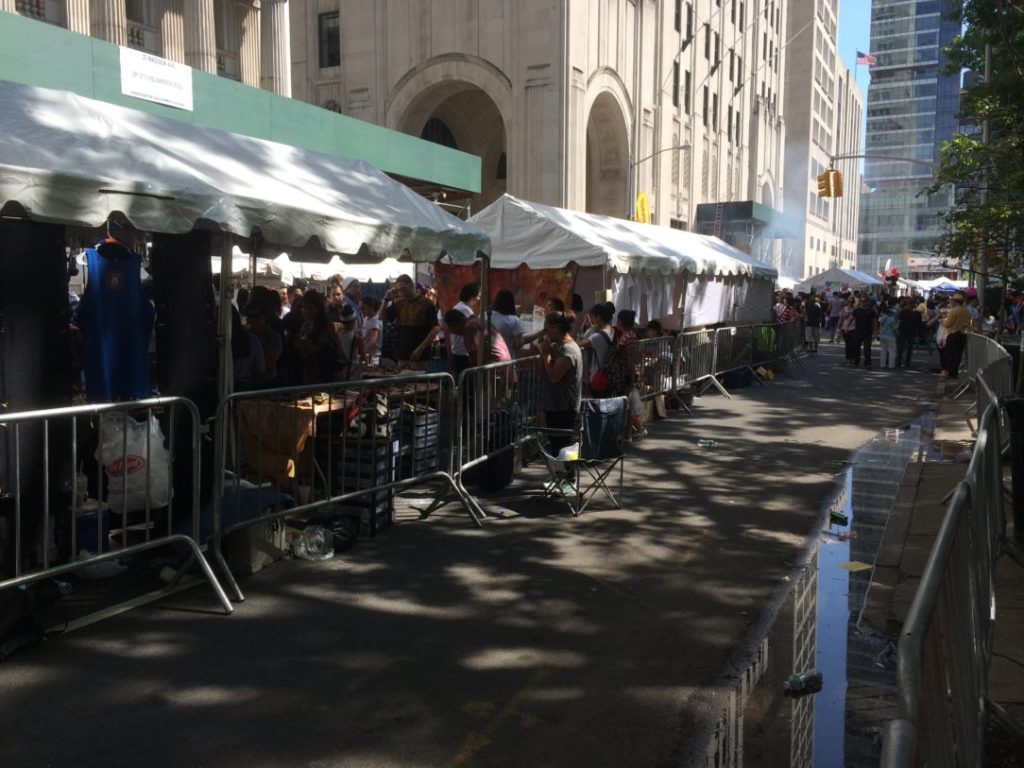
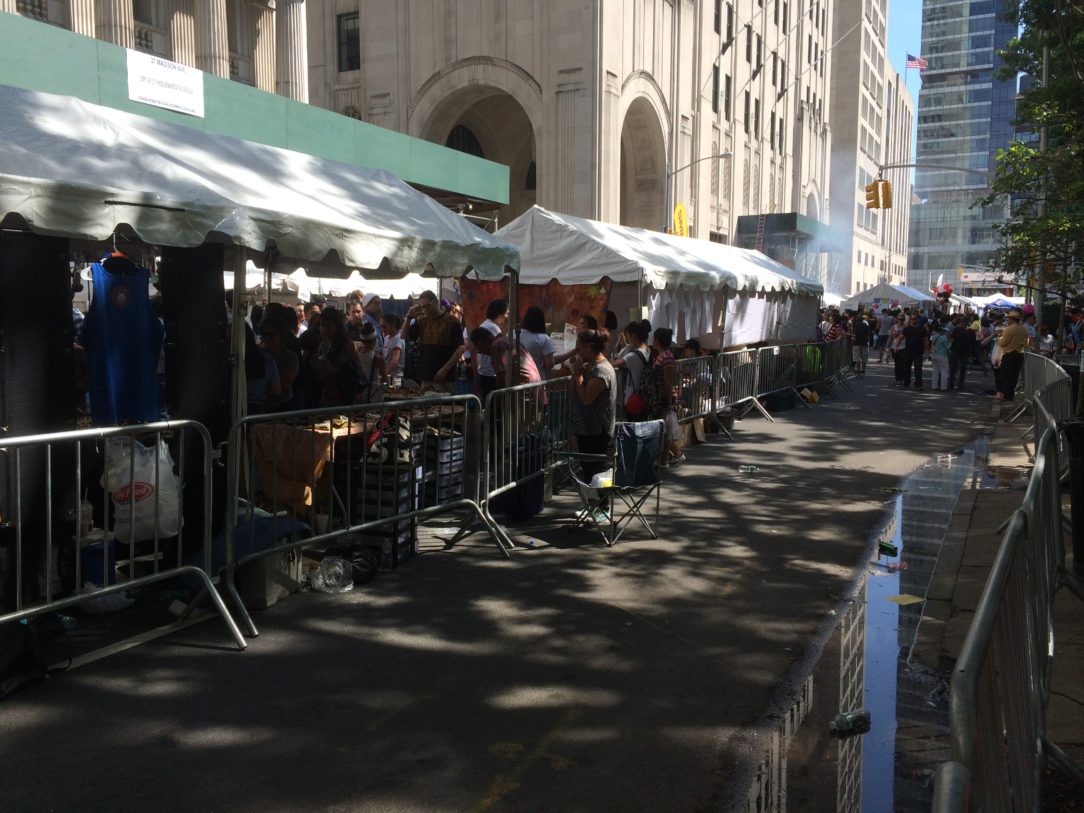
Emergency Access Area, Wider Than Walking Area The tents for the food stalls, advertisers, recruiters, and organizers were set up on Madison Avenue, next to the park. It was very, very tight. About half of the road was sectioned off by barricades, which I assume was meant for emergency vehicles, though I question the logic there. The restricted walking space was so packed with people that I’m surprised it didn’t cause an emergency of some sort. I was surprised by the number of people attending the fair in general. There were tour buses that looked to have been chartered by groups of Filpinos from nearby towns or cities. The lines were long for everything, including the port-a-potties on the northeast corner. There was a constant flow of people walking between the stalls and the park.

People grilling barbecue meat on sticks. We showed up hungry and the smell of grilling barbecue was everywhere. I was more than a little annoyed, having to fight through that crowd and then stand in a huddle in front of the food vendors, trying to catch someone’s attention to place an order, only to find out there was apparently only one stick of chicken barbecue left at the fair. I guess it’s popular! Anyhow, I bought that, some pancit (a vegetable stir fry type of dry noodle dish) and a few pieces of turon (banana wrapped in a pastry dough and fried in brown sugar, I think). We managed to find a bench in the shade to sit on in the park and once we were full, we were able to relax and take in the sights.


Madison Square Park looks great! There’s some sort of art installation with hanging glass set up throughout the park that reflected the light and people. It isn’t really clear in the pictures I took. I think it was a little overcast at the time. The breeze was cool and it wasn’t too hot or humid. It’s been a really cool start to summer this year. Not that I’m complaining. I’m sure it’ll be too hot soon enough. There were plenty of people. Kids were playing, families were hanging out, the muffled sound of performers at the Filipino cultural fair was booming over loudspeakers on the street behind us. It was great. I kind of wish I had a book with me, so I could lean back and sit there for a few hours. But, then again, the park didn’t have a public bathroom (5 dirty port-a-potties don’t count) or my coffee pot. So, after wandering around for a while and doing some people watching, we headed home to relax.


-
Shake Shack and Barnes & Noble on 86th Street

Shackburger, Fries, Peanut Butter Shake and Root Beer. Looks good, doesn’t it? After putting off going to the Shake Shack for a … well, a few years, we finally made the trip. We never went before, because it just wasn’t convenient. There was never one near where we lived. I’m still surprised that they don’t have a location near Union Square. I’d always heard good things about the place, though, so when we decided to take a trip to the Met, I suggested we eat at the Shake Shack a few blocks away on 86th street between 3rd Ave and Lexington.
I was a little surprised by the prices, but after we finished eating, we felt like it was worth it. The fries really weren’t anything special, but the burger and shake were exceptional. I had a Shackburger and my wife had the portobello mushroom burger. She said that was also delicious. I was a little worried about the “special sauce” on the burger, but it really complemented the taste. The peanut butter shake was thick and tasty, but it’s heavy so we split a small. The best part is that it tasted real. The peanut butter shake especially, but all of the food as a whole. Maybe not the fries. But, in general, it felt like I was at a family barbecue eating a real burger off the grill.
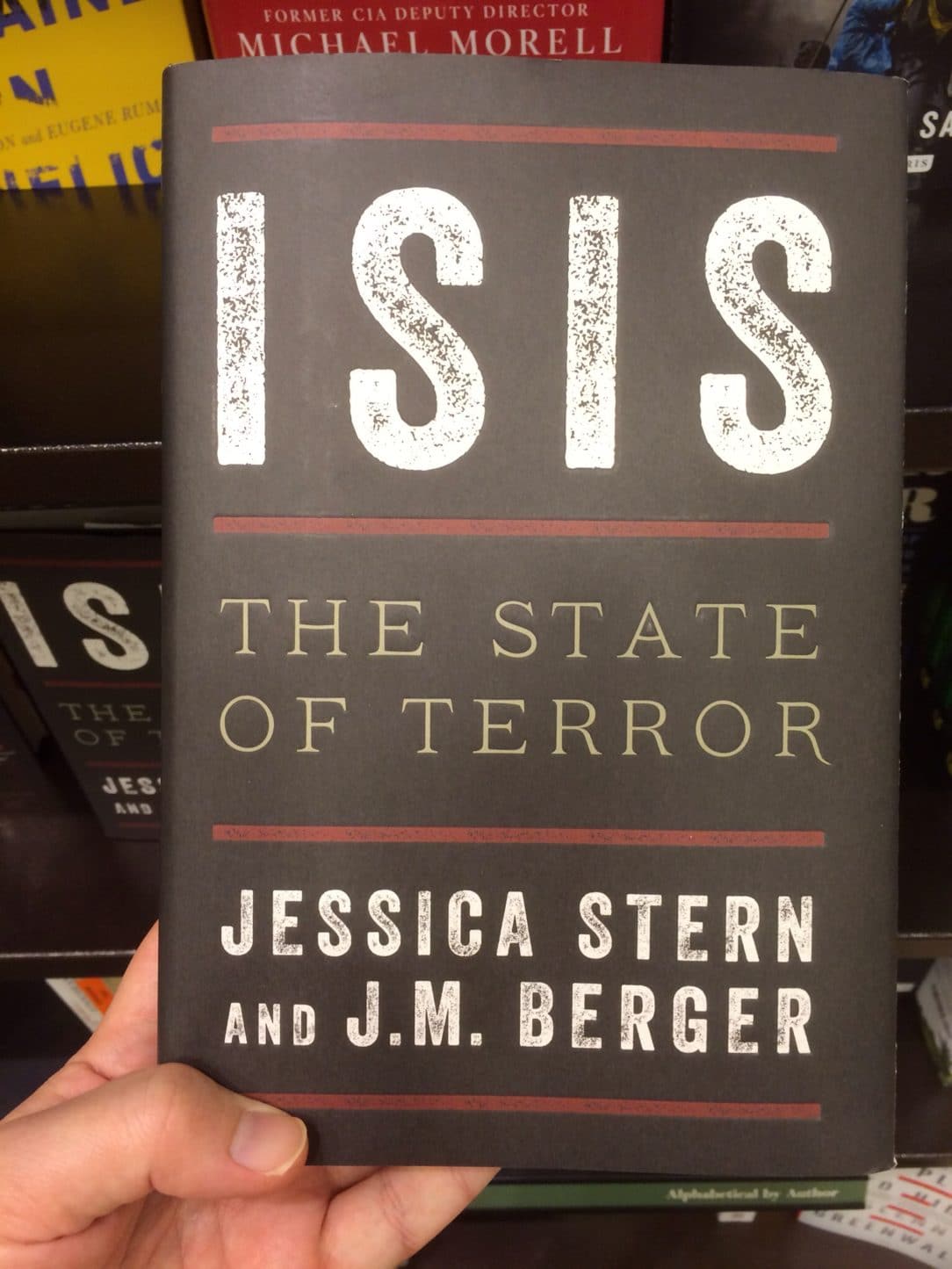
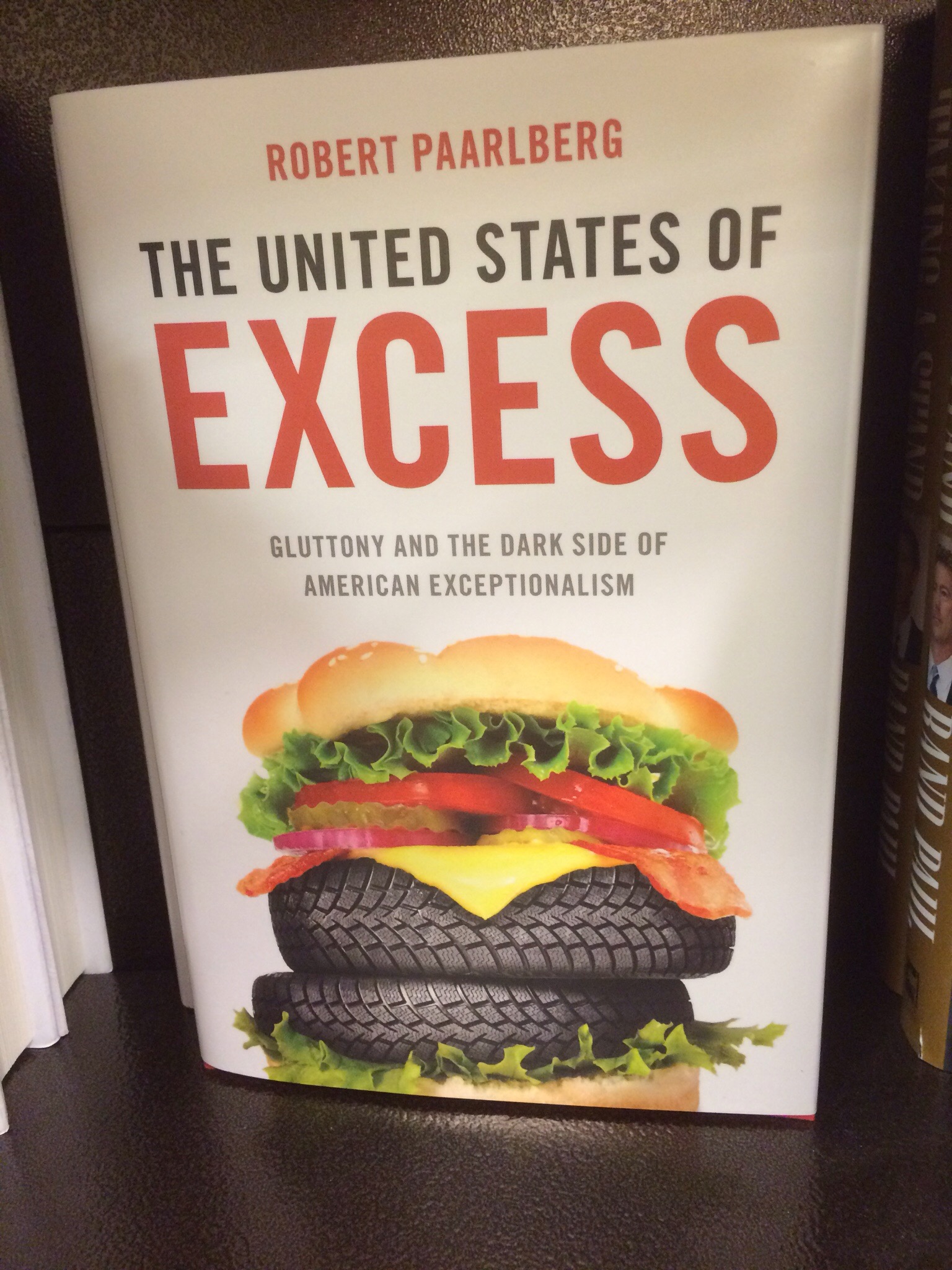
After eating, we went into the Barnes & Noble next door to take a look around. We’re both suckers for book stores. Even if we don’t plan on buying anything, we love to browse. We were surprised by how big the place is. It’s all underground in two basement levels. We never quite managed to leave and before we realized it, it was 8 pm and we were ready to head home. I wound up taking pictures of some book covers from the current events section to pick up later, when (or if) I ever get through the books I already have lined up to read. 4 years of college really put a dent in my pleasure reading.

The Origins of Power, Prosperity and Poverty: Why Nations Fail 
ISIS: The State of Terror 
The United States of Excess: Gluttony and the Dark Side of American Exceptionalism -
Our Cats Are Still Awesome
 I was looking at Dapper a few days ago and I was thinking about how she and Thumper have been with us through the years. They’re almost 7 now. We’ve been married for almost 7 years as well. They’re still constant sources of amusement and happiness.
Cheesecake is new and a pain in the ass because he’s always sick and he over-eats constantly, but he’s very affectionate otherwise.
-
Use it til it Breaks
I went up to 181st Street today to drop off a return at UPS. A book I ordered from Amazon didn’t arrive in time so I had no use for it and figured I might as well get my money back. I love Amazon’s return policies. The refund was processed as soon as the item was scanned in by UPS.
While I was walking down the street, I overheard a conversation between a girl and her mother. We were standing near each other on a corner while waiting for the light to change. The mother was telling her daughter that she was going to get her a new phone in heavily accented English. The daughter, who spoke English without an accent, told her mother that the phone she has works fine and she doesn’t need a new one. This escalated almost into an argument with the daughter telling her mother that her phone works just fine and she’s going to use it until it’s broken before she gets a new one, because she doesn’t see the point of replacing something that still works.
I had a few thoughts about this. Was the mother a first generation immigrant and the daughter born here? Is it a conflict of identity? What I mean is, does the mother see herself as being American through participation in consumer culture while the daughter doesn’t feel the need to? Is it a result of first generation immigrants trying to accumulate material wealth as a response to a previous life of (by US standards) deprivation? Maybe the daughter is more concerned with the planet or the ecosystem and the mother doesn’t understand or care about those things. Or maybe the mother just really wanted to get something nice for the girl and doesn’t know what else to buy her.
Anyway, I’m glad it’s getting warmer again. This winter was like a long period of hibernation. I’m looking forward to going out and exploring the city again.
-
Make the Historiography Madness Stop

I’m so not feeling this paper anymore. It’s interesting but it’s not that interesting that I want to write about it. I guess that’s what I get for picking a topic I thought would be easy rather than fascinating. It’s about Japanese colonialism in Korea and Japanese-Korean relations.The notes in the picture are ones I wrote while reading Mark Caprio’s Japanese Assimilation Policies 1910-1945. So ready for it to be done.
-
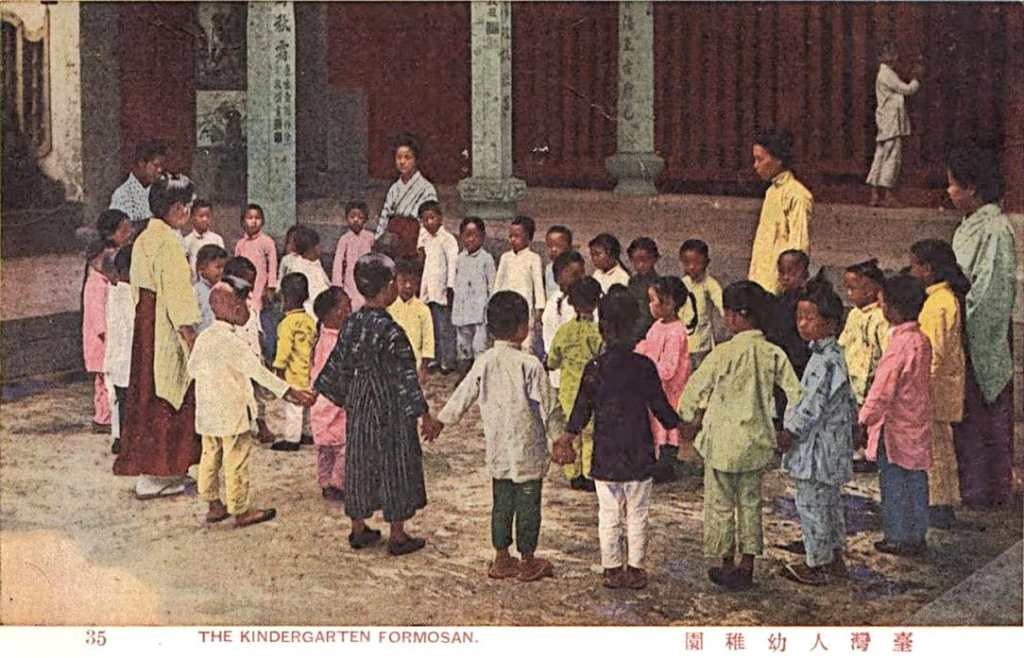
Creating the “Other” in Colonial Taiwan: Comparative Article Review

Paul D. Barclay’s “Peddling Postcards and Selling Empire: Image Making in Taiwan under Japanese Colonial Rule” and Leo Ching’s “Savage Construction and Civility Making: The Musha Incident and Aboriginal Representations in Colonial Taiwan” are both articles that deal with the creation and distribution of propaganda in and about Taiwan. Specifically they both focus on how the aboriginal population was represented to the outside world to suit the needs of the colonial government. Paul Barclay focuses on the use of visual imagery through commercial postcards as propaganda, produced and distributed by the colonial government to generate a specific image of the aboriginal population. Leo Ching writes about the use of stories as propaganda, both to reinforce an image of the noble untamed savage and later as an attempt to generate feelings of loyalty in the Taiwanese population. Both authors make strong cases to support arguments while also touching on deeper issues concerning modernity and colonialism itself.
In “Peddling Postcards and Selling Empire: Image-Making in Taiwan under Japanese Colonial Rule,” Barclay examines the role that picture postcards played in promoting Japanese colonial rule in Taiwan. Specifically, he argues that picture postcards were used to promote a particular view of the Han Taiwanese and the aborigine Taiwanese populations that legitimated Japanese colonial rule. The vast majority of the available postcards depicted aborigine populations even though they were a small fraction of the population and depicted those aborigines as untouched by modernity, savage, and isolated. In other words, aborigines were presented to the world as the true Taiwanese and as backward, pre-modern people they were used as justification for Japan’s supposed civilizing mission.
Barclay’s main sources of primary material are postcards and personal photographs collected by US Consul Gerald Warner during his tenure in Taiwan from 1937 to 1941. Warner possessed both commercial postcards and personal snapshots that were placed together in the same collection, sometimes side-by-side. This collection was later donated to the Special Collections library at Lafayette College. The author argues that given the quantity of material provided by Warner, the collection “constitutes a body of ‘related and contextualized’ visual documents” that he believes can be used to understand the difference between reality and the official narrative of indigenous life in Taiwan.[1]
Barclay’s examination of the images in the Warner collection is broken down into three general categories: images of martial masculinity, images of “savage beauty,” and images that reinforce stereotypical beliefs about the division of labor in indigenous societies. Barclay argues that in the first two of these categories, the subjects of the photos were anonymized. The subjects were also presented in traditional or prestige garments that did not accurately depict what they actually wore on a day-to-day basis in an attempt to make them appear exotic. Warner’s personal snapshots showed a much more integrated and modern indigenous population, but images of mixed dress or use of modern items was absent from the commercial images, all of which were derived from official outlets or government sources.
The colonial government was preventing people from taking photographs of their own while handing out postcards that perpetuated the narrative of the timeless native. Why would the colonial government be interested in presenting the aborigines as timeless and pre-modern? How would images showing the successful modernization efforts of Japan’s colonial government not have served Japan’s purposes? Would it not have validated their position as bringers of civilization? The answer can perhaps be found in Leo Ching’s analysis of “The Savage,” in which Ching attempts to set the psychological backdrop for his later analysis of Japanese propaganda stories.
Like Barclay, in “Savage Construction and Civility Making: The Musha Incident and Aboriginal Representations in Colonial Taiwan,” Leo Ching analyzes media to uncover the propaganda narrative being promoted by the colonial government. Rather than examining images and postcards, Ching focuses primarily on two popular representations of aborigines from the 1910s and 1930s, “The Story of Goho” and “The Bell of Sayon.” First, however, he tries to explain the Japanese mentality towards colonialism through an analysis of “The Savage,” a story that shows the Japanese understood the inherent contradictions in using colonialism to become part of the civilized world.
The main character, Takawa, strives to become more savage because in savagery he sees an inherent nobility. He finds himself repulsed by the indigenous woman who is mimicking Japanese civility, because in her, he sees a reflection of the colonial Japanese, civilized on the outside, savage on the inside. This story helps to explain why so many Japanese visitors to aboriginal areas, like those mentioned in the travel accounts analyzed by Naoko Shimazu in “Colonial Encounters: Japanese Travel Writing on Colonial Taiwan,” found it so deeply unsettling to see the aborigines becoming assimilated into Japanese culture. Without the stereotypical savage as a counterpoint to Japanese civility, the Japanese were forced to confront the savage nature of subjugating another people. Perhaps this is why the image of a timeless savage was so popular as a postcard motif, or why it was used so prolifically by the colonial administration to maintain that distinction between Japanese and Other.
Ching argues that ‘The Story of Goho” represents the initial colonial construction of the martial savage, like those represented in the Warner collection’s pre-1930s postcards. “The Bell of Sayon” represents the tendency after the Musha (Wushe) uprising to idealize the primitive nature of the aborigines and emphasize their potential for a transformation into loyal imperial subjects. The postcards that Barclay examined show a similar trend. However, he attributes the disappearance of martial scenes and the inclusion of Japanese, but not Chinese, garments in images of indigenous peoples to official anti-Chinese paranoia. After reading Ching’s explanation of the meaning of “The Bell of Sayon,” it seems more likely that these postcards reflected the administration’s new goal of building loyalty to the empire, assimilation and eventual conscription into the military.
One point not addressed by Ching is how these stories were distributed and how well they were received. The story about Goho was produced during campaigns by the colonial government to subdue the aborigines. They were simultaneously attempting to get financial backing from local Han Taiwanese. Neither audience was likely to be receptive to a propaganda folk story produced by the Japanese. Similarly, “The Bell of Sayon” was meant to inspire loyalty to the Japanese empire. Was it successful? By what measure? Ching writes that Sayon was targeted at Japanese as well as aborigines, so was the purpose of the story more to reassure Japanese that aborigines could be trusted to serve a military purpose?
Though Barclay’s argument could have been strengthened by using more personal snapshot sources, through careful art analysis he reveals how a romanticized image of Taiwanese aborigines was created, packaged and sold. The impact of these images on world public opinion was meant to legitimize Japanese colonial rule by emphasizing the need for a civilizing mission, but he misses the mark when interpreting post-1930s postcards which are better understood in light of Leo Ching’s analysis of “The Savage.” Leo Ching’s analysis of propaganda stories reveals how the Taiwanese aborigines’ image was manipulated to reflect the changing needs of the Japanese empire, first to maintain difference in order to legitimize colonization and later to instill loyalty to bolster the empire’s military forces.
References
Barclay, Paul D. 2010. “Peddling Postcards and Selling Empire: Image-Making in Taiwan Under Japanese Colonial Rule.” Japanese Studies 30 (1): 81-110.
Ching, Leo. 2000. “Savage Construction and Civility Making: The Musha Incident and Aboriginal Representations in Colonial Taiwan.” Positions 8 (3): 795-816.
Naoko, Shimazu. 2007. “Colonial Encounters: Japanese Travel Writing on Colonial Taiwan,” in Refracted Modernity: Visual Culture and Identity in Colonial Taiwan: 21-38.
Footnotes:
[1] Paul D. Barclay, “Peddling Postcards and Selling Empire: Image Making in Taiwan Under Japanese Colonial Rule,” Japanese Studies 30:1 (2010): 85.
-

Reading Response: Modernization in Egypt, 19th Century
A reading response I wrote for a graduate class, based on four articles or selections about modernization in Egypt.
In “An Irrigated Empire: The View from Ottoman Fayyum,” Alan Mikhail uses agriculture in Fayyum and the maintenance of dikes and dams to make a larger argument about the balance of power in the Ottoman Empire as a whole. Mikhail is arguing against Karen Barkey’s hub and spoke model which posits that all power is in the center and all resources flow through the center. Instead, Mikhail shows that Fayyum acted as its own power center with its own peripheries. One way he demonstrates this is by explaining Fayyum’s traditional role as the grain-supplier of the Hijaz region. Istanbul never attempted to reorganize this regional dynamic and instead supported it because maintaining Fayyum’s productive power was in the best interests of the empire as a whole. More importantly, Mikhail’s article challenges the top-down power dynamic associated with empires by showing that the Fayyumis, the peasants, were able to wield power of their own by using their agricultural production and local expertise as leverage. In Fayyum, the peasants, though at the bottom of the social and power structure, were able to manipulate that structure to their advantage.
Khaled Fahmy’s article “The Nation and Its Deserters: Conscription in Mehmed Ali’s Egypt,” while not making the same argument as Mikhail, plays to the same theme. Fahmy is arguing against the modern historiographical narrative that presents Mehmed Ali’s modernization of the Army as an expression of Egyptian nationalism. He shows quite convincingly that Egyptians saw military service as an onerous burden and went to great lengths to avoid being drafted. The draftees were subject to a modern medical examination to see if they were fit for duty. Understanding this, draftees manipulated the system through self-mutilation, forcing the government to make changes to its policies. While their resistance was not effective or successful, this shows that draftees, like the Fayyumis, understood and engaged with state institutions in ways that made them political actors, rather than passive recipients of top-down power.
In the second article by Fahmy, “The Anatomy of Justice: Forensic Medicine and Criminal Law in Nineteenth-Century Egypt,” Egyptian peasants are shown to have engaged with and used the new siyasa legal system instituted by Mehmed Ali to their advantage as well. The article presents a historical narrative that is similar to the one presented by Milan Petrov in “Everyday Forms of Compliance: Subaltern Commentaries on Ottoman Reform, 1864-1868,” which discusses the way that people in the vilayet of Danube engaged with the new nizami courts. In this article, Fahmy is arguing against the prevailing teleological narrative of a steady progression from “backwards” shariah law to “modern” secular law. He argues instead that the government introduced these legal reforms not for the purpose of enlightenment or justice, but to improve state control over the population. In other words, this wasn’t European light illuminating the darkness of Arab backwardness. It was a carefully thought out plan meant to enhance the efficiency of the state. Fahmy focuses on autopsies and how they were used by the state and understood by the average person. Generally it seems that people understood the benefits of autopsies as a means of ensuring justice in areas that the shariah did not address or did not address adequately.
Brown’s article, “Who Abolished Corvee Labour in Egypt and Why?” is the only article that takes away agency from the common people, who are depicted as a formless mob who act only when ordered to act. In his article Brown is making the argument that corvee labor was not abolished for enlightened reasons, but because it became more profitable for the peasants to remain on their lands to harvest crops after year-round growing became established. The peasants were always being used to serve the greater interests of the state (or the landholders, who in turn produced revenues for the state), and even after the supposed renouncement of corvee labor, there were projects that necessitated the use of forced labor, especially in terms of the maintenance of the irrigation system.
It is interesting how great a role the irrigation system played in influencing policies in Egypt. Egypt’s agricultural output was its greatest asset when it was part of the Ottoman Empire and served as a vital part of the Empire’s infrastructure. After Egypt was separated from the Empire, agriculture was still of vital interest to the state. There were apparently conflicting interests, however. How was the irrigation system maintained when Mehmed Ali depleted the countryside of men to fill the ranks of his army?