Tag: History

  • Response: Cemal Kafadar’s “Between Two Worlds: The Construction of the Ottoman State”

    Cemal Kafadar’s book, Between Two Worlds: The Construction of the Ottoman State, is an attempt to find a middle-ground between existing theories that paints a more realistic picture of a dynamic and fluid process that didn’t exist in polar opposites, as presented in the theories put forward by Herbert Gibbons, Paul Wittek and M. F. Koprulu. By that, I mean their theories seem to be presenting history in a way that supports a contemporaneous need to justify the superior role of one group or another, or a particular aspect of a group, rather than in a way that produces a realistic and sufficiently complex set of events. Cemal Kafadar recognizes this and, rather than producing another theory and trying to prove it, he attempts to reconcile the theories presented by Gibbons, Wittek and Koprulu into something that might better approximate the truth of the origins of the Ottoman state.

    Kafadar tells us that very little written documentation exists from the foundational period of the Ottoman state, and what does exist is only useful up to a certain point because of the possibility of the text being altered to fit the author’s needs. According to Kafadar, it’s possible that the Ottomans didn’t know where they came from. When attempting to establish an empire, however, it’s important to have political legitimacy and creating a new historical narrative is one way to establish the right to rule. Attempts to establish that right are obvious in the creation of false lineages that allowed the Ottomans to trace their descent to Noah (Islamic legitimacy) and to the Oghuz Turks through the Kayi tribe (ethnic legitimacy?). Regardless of whether or not these lineages are accurate, knowing that they were important at the time as symbols of political legitimacy can help explain the problems the Ottomans were facing at the time. Why did they feel that they needed to shore up their right to rule at those particular times?

    It was especially interesting to see the changing role of Islam and the gradual shift from a localized version of Islam to a more orthodox Sunni version of Islam. How important was Islam in the beginning of the Ottoman’s attempt to found a state? Did they even conceive of it as ‘gaza’ at the time? Or was it later legitimated as gaza by historians seeking to shore up the Ottoman’s Islamic credentials? Kafadar mentioned that religious identities at the time were very fluid and often Muslims would ally with Christians for the sake of raiding and battling rivals. It’s likely that the Ottomans also engaged in that practice. And, it’s also likely that they didn’t feel any less Muslim for doing so, given that they had Islamic titles, like “Champion of the Faith.” What made a good Muslim in that period? It’s probably not even possible to make that distinction today, but it’s interesting to see how much more cavalier the reality was, compared to the supposed Islamic norms.

    Kafadar made a brief mention of the similarity between events in Anatolia and the events in the Iberian peninsula, where the remnants of the Umayyad dynasty were slowly being whittled down by the Catholics in the Reconquista. In that conflict, there were also Muslim mini-states that would ally with Christians against a rival Muslim mini-state, with the end result being that Ferdinand and Isabella expelled the last Muslims from the Iberian peninsula in 1492. The rulers of the Muslim mini-states in the Iberian peninsula had to know what would eventually happen to them, so why did they continue to ally with Christians? How important was religion to them, compared to politics and political power? In the same way, modern thinkers were probably reading too much into the religious aspect of the frontier warfare in Anatolia.

    The literature concerning the frontier area is especially interesting in how it depicts the role of women. If Islam were a driving force in Turkish expansion in the area, then why were women depicted in roles that supposedly broke Islamic norms? Efromiya is depicted as a woman convert to Islam that battled alongside men she wasn’t related to, kept their company at night, and didn’t cover herself, and likely had a lover for a while before being married to him (Artuhi). Similarly, in the Book of Dede Korkut, Kan Turali sets out to look for a woman that is good at cutting the heads off of infidels, which isn’t a role traditionally filled by a Muslim woman, or at least not the way we think of a Muslim woman today. He eventually marries a Christian woman, Princess Saljan, who is presented as strong-willed and highly sexual (“she went weak at the knees, her cat miaowed, she slavered like a sick calf…[ and] said, ‘If only God Most High would put mercy into my father’s heart, if only he would fix a bride-price and give me to this man!’”, p 69). How do these stories fit into the actual history of the region? Are they complete fictions that only represent the general fantasies of men at the time for foreign women? Was this considered legitimate behavior in that time and place?

    The only thing that could have made reading his book clearer and more readily understood would have been an introduction that spelled out their theories before Kafadar launched into his own interpretation of them and the events that surround the founding of the Ottoman state. Since there is as yet very little existing documentation from that period, the best we can do is make conjectures about the period and Kafadar does a good job in reducing Wittek, Gibbons, and Koprulu’s one dimensional theories into something more life-like and believable.

  • Way Down Yonder on the Chattahoochee…

    So, down in Georgia, there’s a river called the Chattahoochee. According to Alan Jackson, it gets hotter than a hoochee coochee and it’s a great place to learn to swim, love, and live.

    Back in the 70’s, which is when I assume he’s talking about, that might have been true, but these days there’s so much industrial pollution and waste water run-off in the Chattahoochee that if it’s hot, it’s because it’s burning your skin. Atlanta pumps a lot of waste into the river, ruining it for all of the cities downstream.

    Chattahoochee River, River Walk, Phenix City side.
    Chattahoochee River, River Walk, Phenix City side.

    That hasn’t stopped both Columbus (on the Georgia side of the river) and Phenix City (on the Alabama side of the river) from both trying to develop the area. One of their projects is a river walk. I remember when the Columbus government first started building the river walk back in the mid 90’s. If I remember right, I did a March of Dimes event there when I was a sophomore in high school. It was pretty nice. The view was good. Even going back there now, after having seen the skylines of so many cities in and outside the US, it’s still good, though that may be partly the nostalgia.

    Blown dam on the Chattahoochee River
    Blown dam on the Chattahoochee River

    The other project that Columbus is working on is something to do with white water rafting. The city government has this idea in their head that if they build it, ‘they’ will come, in the hundreds of thousands, so, sure enough, several historic dams that were built to power factories that used to operate along the waterfront were blown open to create a ‘white water’ effect in the river. Personally, I think it looks more like a ‘lazy river’ ride at a theme park, way too tame for someone seeking a real white water thrill, but maybe they haven’t opened up all the dams yet.

    My wife and I went down the Phenix City riverwalk with my dad and he was telling us about how the city made a big deal out of blowing the dam we happened to be looking at, at the time. It was televised and people were expecting a large explosion, but it wasn’t really anything special. I still wish I’d been there to see it, but mostly because I’d have been interested to see what was at the bottom of the river. I bet they pulled a lot of neat stuff out of there.

    Covered over square tunnels visible in far walls.
    Covered over square tunnels visible in far walls.

    Across the river from where we were, for example, there was a wall built of large square stones that was previously submerged. In the side of that wall there were square tunnels running back into the bank. I wonder what’s in there? Was it used fro waste run-off or sewage? The way it was built, with two walls in terraced set-up, it seemed like there used to be a road down there.

    Old factories and a power station (small building 1/4 from the right)
    Old factories and a power station (small building 1/4 from the right)

    Anyway, there’s a lot of history in that area. One of the last major wars of the Civil War was fought in Phenix City. Columbus used to produce most of the boots and swords for the Confederate Army. Columbus was also the end of the line for river cargo from the Gulf of Mexico, since it sits on the fall line. Now, those old factories are being converted into expensive lofts and the river is being turned into a commercialized tourist attraction (which will probably fail due to health concerns), but at least the river has a bit more character now. I wish I could get down in there with a metal detector…

  • The Original Angry Birds? – AMNH Exhibit

    The Original Angry Birds?
    The Original Angry Birds?

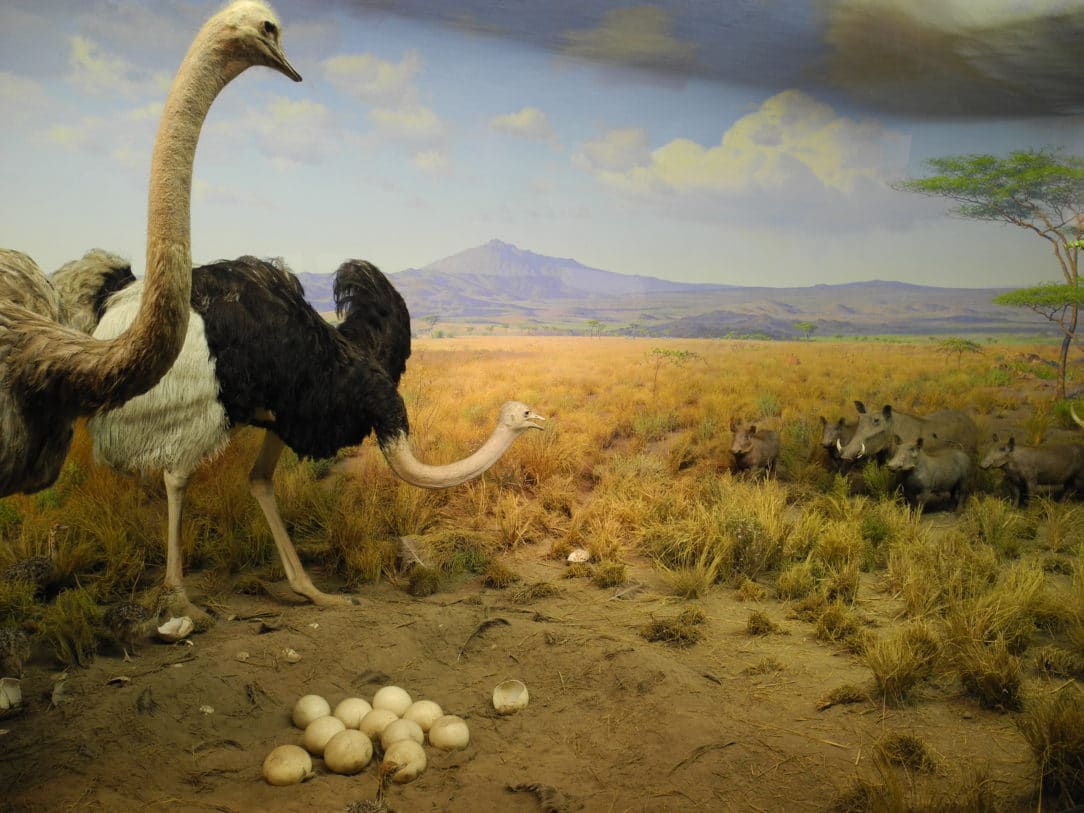
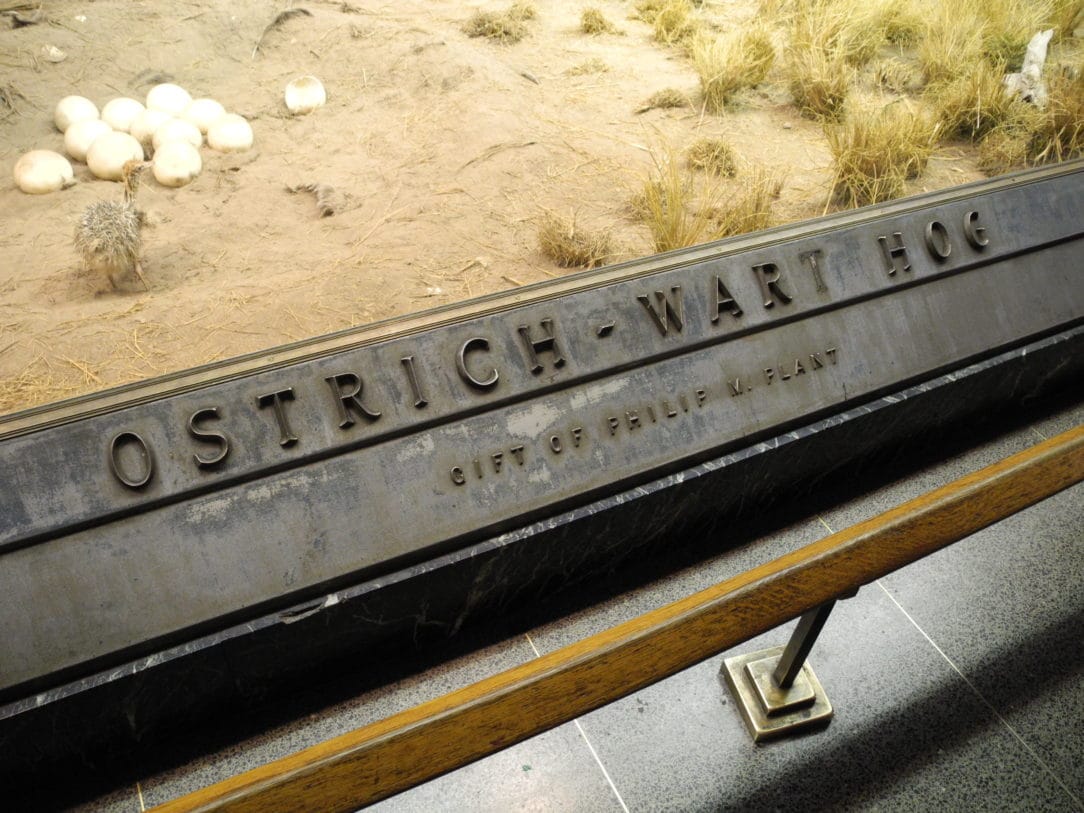
    A few weeks ago my wife and I went to the American Museum of Natural History here in New York City.  I’ll post more about that later, but I just wanted to share this image first.  When I saw it, the first thing I thought of was the Angry Birds games.  I think Rovio (the makers of Angry Birds) is based out of Finland, or at least that’s what their site says, but maybe the person who came up with the concept was thinking of this display window in the AMNH.  It has the whole idea in one scene:  broken eggs, angry birds, and the hogs (pigs) who are responsible.

    Ostrich - Wart Hog
    Ostrich – Wart Hog
  • Lies My Teacher Told Me, An Excellent Call To Action

    Lies My Teacher Told Me is a book that doesn’t try to correct everything wrong with our history, as portrayed in textbooks, but one that gives examples and then challenges the reader to take that information and use it in the future to find real truth in what we’re fed by public education institutions.  The book encourages people to think about what they’re being told, why they’re being told it, and to consider how and when it was presented.  It also offers a few intellectual tools for interpreting the information we’re presented with today, and how to understand why our history is relevant to our current situation.  For example, why do so many people in the world hate the US?  Is it because we’re just so damn good, like our textbooks would have us believe?  Or is it because of actions in the past that are morally ambiguous at best, or completely contrary to the ideas our nation was founded on at worst?

    One of the biggest problems Mr. Loewen presents, in regards to textbooks, is that they’re meaningless jumbles of facts, put together by a mass of authors (sometimes not even the ones on the covers).  That jumble of meaningless factoids turn into a tome of confusing rubbish that leaves the potential learner entirely dissatisfied.  While reading the book I kept thinking back to when I learned American history in high school.  Honestly, it didn’t take long, because I don’t even remember learning American history in high school.  This supports the information he presented which says that most students won’t even remember what they learned, mostly because of the way the information is presented.  Mr. Loewen consistently reinforces the idea that history should be taught as a causal structure, both to make it interesting and to make it relevant.  I completely agree.  Up until recently I had no interest in history, because all I remember of what I was taught, in a middle school class that I only remember vaguely, was that it was horribly boring.  We were presented with lots of names and dates and place names that we had to remember, and not much else.  There was no content.  There were no real people or real actions behind the factoids.  We never focused on the ‘why’ of the situations, or the human aspect.  Instead, we were forced to memorize these factoids and regurgitate them onto paper for tests.  What does that teach me about history?  That it’s boring and irrelevant to what I’m doing today, that the actions of the past and the people responsible for them don’t matter, and that it has no bearing on what I might do in the future.  Nothing could be further from the truth.  After taking a personal interest in history and learning on my own, I find history to be incredibly interesting.  The things I read about are often situations that still occur today, or explain current problems.  Not everyone takes a personal interest in history, though.  Not everyone gets beyond that meaningless factoid stage and really tries to think about the ‘why’.  They memorize, they regurgitate, and then they forget.  That’s why high school history textbooks are a problem.  They turn people off to history, leaving them without a firm foundation to stand on in when trying to forge a better future.

    Another problem with textbooks that Mr. Loewen presents is the affect they have on maintaining the status quo, both on a personal, state, and national level.  He goes into some detail about the textbook adoption process and how that process is affected.  For example, Southern states have more often than not tried to make sure the textbooks that reach their classrooms are not overly negative in terms of the Civil War or slavery.  Textbooks as a whole leave out information on Native Americans, the European diseases that left them decimated, or the forced relocations.  Textbooks also continue to teach the primitive vs. advanced society theory, which has been debunked by recent research.  High school history textbooks also perpetuate the idea of constant progress, even though the resurgence of racism against blacks during Reconstruction obviously was a step in the wrong direction. Textbooks try to avoid mentioning social class, religion, or anything that might be offensive.  Who isn’t offended by something?  History isn’t all peach blossoms and pleasant views.  The truth is more important.  We can’t learn from history if we’re only taught history that makes us feel good about ourselves, or that won’t offend anybody. Mr. Loewen argues that new work in fields like anthropology and sociology should be introduced into history textbooks to better inform students about how our history has affected who they are.  Again, I agree.  History as a set of facts is meaningless, especially when it’s a list of biased facts that don’t tell the whole story.  History as a set of facts is also boring.

    I think the biggest lesson that I can take from Mr. Loewen’s book is that any information, whether from a history textbook or a news article or a book, should be treated with caution, if not suspicion.  Remembering who wrote it, when it was written and what was important to people at the time, what was important to the author and if it’s trying to push an agenda, all these things can help in keeping the information in context.  When in doubt, consult primary sources to find the truth, or at least something closer to the truth.  We’re all biased, one way or another, and the meaning of history is a matter of interpretation.  For example, we can easily say that the US entered the Vietnam War, but why we entered the war and whether it was justified is a matter of opinion that can be supported only by finding facts and then forming them into a coherent argument.

    History is a fascinating subject if you allow it to be.  Real history isn’t the same as the meaningless factoids that you’ll find in a history textbook.  It’s alive, it’s vivid, it’s emotional and it’s relevant to today.  Besides teaching me some things about our history that I didn’t know (because I wasn’t taught properly), Mr. Loewen’s book taught me how to better study history.

  • An American girl in Singapore: Singapore…Then and Now

    An American girl in Singapore: Singapore…Then and Now

    A very cool post showing photos of Singapore’s past and present. It’s amazing how much this island has changed in such a short amount of time.

    Give Singapore another 30 years or so and it will surpass most first world nations in terms of infrastructure and capital.