Traveling in the Time of COVID-19

I was just thinking to myself that I’d like to go to Georgia to visit family. Especially some of my family members that are starting to get a bit older. I’d like to see them while I still have the chance. I’ve been meaning to go see them for a while now.

I looked up the cost of a bus ticket. $106 one-way. Then I checked the price of an airline ticket. $126 round-trip. Wow. What a deal! But then I remembered that I’d heard about needing a COVID-19 test to be able to travel. I wonder how much that costs?

And then I realized that I’ve probably been exposed to the virus and that my desire to see my relatives before it’s too late really isn’t in their best interests, health-wise.

Plus, there are quarantine requirements there and here if I remember correctly.

The ability of the average person to freely travel is really being locked down. How much of these precautions are legitimate? How much is government overreach? Why was there never a huge bump in numbers after the closely packed protests and riots? When do things go back to normal? Next year? Next month? It’s really amazing and fascinating how questionable reality has become in the last 4-5 years.

It’s a testament to the power of the media to shape our understanding of the world. And probably a testament to the dangers of building profitability for a “news” site around ad revenue rather than subscriptions. Things probably went truly wrong with Facebook and Twitter, though. It became too easy to boost misleading and untrue narratives into the national consciousness.

Anyway, I’ll have to put off my travel for a bit longer. Until I’m sure I’m not going to ride into my relative’s homes on a white horse.

Cabin in the Woods

I used to think that needing a cabin in the woods to do any serious writing was over-dramatic and a little elitist. I’m thinking of people who have a summer cottage or any separate dwelling that they can go to for weeks at a time to tune out the world and just focus on writing.

I still think it’s elitist. I mean, how many people can really afford a second place to live? Or in this case, a second residence to just have on call for when you want a little solitude? I imagine most people are lucky if they even have a separate room where they can lock the door and be alone for a while and that doesn’t really, fully separate you mentally from the day-to-day because you can always be interrupted.

I feel like a person needs some space to be creative. A place to truly relax and let their mind run wild, where there are no pets, family, routines, or chores insistently tugging at the edges of one’s consciousness.

My wife was pretty good about giving me space when she saw I was trying to complete writing assignments, but I sometimes wonder how I managed to get through college with such good grades on the papers I turned in.

The next time we move, I’d like to try to find a place with an extra room. Or, if it’s outside of New York City, a place with a garage or shed that I can convert into a study. That way, when I have time, it’s easier to focus.

COVID-19 Social Impact in New York City

I was thinking about the ways that the COVID-19 experience has changed the way we live our lives in New York City. Beyond the obvious continued closures I mean.

As a kid, when I would come here to visit family, the crowds and noise were part of the appeal. Staying up late and seeing and hearing the traffic outside was exciting. It felt alive and a little dangerous. It felt like there were endless possibilities waiting for you as soon as you hit the concrete outside your building’s front door.

Not so much now. A lot of businesses are reopening, but a lot will never open again. Businesses that are open are limited capacity. Same with restaurants. You have to book reservations for something you used to just walk into at will. You have to provide your name, ID, and contact information to dine inside. It feels arduous and invasive and kills the vibe.

To be honest, I never really did much shopping in person before, but I did like to wander around book stores and comic book shops. Old record stores sometimes too. And there was something fun about just sitting in a cafe, talking and people watching. You can’t really do any of those things now. You’re corralled and then rushed through the experience to accommodate occupancy restrictions. So, why bother? If I can’t enjoy the experience, why make the trek down to the store? With all of the traction that online retailers got during the lock down, I wonder how much in person retail shopping will come back in New York City over the long term?

Will people fall back into old habits or maintain new ones? I read somewhere that moments of change in people’s lives are the best opportunity for companies to change shopping habits. That’s why expecting mothers get bombarded with ads for example. The COVID-19 pandemic and lock downs were pretty big moments of change so it was a great opportunity to cement new shopping patterns.

With the lack of restaurant dining and easily accessible amenities like museums, art galleries, and theater performances, with being shut up at home all the time or going from home to work and work to home, it was like a curtain was drawn back. New York City without all of the extras is pretty unpleasant. High rent for a shoe box apartment to live constantly surrounded by high crime and filth isn’t that appealing when you can’t justify it with amazing dinners out and the ability to just pop in at a world class art gallery on a whim.

Movement control orders. Lock downs. Quarantines. Flying restrictions. Travel restrictions. I’m reminded of a book I read about the development of the passport in Europe during a time when travel beyond one’s own village was extremely uncommon and made a person suspect. It feels like we’re going back in time. It’s becoming ever more difficult to simply travel to another State or country after a long period of increasing mobility.

I wonder if there’s anything to that? Accustoming people to being ordered to remain in place in spite of Constitutional guarantees of free movement. Getting people familiar with receiving food rations. Making people feel like it’s ok to have their privacy invaded in exchange for a seat inside a 33% capacity restaurant. That’s a lot of extra government control of our personal lives.

And I get it to a large degree. It’s a trade-off between personal autonomy and collective well-being. There has to be a balance there. But I wonder if the amount of rights and information we’re being asked to give up is greater than the threat we’re facing? Are we doing good or creating an un-legislated set of PATRIOT Act style COVID-19 rules?

I keep coming back to how there was no spike in COVID-19 deaths after the riots and mass protests that started in June and have continued unabated in some areas of the country since. Shouldn’t all of those people congregating together have caused COVID-19 rates to skyrocket, if not among themselves then in adjacent vulnerable populations?

I understand that this is conspiracy theory territory. I know the virus is real. I’m not going to subscribe to the idea of the government using COVID-19 testing to insert microchips in people’s heads or bloodstreams, or to the idea that COVID-19 testing is actually COVID-19 infecting, but I can’t help but wonder if this was overkill.

The virus was in New York City since November or December of 2019 at least. Our numbers were high because the virus had time to spread before we started testing. If it was going to spread like the plague it would have caused a lot more damage before the city shut down in March, but it didn’t. Why were we fine on March 1st, but we suddenly needed refrigerated trucks for the deceased on March 31st?

Anyway, a lot of people are fleeing New York City or changed their minds about coming here in the first place. Unless things improve drastically in the next few months, I’m going to start looking at moving to another part of the country. I’ve been hearing news about COVID-19 spikes in Brooklyn and Queens and different news sources have been telling us for months that the virus could spike again in the Fall, leading to another round of shutdowns. I don’t know if I want to go through that again. Things haven’t been normal in the city since January already.

Lining up in a mall doesn’t make sense

I’m all for social distancing, but I couldn’t figure out what the point was of having people line up outside of stores inside of the mall.

The food court at Westfield Garden State Plaza Mall on 9/5/2020

I had to make a run out to Westfield Garden State Plaza Mall in Paramus, NJ this weekend. I had to drop off a return at the Amazon Books store in the mall. It was something I ordered online but that just didn’t work out quite how I wanted it to and I figured I could kill two birds with one stone: drop off the return and then drive 5 minutes over to IKEA and pick up a few things I’ve been looking to get since pre-COVID.

I figured there would be people in the mall, especially on a holiday weekend, but the crowds were massive. It was so packed in the common areas that I often had to walk slowly behind people or veer wide around large groups. There were often bottlenecks caused by lines of people trying to get into stores next to kiosks. It was often shoulder to shoulder. Keeping people in lines outside of stores was actually increasing instances of close contact.

I’d never been inside that mall before. It’s almost ridiculously big. I don’t really like shopping in person anymore but I’m interested in going back, hopefully when it’s not as crowded. I guess it’s because of how empty the city has been recently, but I actually started to get agitated by the crowds. It became uncomfortable and I had to get out of there.

I never made it into the IKEA either. Earlier on this year when IKEA first opened up again, I remember reading about long, long lines of people waiting to get into IKEA stores. Months later, they’re still a thing. There must have been 250+ people waiting to get into IKEA and the store was scheduled to close an hour and 20 minutes later. Half of the people there waiting weren’t even going to make it in the door, so I just kept driving and went on home.

I keep wondering when things are going to get back to normal. Will it be right after the election? Will it be next year sometime? Never?

And does it really matter anymore? I’d like to go back to the museums, but I’m not going to give myself the headache of trying to prepurchase tickets at tourist rates for specified time-slots. Other than that and the lines at IKEA, my day-to-day hasn’t really changed that much. Though, thinking about it, it would be nice to sit down at a restaurant again too.

I’m ready for another 4 years of more of the same

After 5 years of constant exposure, I think I’ve developed a tolerance for the hyper-sensationalized BS that passes for news now. Even with everything that’s going on this year, it doesn’t seem as bad as 2016 and I started wondering why. This year, we’ve had a global pandemic, an economic crash, and riots, but in a way it just feels like normal. And I wonder if it’s because I’ve just stopped trusting the news and I’ve stopped taking things at face value?

In the run-up to the election in 2016, the media crafted a narrative out of whole cloth and sold the idea that Trump was a walking catastrophe that would fundamentally alter the nation. When he won despite these dire and apocalyptic predictions, it was shocking because it was so contrary to the reality that had been constructed by the media and social elites. It really felt like something meaningful had happened and like something terrible was going to befall us all.

Four years later, the US really hasn’t altered course in any dramatic way. In fact, I imagine that Trump is more establishment than even the establishment could have predicted. He went pro-Israel in a decisive way by moving the US embassy to Jerusalem. He’s stayed strong on stopping illegal immigration at the southern US border. He has been pro-military, but has also done troop draw-downs when it made sense. He put real effort into solving the North Korea problem. Everything we would expect from a US administration.

I personally don’t give AF that he’s in tight with Putin. To me, it makes sense to let go of the Cold War McCarthyism and shore up our relationship with Russia, especially considering China’s rise as a global superpower. It would be great if Russia didn’t interfere with our elections, but I see that more as a failing of Obama’s administration in terms of not putting measures in place to hold companies like Facebook and Twitter accountable for the ads they run.

I also don’t see Trump as completely responsible for the number of COVID-19 deaths. The biggest reason we’re seeing this many deaths is because Obama and the Democrats (when they had a majority in both houses of Congress) failed to pass real universal healthcare. Additionally, the Federal government only has so much power over the States and when States do something stupid, like not enforcing social distancing, that’s on the States, not the President. If the President rolled in with Federal troops unasked on US soil, that would be a bigger problem. So, blame where blame is due. That being said, Trump isn’t exactly out there promoting the benefits of a hyuge, beautiful, universal healthcare system, either.

I’m not really a Trump fan. I’d like to see universal healthcare and a UBI (or some law that limits the income inequality between corporate and actual workers). I’m not in favor of open borders or the lawlessness that Democrats are allowing and promoting either though. Or in paying reparations for something that I had no part in. Even more so than in 2016, there are no good choices when it comes to voting in 2020, but somehow I think things will be worse if Biden and Harris win.

Things really aren’t as bad this year as the media and Twitter would have people believe. Events are being overly sensationalized in the run-up to an election to try to unseat the incumbent. The amount of drama being concocted to try to get Biden in the White House is sort of worrying. It makes me want to reconsider conspiracy theories surrounding Hillary. To be clear, I’m not downplaying the wrongness of shooting unarmed people. I’m just thinking about how these events are suddenly being played up now, in 2020, an election year.

Trump is a blabber mouth on Twitter, but in reality he’s doing more of the same in terms of US policy. What the Democrats want to do is extremely radical. I just can’t get on board with open borders or reparations. I don’t believe in holding someone accountable for someone else’s actions. I just can’t see myself voting for Biden. I almost don’t even care.

Maybe I’d feel more strongly if I was still swallowing the media narrative, but I’ve gotten so tired of wading through heavy political bias that I’ve really slowed down the amount of news I watch. I’d rather read a good book or watch a fun show than tune in to get my outrage forecast for the day. When I can find a good show that isn’t making overt US political statements, anyway.

Anyway, November will be here before I know it. Unlike 2016, when I was madly posting on social media about how terrible things were going to be, I’m staying distanced from here on in. It’s not worth the stress. I’m working. I’m exercising. I’m gaming. I’m getting satisfaction from learning Japanese and Spanish and how to set up a web server. Maybe I just don’t care as much because I’m comfortable? Maybe. But I’d like to think that it’s because I learned from 2016, when I worked myself up just to see 4 years of more of the same.

Trying to Approach the Day with the Right Mindset

“Begin each day by telling yourself: Today I shall be meeting with interference, ingratitude, insolence, disloyalty, ill-will, and selfishness – all of them due to the offenders’ ignorance of what is good or evil.

But for my part I have long perceived the nature of good and its nobility, the nature of evil and its meanness, and also the nature of the culprit himself, who is my brother (not in the physical sense, but as a fellow creature similarly endowed with reason and a share of the divine); therefore none of those things can injure me, for nobody can implicate me in what is degrading.

Neither can I be angry with my brother or fall foul of him; for he and I were born to work together, like a man’s two hands, feet or eyelids, or the upper and lower rows of his teeth. To obstruct each other is against Nature’s law – and what is irritation or aversion but a form of obstruction.”

Marcus Aurelius, The Meditations, ~170 – 180 CE

I’ve been doing a lot of reading on Stoicism and came across this quote by Marcus Aurelius. It’s a very grounding message.

We should understand people’s bad behavior to be a normal, inherent part of life and living in a society. Rather than be affected, we should make sure that we continue to do the right thing and press on, understanding that people who behave badly are coming from a place of ignorance. And rather than retaliating or getting into a confrontation, we should continue to do our best because it is in the best interest of all involved, including ourselves.

Or at least, that’s what I understood from the quote. I’m not there yet, but it seems like a nice goal to work towards. Basically, not letting other people’s BS affect me and continuing to strive for excellence.

Thoughts on the 2020 Census Low Response Rate

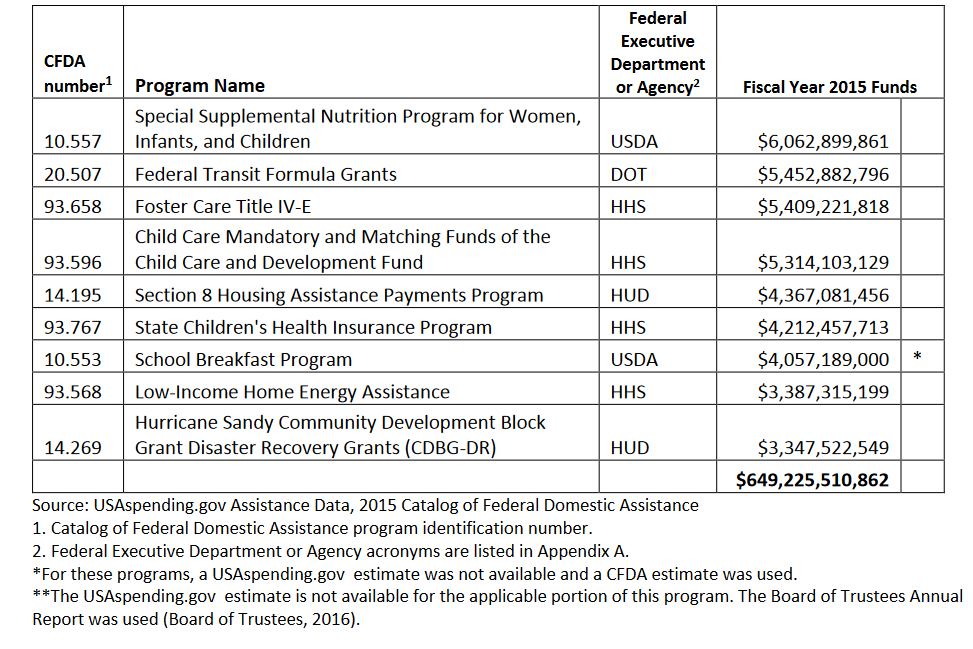
Let me ask you this: if someone walked up to you in the street and offered you $1,091, would you say “No thanks”? According to a George Washington University report, every person that failed to respond to the 2010 Census cost their state an average of $1,091 dollars.

People complain about their communities all the time, especially in the Bronx. The Bronx is one of the worst off areas in the entire country. But people also don’t want to do anything to improve their situation, even when doing it is free.

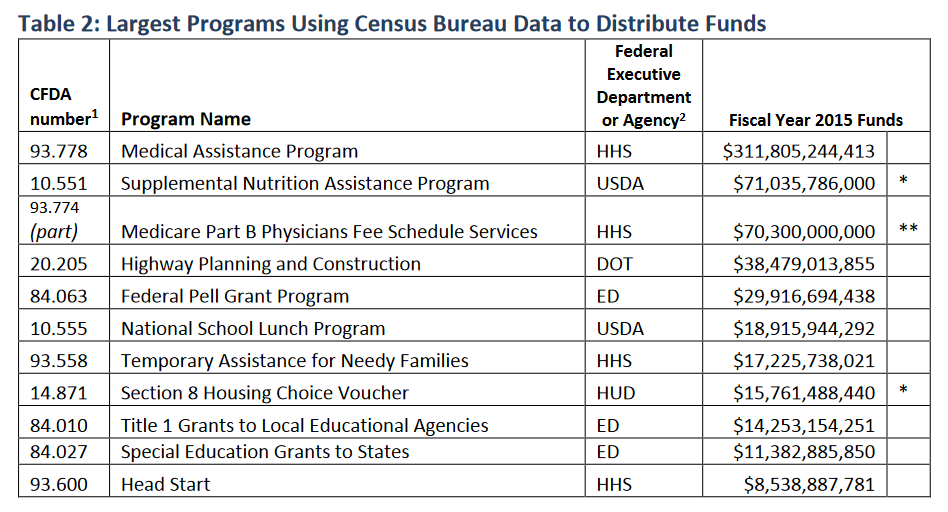
You use public transportation, the school systems, the hospitals, the roads. Maybe you get EBT (food stamps). Maybe your Mom is elderly and gets some sort of medical assistance. You get a lot of services, but those services don’t just appear from thin air. Someone has to pay for that, right? They’re all partially funded by the federal government.

How does the federal government determine how much money to send to each community? The Census! The Census Bureau counts people, removes personal details, and releases statistics to the rest of the government for the purposes of allocating funding and determining representation in the House of Representatives.

Tables source: Census.gov

It’s pretty simple. The more people that get counted, the more federal funding your community gets relative to the rest of the country. So if you don’t complete the census, you’re cheating yourself and your community out of essential services. You’re cheating your parents. You’re cheating your children.

It takes 5-10 minutes to complete the Census online. You can call someone to get the Census done if you don’t understand the questions. There’s really no excuse.

It doesn’t matter if the government has your social security number. It doesn’t matter if you’re on welfare and they “already know where you at”. That’s not how the government works.

If you want that money, if you want your neighborhood to improve, then you have to respond to the census. If you don’t, then funding for services and/or programs that you use could get cut and/or run out before funding is reallocated after the 2030 Census. This only happens once every 10 years.

Completing the census is more important than voting. When you vote, the politician that gets in office does whatever they want regardless of what they promised during their campaign, but when you complete the census, the government has no choice but to allocate funds according to the count and give your area more seats in the House of Representatives if that’s how the numbers play out. That’s just how it works.

Why do I care so much? Because people being willfully stupid bothers me. Because when I hear someone say, “No thanks” when a census taker asks them to complete the Census, that response is so stupid that it just stays with me. They’re not selling you something. They’re trying to give you something that you need. All you have to do is spend 5-7 minutes and take it.

Only 55% of New Yorkers have responded to the census, but guaranteed next year someone who didn’t bother to respond will be complaining about how the federal government doesn’t do enough to help poor communities like the Bronx.

The Myth of Police Protection & the Importance of Gun Ownership

The riots clearly showed that the police cannot protect you. I don’t say that to demean the police in any way. It’s just a numbers thing. There aren’t enough police to deal with the mob if the mob decides they want to attack.

The mob did attack here in New York City. They looted and burned and destroyed. They set a building on fire next to where I live. Multiple police vehicles drove right past them as they looted. I can’t imagine they didn’t see the hordes of people. They didn’t try to stop it. Not because they didn’t want to, but because they had other issues they were trying to deal with already. They were overwhelmed. I’m just glad the FDNY showed up in time to put out the fire before it took the whole building or jumped to our building.

In the news there were plenty of videos of store owners standing guard with guns, both black and white. There were also videos (mostly mocking) of white people with guns standing guard around their neighborhoods. People were mocking them (especially the white people with guns) as if they were stupid or doing something wrong or borderline illegal, but they protected themselves and their property. They still have homes and businesses while others do not. Why? Because the police can’t respond to every call when the mob starts to riot and those business owners and homeowners ensured their own safety with their own guns.

The Left wants to take away people’s guns. The Left wants to riot. The Left doesn’t want people to be able to defend themselves against roaming mobs. The Left wants to defund police departments. The Left wants to be able to attack people with impunity and also be the ones to dole out their own brand of justice through “community enforcement teams”.

These riots showed that gun ownership isn’t just a Constitutional right, it’s a necessity.

We need more of this:

A short note about the ability to join this blog as a “user”

A few months ago, I decided to enable the setting that allows “anyone” to register as a user of this blog with a default role of “subscriber”. I had previously had it turned on but it was a long time ago and I couldn’t remember why I had turned it off.

Today, I disabled the feature again. It doesn’t seem to be that useful, or at least it’s not useful in any way that I could tell. A lot of people signed up as users. Over 250, but I couldn’t see that I had 250 additional people looking at anything on the blog regularly. The email addresses used to sign up were, by and large, what appeared to be references to spammy websites, like example@someshithotelwithcoupons.com, for example.

Even worse, I started getting people making login attempts using my username. I’m not sure if they somehow found my username as a result of my allowing people to join as subscribers or if it was just a guess, but either way, it’s annoying. I know people are going to try to be dicks and gain access to other people’s websites no matter what, but I don’t like feeling like I’m contributing to my own insecurity.

So, I shut off the ability for people to join as new subscribers. I also deleted everyone who had joined as users except for two people who looked legit. If anyone joined as a genuine attempt to subscribe, I’m sorry. You’ll have to follow the blog through the WordPress app or using RSS.

Things to be grateful for 4/26 – 5/1

So, last week was pretty low key. That in itself is something to be grateful for given the circumstances. We’re still in one of the worst outbreak areas of COVID-19 in the world and no one in my family has gotten sick yet, thankfully. I’m a little concerned about how things are going to go with that. We’ve been having warmer weather so more people are congregating and other States are relaxing restrictions already even though they’re still on the upswing of the outbreak.

Some highlights for this week:

  • After many months, our cast iron skillet is finally developing a significant non-stick layer. We’ve baked chicken in the skillet with good results and also made filet mignon (stovetop + oven) that turned out amazing.
  • The filet mignon. We hadn’t had any since last year.
  • Got a lot of work done on last year’s taxes. I should be done with them by this weekend.
  • Got to actually binge watch a series for the first time in a few years. We found a show called “Into the Night” on Netflix that was really good. It has a lot of edge of your seat suspense that kept us reaching for the “Next Episode” button.
  • We finally found out when our stimulus deposit will hit our account.

Sitting at home all the time, I’m not doing a lot that’s exciting. I was thinking the other day that I haven’t posted anything to Instagram in a while because I haven’t been out to see anything that I felt was worth posting. But I’ve been using the time to read more, study foreign languages more, and to try to finish video games that I bought years ago and never got through.

For example, I’m about 60% of the way through “Grand Theft Auto V”. I bought the game about 7 years ago, got about 37% of the way through it and never finished it. I’m having a lot of fun watching Michael and Trevor’s bromance unfold.