
The three times I’ve ordered a mocha latte, I’ve received something that looks like this. You’re doing it wrong, CCNY cafe.
Recent updates
-

Bible in Pop Culture Week 1: Creationism in Schools
Image Attribution:By NYC Wanderer (Kevin Eng) – originally posted to Flickr as Gutenberg Bible, CC BY-SA 2.0, https://commons.wikimedia.org/w/index.php?curid=9914015
Creationism and Schools: Youngstown, Ohio Opts for Science Only
News articles published between September 8th and 10th, 2016 noted that Crish Mohip, the Youngstown Schools Chief Executive Officer has stated that schools are obligated to follow the 344-page science standards developed by the Ohio Department of Education, which present the evolutionary view of biological development. Beginning with the 2016-2017 school year, “any reference to intelligent design, creationism, or any like concepts are eliminated from the science curriculum,” Mohip stated.[1] The memo that Mohip sent out was prompted by the use of a video in a science class that claims to present evidence for creationism based on the proliferation of species starting 500 million years ago. Complicating the issue is the fact that the video was produced by a Turkish Islamic televangelist named Adnan Oktar who is reportedly a Holocaust denier and the leader of a sex cult.[2]
The teacher who showed the video in class stated that he was presenting different views and that students should be able to clearly identify and weigh the merits of various arguments.[3] This, however, contradicts Ohio state policy. Creationism is the theory that the universe was intelligently, or purposefully, designed by God as described in the Abrahamic tradition of religions. Genesis, the first book of the Hebrew Scriptures and Christian Bible as well as the Quran describe existence as having been formed by God. Modern science presents the theory that the universe was compressed into a small bit of matter surrounded by nothingness and, for reasons unknown, that pinpoint of matter suddenly exploded and began to expand into all of existence as we know it today.
The fight over the teaching of creationism in schools has been taking place for decades, with the common consensus shifting from creationism to evolutionary and scientific theories. In the American context that fight has revolved primarily around the Christian, literal interpretation of the Genesis creation story. In 1925, John Scopes was convicted of violating a Tennessee law making it illegal to teach evolution in a state-funded school. In 1987, the U.S. Supreme Court overturned a Louisiana law making it illegal to teach evolution in public schools without also teaching creationism.[4] In more recent years, the tide has turned in favor of the teaching of evolution over creationism. The recent decision of the Youngstown Schools Chief Executive Officer is just the most recent event in this ongoing trend and serves to show that a text compiled approximately 2200 to 2900 years ago still has meaning and significance in to modern societies.
References
Brown, S. (2016, September 8). Creationism Booted From Ohio Public Schools. Retrieved September 11, 2016, from Americans United For Separation of Church and State: https://www.au.org/blogs/wall-of-separation/creationism-booted-from-ohio-public-schools
Gauntner, M. (2016, September 10). CEO cuts ‘Creationism’ from Youngstown school classrooms. Retrieved September 11, 2016, from wfmj.com: http://www.wfmj.com/story/33007921/ceo-cuts-creationism-from-youngstown-school-classrooms
[1] Mike Gauntner, “CEO cuts ‘Creationism’ from Youngstown school classrooms,” wfmj.com: Locally Owned, published September 2, 2016, modified September 10, 2016 and accessed September 11, 2016, http://www.wfmj.com/story/33007921/ceo-cuts-creationism-from-youngstown-school-classrooms.
[2] Simon Brown, “Creationism Booted From Ohio Public Schools,” Americans United For Separation of Church and State, published September 8, 2016 and accessed September 11, 2016, https://www.au.org/blogs/wall-of-separation/creationism-booted-from-ohio-public-schools.
[3] Ibid.
[4] Mike Gauntner, “CEO cuts ‘Creationism’ from Youngstown school classrooms,” wfmj.com: Locally Owned, published September 2, 2016, modified September 10, 2016 and accessed September 11, 2016, http://www.wfmj.com/story/33007921/ceo-cuts-creationism-from-youngstown-school-classrooms.
-

Reading Response: Kathleen Conzen et al., “The Invention of Ethnicity…”
Kathleen Neils Conzen et al, “The Invention of Ethnicity: A Perspective from the U.S.A.”
In “The Invention of Ethnicity: A Perspective from the U.S.A.,” Conzen and her colleagues are attempting to construct a new conceptual framework for understanding ethnicity that builds off of the earlier work of Werner Sollors. Sollors believes that ethnicity is a “collective fiction” that is essentially invented. Conzen and her colleagues agree with Sollors that ethnicity is constructed, but not that it is complete fiction. Rather, they see ethnicity as a product of “communal solidarities, cultural attributes, and historical memories” (Conzen, et al., 4-5).
In order to prove their point, the authors use three case studies to demonstrate support for their theory that ethnicity is constantly reconstructed. The authors successfully show that there is nothing primordial, in the sense that they are unchangeable, about ethnicities. They are malleable and new expressions of ethnicity, at least in the American context as presented by the authors, are consistently reconstructed in reaction to external pressures or events. In doing so, Conzen and her colleagues demonstrate that expressions of ethnicity in the United States, while sometimes assuming symbols from their homelands, are uniquely American.
The authors also show that immigrant ethnicities have consistently emulated each other or presented their best imagined attributes in order to become respected in society. An interesting problem in the article, though not necessarily with the authors’ work, is that ethnic posturing of supposed positive contributions to society seems to have less to do with the successful integration into American society than the acquisition of wealth and political power does. This becomes apparent when the authors note that the Italian community was able to reposition itself in society, by demanding the establishment of Columbus Day as a Federal holiday and pressuring media outlets to stop referring to Italians as gangsters, only after they had become financially and politically powerful in American society (Conzen, et al., 31).
One of the most important contributions of Conzen and her colleagues’ article is the fact that they present the whole history of American society as being engaged in this process of constant ethnic redefinition. They show that after the revolution against Britain, an Anglo-Saxon Protestant identity was defined in order to maintain a functional society across States with different cultural and national backgrounds. This reinforces the authors’ point that ethnicity is built, fades and is rebuilt in order to meet peoples’ needs, not just by immigrants, but by the supposedly dominant cultural element in the country as well. There is no monolithic American culture that immigrants must emulate in order to become American. The authors show that ethnicities trade values and ideals and are constantly defining themselves and each other.
By complicated an overly simplistic narrative about ethnicities and assimilation into American society, the authors have opened the possibility for a more nuanced understanding of what it means to be an American. Viewing immigration and belonging in America through the lens of ethnic identities that are constantly being redefined clears away the mythology of a monolithic Anglo-Saxon super-ethnicity that immigrant ethnic groups must join. We are left with new questions, as well. Are there essential qualities or ideals that one must subscribe to in order to be American, or is what it means to be American a constantly shifting definition? Another avenue that could be explored using the concept of ethnicity presented by the authors is the fluidity, or lack thereof, of traveling between ethnic groups. This is touched on by the authors, but they focus their analysis on the behavior of ethnic groups as a whole, rather than the transition of a person from one group to another.
-

Reading Response re: The Nanjing Massacre
Image (above): The Great Nanjing Massacre, Zi Jian Li, 1992
Mitter, China’s War with Japan: 119-140.
Primary Source: “The Rape of Nanking: Bearing Witness, The Nanjing ‘Murder Race,’” in The Search for Modern China: A Documentary Collection (1999): 324-30.
Mark Eykholt, “Aggression, Victimization, and Chinese Historiography of the Nanjing Massacre,” in The Nanjing Massacre in History and Historiography (2000): 11-69.
Takashi Yoshida, “A Battle over History: The Nanjing Massacre in Japan,” in The Nanjing Massacre in History and Historiography (2000): 70-132.
The readings for this week center on the events that happened in Nanjing in 1937-1938 when the Japanese Army took control of the city. The Rape of Nanjing, or Nanjing Massacre, was an exceptional event in the war between Japan and China, not only because of the scope of death, destruction and trauma inflicted on the population, but also because of the impact the event has had on the national memories of both China and Japan. The event has become a symbol more than a real event, a tool used to express feelings of victimization and growing strength or, on the other side, a key battlefield in the definition of post-war Japanese identity.
One of the most interesting debates regarding Nanjing is why it happened in the first place, and this is unfortunately one of the debates that has received the least attention. Mitter presents some possible reasons, but they reveal an assumption that the Japanese military was out of control. This plays on the idea that there was a break down in control of the military by the civilian administration. The introduction to the primary source, on the other hand, posits the massacre as a preplanned and deliberate military policy. Eykholt somewhat supports this by stating that the idea of the military being out of control isn’t supported by the facts. The nature of the reported killings and the organized lootings speak to coordinated action. This seems like a more reasonable approach to the situation.
This, however, brings up the problem of responsibility. Who is responsible for what happened? Was blame placed where it should have been? The War Crimes trials, according to Eykholt, focused on American interests in the Pacific and some of the evidence may or may not have been accurate. It seems to have become a symbol for the entire conflict between the two nations and, like Eykholt and Takashi both argue, guilt and blame have dominated the discussion, preventing a real analysis of the events.
-
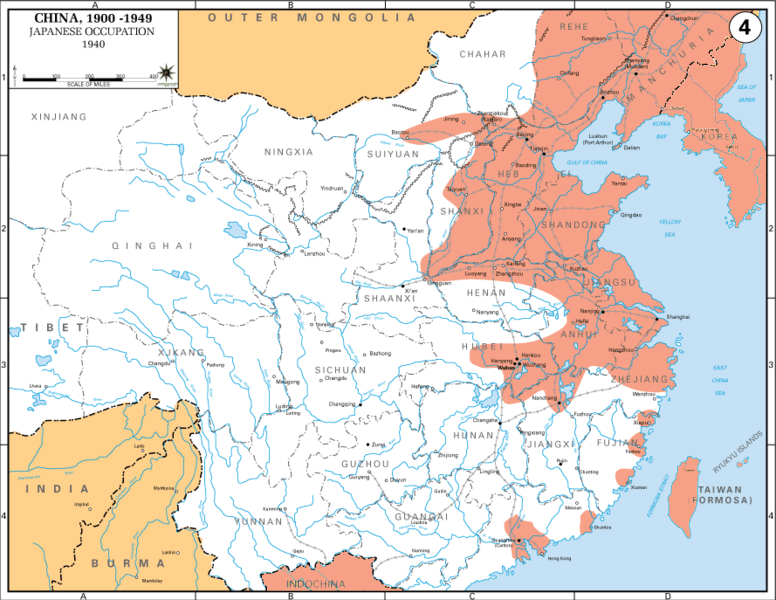
Reading Response: Nish, Duus, and Mitter on why Japan invaded China
Image by U.S. Army – United States Military Academy, West Point, Public Domain, Wikipedia
Ian Nish, “An overview of Relations Between China and Japan, 1895-1945,” The China Quarterly 124 (1990): 601-623.
Peter Duus, “Introduction, Japan’s Wartime Empire: Problems and Issues,” in The Japanese Wartime Empire, 1931-1945 (1996): xi-xlvii.
Rana Mitter, China’s War with Japan, 1937-1945: The Struggle for Survival (2013), 1-118.
All three authors are presenting arguments about what led up to Japan’s invasion of China. Like LaFeber, Duus focuses primarily on the economic aspect of Japan’s invasion.
Nish promotes the idea that Japan’s expansion into China was strategic and was intended to create a buffer between Japan and the USSR. This point also comes up in Mitter’s work and is interesting because it paints the situation in the Pacific as a sort of preamble to later Cold War politics between the US and the USSR, which would also impact China and Japan by reversing their positions vis-à-vis Western powers. According to Mitter, the US’s preeminence in the region through Japan after the Pacific War would create lasting resentment in China.
Mitter examines the details of internal Chinese politics in an attempt to show that China was more than just a passive victim of Japanese aggression. LaFeber barely touched on China’s role in the war. Nish and Duus both present China as being weak and fragmented, consistently encouraging outside intervention into the conflict. Mitter clearly shows that Chinese nationalists took an active role in shaping China’s future, but internal conflict coupled with external aggression or indifference crippled the country. According to Mitter, China did not become truly unified until active hostilities with Japan broke out. Was the conflict with Japan really the creation of a new national identity based, or simply a convergence of interests among disparate parties? And does a national body have to be unified to be legitimate?
Duus brings up the point that the myth that GEACPS was legitimately for the good of Asia lives on in Japan because people are trying to reestablish a national identity. Guilt is shifted away from Japan onto external forces that supposedly made Japan’s actions necessary. How much of a role did Western colonialism and expansionism play in China’s weaknesses as a country and Japan’s drive to become economically self-reliant? Were there other options available to Japan and what factors prevented those paths from being explored?
-

Walter LaFeber, The Clash: A History of U.S. – Japan Relations (1997): xvii-xxii, 3-159.
Reading Response:
LaFeber’s main argument in the sections covered in the reading is that America and the Japanese generally saw each other as partners in East Asia, but that there has been an ongoing series of clashes that led to war between the countries during World War II. LaFeber boils this difference down to a conflict of economic interests in China. He states that there is something uniquely different about Japanese and American forms of capitalism that led to different approaches over China.
LaFeber states that the topic he is covering has been covered before, but hasn’t been viewed from a long perspective. He intends to cover the entire post-1850s relationship between the US and Japan to show that the conflict was inevitable (xxii). Essentially, that from the moment Perry forced open Japan, the two countries were set on paths to conflict. He does this by showing that both the US and Japan were heavily reliant on China for exports and that there was a crucial difference in methods. Japan wanted to create a closed market system that would protect its domestic market while the US wanted to maintain Chinese territorial integrity and include the country in a global economic system.
LaFeber’s methodology is interesting in that it shows a lot of the background and details of the relationship between the U.S. and Japan that eventually led to conflict. The title of the book and the way LaFeber framed his argument in his preface seems to imply that a clash was inevitable from the beginning. His argument feels a little fatalistic, and maybe makes sense in hindsight, but was everything that happened from 1850 onward definitely leading to war? Or is LaFeber placing too much emphasis on that one aspect?
-

The Davao Bombing, President Duterte, and Law
This morning I saw an email in my inbox from the US embassy in the Philippines about a bombing in Davao. I signed up for the newsletter when I used to live in Antipolo, near Manila. I of course quickly did a search to see what had happened and found an article on MSN with the details of the incident. It’s not clear who set off the bomb yet, but regardless, it is a tragedy and my thoughts go out to the families who are suffering now.
I took a look at the comments section to see which direction the conversation was going. Davao is in Mindanao, an area of the Philippines where Islamic terrorist groups have a presence, including Abu Sayyaf, which is linked to Islamic State, and the Moro Islamic Liberation Front (yeah, MILF, LOL). I thought I would see the usual set of comments about how all Muslims are evil and Islam is destroying the world, but the first comment, while equally ridiculous, was something I wasn’t expecting. Some guy was saying that “America” (because he was elected as our representative, apparently) supports what the new president in the Philippines is doing.
//Unfortunately, I embedded the Facebook comment on the article instead of taking a screenshot and the person who posted the original comment deleted it.
If you’re not too familiar with what’s going on in Philippines politics, the new president, Duterte, has literally encouraged police officers to kill as many people as they can, if they feel that they are criminals. If you think America as a whole supports extrajudicial killings and has no interest in the due process of law, then you are mistaken. People in the US protest constantly because they feel that they are not being given due process under the law. Black Lives Matter is just the most obvious example. Extrajudicial killings are absolutely not what America is about, and it’s a dangerous road to go down.
-

New York State VTA and Financial Aid Hell
Going Back to School
A few months ago I started thinking about how I could best go about finishing my Master’s Degree. I had this idea that I could keep working and just take classes in the evening. I had a 9 AM to 6 PM job and if I was patient, I could take one Master’s Class at a time. I would need to pick one that began at 7 PM, to hopefully give myself enough time to make it. Hopefully, I would be able to deal with work, the fatigue from work, class, classwork and the field papers (in lieu of a thesis) all at the same time. I was planning on doing that, because I’d become accustomed to having plenty of spending money available.
The more I thought about it, though, the more I realized it wasn’t going to happen for me. I did take a class after work in the Fall of last year and I got a 4.0, but it was exhausting and I was frequently late, which really bothered me. I had to apologize profusely to the professor and explain what was going on. I didn’t want to go through that again. I didn’t want to rely on having a professor that was flexible with attendance and that would only grade me based on the work I turned in. I wanted to do it right. Also, I was at a point where things were getting out of hand at work. There was a change in management and the work requirements were spiraling into a micro-managed Hell, so I decided to move on. Today is going to be my first day of classes this semester. Pacific War, 4:50 PM. I’m looking forward to it.
The last few days have been mostly about winding down and getting ready for the semester. My last day at work was Monday. I tried to put in full effort, but by then I was more interested in forwarding emails and documents that I thought were worth keeping to a private email address. You never know when you might need copies of performance indexes and reviews after all. I did a little grocery shopping yesterday, but mostly tried to relax and decompress. Leaving that job… I felt like I’d been wearing a dirty blanket for a year and I’d finally shrugged it off my shoulders. It felt like I was actually feeling the sun for the first time in a long time, and that I was feeling life again. There was a lot of stress involved in what I was doing, but that’s a story for another time I suppose.
Why hasn’t my VTA been applied to my CUNYFirst balance?
This past Tuesday, I had to deal with a Financial Aid issue. I had applied for the New York State Veteran’s Tuition Assistance through the HESC website. I did it while doing the TAP application. Apparently, we made too much last year for me to qualify for FAFSA or TAP, but VTA is something I’m entitled to as a Veteran of the US Military. I kept checking my school’s student portal, CUNYFirst, but the award wasn’t applied towards the total balance due. I thought that somehow, they might have overlooked it and didn’t apply it, so I went up to City College to get in line to talk to someone in the Financial Aid office.
I got to the administrative building at 9:45 AM and pulled a ticket for F085 at 9:50 AM. A few minutes after I sat down, F020 was called. I didn’t think I would be there that long. I figured, an hour or so tops. Two hours and twenty minutes later, I was still sitting, and the number being called was just F037. I have no clue how they were managing the queues. There was a machine that printed out a ticket with a different letter number based on what your issue is. Some queues were being called very quickly, but an “F” queue number was only called about once every 20 minutes. It was absurd. I decided to go have lunch at the Chinese place on Amsterdam Ave.
Just by chance, I decided to eat my lunch in the Veterans’ office in Wingate Hall. While I was eating, the receptionist asked me if I needed any help. I briefly explained what was going on and she recommended I talk to Chris, the Veterans Adviser. Talking to him hadn’t crossed my mind, because I was out of Post 9/11 GI Bill funds. I had burned through them finishing a BA with a double major and most of my MA. I figured it couldn’t hurt, though. Even if he told me I just had to go wait, maybe he could pull some strings and get things done more quickly for me.
Chris let me know that VTA isn’t like TAP and it won’t show up as an award in CUNYFirst. It is something that he should be made aware of so he can send an email to a person who handles those awards. He said that awards for VTA are usually applied about halfway through the semester and whatever the difference was, I would be responsible for. I asked him if he had any suggestions for how to handle the balance due against my account right now. He said not to worry about it. He said that because I’m a Veteran, my classes won’t be dropped during this process. He did remind me that I would be responsible for any difference between the award amount and the tuition due, and it would impact my ability to enroll in classes in future semesters, but that makes sense anyway. It was a weight off my shoulders and I can walk into this semester focused on just getting my degree done.
Perhaps most importantly, Chris let me know that I didn’t have to go back to sitting in that ridiculously long Financial Aid queue. I could save the rest of my day and head home. I still can’t get over the queue only going up by 17 people in two and a half hours. Another reason to be thankful to the Veteran’s Administration, I suppose. I don’t have to deal with that. /salute
The Takeaway
If you showed up here trying to figure out what’s going on with your New York State Veteran’s Tuition Assistance, don’t go to your Financial Aid office. VTA is applied halfway through the semester but is more than likely going to require some input from your Veterans Adviser. Go directly to him or her. Otherwise, you might spend 7 hours in a Financial Aid queue just to be told to go talk to your Veterans Adviser. Check with your adviser regarding your school’s policies about carrying a tuition due balance and dropped classes in regards to Veterans and Veteran tuition awards.
-
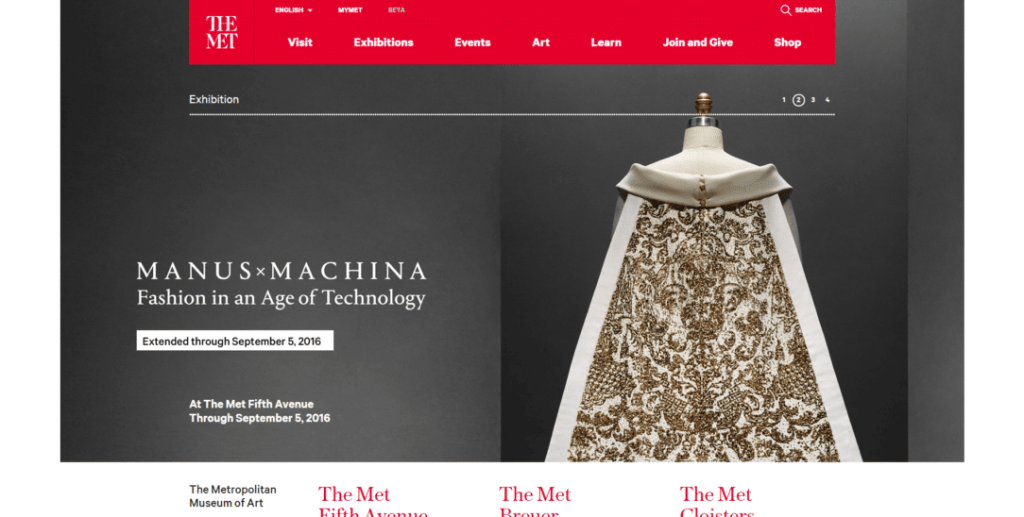
An Afternoon at the Museum
Another week done. On the one hand, I feel like I should value my time more, but on the other, I’m always so glad when another work week is finished. Sometimes we’re too worn out to do anything on the weekend and we spend most of our time at home, just relaxing. This weekend, we’d made plans to try to get out and enjoy some art. We had originally planned to go to the Guggenheim on Saturday night. I did a little research on their website and found out that if you go between 5:45 PM and 7:45 PM on a Saturday night, you can pay whatever you want for admission, instead of the usual $25 apiece. I don’t mind paying to see art, but I can’t see paying $50.00 (the Met has the same suggested rate for adults, though it’s just a suggested rate) every time we decide to spend an hour or two inside a museum. We’re not tourists, after all.
We never made it out of the house on Saturday afternoon, so when we got ready to go out on Sunday we went to the Metropolitan Museum of Art instead. We can go visit the Guggenheim next Saturday, if we’re not doing something else. Our plan was to go to the second floor and look at the 19th and early 20th century European paintings, but we got sidetracked when we stumbled into the “Manus x Machina” special exhibit behind the medieval European art section of the first floor. We were actually heading to the restrooms at the time. The exhibit wasn’t too big so we figured we’d take a look before heading upstairs. It was incredible how many people were in that small area. In a few places I felt like I was wading through the herds of people that are always moving through Times Square.
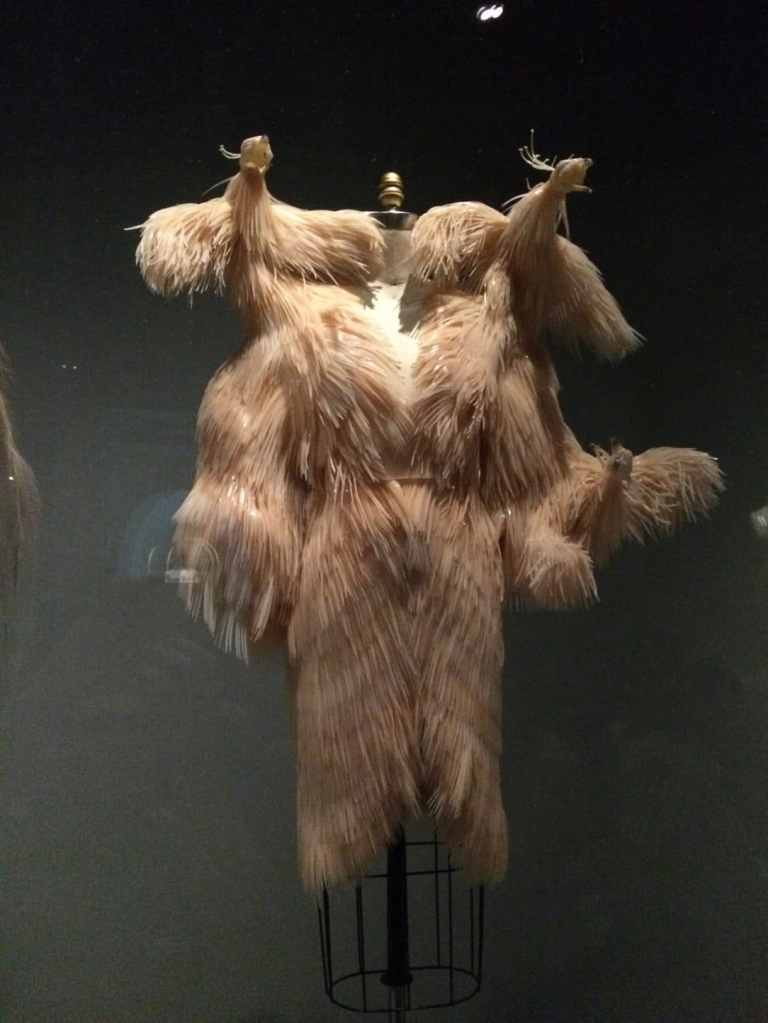
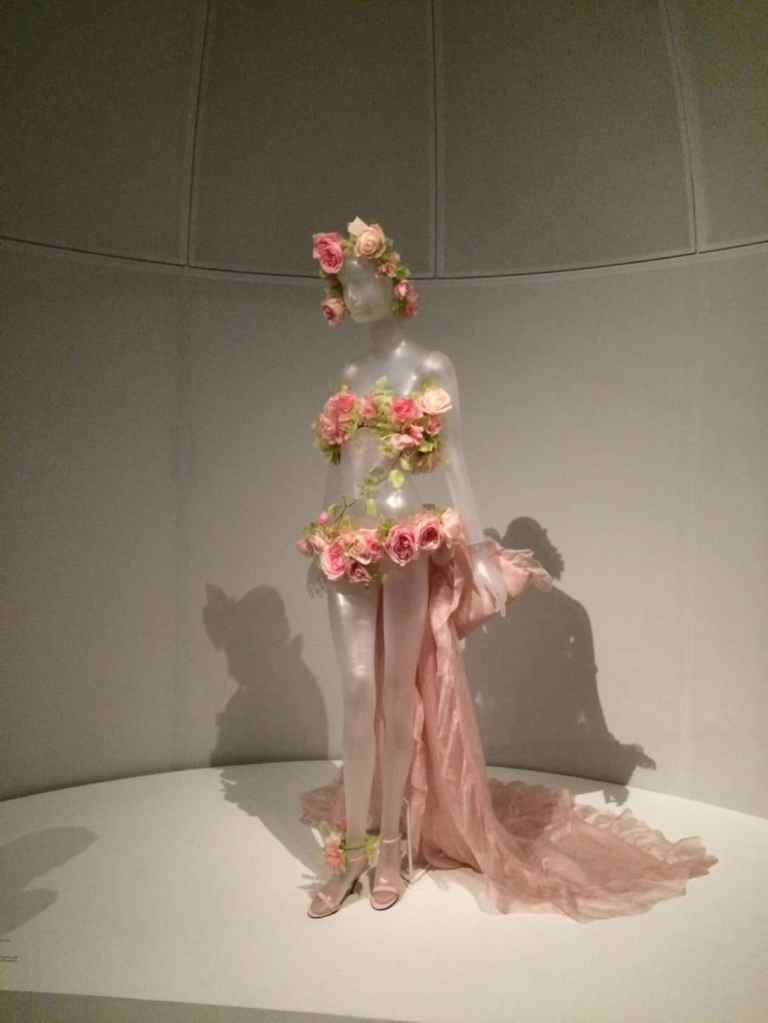
The dresses on display were way beyond what I was expecting. I didn’t think I would be impressed, because I’m not seriously into fashion, but looking at the dresses on display there, I think I finally understood that sometimes fashion can be art too, as cheesy as that sounds.
Some of the dresses were fascinating:

Some were terrifying (this one is made with real gull skulls):
Others were whimsical:
A few more images in a Flickr gallery:
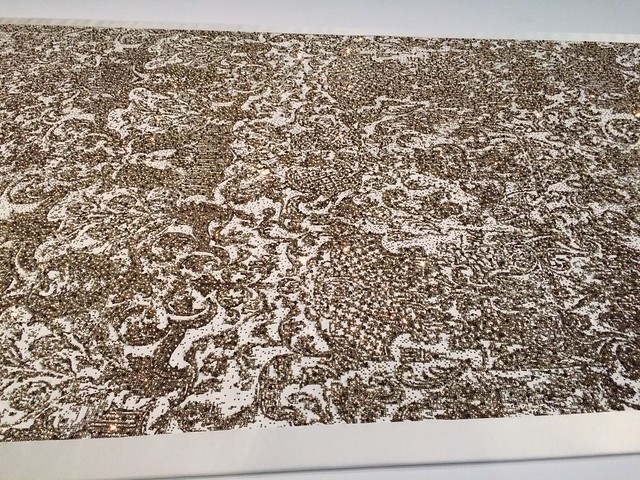 //embedr.flickr.com/assets/client-code.jsWe finally found our way upstairs, but immediately got lost in the 1600-1800s era galleries. It wasn’t until we were about to leave that we finally found ourselves looking at Van Gogh, Degas, and Gauguin. After having visited so many times, I got overconfident in my ability to navigate to the area we were looking for. Next time I’ll just download the app before we go so I have a map in my pocket.
I’d hoped to spend 20 minutes or so in the Arab Lands, Turkey, Iran, Central Asia and Later South Asia gallery, but I think I was being too ambitious considering how late it was when we got there, but there’s always next time.
We polished off the evening with some awesome burgers over at Shake Shack. It was a pretty good end to the weekend.


