Getting an Export Permit from the Philippines BAI for Marble

Getting Marble’s export permit was a bit difficult, but not because of the process itself.  It was getting there that was annoying.  Before we headed down to the BAI, we had to stop by the vet to pick up her health certificate.  The vet didn’t have a printer in the office so we couldn’t get it on the spot.  The problem with that is that the vet is sort of out of the way when it comes to getting transportation to Manila from Antipolo.  It is on the road that leads out of town though, so instead of backtracking to the center of town to get an air conditioned FX (a passenger SUV that’s been converted for public transportation) we walked out to the curb and flagged down a Jeepney instead.  Thankfully, it was overcast and kinda cool with the breeze since the windows stay open in the passenger area except when it’s raining.  Unfortunately, that also meant we got dusty and had black boogers later.

After a tricycle to the vet, a jeepney to Manila, the train to Quezon Ave and then 2 more Jeepney’s to Visaya Avenue by the Quezon Memorial, we finally arrived at our destination.

The Bureau of Animal Industry, National Veterinary Quarantine Services building.

After seeing the AVA’s offices in the Ministry of National Development building in Singapore, I was a bit underwhelmed by the appearance of the building, but I suppose it’s no worse than some of the building’s I’ve seen used as government offices in the US.

Despite the appearance of this place, the people inside were very efficient and very friendly.  The e-mail I’d received from one of the people that works there said the wait time for the export permit was about an hour, but I had everything I needed and was out the door in about 20 minutes.  I did have to go around the back of the building to get a dry notary seal stamped into the form, but that only added another 10 minutes, most of which was walking.

Vet health certificate, BAI health certificate and export permit, plus shot records.

The best part of it was that I got the export permit and they converted the veterinary health certificate to a government health certificate (which I didn’t expect), all for the low, low price of free.  That’s surprising.  The import permit was 650 PHP (about 15 USD).  The export permit fee and the fee for the government health certificate in Singapore were 50 SGD (about 38 USD) apiece.  I guess that’s how they paid for that big fancy building.

With this out of the way, the only thing left to do with Marble is to stick her in a carrier and show up at the airport with her.  I do have to find a hotel that will let me stay there with her in Manila for the night before the flight though.  It’s at 7:30 in the morning and it’s impossible to make the commute to Manila at 3:30 AM (it’s 2 hours one way, roughly).

UPDATE (2016): BAI Philippines has a Facebook page with updated contact information available. Click here.

Update (2017): This is a Flickr slideshow of pictures of the cat carrier my wife used in 2011 to bring two cats from the Philippines to New York City. Please note the bolts that were added to the carrier after-market. Make sure you do that. Also, zip-ties were added at the built-in latch points to further secure the carrier. I would bring zip-ties to the airport so that you can secure the door after the airport personnel are satisfied that they don’t have to open the door. Include a bowl for water and food. Ask that your pet be provided with water. Put blankets in the carrier so your pet(s) can stay warm.

Most importantly, keep this as your second or last option. Check with your airline to see if you can bring your pet in the cabin with you in a smaller pet carrier. Check with your airline for permission and/or requirements and fees.
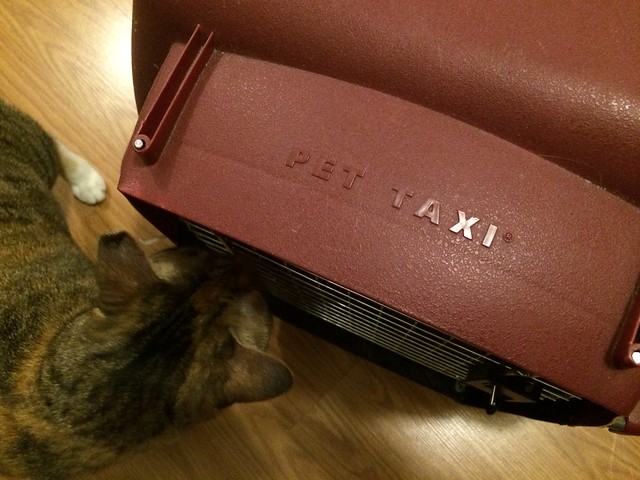
Pet Taxi Cat Carrier for an International Flight//embedr.flickr.com/assets/client-code.js

Comments

Leave a comment

This site uses Akismet to reduce spam. Learn how your comment data is processed.

35 responses to “Getting an Export Permit from the Philippines BAI for Marble”

  1. Saumya Khattri Avatar
    Saumya Khattri

    Hi Bradley. This is one of the most thorough things that I have found online. It was a huge help. Thanks a lot!

    Like

    1. Bradley Avatar

      You’re welcome!

      Like

  2. Lou Cep Avatar
    Lou Cep

    Again, thanks a lot for your reply. we will be leaving soon. And still looking for the best carrier that will fit the standards of most airline. 🙂

    Like

  3. Lou Cep Avatar
    Lou Cep

    Hi Brad, do I need to bring my Cat when I go to BAI? Also, what type of Carrier can you recommend? We currently have one, but not sure if it will pass the Airport standards. Thank you

    Like

    1. Brad F. Avatar

      Hiya. Sorry for the late reply. We did not take our cat the BAI. The health certificate from the local vet was in lieu of taking the cat to the BAI. As for carriers, I’ll take some pictures of the one my wife most recently used when she brought two cats over from the Philippines to New York in 2011 and then put them here as replies.

      Like

    2. Brad F. Avatar

      I decided to add a Flickr photo gallery of the pictures to the bottom of the post along with some additional information. Please check back to see them. =) Best of luck to you and your pet in your upcoming journey.

      Like

  4. Maria Torres Avatar
    Maria Torres

    Hi! This was really helpful! Anyways, I have a flight from manila to Los Angeles in September 5 and one of the requirements is a screwworm test within 5 days of the flight. Did you have to do that? And how much did you pay for? What about an anti rabies certificate? How much was your health certificate? Thanks in advance!

    Like

    1. Brad F. Avatar

      Hi! I’m sorry for the late reply. We didn’t have to do a screw worm test. I think that might be dependent on the state you fly in to. We also didn’t get an anti-rabies certificate. Our cats just had to have a rabies shot within I think it was a month of the flight. That was a prerequisite to getting the health certificate, which I took to the BAI to get converted into a government health certificate.

      Like

      1. Pia Avatar
        Pia

        Hi Brad! For the rabies shot, is the rabies shot suppose to be given at least 30 days before the flight or within 30 days before? My Chihuahua had his last rabies shot February 4, 2017, which is active until February 4, 2018. Does he need another shot before we travel? Thank you!

        Like

        1. Bradley Avatar

          Hi. I added some information to the following post that I think you will find helpful in answering your question:

          Exporting Cats From the Philippines to the USA (via Delta Airlines)

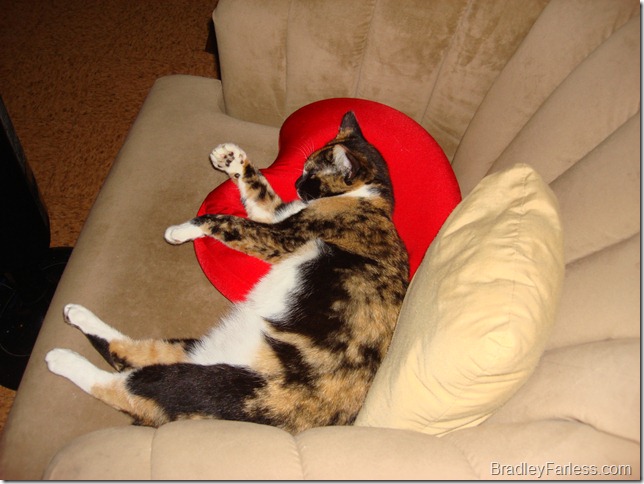
          Meet Marble.  Marble was born in Singapore, has lived in the Philippines and is sleeping in an armchair in Manhattan, New York City, in the above picture.  She’s an international cat and probably has more Sky Miles than most human beings.  She’s also a lucky cat, having started out her life as a stray under a building near the train station in Pasir Ris, Singapore.  Now she lives a life of relative luxury on the other side of the world with canned food every day, lots of attention and love and a safe environment.

          So, how did she get here?  Well, it’s a long story, but first we exported her from Singapore to the Philippines and then when it was time to move on, we exported her again from the Philippines to the US.  (If you want to read about how to get your cats from Singapore the Philippines, click here.)  Compared to the process of getting Marble from Singapore the Philippines, bringing her to the US was relatively painless.

          U.S. Requirements:

          Just to give you an idea, the requirements set forth by the CDC (Center for Disease Control, which regulates animal imports) for bringing your pet cat into the US are that the cat has to be in apparent good health and, depending on the state of entry, updated on rabies shots.  That’s it.  Here’s the exact quote from the CDC’s page on cat importation:

          A general certificate of health is not required by CDC for entry of pet cats into the United States, although some airlines or states may require them. However, pet cats are subject to inspection at ports of entry and may be denied entry into the United States if they have evidence of an infectious disease that can be transmitted to humans. If a cat appears to be ill, further examination by a licensed veterinarian at the owner’s expense might be required at the port of entry.

          Cats are not required to have proof of rabies vaccination for importation into the United States. However, some states require vaccination of cats for rabies, so it is a good idea to check with state and local health authorities at your final destination.

          All pet cats arriving in the state of HawaiiExternal Web Site Icon and the territory of GuamExternal Web Site Icon, even from the U.S. mainland, are subject to locally imposed quarantine requirements.

          Delta Requirements:

          An additional requirement from Delta (the airline I used) was that she needed a government health certificate and to get her out of the country we had to get an export permit.  In the Philippines, you’ll get your export permit and government health certificate at the same time.  They’re the same form in fact.

          Philippines Bureau of Animal Industry - Image provided by commenter Lou Cep (1/26/2017)
          Philippines Bureau of Animal Industry – Image provided by commenter Lou Cep (1/26/2017)

          So, here’s a step-by-step for what you’ll need to get your pet cat out of the Philippines:

          1. When you book your flight, do it with a live person and inform them that you’ll be taking a pet cat with you on the flight.  This is necessary, because not all planes are equipped to carry live animals.  The fee for carrying pet cats is 200 USD each, flat rate.  You pay this later.  I’m not aware of any limit to the number of cats you can bring at one time, but I’m sure there is one.
          2. Within 10 days of your flight, take your cat to a vet and have her updated on all shots.  Depending on what state you go to, your cat may need a rabies shot.  Also, regardless of US requirements, the BAI staff asked to see proof of rabies vaccination.  Get your cat the other shots he or she should have anyway, because it’s just healthier that way and will help your cat avoid disease and live longer.  Depending on what vet you use, costs may vary.  Our cat had her rabies shot in Singapore in May, so it was still valid.  Her feline leukopenia booster was 750 pesos.
          3. Request a Veterinary Health Certificate.  You may need to explain what this is and what it’s for and what it needs to say.  The vet we went to didn’t seem to know, which isn’t surprising.  Cats aren’t popular pets in the Philippines and I imagine exporting them to other countries by owners is rare.  We paid 500 pesos for our Health Certificate at Our Lady of Assumption Dog and Cat Clinic – Antipolo:
            • Contact Person: Oscar Macenas
            • Address: Joren Building, Circumferential Road, Marville Park Subdivision, Antipolo, Rizal
            • Contact Numbers: (02) 697-1896, (02) 697-3378
            • Accreditation: Philippine Animal Hospital Association (PAHA)
          4. Take your Veterinary Health Certificate (within 3 days of issue!!!) and your cat’s shot record, showing the valid rabies vaccination, to the BAI building on Visaya’s Avenue in Quezon City, Manila. Please note that BAI will only consider your veterinary health certificate valid for three days after issue. You must bring it to them within that timeframe.  They’ll process your combo export permit/government health certificate in an hour or less.  Take the form they give you and go around to the back of that building (to the left as you exit the door).  Go into the building there on your left (there’s only one) and up to the 3rd floor to the records unit.  They’ll put a ‘dry seal’ (raised notary seal) on your export permit.  All of this is free. The forms you receive from the BAI will be valid for 10 days. (Confirmation that the veterinary health certificate is still only valid for 3 days after being issued and updated information on the length of time that the BAI documents are valid provided by commenter Lou Cep 1/26/2017).
            • Contact Person: Virgie Tiong or Maynard Lagmy
            • Address: National Veterinary Quarantine Services, Bureau of Animal Industry, Visayas Avenue, Diliman, Quezon City, Manila
            • Contact Numbers: Phone: (632) 920-0816; Fax: (632) 920-0815
            • UPDATE (1/15/2017): BAI now has a Facebook page with up-to-date contact information in the About section. Click Here.
          5. When you get to the airport, check in as usual at Delta’s ticket counter.  They’ll ask to see the documentation, make photocopies, and collect your pet there after you make your payment of 200 USD, which can be made in cash or by credit card.  Delta doesn’t accept carry on pets on international flights.
          6. Collect your pet in the baggage claim area at your destination airport.

          Timeline for Rabies Vaccination (Updated 4/20/2017):

          According to the CDC in the United States:

          An animal can be considered immunized within 28 days after initial vaccination, when a peak rabies virus antibody titer is reached. An animal is considered currently vaccinated and immunized if the initial vaccination was administered at least 28 days previously or booster vaccinations have been administered in accordance with recommendations. Because a rapid anamnestic response is expected, an animal is considered currently vaccinated immediately after a booster vaccination.

          So, what does that mean? If your pet is receiving its initial rabies vaccination, the pet won’t be considered inoculated until 28 days have passed. If your pet is receiving a booster shot, the CDC says the inoculation is considered valid immediately.

          When I went through the export process, I remember there being some confusion about how much time had to pass between the vaccination and the export permit being issued. My cats had all been previously vaccinated and the vaccination was still considered valid.

          Some rabies vaccinations are valid for one year, while others are valid for three. It depends on the type of vaccine used. Please check with your veterinarian to determine whether or not your pet(s’) vaccination against rabies is still valid. Please get the vaccination at least 30 days before your trip.

          During the Flight:

          You won’t see your pet during the flight at all, even if you have a layover.  What comfort you will have comes in the form of little cards:

          Delta provides this card to you on the plane to let you know your pet is onboard.

          These cards come off of a form that is stuck to the side of your pet cat’s carrier.  You’ll be given one by a flight attendant prior to the plane leaving the gate area.  If you have a layover, you’ll be given another one before the plane takes off again.  My flight was from Manila to Tokyo to New York, so I received two of them.  The fact that it comes from the sticker form stuck to the carrier at the check in counter is what gives you the assurance that your pet is in fact on the plane.

          If you’re wondering how a cat holds up under a plane for 20 hours, I would tell you that it depends on your cat’s temperament.  Each cat is different and some are more skittish than others, but Marble was just fine.  She was a little nervous and hid under the blanket I put in there for her, but that was about it.  Please do leave a blanket in the carrier.  Despite being air conditioned, the plane gets cold.  My advice to anyone, though, is to not drug your cat prior to the flight.  Besides the fact that it’s not healthy for the cat, if he or she looks dopey or messed up on arrival you may wind up with your cat being quarantined to make sure it’s not sick with some disease.

          On Arrival at JFK International in New York City:

          If you’re flying this exact route, you can collect your cat in JFK’s baggage claim area.  Just past the baggage carousels, there is a locked door with a keypad.  Above it, there is a light with a yellow cover.  When a pet shows up on a flight, it’s taken to this room and the warning light is turned on to alert the owner that the cat (or dog) is available for pick-up.  When I picked up my cat I wasn’t required to show any documentation at all, because Delta had copies that were likely handed over when the cat was unloaded.

          I hope this guide gives you some insight into the process of getting your cat from the Philippines to the US!  Below is a map showing the location of the BAI office on Visaya’s Avenue.  If you have any questions, don’t hesitate to ask and I will answer to the best of my ability.

          October 1, 2010, 06:16 0 boosts 0 favorites

          Like

  5. angii Avatar
    angii

    I’ve scoured the internet for any and all info and you’ve helped me the most, thank you. I was just wondering if you could walk me through the vet certificate? Did your vet do it all themselves? What info exactly did you have on it? Could any old vet just type it up or is it a particular vet that has to make it? Will they convert it into a gov’t health cert for anyone? Thank you!

    Like

    1. Brad F. Avatar

      Hi. Sorry for the delayed reply. It’s been quite a while so on the one hand I’m glad this post is still useful to people, but on the other, I don’t recall the process too well. I would say just check with the vet you go to. They should be able to tell you (without lying about it to make a buck one would hope) whether or not they can provide a veterinary certificate for exporting a pet. Your pet will have to be up to date on shots and will need to have a rabies vaccination at least, I wanna say 3 or 4 weeks prior to the trip. Double check with the vet and BAI. When we took the veterinary certificate with that information on it to BAI they converted it into a BAI certificate. I think the point of doing it that way is to avoid having to bring your pet directly to BAI, which can be a lot of trouble, depending on how far away you live.

      Like

  6. Kaye Lagmay Avatar

    When you applied for your pet import certificate to bring your pet into the Philippines, did you do it online before coming into the country?

    Like

  7. Carah Villacampa Avatar
    Carah Villacampa

    I know that this post is late but do you guys have any idea where to get a BAI PERMIT in Cebu? and did you need to have a screwworm certificate?

    Like

    1. Brad F. Avatar

      Hi. I’m sorry I missed your comment. I know this is probably too late to address your question, but we never went to Cebu so I wouldn’t have been able to provide that information. I hope you were able to find the BAI permit there. The only certification I remember needing was proof of a rabies vaccine that was administered 30 days prior to the trip.

      Like

    2. Mike Avatar
      Mike

      In Cebu City there is a BAI office between Piers 1 & 2 (032 511 0032). We called them a few days ago and they said they could issue the required docs if we bring the vet docs. No need to bring animal. I understand there is also one at Mactan Airport I’m trying to find out info on that, will update.

      Like

  8. Exporting Cats From the Philippines to the USA (via Delta Airlines) - The Adventures of Bradley Avatar

    […] certificate and to get her out of the country we had to get an export permit.  In the Philippines, you’ll get your export permit and government health certificate at the same time.  They’re the same form in […]

    Like

  9. Trendy Avatar
    Trendy

    Thanks for the post. Gave us some idea on how the process is.

    Like

    1. Brad F. Avatar

      You’re welcome. I’m glad you found it helpful.

      Like

  10. irishprice Avatar
    irishprice

    Hi Bradley. Thanks for this. I just brought my cats to Manila from Guam last June and I had a hellish time at Customs. It was a nightmare and swore not to go through it again. Now that it is time to take them away again. (This time, they are coming to Jordan with me), I have this fear that I will go through the same ordeal again. Reading your experience is very encouraging. One question though, did you have to deal with the guys at Customs before you departed with Marble? Any input is very much appreciated.
    Kind regards,
    Irish

    Like

    1. Brad F. Avatar

      Hi Irish. You might find this follow-up post helpful:

      Exporting Cats From the Philippines to the USA (via Delta Airlines)

      Meet Marble.  Marble was born in Singapore, has lived in the Philippines and is sleeping in an armchair in Manhattan, New York City, in the above picture.  She’s an international cat and probably has more Sky Miles than most human beings.  She’s also a lucky cat, having started out her life as a stray under a building near the train station in Pasir Ris, Singapore.  Now she lives a life of relative luxury on the other side of the world with canned food every day, lots of attention and love and a safe environment.

      So, how did she get here?  Well, it’s a long story, but first we exported her from Singapore to the Philippines and then when it was time to move on, we exported her again from the Philippines to the US.  (If you want to read about how to get your cats from Singapore the Philippines, click here.)  Compared to the process of getting Marble from Singapore the Philippines, bringing her to the US was relatively painless.

      U.S. Requirements:

      Just to give you an idea, the requirements set forth by the CDC (Center for Disease Control, which regulates animal imports) for bringing your pet cat into the US are that the cat has to be in apparent good health and, depending on the state of entry, updated on rabies shots.  That’s it.  Here’s the exact quote from the CDC’s page on cat importation:

      A general certificate of health is not required by CDC for entry of pet cats into the United States, although some airlines or states may require them. However, pet cats are subject to inspection at ports of entry and may be denied entry into the United States if they have evidence of an infectious disease that can be transmitted to humans. If a cat appears to be ill, further examination by a licensed veterinarian at the owner’s expense might be required at the port of entry.

      Cats are not required to have proof of rabies vaccination for importation into the United States. However, some states require vaccination of cats for rabies, so it is a good idea to check with state and local health authorities at your final destination.

      All pet cats arriving in the state of HawaiiExternal Web Site Icon and the territory of GuamExternal Web Site Icon, even from the U.S. mainland, are subject to locally imposed quarantine requirements.

      Delta Requirements:

      An additional requirement from Delta (the airline I used) was that she needed a government health certificate and to get her out of the country we had to get an export permit.  In the Philippines, you’ll get your export permit and government health certificate at the same time.  They’re the same form in fact.

      Philippines Bureau of Animal Industry - Image provided by commenter Lou Cep (1/26/2017)
      Philippines Bureau of Animal Industry – Image provided by commenter Lou Cep (1/26/2017)

      So, here’s a step-by-step for what you’ll need to get your pet cat out of the Philippines:

      1. When you book your flight, do it with a live person and inform them that you’ll be taking a pet cat with you on the flight.  This is necessary, because not all planes are equipped to carry live animals.  The fee for carrying pet cats is 200 USD each, flat rate.  You pay this later.  I’m not aware of any limit to the number of cats you can bring at one time, but I’m sure there is one.
      2. Within 10 days of your flight, take your cat to a vet and have her updated on all shots.  Depending on what state you go to, your cat may need a rabies shot.  Also, regardless of US requirements, the BAI staff asked to see proof of rabies vaccination.  Get your cat the other shots he or she should have anyway, because it’s just healthier that way and will help your cat avoid disease and live longer.  Depending on what vet you use, costs may vary.  Our cat had her rabies shot in Singapore in May, so it was still valid.  Her feline leukopenia booster was 750 pesos.
      3. Request a Veterinary Health Certificate.  You may need to explain what this is and what it’s for and what it needs to say.  The vet we went to didn’t seem to know, which isn’t surprising.  Cats aren’t popular pets in the Philippines and I imagine exporting them to other countries by owners is rare.  We paid 500 pesos for our Health Certificate at Our Lady of Assumption Dog and Cat Clinic – Antipolo:
        • Contact Person: Oscar Macenas
        • Address: Joren Building, Circumferential Road, Marville Park Subdivision, Antipolo, Rizal
        • Contact Numbers: (02) 697-1896, (02) 697-3378
        • Accreditation: Philippine Animal Hospital Association (PAHA)
      4. Take your Veterinary Health Certificate (within 3 days of issue!!!) and your cat’s shot record, showing the valid rabies vaccination, to the BAI building on Visaya’s Avenue in Quezon City, Manila. Please note that BAI will only consider your veterinary health certificate valid for three days after issue. You must bring it to them within that timeframe.  They’ll process your combo export permit/government health certificate in an hour or less.  Take the form they give you and go around to the back of that building (to the left as you exit the door).  Go into the building there on your left (there’s only one) and up to the 3rd floor to the records unit.  They’ll put a ‘dry seal’ (raised notary seal) on your export permit.  All of this is free. The forms you receive from the BAI will be valid for 10 days. (Confirmation that the veterinary health certificate is still only valid for 3 days after being issued and updated information on the length of time that the BAI documents are valid provided by commenter Lou Cep 1/26/2017).
        • Contact Person: Virgie Tiong or Maynard Lagmy
        • Address: National Veterinary Quarantine Services, Bureau of Animal Industry, Visayas Avenue, Diliman, Quezon City, Manila
        • Contact Numbers: Phone: (632) 920-0816; Fax: (632) 920-0815
        • UPDATE (1/15/2017): BAI now has a Facebook page with up-to-date contact information in the About section. Click Here.
      5. When you get to the airport, check in as usual at Delta’s ticket counter.  They’ll ask to see the documentation, make photocopies, and collect your pet there after you make your payment of 200 USD, which can be made in cash or by credit card.  Delta doesn’t accept carry on pets on international flights.
      6. Collect your pet in the baggage claim area at your destination airport.

      Timeline for Rabies Vaccination (Updated 4/20/2017):

      According to the CDC in the United States:

      An animal can be considered immunized within 28 days after initial vaccination, when a peak rabies virus antibody titer is reached. An animal is considered currently vaccinated and immunized if the initial vaccination was administered at least 28 days previously or booster vaccinations have been administered in accordance with recommendations. Because a rapid anamnestic response is expected, an animal is considered currently vaccinated immediately after a booster vaccination.

      So, what does that mean? If your pet is receiving its initial rabies vaccination, the pet won’t be considered inoculated until 28 days have passed. If your pet is receiving a booster shot, the CDC says the inoculation is considered valid immediately.

      When I went through the export process, I remember there being some confusion about how much time had to pass between the vaccination and the export permit being issued. My cats had all been previously vaccinated and the vaccination was still considered valid.

      Some rabies vaccinations are valid for one year, while others are valid for three. It depends on the type of vaccine used. Please check with your veterinarian to determine whether or not your pet(s’) vaccination against rabies is still valid. Please get the vaccination at least 30 days before your trip.

      During the Flight:

      You won’t see your pet during the flight at all, even if you have a layover.  What comfort you will have comes in the form of little cards:

      Delta provides this card to you on the plane to let you know your pet is onboard.

      These cards come off of a form that is stuck to the side of your pet cat’s carrier.  You’ll be given one by a flight attendant prior to the plane leaving the gate area.  If you have a layover, you’ll be given another one before the plane takes off again.  My flight was from Manila to Tokyo to New York, so I received two of them.  The fact that it comes from the sticker form stuck to the carrier at the check in counter is what gives you the assurance that your pet is in fact on the plane.

      If you’re wondering how a cat holds up under a plane for 20 hours, I would tell you that it depends on your cat’s temperament.  Each cat is different and some are more skittish than others, but Marble was just fine.  She was a little nervous and hid under the blanket I put in there for her, but that was about it.  Please do leave a blanket in the carrier.  Despite being air conditioned, the plane gets cold.  My advice to anyone, though, is to not drug your cat prior to the flight.  Besides the fact that it’s not healthy for the cat, if he or she looks dopey or messed up on arrival you may wind up with your cat being quarantined to make sure it’s not sick with some disease.

      On Arrival at JFK International in New York City:

      If you’re flying this exact route, you can collect your cat in JFK’s baggage claim area.  Just past the baggage carousels, there is a locked door with a keypad.  Above it, there is a light with a yellow cover.  When a pet shows up on a flight, it’s taken to this room and the warning light is turned on to alert the owner that the cat (or dog) is available for pick-up.  When I picked up my cat I wasn’t required to show any documentation at all, because Delta had copies that were likely handed over when the cat was unloaded.

      I hope this guide gives you some insight into the process of getting your cat from the Philippines to the US!  Below is a map showing the location of the BAI office on Visaya’s Avenue.  If you have any questions, don’t hesitate to ask and I will answer to the best of my ability.

      October 1, 2010, 06:16 0 boosts 0 favorites

      As best as I can remember, though, the only time I dealt with anyone related to the government or something like customs was when I got the health certificate from the BAI. When I got to the airport, Marble was taken from me at the ticket counter and I didn’t see her again until I landed in New York City. So, I cleared customs without her being with me.

      I hope that helps you out a bit, and have fun in Jordan!

      Like

      1. irishprice Avatar
        irishprice

        Thanks Brad!!

        Like

  11. ohinm Avatar

    Just an update: As it turns out, I did not have to bring my dog to the Davao Airport Quarantine. I had to go to the vet to get his Health Certificate (Php. 450.00) and all they needed was to see that and they gave me my BAI permit. Very easy. Our flight is on Saturday so hopefully things go smoothly from here…

    Like

    1. Bradley Avatar

      Hi! I’m glad to hear everything worked out for you. It looks like the process is the same in Davao as it is in Manila, with the only change being that you get the government health certificate from the airport quarantine instead of the BAI office.

      Best of luck to you and your dog on the flight! Make sure he has a blanket in the kennel with him. They say the holds are air conditioned to be comfortable, but even the cabin gets chilly.

      Like

    2. alejandra Avatar
      alejandra

      Most clear, I gonna go to find out, just to make sure!!! I let you know later. Thank you very much

      Like

  12. RMT Avatar
    RMT

    Thank you, Bradley! I’ll keep posted on our progress (Davao doesn’t have a BAI so the Manila office referred me to our airport’s quarantine to get the requirement) just in case any readers have the same situation. When I lived in Manila and had to bring my dog to Davao, I had to go through the hassle of finding the BAI office which was definitely the trickiest part. Once there it was very quick and easy. I later found out that our airline, Cebu Pacific, has their own veterinarian ready to hand out the shipping papers, so I really didn’t need to go through all that work (they just need updated vaccinations – rabies, specifically.)

    Like

    1. Bradley Avatar

      Thanks! Once you’ve finished your move and have time, let me know how it went. I want to collate the information people have posted in the comments and add it to the actual post as an update. It will help keep the post relevant and useful to other people.

      Like

    2. alejandra Avatar
      alejandra

      Hello, all this information really help me, so I CAN DO IT IN DAVAO, because I live in Davao and want to avoid going to Manila!!!!

      Like

  13. RMT Avatar
    RMT

    Hey Bradley, your blog has been very helpful to me. Probably the most helpful resource I’ve found online! My question is, do you think it is necessary for me to go to my vet to get my dog’s health certificate before the BAI, or is it okay to skip that part? Since the BAI gives you a health certificate anyway along with the export permit (I live in Davao and I would have to go to our airport’s quarantine to get our certificates and I was asked to bring my dog for his checkup) so I don’t have to do double. Please let me know. We are flying to the US. Thank you again!

    Like

    1. Bradley Avatar

      Hi. The reason I took my cat to the vet to get a health certificate there was to avoid the trouble of having to take her all the way to the BAI. I was living in Antipolo at the time and the BAI office we went to was in Manila, so it would have been a pain in the butt. If you can take your dog to the BAI office, then they should probably be able to do both at once. If that’s what they told you to do, then you should be good to go. Just don’t forget the rabies vaccination. That’s pretty much required for all dogs entering the US.

      Also, thanks. I’m glad you found this post helpful!

      Like

      1. alejandra Avatar
        alejandra

        all info it’s been so helpful, Can you tell me if I have to pay airline fee here and again in Manila, or I pay all together in Davao, by the way, I after checking my pets will I see them again in USA? Thanks

        Like

        1. Bradley Avatar

          I don’t know about that. You’d better call your airline. I booked a flight straight from Manila to New York City. There was a layover in Japan and I wasn’t charged anything extra, so if you book a flight that has a layover in Manila, there’s a good chance you won’t have to pay more. But, if it changes airlines, you may have to pay two fees. For example, if it’s Philippines Airline from Davao to Manila and then Delta from Manila to USA. When you find out, leave a comment to let us know!

          (And, of course you would see your pets again in the USA. That’s the whole point of bringing them!)

          Like

          1. alejandra Avatar
            alejandra

            Thank you very much, by experience I know I just have to pay before departing, but you Know we are in Philippines anything can happens, jeje!! Again thank you very much

            Like

  14. beck19 Avatar
    beck19

    thanks for this! really helpful!!!

    Like

    1. Bradley Avatar

      You’re welcome! I’m glad these posts are still helping people out!

      Like