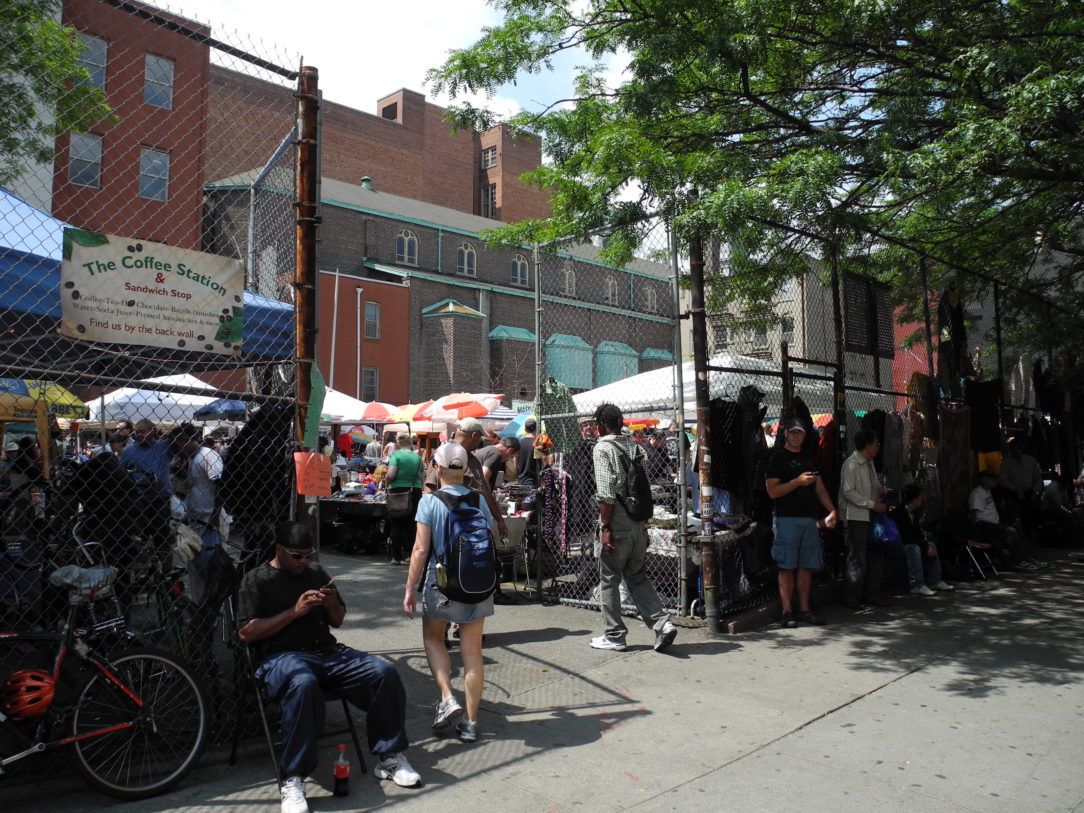
I’d forgotten about this place until I started going back through my photos. Last week, my wife and were walking down 11th Street. I don’t recall where we were going, but we saw a flea market and stopped in to look around. I’d always thought of flea markets as being a uniquely ‘Southern’ thing and I’ve been to quite a few. I have this vague memory of being at one where a guy had a stall set up to sell animals. I remembering seeing snakes. I have no idea how many years ago that was.
I asked around a bit and this flea market is set up once a week. The space it covers is pretty big, which made me wonder how much each individual seller pays the lot owner for the time they spend there.
If I had more time and more space, I would probably pick up some of the things they sell there, specifically books. I hardly have time to read the ones I have, though, given how much I read for classes I’m taking. I also saw some bicycles near the front entrance. I think I want to get bicycles for myself and my wife again. It would be fun to ride around Central Park and the bike paths that go around Manhattan. I don’t think I’d want to ride inside the city though and especially not on busy roads. Too dangerous.
Guy posing for shot near flea market.
On the way out, this guy saw me taking photos and indicated that he wanted to post for the camera, so I humored him and I’m happy with how it came out. He looks pretty slick.
Israelite U.P.K. School Demonstration in Times Square
Last Saturday my wife and I were in Times Square, heading to Olive Garden to have a nice dinner for our anniversary. We got off the train at 42nd street and walked through Times Square to do a little site seeing first. I was surprised to see what looked like a hate group preaching in the middle of Times Square.
When we were there, I didn’t really pay too much attention to them, other than to stop and take the above photo and note that they were yelling loudly about black people being oppressed. When I got home, I looked them up on Wikipedia and found the following information:
Israelite School of Universal Practical Knowledge (ISUPK) is a non-profit organization based in Upper Darby, Pennsylvania, United States. The group is part of the Hebrew Israelism movement, which regards American blacks as descendants of the Twelve Tribes of Israel. The Southern Poverty Law Center has labeled ISUPK an “extremist” and “black supremacist” group.
I zoomed in on the info boards they had set up and saw some things I didn’t expect:
Christianity Board Crop-Closeup
They apparently consider Jesus to be the anti-Christ. I’m no expert on Jewish theology, but I think that’s a harder line than the average Jew would take, fears of antisemitism aside.
Islam Board Crop-Closeup
Islam wasn’t spared either; not that anyone thinks to spare Islam these days when there’s an opportunity for criticism. The ISUPK has apparently equated the Ka’aba (the square structure in the photo) with an idol. They’ve gone so far as to tag the ‘black stone’ as a “clitoris”. If you’re not aware, Muslims believe that Abraham visited Hagar and his son by her, Ishmael, and helped them construct a home near a spring which came up out of the ground when struck by Ishmael’s feet as a baby. That’s the black square structure. Or, at least, the rebuilt and maintained representation of it. Muslims pray facing this structure, regardless of where they are in the world and perform a pilgrimage, but not because they worship the structure. It’s just a symbol; it’s the focal point that unites all Muslims. Islam as a religion is big on the concept of unity, though you couldn’t guess it considering some of modern day politics.
The black stone which the ISUPK referred to as a “clitoris” is a black stone said to have fallen from Heaven to show Adam and Eve where to build an altar for sacrifice to God. It was, according to tradition, placed in the Ka’ba by the Prophet Muhammad. Muslims attempt to touch it or kiss it on one of their seven circuits around the Ka’aba during the Hajj, or pilgrimage.
Neither the Ka’aba nor the black stone are idols in the sense that they’re worshipped. They’re merely focal points for the religion. I’d put good money on Jesus Christ not being the anti-Christ as well.
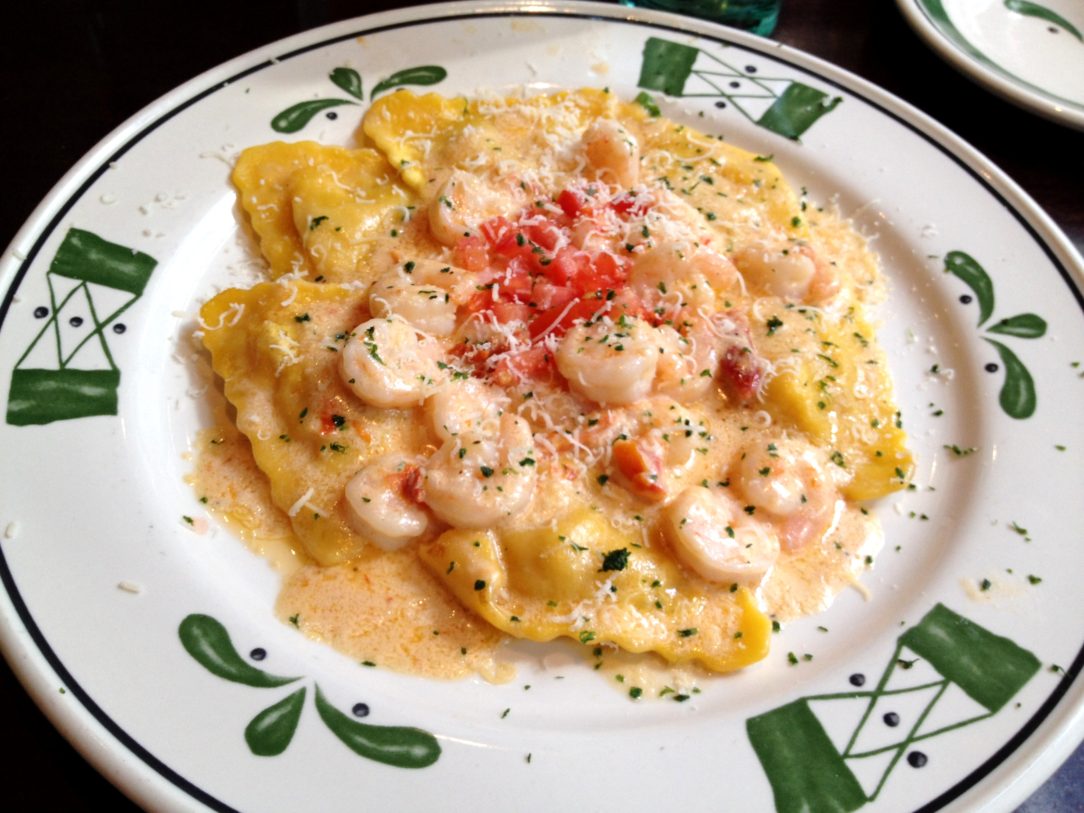
Last Saturday was my and my wife’s fourth anniversary together. We spent our first anniversary in Singapore. Our second anniversary was in the Philippines. Our third anniversary we spent apart. I was here in the US and she was in the Philippines. We spent a lot of time talking about how we would spend our anniversary this year, after having missed one. I don’t recall what we had in mind anymore, but I think it was especially appropriate that we went to Olive Garden in Times Square for our Anniversary Dinner, since we spent so much time talking about being together in New York while we were apart. Plus, the food is pretty good!
Olive Garden’s Lasagna ClassicoOlive Garden’s Shrimp and Crab Tortelline Romana
The amount of food was just right for me. My wife wound up taking a lot of her dish home in a take-out bag, but she had a big breakfast and I just had cereal. Our dishes came with a soup or salad and breadsticks. We both got the chicken & gnocchi soup. It’s outstanding!
I’d like to have done more over the weekend, but I suppose we can put off a trip until a little later in the summer when the weather is nicer. Coney Island maybe? We did spend some time talking about the last four years and it’s hard to believe it has been that long. Time seems to have gone by so fast. It seems like just a little while ago we were doing the 5k run at Pulau Ubin for Run350, or watching fireworks in Singapore on New Year’s Eve, or hanging out at Patong Beach in Phuket, Thailand. Time seems to be moving even faster now that we’re both so busy. Hopefully we’ll find time in the coming year to go out, despite our hectic schedules, and create more wonderful memories together.
Last Wednesday night I went back to the Spiritual Life Center at NYU. My class at City College was given the choice to vote between whether they’d rather have class at CCNY or go back to the Ramadan Workshop and they chose the workshop. That was good, because even if they hadn’t, I’d have skipped class to go back. It’s one thing to read about Islam and Muslims in a book or see it in a documentary; it’s quite another to get that first-hand experience in actual religious workshops that discuss the details of the faith and how people are actually practicing it. It’s also nice to socialize with and meet people who practice Islam. It really helps to put things in perspective, in the sense that Islam is not a monolithic evil.
While I was there I was pleasantly surprised to see a former classmate from an English class I took last Fall semester. She was sitting on the other side of the room (the room basically stays divided by gender in Islam, forcing people to focus on the material and God rather than each other), so we chatted by Facebook messenger for a few moments before paying attention to the lecture. She told me that the speaker’s name from the previous week is Khalid, so I went back and edited that post. I’m pretty bad with names.
She also told me the guy has videos up on YouTube so I did a search and found out the NYU Islamic Center has its own YouTube channel. There are two videos from the workshop up already: the first and second. The one from this week hasn’t been uploaded yet. I’m not sure if it will, since it wasn’t Khalid giving the lecture. If you were curious, you can watch the video below to see some of what I sat through during the first week. The video could be a bit better. The information borders cover too much of the viewing area and never fade away, but the important part is what Khalid is saying.
This last week’s lecture was by a guest speaker. Again, I don’t remember his name. He studied Islamic disciplines in South Africa, if I remember right. He spent six years being educated in Islamic schools and he’s now here in New York to begin his undergraduate education in a Western traditional college. His lecture focused on the legal aspects of fasting during Ramadan. The guy has a bit of a sense of humor and I was surprised and happy to see that he was very candid with the topic in the interests of clarity of information.
Issues like menstruation and avoiding any activity that might “get the juices flowing” were addressed. It wasn’t something I expected to hear discussed, but then again, what was I expecting? I suppose topics like that probably wouldn’t come up during a conservative Christian sermon. I wonder if that means Islam has a healthier conception of sex and the body? I’ll have to think about that more. The topics weren’t all racy. Things like medication and health issues were also covered, including when fasting begins and ends and when you’re allowed to eat.
Islam is more of a rule-oriented religion, where you have to follow strict and clear guidelines if you want your act of worship to be valid and effective. On first inspection it seems overly complicated, but in a way, it seems very clear and the complications are only there to prevent people who are trying to find loopholes from cheating. One example of that is having to be told that chewing gum invalidates fasting, since you swallow the flavor of the gum, even involuntarily.
So, essentially what it boils down to is this: When it’s Ramadan, you eat when the sun is down. When it’s fajr (first prayer of the day at dawn) it’s too late to eat. It’s too late to drink. You also don’t smoke, have sexual relations, masturbate, put anything into your mouth or another orifice that would cause your body to receive nourishment for the duration of the day. You attempt to avoid doing anything that would cause sexual arousal and stay away from immoral things. You try to clean up your act and don’t intentionally use foul language or do foul things. When night time comes and you do the sunset prayer, maghrib, you can eat, drink, smoke (if that’s your thing) and engage in sexual relations again. There are exceptions, but I won’t go into all of the details here.
The point of Ramadan is to remind you to be humble by creating empathy with those who do without because they have nothing, rather than voluntarily, people who fast all the time because they’re too poor to eat. It’s a time to refocus your mind on God, drop bad habits, create new, good ones, by studying scriptures and praying more. Ramadan is like a once-a-year opportunity to try to reinvent yourself into what you should be (to be a good Muslim) and to move further away from where you were before you began your fast. As Khalid put it the previous week, you should never meet two Ramadans with the same perspective. You should always grow. Not that I imagine he would say personal growth is restricted to Ramadan.
Here’s a real short video that gives a real good overview of Ramadan from a Turkish family’s perspective:
I’m looking forward to attending the workshop again this coming week. It’s really great, and if you didn’t know, open to anyone with a picture ID. You don’t have to be an NYU student.
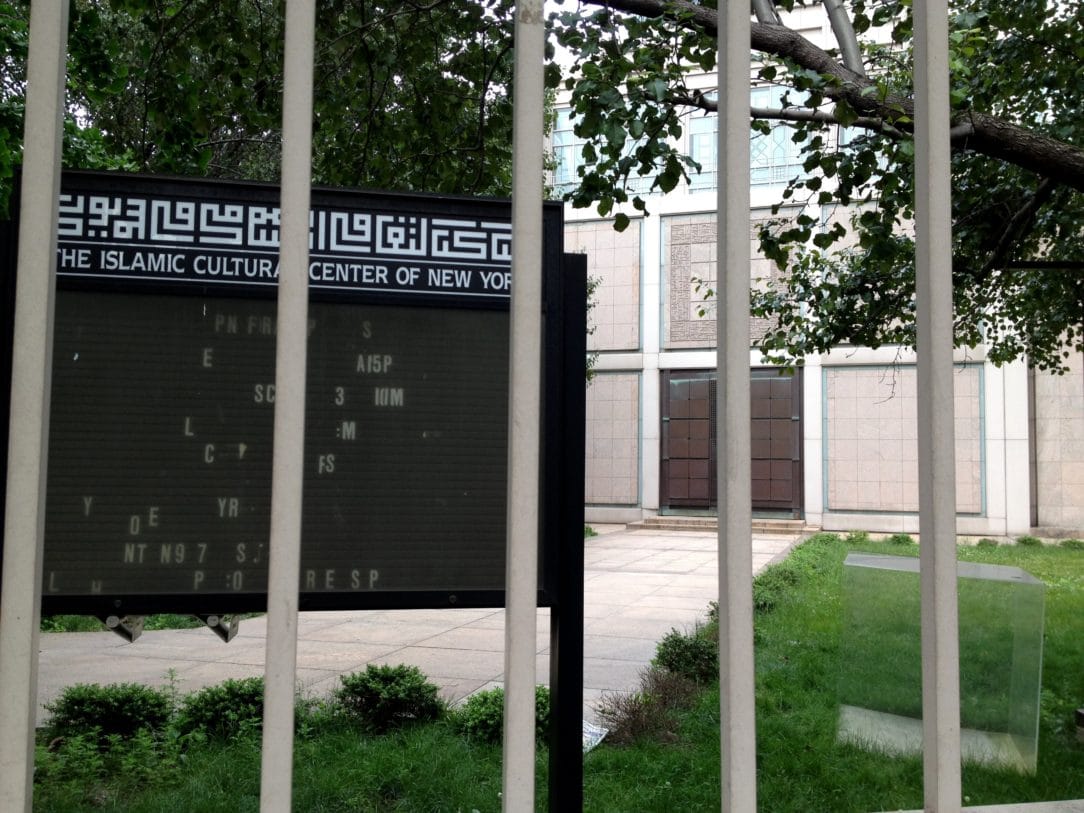
Last Tuesday I had the opportunity to go to the Islamic Cultural Center of New York on a field trip for my summer anthropology course: “Islam in the West”. If you don’t count my visit to the Islamic Center at NYU’s Spiritual Life Center, this was my first visit to a mosque. I don’t suppose you can count that, though. NYU’s Islamic Center had a prayer room, but this is the first full-on mosque I’ve visited. Because of how much I’ve read about mosques and how often I’ve seen them in videos, and perhaps because of my trip to NYU’s Islamic Center, the setting felt familiar to me. I didn’t see anything that I didn’t expect. That’s not to say I wasn’t impressed. I just wasn’t surprised.
The one thing that I did find a little unusual was the apparent lack of care for the exterior of the building. The colors seemed a little drab, the doors were slightly rusted and the sign was (obviously) in need of a little help. I also noticed that the trees have been allowed to grow on the front side of the building, obscuring the view from the street. I can’t help but wonder if it was done intentionally to make the building appear non-threatening to the non-Muslim majority, especially in the wake of 9/11.
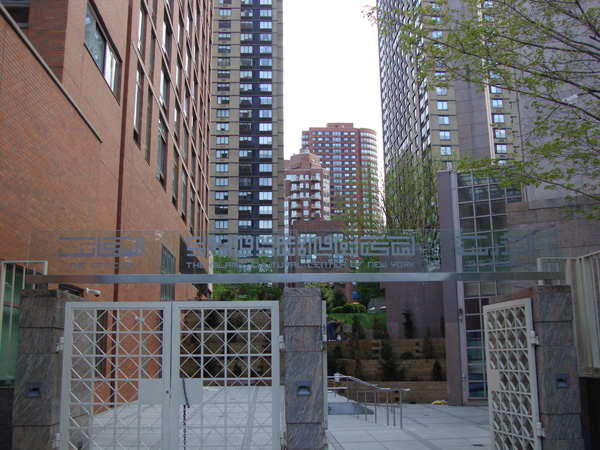
Back entrance to Islamic Cultural Center of New York (From ICC Website)
The main entrance (in the picture above) isn’t used often. It’s only opened for Jumah, the Friday prayer that comes with a sermon, like Jewish and Christian Sabbath services. The ‘daily entrance’ is around the corner on 97th Street. It’s actually really nice, with wooden terracing for plants, but I didn’t get a photo of it (photo above is borrowed from their site). I was running late because I was waiting at the main entrance for quite a while. I forgot about having to use the other entrance.
When you enter the building through the daily entrance, you wind up on the bottom floor, which is below ground level. There’s a shop that sells Islamic books, Qurans, dates (the fruit) and other related items. I didn’t get to spend a lot of time browsing the store. I’d like to go back and look around. I have a feeling there’s stuff there that isn’t widely available in commercial bookstores.
Just past the gift shop on the right is a daily prayer room. The daily prayer room was lit with soft light and was quiet. A few people were praying. I saw a man sleeping along the wall. The carpet was very comfortable and the atmosphere was reverent. I suppose the people in there at that time of day are the ones that are really looking for answers, since it wasn’t close to a normal prayer time yet.
A curtain divided the female prayer area from the male prayer area. I found out that the reason for the division of genders is that when you’re in the mosque it’s to worship, not to be distracted by women’s back ends being up in the air around or in front of you. The explanation is much more common-sense than what I’d assumed.
When I went in and sat down with a few guys from my class, we started talking about the use of misbaha/tasbih, which are prayer beads. It’s sort of like a Catholic rosary, meant to help you keep track of prayers. The guy I was talking to told me that after the salaat prayer (one of the five daily ritual prayers), some people use prayer beads to continue praying a while longer. He said it’s strongly recommended, but not required.
Then my phone rang. Embarrassing.
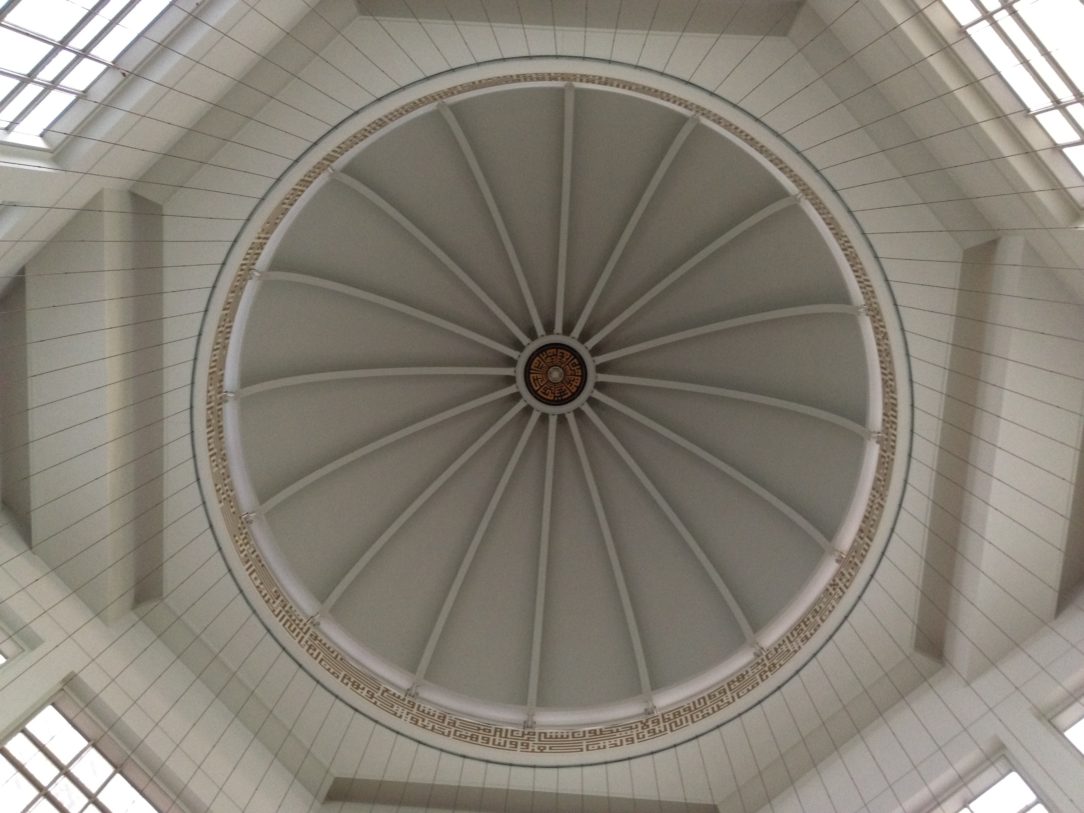
Interior of the Dome at ICC New York
About the time I came back, our tour of the building started, though it wasn’t so much a tour as an information and Q&A session with one of the assistant imams. He took us up to the main prayer room, which is under the dome that can be seen from outside. He told us about the basic tenets of Islam and then started answering questions from the class about women’s roles in Islam, how the authenticity of hadith are verified, polygamy, and other similar topics.
99 lights hang from the ceiling under the round dome, some say to symbolize the 99 names of God that are known. According to Islamic theology, God has an infinite number of names.Prayer lines on the carpet of the mosque.
He briefly mentioned the architectural design of the room we were in, the main prayer area. He said the room was stripped of everything except the essentials and that the decoration was kept to a minimum, to prevent distracting people from the worship of God. He explained the use of the lines on the floor and how Muslims line up foot to foot and shoulder to shoulder to pray, which is done because of the story about how Muhammad, the Prophet, told people to stand close and not leave any room for Shaitan (Satan) to get between them and disturb their prayers. Islam as a belief system places heavy emphasis on community, unity, and group actions that maintain proper behavior. It’s harder to do something bad when you’re constantly engaging with your community.
Tapestry of the Kaaba in Mecca, donated by Iran.
He also told us that this tapestry of the Kaaba, which is located in Mecca and the site of pilgrimage of millions of Muslims every year, was donated to the center by Iran. The ICC is primarily maintained by monetary contributions from foreign governments, most notably Kuwait. Not that that should be alarming to anyone. There are lots of establishments in the US that receive funding from overseas. Also, we have a pretty solid political relationship with Kuwait. We have quite a few military bases there. I spent a year living on one.
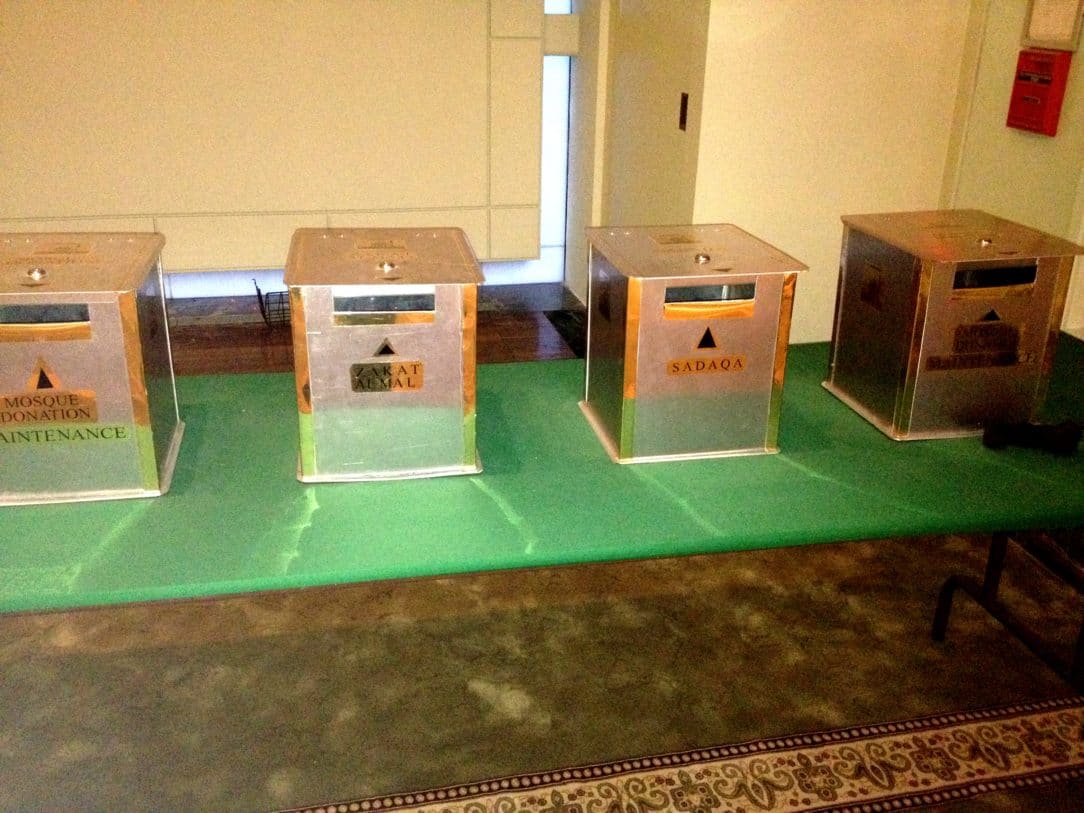
The mihrab, which indicates the direction of prayer. Muslims always pray facing Mecca.Qu’rans on shelves in the main prayer area.Donation boxes for zakat, sadaqat, and mosque maintenance.
The Q&A session lasted up until it was time for the fourth prayer of the day, maghrib, the prayer that happens just after sunset. This time of year, that’s at 8:30 PM. I didn’t have to hang around for that, so I visited the restroom and then left.
Area for wudu in the male restroom at the New York ICC.
The restroom was the last place I expected to find something unusual, but I was surprised to notice that there were no urinals, just stalls. I double checked to make sure I was in the correct restroom. The other one had a picture of a woman in a hijab on the door and women were going into it, so I hadn’t accidentally gone into the women’s room. Also, there was a bench set up inside where people could comfortably perform the ritual cleansing before prayer: wudu.
I don’t really know what sort of crowd visits this mosque on a Friday, but during the week we were told that it’s primarily cab drivers who stop to pray and then go back to work. Either way, it seems to be a very nice, well maintained building and a great resource for people in Manhattan who need to pray, or for non-Muslims to stop in and ask a few questions.
When I saw this red Swingline stapler on Amazon I just couldn’t resist ordering it. I absolutely loved the movie Office Space and this stapler is one of the memorable items from the film. If you haven’t seen it, I highly recommend it. It’s a comedy and it’s hilarious!
My mother’s side of the family has lived in New York City since my great-grandmother immigrated here from Spain (via Puerto Rico) in 1930. Ever since I was a kid, I came here to visit family every summer and then, about every 2 to 3 years. My family has always lived in the East Village and I remember when I used to step out on the streets in the morning and see used syringes in the cracks, but I don’t recall that I’ve ever been to Washington Square Park before last Wednesday.
It’s possible. They’ve renovated it a lot recently. In fact, they were still doing renovations on about half the park when I went through there last week, but I’m pretty sure I’d remember that big arch at the entrance.
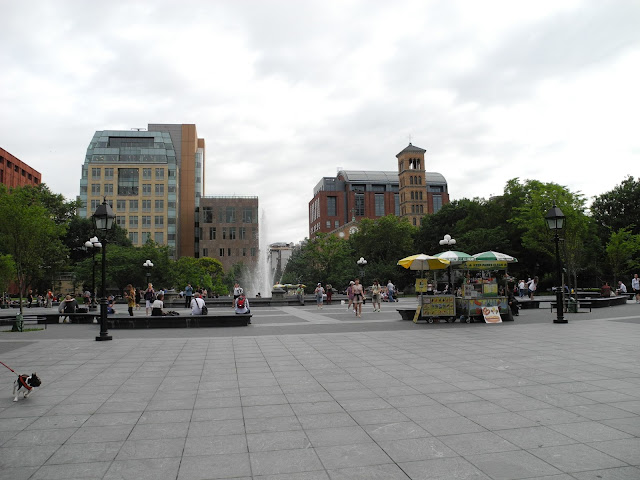
Washington Square Park is a really nice, quiet, classy type of area. It’s surrounded by NYU buildings so the crowd is diverse but generally classy. It’s the type of place I’d want to go for an afternoon of reading or people watching. I wish I had more time for that, but lately I’m always so busy.
Washington Square and the NYU Spiritual Life Center (short building, just left of center)
Wednesday evening, I had the opportunity to visit New York University’s Spiritual Life Center at Washington Square in Lower Manhattan. NYU has organized a series of workshops that will take place every Wednesday night from last week until Ramadan begins, with each session focusing on a different aspect of Ramadan. I attended the workshop with a group of students from CCNY as a sort of field-trip for my anthropology course: “Islam in the West,” which explores the immigration of Muslim communities to Western nations and their interactions with the cultures and communities of their host nations.
I don’t want to dwell too long on the building, but the Center is very, very nice. I heard that the building is relatively new and the interior is very well appointed and in good condition. The first floor of the building is devoted to Catholics. The first floor is for Muslims. I don’t recall what other religious traditions have space in the building, but I was told that the building has a meditation room where people of all faiths can sit quietly and pray and/or reflect.
The fourth floor was designed specifically with the needs of Muslims in mind. Separate from the bathrooms (which were really nice too) there are men’s and women’s ablution rooms, where Muslims can perform ritual washing (“wudu”) before prayer. Outside of the prayer room there are shelves built into the walls where people can leave their shoes (Muslims don’t wear shoes in their sacred spaces). The room itself is carpeted and looks out over Washington Square Park. The qibla, the direction towards Mecca, which Muslims face when they pray is marked by a prayer rug.
Qibla direction for NYC
I found it interesting that the prayer direction is northeast. I assumed it would be southeast, since that’s where Mecca is on a map in relation to New York City. I’m probably not taking the curvature of the Earth into consideration or something.
When I first arrived on the floor, I initially felt a bit out of place, but that feeling passed more quickly than I thought it would. I didn’t ask other people in the class who aren’t Muslims, but I wonder if my experience was a bit different, given how much I’ve studied Middle Eastern and Islamic History?
Since we were new faces, a guy came up and said hello to us and showed us where to go. It turned out that he was the guy in charge of the workshops and the one who was giving the lecture that night. I think he said his name is Khalid, but I could be wrong. Regardless, he was a pretty pleasant guy. He’s also a very, very good speaker.
Muslim Prayer Room, NYU Spiritual Life Center
The workshop event was scheduled to begin at 6:30 PM, but it was preceded by the afternoon prayer, ‘asr. I know that sounds off, but the prayer times are scheduled according to daylight hours rather than Western concepts of what constitutes morning, afternoon and evening. For more information on Muslim prayer times, click here.
Watching the prayer up close and personal was an interesting experience. It seems like every popular movie that has anything to do with Islam or Muslims starts or has a scene overlooking a city-scape with the muezzin call playing in the background. It comes across as exotic, foreign, and given recent events in the world, a bit dangerous. But, when you’re sitting on a carpeted floor overlooking a park, chatting with people about life, school and work and a guy begins a call to prayer from the corner of the room, it has a different tone.
The room became hushed and the Muslims present gathered in lines (there were a decent amount of non-Muslim participants in the room), women on one side of the room and men on the other, to pray. It felt like being in a Christian church, listening to a pastor give the opening prayer while the congregation stood quietly with heads bowed. The ritual prayer (salaat) was pretty much what I’d expected to see. What was interesting, though, was noticing the differences between prayer styles. Depending on where a Muslim is from, they might do certain parts of the prayer a little bit different, but every Muslim believes in the ritual prayer as an integral practice of Islam.
After the prayer, everyone sat down and faced the lectern at the rear of the room (opposite the windows and the direction of prayer). I noticed that the women and men maintained their separation throughout the evening. When I first heard about that I assumed it had something to do with keeping women subservient, since the portion of the room where women pray is typically the back of the room, but the real reason is much more common sense than that. When you go to pray, when you go to learn about or hear about God, you’re there for God and worship, not to be distracted by the opposite gender. The only people that roamed wildly between the men and women were the children.
The actual workshop took off a bit awkwardly for me, but somewhere after the group project of coming up with an idea for a commercial about Islam and what demographic to market it to and the beginning of the lecture about Ramadan, everyone, including myself, seemed to settle in and get comfortable. The theme of the talk was to think about why you do the things you do, and not just when it comes to Ramadan, but anything. Why do you hang out with people who are bad for you? Why do you keep drinking if you know you shouldn’t? Why do you put on your hijab (head scarf that some Muslim women wear) in the morning? Why do you get up and pray fajr (the before dawn prayer)? Why do you fast during Ramadan? The point of the talk seemed to be to remind people that rather than just doing what they’ve always done because that’s how it’s been done, they should ask and know the reasons behind it.
The speaker (again, I think his name is Khalid) used an analogy of a woman who always cut the tip of the leg off her roast lamb leg because that’s how her mother had always done it, only to find out from the grandmother that it was unnecessary and the only reason she started doing it was because their oven was too small to fit the whole leg at one time.
The talk did touch on other points. The other thing I remember most clearly from the talk was a story that the speaker related. I think it was from a hadith (a recorded quote, saying or habit of the Prophet Muhammad). The short version is that a man killed 100 men and then realized he needed to change his life. He asked another man if he could be forgiven for what he’d done and the man said he could, but to be forgiven he’d have to go to another town. So, the man set off on a journey to the other town to find forgiveness but along the way he died. Two angels appear and begin arguing over whether to take him to Heaven or Hell. God intercedes and tells them that if he is closer to the second town (to forgiveness) then take him to Heaven; otherwise take him to Hell. In reality, the man was closer to the first town (Hell), but because God is merciful, he made it appear as though the man were closer to the second town, and the angels took him to Heaven. The moral of the story is that God is merciful and looks for excuses to be merciful. I thought that was a nice idea.
The talk ran a bit long and by the end I was ready to get going, but overall I enjoyed the experience. It could probably be considered overgeneralizing, but the experience reinforced my belief that Muslims as a whole are average people with average hopes, average problems and average dreams, just like anyone else. It also reinforced my belief that there are more similarities between Christianity, Judaism and Islam than differences. I think people try to create and widen differences whenever possible out of fear and misunderstanding, but sitting in that room and hearing messages about hope, mercy and fasting to remember the poor and hungry, I felt as though it could have been any religious youth group; not necessarily just Muslims.
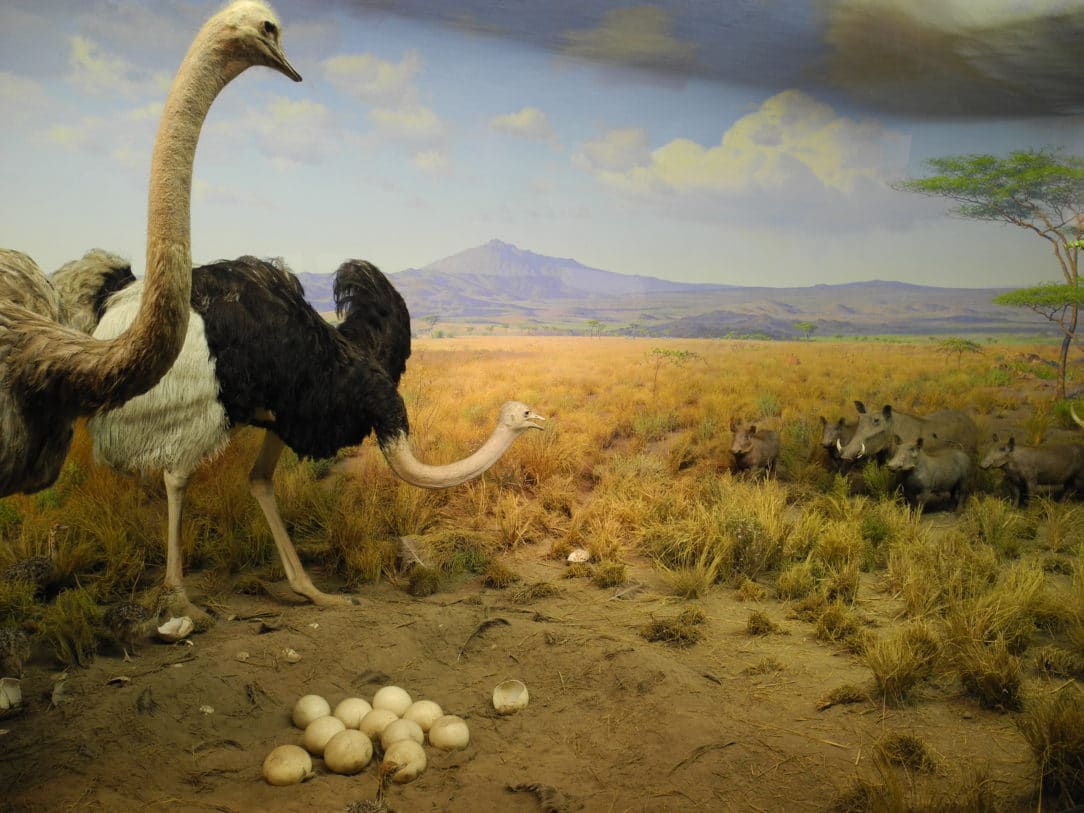
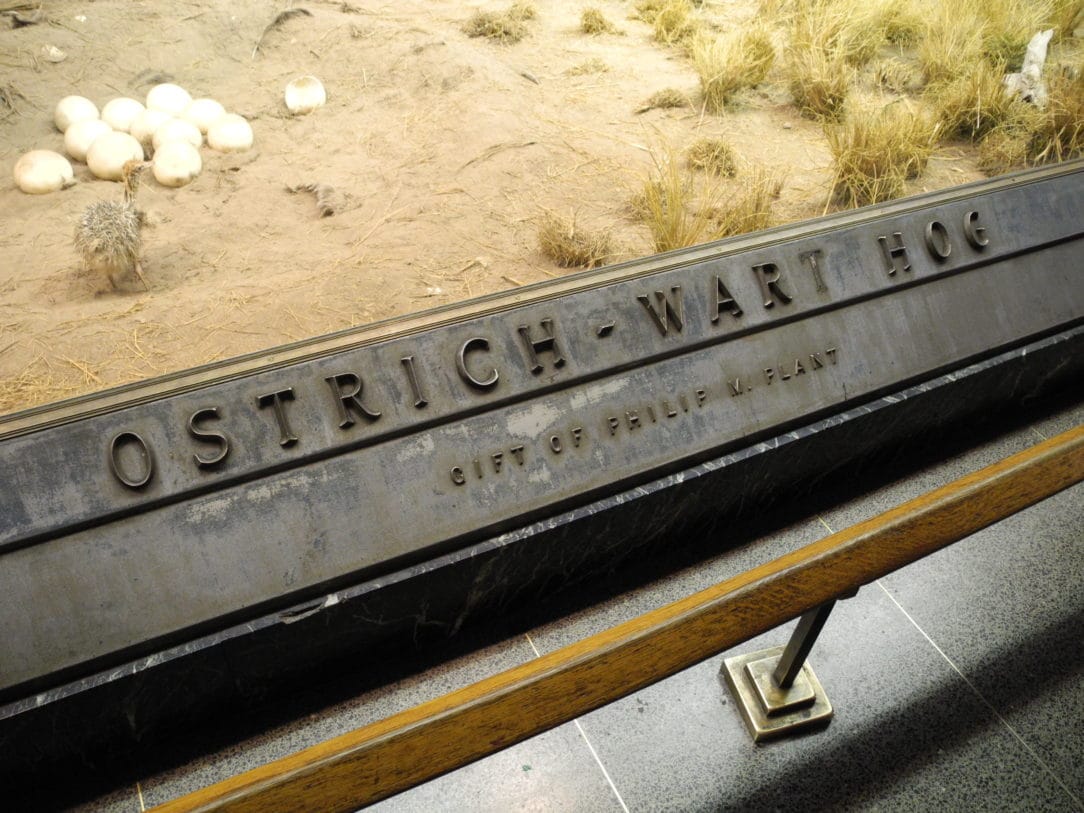
A few weeks ago my wife and I went to the American Museum of Natural History here in New York City. I’ll post more about that later, but I just wanted to share this image first. When I saw it, the first thing I thought of was the Angry Birds games. I think Rovio (the makers of Angry Birds) is based out of Finland, or at least that’s what their site says, but maybe the person who came up with the concept was thinking of this display window in the AMNH. It has the whole idea in one scene: broken eggs, angry birds, and the hogs (pigs) who are responsible.











 Bradley's Old Fashioned Weblog