The following is a short essay I wrote about The Yacoubian Building for an undergraduate history course.
In Alaa al Aswany’s book, The Yacoubian Building, Islamism and Islamists are primarily presented through the point of view of the character Taha El Shazli, the son of a doorman who lives on the roof of the Yacoubian building. As the story progresses, the rise of Islamism in Egypt is presented as being directly related to socioeconomic background, the lack of adequate economic opportunities and corruption present in government and society.
Taha’s family was of very modest means. Despite this, Taha was very intelligent and was able to excel at his studies because of his desire to become a police officer, which he believed would allow him to advance in life and gain the respect and dignity that he lacked while growing up in the Yacoubian building. As the son of a doorman, he was often ridiculed and looked down on by the other residents, which he was forced to put up with because he had no other option. Taha was sure that he would be able to succeed in his endeavor because he believed firmly in God, prayed regularly and avoided major sins (Aswany, 20).
Taha almost reached his goal, but his socioeconomic status caused his application to be rejected. Before attending the character interview, he had spoken to officers in his district who told him that because he had no rich and influential family members he would have to pay a bribe of 20,000-pounds to guarantee his acceptance into the police academy. Taha wasn’t financially capable of paying a bribe of that amount and given his religious devotion, he probably wouldn’t have done it anyway. Instead, he believed firmly in his abilities and hoped that his devotion to God would enable him to overcome that obstacle.
Unfortunately, the board wasn’t interviewing for ability or the marks of a good police officer. They were only interested in the corrupt practices of giving out government positions to family members or people with the right amount of money. Even though they were impressed by Taha’s answers, when it was discovered that his father was a “property guard,” he was dismissed. This was Taha’s first taste of corruption, another in a long line of blows to his dignity, and a serious threat to his chances of ever having a respectable life.
Taha’s next attempt to push past the boundaries set by his socioeconomic background was his enrollment in the Faculty of Economics at Cairo University. In his new surroundings, however, he still felt the sting of class divisions and was drawn towards other people who, like himself, came from humble backgrounds. These people were more religiously observant and Taha finally felt like he’d met people that would allow him the respect and dignity he was seeking. The level of respect and the sense of belonging he finally felt with this new group of people, student Islamists, made him far more open to radicalization. He felt that he was valued. He was brought into an inner circle and introduced to an influential and charismatic leader, Sheikh Shakir, which validated his need for respect and purpose.
The event that crystallized Taha’s emergence as not just an Islmaist, but a jihadi Islamist, was the trauma he experienced when arrested after a demonstration protesting Egypt’s involvement in the Gulf War. Already having spent most of his life being bullied and pushed around because of circumstances out of his control, he was bullied, tortured and raped by the very government entity that he had at one time hoped to work for. The corruption that prevented him from serving his country as a police officer now served to facilitate his torture and radicalization. When Taha was finally released from prison, his dignity as a man and a human being was shattered. His faith was shaken. Through coaxing from his Islamist mentors, however, he was convinced that he could best recover through renewed devotion and military-style training, which Taha readily agreed to out of an intense need for both healing and revenge.
In the end, Taha became a “martyr,” dying in the process of taking revenge on the man who ordered his rape. Because of Taha’s socioeconomic background, he had limited options to start with. Because of the corruption in the police department (and the government office that denied his claim of unfairness) he was pushed down a path that led him to associate with Islamist oriented people of a similar background. Further government corruption in the form of sanctioned torture and degradation in prison caused Taha to pass the tipping point. While not all Egyptians may follow the same path to Islamism, Aswany’s message is clear: the lack of opportunities open to people of all classes and the government’s enabling of and participation in corruption helped to create violent Islamists.
The following is a short essay I wrote for an undergraduate college class on the history of Islamist political thought:
On June 30th, 2012, Mohammed Mursi, a member of the Muslim Brotherhood founded by Hasan al-Banna in 1928, assumed office as the 5th president of Egypt. In modern politics, the Muslim Brotherhood holds the highest offices of power in the state, but it began as a small movement in the port city of Suez with a membership of seven. Today, the Muslim Brotherhood expresses the culmination of decades of Islamist thought and is a diverse movement with members who champion women’s rights and push for greater integration with Christians and other minorities, as well as more conservative, Salafist and Qutbist members.[i]
The shape and expression of Islamist thought has changed dramatically over the years, but the ideology expressed in the Muslim Brotherhood today has its foundation in the political writings of Hasan al-Banna, the man who founded the organization. From an early age, Hasan al-Banna took a strident stance against the British presence in Egypt, Christian missionary activity, and behavior that was deemed un-Islamic. Rather than pursue religious studies, al-Banna became a teacher and was posted at a school in the Suez Canal Zone, where he was appalled by what he saw as the dominance of materialism, secularism, and a trading of Islamic morals for Western decadence. He was also repulsed by the sight of Egyptians being exploited for the economic benefit of foreign powers.[ii]
The problems Egyptian society faced in confronting Westernization and colonial exploitation weighed heavy on Hasan al-Banna’s mind and the only solution he felt was appropriate was a return to Islam. In a letter al-Banna sent to heads of state and other influential people, he said, in regards to Islam: “If we take the nation along this path, we shall be able to obtain many benefits … For then we will construct our lives on our own principles and fundamental assumptions, taking nothing from others. Herein lie the highest ideals of social and existential independence, after political independence.”[iii] From this, we can see that al-Banna rejected Westernization as a system of living, opting instead for Islam as a native, natural, superior and complete way of life.[iv]
Al-Banna left it to other thinkers to flesh out his ideas and focused instead on social welfare programs and expanding the Brotherhood’s membership. However, al-Banna did firmly establish the concept of a dichotomy of Islam versus the “West,” attributing the decline of Muslim civilization to the wholesale adoption of Western values and social norms, and argued for a return to Islamic values as a solution to the social malaise being experienced in Egypt. He presented Islam as an opportunity for Egyptians to throw off the shackles of second-class humanity and reclaim their former glory, the former glory of their Islamic heritage. He also established the important concept of modernity and Islam not being mutually exclusive. A civilization does not have to be “Westernized,” or secularized, in order to be modern. A civilization can be Islamic and modern as well: technologically advanced, socially progressive, but still retaining the values, beliefs, and social norms that make Muslims and Islamic civilization distinct.
While some of al-Banna’s writing emphasizes the rejection of pacific forms of jihad in favor of armed conflict with unbelievers, al-Banna was pragmatic, conciliatory and willing to compromise. For example, while he disapproved of the Egyptian political system, he participated in elections.[v] Other Islamists that followed al-Banna were less forgiving. For example, Sayyid Qutb was decidedly more in favor of violent jihad, earning himself the nickname “The Philosopher of Islamic Terror.”[vi]
Sayyid Qutb was born in Upper Egypt in 1906 and, like al-Banna, began his career as a teacher. He also adhered to al-Banna’s ideology of Islam being the correct path for Egyptians to follow in order to regain their power as a civilization and joined the Muslim Brotherhood. Where Qutb differed was in his stridency and his message of Islam being the only correct lifestyle in any part of the world where Muslims live. He was firmly against any system that gave legislative authority to man and, unlike al-Banna, did not compromise in his ideology. He wrote that “submission to God alone is a universal message which all mankind must either accept or be at peace with. It [a legal framework] must not place any impediment to this message, in the form of a political system or material power.”[vii]
He also believed that establishing this legal framework required more than “verbal advocacy of Islam,” because “the problem is that the people in power who have usurped God’s authority on earth will not relinquish their power at the mere explanation and advocacy of the true faith.”[viii] Qutb did not believe in idly sitting by and hoping that Islam would become dominant in the world of its own accord. He believed that Muslims have an obligation to actualize proper Islamic governance through action. He wrote, “… knowledge is for action… the Qur’an was not revealed to be a book of intellectual enjoyment, or a book of literature or art, fables or history… Rather, it was revealed to be a way of life, a pure mode of being from Allah.”[ix] Combined with Qutb’s idea of a single, true version of Islam, this concept of bringing about God’s law on earth through action contributed to the rise of violent jihad.
Building on Sayyid Qutb’s ideology, Muhammad ‘Abd al-Salam Faraj advocated the jihad of the sword as the only legitimate interpretation of jihad, dismissing the greater jihad of internal struggle against sin as a fabrication meant to pacify the Muslim masses.[x] Like Qutb, Faraj saw (Western) modernity as a condition of moral bankruptcy, and as an infection that was destroying the ummah from within.[xi] In 1981, using his reworked definition of jihad, Faraj published a collection of justifications for violent jihad against un-Islamic rulers in a pamphlet called al-Farida al-Gha’iba (The Absent Duty). A few months later, the militant group that Faraj belonged to, Jama’at al-Jihad, planned and executed an assassination of President Anwar Sadat, a secular leader intent on rapid modernization.
The debate over Islam and how it relates to government in Egypt continued into the 1990s, with two opposing views being presented by Yusuf al-Qaradawi in Min fiqh al-dawla fi’l-Islam and ‘Umar ‘Abd al-Rahman in The Present Rulers and Islam: Are They Muslim or Not? Qaradawi argued that democracy is compatible with Islam and wrote that “A call for democracy does not necessitate a rejection of God’s sovereignty over human beings.”[xii] He explains that Islam contains elements of democracy and uses role of an imam as an example. He says that an undesirable prayer leader may be removed, which is a precedent for the removing of an undesirable governmental leader, which in turn is an expression of democracy. The people select who will rule over them. Qaradawi argues that democracy is the best form of government for Muslims and it shouldn’t be rejected simply because it originated outside of Islam. It should be incorporated, with useful elements being retained and the rest being discarded.[xiii]
‘Abd al-Rahman, on the other hand, advocated the rejection of any ruler that was not in full compliance with the concept of Islamic governance as expressed by Sayyid Qutb, even to the point of causing civil war. He wrote that fitna (civil war), though a serious issue in the Muslim ummah, is preferable to being ruled by an un-Islamic ruler, and that “We would not, in fact, consider the resulting social discord [from eliminating an un-Islamic ruler] to be fitna at all; rather we would regard it as a struggle for reform because its ultimate aim would be the elevation of the Truth, the uprooting of corruption, and the reaffirmation of Islam.”[xiv] For al-Rahman, whether or not to use violence is not a question, but rather a necessity, against any form of rule that is not compliant with the shariah and places legislative authority in the hands of man. The removal of the leader should be immediate, or the people will be just as guilty of shirk as the leader.
Islamist thought in Egypt has branched out into a number of different schools of thought, from extremists who advocate violent jihad and a return to the fundamentals to those who try to reconcile Islam with democracy. The common thread that holds them all together is their belief that the future lies in the Quran and man’s obedience to Islam and God’s law as a way to reestablish the power and dignity of Muslims. With the recent political upheaval in Egypt and the coming to power of a Muslim Brotherhood member, Islamists may finally have the opportunity to realize some of their ideals. Mohammed Mursi’s ascension to Egypt’s presidency is a remarkable event and Hasan al-Banna’s surving brother, Gamal al-Banna, believes the election would have pleased his brother, because “it was God’s will.”[xv]
[ii]. Roxanne L. Euben and Muhammad Qasim Zaman, Princeton Readings in Islamist Thought: Texts and Contexts from al-Banna to Bin Laden (Princeton: Princeton University Press, 2009), 50.
[iii]. Euben and Zaman, Princeton Readings in Islamist Thought, 58.
[xv]. “How Muslim Brotherhood went from 7 members to Egypt’s presidency.”
Bibliography
Euben, Roxanne L., and Muhammad Qasim Zaman, . Princeton Readings in Islamist Thought: Texts and Contexts from al-Banna to Bin Laden. Princeton: Princeton University Press, 2009.
This is a paper I wrote for an undergraduate history course called Modern Middle East. I was taking a very involved course on the Arab-Israeli Conflict at the same time, so my papers for the Modern Middle East class focused on Palestine and Israel as well. The paper was given 15/15 points. I’d like to have written more, but it was only supposed to be 5 pages. If I’d had more time (or a requirement for more pages!) I’d probably have written more about how the Arabs and Jews both deliberately exaggerated to the events at Deir Yassin to their own advantage, and detriment.
Deir Yassin Massacre Victims via Palestine Solidarity Project
Impact of the Deir Yassin Massacre on the Palestinian Exodus in 1948
In 1917, Britain conquered Jerusalem and ruled the region through a military administration. In 1920, the San Remo Conference awarded Britain the mandate of Palestine, which was sanctioned by the League of Nations in 1922.[1] By 1947, the British had grown weary of the sectarian violence between the Zionist Jewish and Arab populations in Palestine and as part of an overall downsizing of their colonial holdings after the economic stresses of World War II turned over the Palestine Mandate to the United Nations, which decided, in UN General Assembly Resolution 181, to solve the problem by separating the parties through land partition.[2]
The 29 November 1947 UN partition plan would have granted 55% of the land (much of it desert) to the Jews and 40% to the Arabs, with Jerusalem and Bethlehem falling under international control. The Jews accepted the plan, reasoning that it would provide them a foundation from which to build a Jewish state. The Palestinians, on the other hand, rejected the partition and launched a three day general strike followed by a wave of anti-Jewish terrorism in the cities and on the roads.[3]
As British Mandatory rule drew to a close in early 1948, the conflict between immigrant Jews and native Arab Palestinians erupted into an open civil war. On May 14th, 1948, the day before the Mandate ended, David Ben-Gurion, the Executive Head of the World Zionist Organization and chairman of the Jewish Agency for Palestine, changed the nature of the conflict by declaring the establishment of a Jewish state. The fighting between Jews and Arabs stopped being a sectarian struggle and evolved into a national struggle, not just between the new Israelis and the Palestinians, but between the newly formed Israel and the surrounding Arab states, who joined in the fighting. The war in 1947 – 1948 later became known as the War of Liberation to Israelis and as al-Nakba (“Disaster,” or “Catastrophe” in English) to the Palestinians and Arabs in the Middle East.[4] The Arabs were soundly defeated, leaving the Israeli state in control of more land than originally granted to it by UN Resolution 181, which the Arabs rejected under the assumption that the combined powers of the Arab armies could defeat the Jews.[5]
The conflict was a total defeat for the Palestinians. They not only lost control of a majority portion of the Palestinian Mandate territory, but they also failed to establish political independence. Only the Gaza Strip and the West Bank (with larger boundaries than today) remained outside of Israeli control, but they were claimed by other countries who had participated in the war against Israel: Egypt and Jordan. After the 1948 war, Jordan retained control over the resource-rich West Bank and East Jerusalem while Egypt controlled the Gaza Strip.
Perhaps the worst blow to the Palestinians, however, was being driven from the land and being prevented from returning. During the fighting, Palestinians fled their homes in droves in advance of or during combat between the Jews and Arabs, or to evade Arab militias who abused villagers. A total of approximately 750,000 Palestinians were displaced by the 1948 war in Palestine, and the issue showed up time and again in peace talks in the form of demands for the right-of-return of refugees.[6] Today, the number of refugees has ballooned to approximately five million as new generations of Palestinians are born in refugee camps and inherit the refugee status of their parents.[7]
Many factors contributed to the creation of the Palestinian refugee problem, including expulsion orders, such as those signed by Yitzhak Rabin (later a Prime Minister of Israel) that ejected the Arab population from Lydda;[8] voluntary self-removal of the wealthier classes to other countries to avoid loss of capital during the fighting;[9] the flight of Palestinian leadership;[10] and as a result of Israeli actions during the implementation of “Plan Dalet” (also known as Plan D). Plan Dalet would later become known as a very controversial strategic operation which aimed at:
gaining control over the territory assigned to the Jewish state and defending its borders, as well as the blocs of Jewish settlement and such Jewish population as were outside those borders, against regular, para-regular, and guerrilla forces operating from bases outside or inside the nascent Jewish State.[11]
To its critics, especially those in Arab states, the plan called for nothing short of the ethnic cleansing of the land allotted to Israel in the 1947 United Nations General Assembly’s Resolution 181, which partitioned the land of Palestine into separate Jewish and Arab states.[12]
Plan Dalet wasn’t necessarily a political blueprint for the expulsion of Palestinians en masse. It was governed by military considerations and, given the nature of the war and the admixture of populations in Palestine, securing the interior of the Jewish state from ‘external’ threats required the depopulation and destruction of villages that housed hostile militias and irregulars.[13] It was also common for roving irregular forces from other Arab states to impose on villages by demanding housing, since they were there fighting for their interests, supposedly.[14] The people of Deir Yassin had decided to remain neutral in the conflict, refusing entry to outsiders, and worked out a system of signals with the nearby Jewish settlement of Givat Shaul to alert them that roving militias and irregulars were in the area. Deir Yassin hoped that by cooperating, their town would be spared the hardships of war.[15] They would, however, be disappointed.
A widely implemented tactic by the Arabs was to cut off supply lines between the Jewish coast and Jewish population centers inside the country, like Jerusalem and the Etzion Bloc. Opening up these supply lines became a priority.[16] At David Ben-Gurion’s insistence, a force of 1500 Jewish troops was mobilized to take part in Operation Nachshon. No longer would the Jews passively protect their convoys with guards; they would instead conquer and hold the routes themselves, as well as the heights surrounding them.[17] It was during Operation Nachshon that the Deir Yassin massacre occurred. The operational order of 3 or 4 April states that “all the Arab villages along the [Khulda-Jerusalem] axis were to be treated as enemy assembly or jump-off bases” and according to Plan Dalet, villages so defined, if offering resistance, should be depopulated (through forced migration) and destroyed.[18]
It’s not clear why, but the Haganah command allowed two Jewish militant extremist groups to participate in Operation Nachshon, perhaps because of the importance of securing the routes and the need for able bodied fighters. Irgun Zevai Leumi (Irgun) and Lohamei Herut Israel (Lehi, aka the “Stern Gang”) were widely regarded as terrorists by British mandatory authorities and the Israeli defense establishment itself.[19] For example, in 1946 the Irgun, acting under the direction of Menachem Begin, who would in 1977 become the Prime Minister of Israel under the Likud Party, ordered the bombing of the King David Hotel, which housed the British Mandate headquarters. The final casualty list included ninety-one British, Arab, and Jewish dead.[20]
The result of the Irgun and Lehi’s participation in Nachshon was a massacre of civilians. Despite Deir Yassin’s non-belligerency agreement with neighboring Givat Shaul, Irgun and Lehi forces entered the town to occupy it and met with unexpectedly strong resistance from residents who probably felt betrayed by their Jewish neighbors. During the fighting, Irgun and Lehi forces blew up several houses and gunned down families in the streets. They also rounded up groups of unarmed residents of both sexes and murdered them en masse. Some residents were paraded through the streets of Jerusalem before being taken back to Deir Yassin to be murdered.[21] A Haganah Intelligence Service report states that “whole families – women, old people, children – were killed.”[22] The following day the author of the report added: “[Lehi] members tell of the barbaric behavior of the [Irgun] toward the prisoners and the dead. They also relate that the [Irgun] men raped a number of Arab girls and murdered them afterward (we don’t know if this is true).”[23]
Regardless of whether or not it was true, reports like the one above and the stories told by the survivors rapidly spread throughout the region, becoming headline news. Altogether, about 100 – 120 villagers died that day, but the event became amplified through gossip and the media to such a degree that it became extremely influential in affecting the flight of the Palestinian population.[24] When trying to justify their actions after the fact, the Irgun cited the fear and panic the act caused and its beneficial impact on the Israeli war effort.[25]
The massacre and the way it was emphasized and possibly exaggerated in the media strengthened the resolve of Arab leaders to aid the embattled Palestinians and defeat the Jews. It also caused problems for the Jewish forces when criticized by the Western media, but the most important aspect of the massacre was the role it played in increasing flight from the Palestinian villages.[26] In Beit Iksa, fear caused the start of an immediate evacuation. The same occurred in al-Maliha and the residents of Fajja, near Petah Tikvah, Mansura, and near Ramle quickly called their Jewish neighbors and promised to not fight. In Haifa and surrounding villages, Palestinians heard rumors of Jewish atrocities at Deir Yassin and took flight. In the village of Saris, Arabs offered the attacking Haganah no resistance whatsoever, for fear of sharing Deir Yassin’s fate. [27] The fear of another Jewish massacre of civilians had an impact on the behavior of Palestinian villagers across the territory.
The British noted that whether or not all of those atrocities actually took place, the Haganah and the Jews had certainly profited from it and Jewish political leaders determined that the Deir Yassin massacre was one of two pivotal events in the exodus of Palestine’s Arabs, the other being the fall of Arab Haifa.[28] The psychological impact of the massacre may not have been the main cause of the Palestinian refugee crisis, but it certainly increased the number of people affected, making resolution of the Arab-Israeli conflict that much more difficult for generations to come.
[1] David Lesch, The Arab-Israeli Conflict: A History, p. 95. [2] Ibid., p. 134. [3] Benny Morris, The Birth of the Palestinian Refugee Problem Revisited, p. 13. [4] Ibid., p. 145. [5] Tom Segev, One Palestine: Complete, p. 496. [6] Rashid Khalidi, The Iron Cage, p. 7. [7] “Palestine refugees”, United Nations Relief and Works Agency for Palestine Refugees. [8] Benny Morris, The Birth of the Palestinian Refugee Problem Revisited, p. 429. [9] Ibid., p. 67. [10] The Pittsburgh Press, “British Halt Jerusalem Battle,” 1948. [11] Quoted in David Lesch, The Arab-Israeli Conflict: A History, p. 137. [12] David Lesch, The Arab-Israeli Conflict: A History, p. 137. [13] Benny Morris, The Birth of the Palestinian Refugee Problem Revisited, p. 164. [14] Ibid., p. 123; p. 114. [15] Ibid., pp. 90 – 91. [16] Ibid., p. 66. [17] Ibid., p. 233. [18] Ibid. [19] The Glasgow Herald, “Irgun Accept Ultimatum,” 22 September 1948; The Pittsburgh Press, “Two Palestine Hostages Dead, British Told,” 30 July 1947; St. Petersburg Times, “Jews Arrest Stern Gang Terrorists,” 19 September 1948; St. Petersburg Times, “French Uncover Plot To Bomb London,” 8 September 1947. [20] David Lesch, The Arab-Israeli Conflict: A History, p. 129 & 259; The Glasgow Herald, “Irgun Message Admits Guilt in Death Blast,” 24 July 1946. [21] Benny Morris, Birth of the Palestinian Refugee Problem Revisited, p 237. [22] Ibid. [23] Benny Morris, Birth of the Palestinian Refugee Problem Revisited, p. 238. [24] Ibid., p. 238. [25] Ibid., p. 239. [26] The Indian Express, “Arab States Out To Undo Jewish State: Azzam Pasha Outlines New Policy,” 21 May 1948. [27] Benny Morris, Birth of the Palestinian Refugee Problem Revisited, p. 240. [28] Ibid.
Bibliography
“Arab States Out To Undo Jewish State.” The Indian Express 21 May 1948: 5. Web Archive. 18 May 2012. .
“British Halt Jerusalem Battle: Fresh Troops Pour into City To Keep Peace.” The Pittsburgh Press 3 May 1948: 1. Web Archive. 8 May 2012. .
“Irgun Accept Ultimatum.” The Glasgow Herald 22 Sep 1948: 5. Web Archive. 17 May 2012. .
“Irgun Message Admits Guilt In Death Blast: Communique Purported From Underground Claims Warning Went Unheeded.” The Montreal Gazette 24 Jul 1946: 1. Web Archive. 17 May 2012. .
“Jews Arrest Stern Gang Terrorists.” St. Petersburg Times 19 Sep 1948: 1. Web Archive. 17 May 2012. .
Khalidi, Rashid. The Iron Cage: The Story of the Palestinian Struggle for Statehood. New York: Beacon Press, 2007. Kindle edition.
Lesch, David W. The Arab-Israeli Conflict: A History. New York: Oxford University Press, 2008. Print.
McGhee, George Crews. On The Frontline in the Cold War: An Ambassador Reports. Santa Barbara: Greenwood Publishing Group, 1997. Google eBook.
Morris, Benny. The Birth of the Palestinian Refugee Problem Revisited. New York: Cambridge University Press, 2004. Print.
“Palestine refugees.” n.d. United Nations Relief and Works Agency for Palestine Refugees. Web. 17 May 2012. .
Segev, Tom. One Palestine, Complete: Jews and Arabs Under the British Mandate. New York: Henry Holt and Company, LLC, 2001. Print.
“Two Palestine Hostages Dead, British Told: Sergeants Hanged, Underground Claims.” The Pittsburgh Press 30 Jul 1947: 1. Web Archive. 17 May 2012. .
The following is a paper written for an undergraduate Jewish studies course titled, “The History of God,” which was intended to present God in a historical manner, using the Bible as the main source document and the Documentary Hypothesis as the main tool for interpreting its contents. The paper addresses Isaiah 2:2-5 to 6:22.
The professor left the following comment on the paper:
You show there are real forces beneath this passage – that it’s helping hearers find a way out of their problems. Bravo… You see the fact that religion and doctrines address people where they hurt.
There were a few minor criticisms, but I’ve corrected the most glaring one before publishing it online. Also, despite the criticisms, the professor felt the paper was, overall, on the mark and marked it with an A/A-. I’m not sure about how he rates things. He usually left two grades on papers like that.
The Prophet Isaiah (Image from Wikipedia)
Isaiah 2:2-5 to 6:22 is a complex message that describes Judah and Jerusalem’s future according to Isaiah. It presents a utopian view that sits in stark contrast to Isaiah 1, where Jerusalem is compared to a booth in a cucumber field, surrounded and isolated, or as an unfaithful whore, found in the previous chapter.[1] It looks even more out of place compared to the contents of Isaiah 3, which describes the destruction of Jerusalem and Judah. However, the message being delivered has a purpose and fits an established framework.
According to the Documentary Hypothesis, Isaiah 1-39 was written by an individual referred to as Isaiah 1 in approximately 720 BCE. Isaiah 40-55 are attributed to a second author, and 56-66 are attributed to a third author.[2] These authors all wrote at different times and wrote for different purposes. Isaiah 1’s purpose was to explain the fall of the northern kingdom of Israel to the Assyrians, to fit it into an established framework that the people would recognize and understand, and then to give hope to the southern kingdom of Judah, that they could be preserved if they mended their ways.
Isaiah 2:2-3 describes the existence of Jerusalem in the future, when it has become a cultural center. Verse 2 establishes that Jerusalem will exist in the latter days and that all nations will flow to it. This was probably a very important message for the people to hear and be reminded of after the fall of the northern kingdom of Israel to the Assyrians. The defeat of Israel not only called into question their political independence but the religious foundations of their society as well. According to Nathan, three-hundred and thirty years before in approximately 1050 BCE, God had promised to maintain the political solvency of David’s kingdom forever, telling him (through Nathan), quite literally, “Your throne shall be established forever.”[3] So, when the Assyrians destroyed the northern kingdom, Isaiah had to find a way to explain it, justify it, and then give hope that it did not mean the end of their way of life.
The only way to justify God’s apparent failure to uphold His end of the covenant was to say that He actually had not failed; the Israelites and Judeans failed God. Isaiah reasoned that God must have failed to protect the northern kingdom because the Israelites had turned their backs on God, or at the least, it was a plausible solution to the problem of explaining the breach of the covenant. He applies this logic by introducing a new concept, that sacrifice is not enough, and God never really wanted sacrifices in the first place. God tells the people He will not listen to them because their hands are full of blood. He tells them that instead of sacrificing, they should have been doing good, seeking justice, correcting oppression, upholding justice and pleading the widow’s cause.[4]
The point of this break with tradition is to shift people’s focus from the Temple rituals to practicing religion in their everyday lives. This idea is reinforced in Isaiah 2:3, where Isaiah prophecies that people will flock to Jerusalem in the future, not for its food or the climate, but for the law. “Come, let us go up to the mountain of the Lord… that he may teach us his ways…For out of Zion shall go the law, and the Word of the Lord from Jerusalem.”[5] This was not his attempt to stop the Temple rituals, but it was his way of laying the seeds of future faith, when the inevitable happened and the temple was destroyed.
Isaiah 2:4 further reinforces the Davidic Covenant and simultaneously acts to reassure the people that all will be well. It introduces the idea of God being bigger than just Jerusalem. He’s so big that He “judge[s] between nations, and shall decide disputes for many peoples…”[6] This verse takes God out of the Temple. It separates Him from ritual and puts Him above the affairs of nations. It not only expands His powers, but it frees Him and his followers from religious destruction if the Temple is destroyed. The second half of Isaiah 2:4 describes people of the nations around Israel turning their weapons into agricultural instruments. They “shall not lift up sword against nation, neither shall they learn war anymore.”[7] When confronted with the utter destruction of the northern kingdom, it must have been welcome news to hear that in the future, there would be no war, and, hence, no threat to Judah’s existence.
Isaiah 2:5 is a call to action. It asks the house of Jacob to come and walk in the light of the Lord. The ensuing diatribe in 2:6-22 against the materialism and idolatry of the descendants of Jacob, presumably in the southern kingdom of Judah and Jerusalem, which have yet to be conquered, is probably intended to give the original recipients a road map for change that will allow them to avoid the same fate as their northern neighbors. Isaiah 2:6-22 basically tells them what they’re doing wrong, with 2:5 being the lead-in, warning them to steer clear of the following things that are against God’s will.
Isaiah 2:2-5 is a reminder to a people facing an imminent danger that threatens their way of life. It is a way out, a way to avoid the fate that befell the northern kingdom, and it is part of a message that explains why God did not uphold the covenant given to David, thereby saving the religion from destruction. By reaffirming the Davidic covenant and justifying the destruction of the northern kingdom, Isaiah reaffirms God’s dedication to David’s people and their well-being. Isaiah 2:2-5 is also an important turning point in the religion, bringing God out of the temple and into personal life.
[1] Isaiah 1:8 and 1:21. All references to Bible passages are from the English Standard Version. [2] Arthur Patzia and Anthony Petrotta, Pocket Dictionary of Biblical Studies…. [3] 2 Samuel 7:16. [4] Isaiah 1:11-17. [5] Isaiah 2:3. [6] Isaiah 2:4. [7] Ibid.
Works Cited
Patzia, Arthur G. and Anthony J. Petrotta. Pocket Dictionary of Biblical Studies: Over 300 Terms Clearly & Concisely Defined. InterVarsity Press, 2002. Google eBook.
The Holy Bible, English Standard Version. Amazon Digital Services: Crossway, 2011. Kindle eBook.
Note: This is a paper that was written for a Modern Middle East undergraduate history course. The paper was supposed to be five pages long, but I went a little overboard. Even so, I don’t think I even came close to fully covering the topic, not that I really could in a semester, or in one short research paper. Nonetheless, this paper received an A.
Zionist Military Operations Outside UN-proposed Jewish State, 1 April to 15 May 1948. (Source: Greenpolitics)
At the end of World War I, with the fall of the Ottoman Empire, the entire Middle East was in a state of flux. What used to be a single sovereign entity was carved up into modern nation states by the victorious European powers. At a conference in San Remo in 1920 Britain and France, according to an arrangement known as the Sykes-Picot Agreement (1916), drew the borders for four new states: Iraq, Syria, Lebanon and Palestine. In 1922, Palestine was further divided into Palestine and Transjordan. These new countries were legitimized as mandates of the League of Nations, states that would be protectorates of European powers and eventually gain independence. Thus, Britain retained control of Iraq, Palestine and Transjordan and France retained control of Syria and Lebanon, directly and indirectly.[1]
Over the following decades, each of the mandate states threw off the shackles of colonialism and won independence, with the exception of Palestine. The pursuit of national independence for Palestinians has been impeded by a series of complications, starting with the Balfour Declaration of 1917:
His Majesty’s Government [of England] view with favour the establishment in Palestine of a national home for the Jewish people, and will use their best endeavours to facilitate the achievement of this object, it being clearly understood that nothing shall be done which may prejudice the civil and religious rights of existing non-Jewish communities in Palestine, or the rights and political status enjoyed by Jews in any other country.[2]
The Balfour Declaration is a letter that was issued by the United Kingdom’s Foreign Secretary, Arthur James Balfour, to Baron Rothschild, a leader of the British Jewish community. British government officials believed that the Jewish ‘vote’ needed to be won to ensure victory in World War I. If the British didn’t secure Jewish backing, the Germans would “buy them” and use them to influence Russia into signing a separate peace treaty with Germany, allowing the Germans to focus on the western front.[3] The Balfour Declaration was a response both to the fear of the supposed power of world Jewry and the sympathetic nature of some British government officials to the Zionist cause.[4] Zionist leaders did their best to encourage these feelings, resulting in the inclusion of the wording of the Balfour Declaration in the League of Nations sanctioned British mandate for Palestine in 1922.[5]
Contrary to the popular idea that Palestine was a land without a people for a people without a land, the area was well populated. At the beginning of the Zionist influx into the Palestine Mandate area, there were approximately 450,000 Arab and 20,000 (Arab) Jewish residents.[6] Direct British rule and British efforts to fulfill the obligations of the Balfour declaration combined with the influx of European Jews created a volatile situation that retarded the national development of Palestine. Instead of developing modern governing institutions like other newly formed Middle Eastern nations, Palestine’s residents spent the mandate period in conflict and constant competition between British, Jewish and Arab interests.
The major conflict between the two groups was based on the meaning of the Balfour Declaration. The Zionist interpretation of the Balfour Declaration was that it intended the creation of a Jewish state that, as Chaim Weizmann (Chair of the Zionist Commission and later first president of Israel) said, would be as Jewish as England is English.[7] Critics of the Zionists interpreted the Balfour Declaration’s goal as the creation of a Jewish cultural center inside an independent Arab state. The ambiguity was introduced into the document to give the British room for diplomatic maneuvering, but in the end, all it did was complicate their position in Palestine. They were never able to resolve the contradiction inherent in their promise.[8]
The confusion in policy created by the Balfour Declaration led one senior British official to say, just prior to leaving the country, that Britain had “nothing but fluctuations of policy, hesitations…no policy at all.”[9] The British alternately supported Jewish development of a national home and Arab national aspirations in a precarious balancing act intended to maintain the status quo. This remained true until their withdrawal from Palestine in 1948, twenty five years later. When the last British High Commissioner departed Haifa, there was no formal transfer of powers to a new local government because there was no government in Palestine. When the mandate ended, the Jews and Arabs were left to struggle for supremacy.[10]
The internal struggle for power in the years and months leading up to the end of the British mandate for Palestine and the subsequent war that started on May 15th, 1948 with the end of British mandatory rule between Jewish and Arab irregular forces from the surrounding nations saw the birth of the state of Israel and the failure of the Palestinians to establish a nation. The reason for the success of the Jews over the Arabs boils down to three key differences: unity, external support and military power. The Jews entered Palestine with a unified goal, if not a unified ideology. They enjoyed wide support from Jewish and Christian communities around the world, as well as the backing from Britain guaranteed by the Balfour Declaration. They also took advantage of their ties to Europe to advance their military prowess, which proved decisive in the 1947-1948 conflict with the Arabs, also known as the first Arab-Israeli War. The Palestinian Arabs, on the other hand, were completely unprepared for the task ahead of them.
During the early years of the mandate, the Arab notables felt it was only natural that they should govern the land they had lived on for centuries.[11] They were convinced that at some point the British would come to their senses and stop supporting the Jews. In the meantime, the Arab notables in Palestine did what they could to maintain their social status, including working with the British mandate authorities, who supplied them with positions of authority.[12] For example, the British created the office of Grand Mufti of Jerusalem and assigned al-Hajj Amin al-Husayni to the role. Later the British created the Supreme Muslim council, which Husayni headed.
The reliance of Arab leadership on the British caused them to mostly work with, rather than against, the mandate government, which also meant that they were indirectly supporting the Zionist occupation of what they considered to be Arab land. The Arab notables attempted to negotiate with the British privately while condemning British support of Zionism publicly, all the while working to ensure there would be no disruptive mass political demonstrations that could destabilize their social and political positions.[13] The need to stay on good terms with the British undermined the authority of the Arab notables in the eyes of the public.[14] Further complicating the Arab political atmosphere in Palestine was the constant rivalry between the two prominent families in the region: the Husaynis and the Nashashibis. Their attempts to create rival power bases in Palestine prevented Arab unity. The inter-Arab rivalries and reliance on the British, together with the need to suppress popular movements to maintain their positions, caused the Palestinians to never be capable of forming a unified front, which effectively neutered the Palestinian political body and Palestinian aspirations of nationhood. It would be fair to say that the goals of the Arab leadership (to maintain their positions) did not match the goals of the Palestinians, but due to the Ottoman top-down power structure, the average Palestinian had no way to directly influence the decision making process until later in the mandatory period, when guerilla leaders like al-Qassim began to rally popular support.
Compounding the problem was the lack of any meaningful external support for the Palestinian Arabs. To start with, none of the Arab political institutions formed in mandate Palestine were recognized by any international authority, not even by the Arab states, who took it upon themselves to speak for the Palestinian Arabs.[15] But, their motives weren’t entirely pure either. Throughout the mandate period, the surrounding Arab states had, despite repeated requests, failed to supply the Palestinian Arabs with arms, food, or any financial support. The Arab states each had different agendas in terms of what they wanted to accomplish in Palestine, but the rights of the Palestinians themselves probably ranked very low on their list of priorities. Most of the surrounding states were solely interested in land grabs to increase the power of their respective states in terms of inter-Arab regional politics.[16]
By the time hostilities broke out in Palestine after the November 1947 announcement of the UN Partition Plan, the Arabs felt a distinct sense of abandonment. They had no effective leadership and they had been isolated by the surrounding Arab states. According to Rashid Khalidi,
The Palestinians entered the fighting which followed the passage of the UN Partition Resolution with a deeply divided leadership, exceedingly limited finances, no centrally organized military forces or centralized administrative organs, and no reliable allies.[17]
According to a Haganah Intelligence Service – Arab Division executive, the average Palestinian had come to the conclusion that they could not hold their own against the Jews.[18] HIS – AD further reported that most of the Arab public would be willing to accept the 1947 UN Partition Plan and lacked a desire to engage in a war with the Jews because of a lack of weapons and internal organization.[19] Many were unwilling to fight because if they died, there would be no compensation for their widows and/or orphans.
The following is a paper I wrote for a Jewish Studies class I’m taking called “History of God.” The point of the paper was to examine a set of verses from the Old Testament from a historical perspective, discussing what the verses reveal about the people it describes, or that wrote it. This paper relies heavily on the Documentary Hypothesis theory and the concept of Spiral Dynamics as put forth by Ken Wilber.
For clarity, the paper was graded by George KC Forman and received an A-, as well as some notations about grammar and style corrections (which haven’t been made here). The professor’s notes on the last page are:
So close! Ask yourself, what was happening in J’s Day? What’s his point. Yes, free will. But to what end? Kingdom has arisen; we now have cities and power in Levant. So free will is in service of Solomon’s reign. How might story fit with that people’s needs and worries? Why free will? Why portray the many languages? I’d given this story answers the need for cooperation, under aegis and king. Unite, it says, to gain power, etc. But good work. Where is this doc. hypoth. book? Sounds great! A-
Essay:
The Tower of Babel
The story of the Tower of Babel, found in the Book of Genesis in the Bible, is fascinating and complicated and is open to many levels of interpretation, especially since it is a story that was probably not original when it was added to the Bible. What does it mean that the people were attempting to build a tower “that reaches into the sky”?[1] And what does God’s response indicate about the nature of the relationship between man and the divine? What can we learn about the needs and wants of that society by analyzing these verses?
The story of the division of human language isn’t unique to the Bible, but that in itself isn’t remarkable. Something as mystifying as why all men don’t speak the same language is a problem that people from various cultures would have tried to solve the best way they knew how: attributing it to an act of the divine, leaving modern readers with a variety of similar myths. Obvious parallels exist in the stories of the Enuma Elish, the building of Babylon’s ziggurat, and a Sumerian story that tells of a time when all people spoke the same language. The closest parallel is a Sumerian epic titled “Enmerkar and the Lord of Aratta.”[2] It starts out describing a time when man had no rival and everyone spoke the same language, but:
Enki…the leader of the gods
Changed the speech in their mouths
Brought contention into it,
Into the speech of man that (until then) had been one.[3]
Whether J came up with the story of the Tower of Babel or borrowed the tradition, its inclusion in the religious tradition of the Hebrews is still significant. It indicates clearly that people identified with the story and felt that it reflected their own relationship with God.
According to the Documentary Hypothesis, the stories of the Pentateuch were not written by one author, but rather four authors and then collated into a single work by a series of redactors. These sources are J (Jawhist/Yawhist; approx. 950 BCE), E (Elohist; approx. 850 BCE), D (Deutoronomist; approx. 600 BCE), P (Priestly source; approx. 500 BCE) and R (the Redactors / Editors). Developed by Biblical scholars in the 18th and 19th centuries, the Documentary Hypothesis uses linguistic cues and source criticism to try to explain the apparent contradictions and repetitions in the Pentateuch. The story of the Tower of Babel (Genesis 11:1-9) is generally attributed to the Jawhist source, making it one of the earliest written stories of the Bible, despite its placement. According to the Documentary Hypothesis, J’s writing focuses on the interaction between God and man’s free will.[4]
Understanding how J writes can be helpful when examining the Tower of Babel story as presented in the Bible and for determining what it might mean about the people it describes. One interpretation is that it’s an origin story for the existence of different languages and cultures in the world. The beginning of the story says, “At one time all the people of the world spoke the same language and used the same words.”[5] By the end of the story, God has confused their languages and caused them to be scattered all over the world. However, this story conflicts with an earlier account that says (emphasis added):
4The descendants of Javan were Elishah, Tarshish, Kittim, and Rodanim. 5Their descendants became the seafaring peoples that spread out to various lands, each identified by its own language, clan, and national identity.[6]
The earlier account already describes the creation of multiple languages and cultures, directly contradicting the later Tower of Babel account. Also, Genesis 11:1-2 implies that all of the people in the world traveled together in one group, which contradicts the earlier account of Cain and Abel. When Cain was banished, God put a mark on his head so no one else would kill him and he went to the land of Nod.[7] This implies that there were people in Nod already that Cain had to be fearful of and that people weren’t traveling together in one group.
This is where it helps to understand the Documentary Hypothesis, which explains that the account in Genesis 10 was added much later, by P (the Priestly source). However, it doesn’t explain the contradiction in the Cain and Abel story, which is also attributed to J.[8] Because the two stories by J are contradictory, the Tower of Babel story must have been included for a symbolic reason, rather than to record factual events in the sense that a history book records factual events. It wasn’t the content itself that was important. It was the message it carried. Approaching the Tower of Babel story from this perspective lends support to the idea that it was borrowed from another culture’s religious tradition. The tower mentioned in the story is probably borrowed from the ziggurat dedicated to Marduk in Babylon called Etemenanki. The plot of the story is probably borrowed from earlier stories, like the Sumerian epic mentioned earlier.[9] So, how can this story tell us anything about the Hebrews?
For the story to be included in the oral and later written tradition of the religion means that the people identified with it strongly. While it’s not possible to apply the details of the people in the story to the Hebrews exactly, it’s possible to analyze the text and draw conclusions about the relationship between man and God, as they saw it. Understanding that the story is symbolic and knowing that one of J’s common themes is the struggle between man’s free will and God, it’s also reasonable to believe that this story is about man’s exercise of free will and the limits of man’s authority over the world.
The Tower of Babel story is about power. Genesis 11:2 describes a tribal, migratory people passing through the Fertile Crescent into Mesopotamia and arriving at a place suitable for settling. Upon arriving, their first thought is to establish themselves in the region through a show of power. They decide to build up a city and a tower that will reach into the heavens. Because they are united, they are able to make quick progress in reaching their goal. However, God has another plan for mankind and takes an active role in the world to push man onto the path He’s chosen for them.
The dialogue attributed to God in Genesis 11:6 gives Him a very anthropomorphic, active and human personality. God appears to be either afraid of what man might accomplish or jealous that man is able to create something monumental, which is a type of action that should be reserved for Him. To stop man from completing the tower, and thereby demonstrating his power of the world, God goes down and “confuse[s] the people with different languages…[so] they won’t be able to understand each other.”[10] After their languages are confused, the people have no choice but to abandon the project. They migrate away from the Tower of Babel, probably sorted into language groups.
It is hard to look at this story and find a way to paint God in a positive light, other than to say that perhaps this was part of a larger design, such as ensuring the fulfillment of his earlier command to Adam and Eve to go forth and populate the Earth. Adam and Eve’s descendants could not accomplish that task if they all stayed in one city. However, I think the key phrase from this passage is in verse 6: “The people are united…. Nothing they set out to do will be impossible for them!” The author of the story perhaps believed that man could achieve anything he put his mind to through unity with his fellow men, with only an act of God being able to stop him. Communal action to support and increase the power of the group is a very tribal action. The inclusion of this story in the religious tradition of the Hebrews could have greatly reinforced the importance of group solidarity, as well as the concept of not transgressing what is sacred at the same time.
The story of the Tower of Babel in the Bible is one version of a larger body of stories that attempt to explain or describe the division of the human race into language and culture groups. The story is not unique to Genesis, but the unique adaptation of the story helps to reveal how the ancient Hebrews may have thought of God, and what they thought of man in relation to that power. It is clear that when this story was introduced into the religious tradition, God was a much more active and anthropomorphic being than He is today. Most importantly, the story describes man’s potential in the world, his ability to do the unbelievable through group solidarity and effort. Where man’s power ends and God’s begins is a boundary that is constantly being redefined, even in the modern age over issues of cloning, for example, but it’s also an ancient argument that has been expressed in one of the earliest portions of the Bible and will continue to be expressed and redefined by generations to come.
[1] Genesis 11:4. [2] Jim Rovira, “Babel in Biblia.” [3] Ibid. [4] William Lyons, “Teaching the Documentary Hypothesis to Skeptical Students,” p. 134. [5] Genesis 11:1. [6] Ibid., 10:4-5. [7] Ibid., 4:14-16 [8] Timothy R. Carmody, Reading the Bible, p. 40. [9] Jona Lendering, “Etemenanki (The tower of Babel).” [10] Genesis 11:7.
Works Cited
Carmody, Timothy R. Reading the Bible: A Study Guide. Mahwah: Paulist Press, 2004. Web.
Lendering, Jona. “Etemenanki (The tower of Babel).” n.d. Livius: Articles on Ancient History. Web. 09 March 2012.
life Application Study Bible: Personal Size Edition. 2nd. Carol Stream: Tyndale House Publishers, Inc., 2004. Print.
Lyons, William L. “Teaching the Documentary Hypothesis to Skeptical Students.” Roncace, Mark and Patrick Gray. Teaching the Bible: Practical Strategies for Classroom Instruction. Atlanta: Society of Biblical Literature, 2005. 133-134. Web.
Rovira, Jim. “Babel in Biblia: The Tower in Ancient Literature.” July 1998. Babel. Web. 09 March 2012. .
With globalization being so popular an idea these days, we often seem to forget that nations do have sovereignty over their own territory. That sovereignty comes with the ability to live in ways that don’t necessarily agree with our own values, expectations or religion and to create law systems that have a foundation on something other than a mirror of our (US) constitution. One example that comes to mind right away is the shocked reaction that everyone had when Egyptians decided they wanted to replace Mubarak’s tyranny with a government based on Islamic values.
I mention sovereignty because it seems to me that most of the world’s problems come from unrealistic expectations that ones’ own way is not only the best way, but the only way. If anyone doesn’t want our way, we use it as an excuse to force it on them for their own good while exploiting them for economic gain. In India, that behavior led to a revolution that, thankfully, wound up being more peaceful than it would have been due to the hard work of a man named Mohandas Karamchand Gandhi, the Mahatma. In the Middle East, Western meddling planted the seeds that would eventually grow into global terrorism on a grand scale.
Tying Gandhi’s philosophy of non-violent non-cooperation into modern day problems with terrorism was the focus of a class I took over Winter Session. It was 3 weeks of class, 4 hours a day, 4 days a week, that culminated in an oral presentation and a 10 page paper after having read 3 books on Gandhi’s philosophy and 1 on the rise of religious terrorism. It was difficult, but educational. Looking at the paper now, I wish I’d had more time to directly compare Gandhi’s goals with bin Laden’s goals, and to compare their use of religion as a tool to achieve an end. Instead, I tried to explain the mentality of religious violence and how meeting that violence with more violence only perpetuates the cycle and, even worse, justifies and empowers the terrorist ideology of hatred. In a way, meeting violence with violence is cooperating with the terrorists, and after you read this you might have a better understanding of why.
[Sources and footnotes are listed at the bottom.]
The Gandhi Memorial Statue in Union Square, New York City
On August 15, 1947, India acquired independence from the British Empire. The country’s road to freedom was paved not with violence, but with Satyagraha, a method of non-violent non-cooperation employed and promulgated by Mohandas Karamchand Gandhi, the Indian Mahatma (Great Soul) who expanded on this unique style of civil disobedience in South Africa.[1] The word Satyagraha is a Sanskrit composite formed from satya and agraha. Satya implies love and agraha firmness, which is synonymous with force in terms of the force born of “Truth and Love or Non-Violence…”[2] Gandhi didn’t claim to have invented Satyagraha. Rather, he just named it. Gandhi was certain of the existence of Satyagraha prior to his use of it by the very fact that the world still lived on, despite the constant warfare. He cited Satyagraha as the force that amiably dissolves the quarrels of millions of families daily and emphasized that the only reason it’s not mentioned in history books is because history itself is a record of the disruptions of Satyagraha, or ahimsa, which is the natural course of nature.[3]
Mahatma Gandhi successfully used Satyagraha to fight for Indian rights in South Africa. He used it again to win independence from the British Empire for India. Dr. Martin Luther King adapted Gandhi’s ideology to his own movement and successfully fought for equal rights for African Americans. Without using weapons, Gandhi’s Satyagraha has been proven to work. So, does that mean it has applications for today’s modern war on terrorism? And how would we go about making the changes necessary to effectively employ this force against the ‘enemy’ and bring about a peaceful resolution of conflicts?
Gandhi with a spinning wheel in India
Gandhi said, “…if we are Satyagrahis and offer Satyagraha, believing ourselves to be strong…we grow stronger and stronger every day.”[4] Satyagraha is an ideology of empowerment that places emphasis on maintaining the moral high ground through “self-help, self-sacrifice and faith in God…”[5] Naturally, this is something one must do oneself for it to work properly, which is why Gandhi said that Satyagraha is for self-help and declined the assistance of foreigners in fighting for India’s freedom, except insomuch as he wanted their attention and sympathy.
Gandhi believed that the process of Satyagraha could only happen if one maintained a total absence of violence, both in one’s actions and one’s thoughts. For Gandhi, a “struggle could be forceful…but it could not be violent,” so willing self-sacrifice played a key role in achieving one’s goal.[6] Through non-violent self-sacrifice a movement gains both public sympathy and the admiration and respect of the aggressor, eventually inducing a change of heart and an amiable resolution to conflicts.
Most importantly, by not using violence, Satyagraha creates solutions that break the cycle of violence. Gandhi said, “A non-co-operationist strives to compel attention and set an example not by his violence but by his unobtrusive humility.”[7] The moment violence is used the means become corrupted, which invariably leads to a corrupted end. Gandhi used this argument to counter the call for violent revolution against the British in India. He said that “by using similar means we can get only the same thing that [the British] got” and compared gaining morally pure rule through violence to planting weeds to grow roses.[8]
A violent response escalates the level of violence used. Gandhi believed that winning independence through violence would leave India just as bad off as it already was, because it would mean that violent people would be assuming control of the country.[9] He did agree that he would rather have bad home rule rather than suffer under a foreign master, but Gandhi’s goal was to achieve a free India that could initiate a new government with clean hands.[10] To do this, Gandhi believed that India had to break with modern secular Western society. He described the materialism of Western civilization as a sickness.[11] Britain’s industrialization, and all industrialization, relies on the exploitation of other countries. Engaging in industrialization would pollute India and India would become no better than the former masters’ whose yoke she had thrown off.[12]
1993 World Trade Center Bombers
According to Mark Juergensmeyer, the advent of modern Western society has devalued religious belief, replacing theology with secular morality and the Church with the nation state. Social identity has shifted from religious affiliation to national citizenship. Some religious activists believe that “secular society and modern nationalism can [not] provide the moral fiber that unites national communities or the ideological strength to sustain states buffeted by ethical, economic, and military failures.”[13]
In an interview with Mahmud Abouhalima, convicted of participating in the 1993 World Trade Center bombing, Mark Juergensmeyer asked him what it was that secular America was missing that caused it to not understand him and others like him. Abouhalima answered, “the soul of religion.”[14] He went on to compare secular life to an ink pen that was missing its ink. He said, “An ink pen, a pen worth two thousand dollars, gold and everything in it, it’s useless if there’s no ink in it. That’s the thing that gives life…”[15]
Western societies may see secularization as a positive process, a freeing of the population from archaic dogmas, but people like Abouhalima and even Gandhi were adamantly opposed to separating religion from life.[16] Without religion, Abouhalima would have no meaning in his life, and Gandhi would not have had the strength to free India. Thinking in those terms, any encroachment of Western society in the modern Middle East may be viewed by the locals as not only unbeneficial but harmful, and potentially as an attack on fundamental values and religion itself, which for Muslims constitutes a large portion of their everyday life and culture.[17] Gandhi believed that all change has to come from within to be lasting. It cannot be forced upon people, and attempting to use violence through sanctions that cause hardships or through rhetoric and demonizing will have no effect but to draw sympathy to the victimized, even if their cause is wrong.[18]
2001 attack and destruction of World Trade Center in New York City
In today’s War on Terror, responding to terrorism with acts of violence empowers the terrorists by cooperating with their ideology of hatred, by affirming that the secular West is indeed evil and intent on destroying the religion and culture of the average person. Mark Juergensmeyer wrote that “many secular political leaders have described [the War on Terror] as a war that must be won—not only to avenge savage acts as the destruction of New York’s World Trade Center, but also to allow civilization as the modern West has known it to survive.”[19] In a war between civilizations where the existence of each civilization’s future is at stake, only one can remain at the end of the conflict. The sort of rhetoric being used to promote the War on Terror is one of absolutes and only further justifies the teachings of terrorists: that the US must be defeated for Islam and Islamic culture to survive. The immediate response after the attacks on the World Trade Center in New York City was to launch a retaliatory attack, but has that attack actually solved anything? Did we not in fact validate the terrorists’ ideology of hatred by destroying the lives of the innocent along with the accused through long-term warfare?
Madanlal Dhingra
In 1909, Madanlal Dhingra, an Indian student in England, assassinated Sir William Hutt Curzon Wyllie, a political aide to Lord George Hamilton, the Secretary of State for India. According to Sankar Ghose, “Winston Churchill regarded Dhingra’s last words “as the finest made in the name of patriotism…”[20] Gandhi had a completely different opinion of Dhingra: “It is not merely wine or bhang that makes one drunk, a mad idea can also do so… Dhingra was a patriot, but his love was blind. He gave his body in a wrong way, its ultimate result can only be mischevious.”[21] Gandhi, a man so religious that his last words after being shot by an assassin were “Hē Ram (Oh God),”[22] was absolutely opposed to violence in any form, for any objective, which makes it all the more surprising that terrorism today is most often tied to extreme religious views. In his own way, Gandhi was an extremist, but he was an extremist who used and advocated extremes of peace and love to achieve what he considered just ends. Today’s religious extremists are not so different from Gandhi, in that they go to extremes to ensure that their views are made known. In fact, Osama bin Laden’s goals were not that different from Gandhi’s.
In 1991, Iraqi forces invaded Kuwait, prompting a coalition force of Middle Eastern and Western nations (including the United States) to engage in military operations in defense of Kuwait. Military operations began on January 16th, 1991 with air and missile attacks on targets in both Kuwait and Iraq. After an unavoidable ground war, Iraqi forces were put into full retreat. On February 27th, 43 days later, President Bush declared a suspension of offensive combat. During the war, Saudi Arabia was used as a launching point for allied offensives against Iraq.[23] After the war ended, the US presence in Saudi Arabia remained, further outraging some religious conservatives that consider Saudi Arabia to be the holiest of Islamic lands, being home to both Mecca, where the Ka’aba resides, and Medina where the Prophet Muhammad established the first Muslim community. The Ka’aba is the center of the Muslim world. Muslims believe that the Ka’aba was built by Abraham and his son Ishmael. One of the five pillars of Islam is pilgrimage to Mecca, to circumambulate the Ka’aba.[24]
Osama bin Laden
Among those angered by the continued presence of US troops on Saudi soil was Osama bin Laden, head of the Al Qaeda network. On August 3rd, 1995, he issued a message called “an Open Letter to King Fahd,” outlining grievances against the Saudi monarchy, notably calling for a guerilla campaign to drive U.S. forces out of Saudi Arabia. In July 10, 1996, a British newspaper (The Independent) quoted bin Laden as saying that Saudi Arabia had become an American colony. He also stated that the real enemy of the Saudi people is America. In August of 1996, bin Laden issued a document known as the “Declaration of War Against the Americans Who Occupy the Land of the Two Holy Mosques.” The two holy mosques he references are Mecca’s Ka’aba in Saudi Arabia, where US troops were stationed, and Al Aqsa in Jerusalem. Osama bin Laden considered Israel to be a US puppet regime, so fault for occupying Jerusalem was transferred to the United States. In a CNN interview in 1997, bin Laden began to solidify his message with demands that may sound familiar to anyone familiar with India’s struggle for independence from the British Empire. He said:
We declared jihad against the US government, because the US government is unjust, criminal and tyrannical. It has committed acts that are extremely unjust, hideous and criminal whether directly or through its support of the Israeli occupation…. For this and other acts of aggression and injustice, we have declared jihad against the US, because in our religion it is our duty to make jihad so that God’s word is the one exalted to the heights and so that we drive the Americans away from all Muslim countries…. The country of the Two Holy Places has in our religion a peculiarity of its own over the other Muslim countries. In our religion, it is not permissible for any non-Muslim to stay in our country.[25]
Almost a year later, he goes on to make the following demands:
For over seven years the United States has been occupying the lands of Islam in the holiest of places, the Arabian Peninsula, plundering its riches, dictating to its rulers, humiliating its people, terrorizing its neighbors, and turning its bases in the Peninsula into a spearhead through which to fight the neighboring Muslim peoples. We–with God’s help–call on every Muslim who believes in God and wishes to be rewarded to comply with God’s order to kill the Americans and plunder their money wherever and whenever they find it… in order to liberate the al-Aqsa Mosque and the holy mosque [Mecca] from their grip, and in order for their armies to move out of all the lands of Islam, defeated and unable to threaten any Muslim.[26]
Osama bin Laden and Mahatma Gandhi both had similar goals. Both felt oppressed by foreign powers who meddled in local affairs, to the detriment of the native populations, and in both cases as a result of something Gandhi warned of: the need to exploit other countries to support the industrialization of modern Western culture.
The implied conflict for the survival of civilizations and the perceived attack on religion causes some religious activists to use violence to try to bring attention to their stated goals. From Gandhi’s teachings, we know that he could have in no way supported the terrorism of today to attain independence from foreign oppression, but it is reasonable to believe that he would have empathized with Osama bin Laden’s goal.[27] When Gandhi condemned Dhingra, the Indian student who assassinated Sir Curzon Wyllie, he didn’t condemn his goal; he instead called him a patriot and condemned the means he used. This is where terrorists like Osama bin Laden differ from Gandhi, in the means they use to reach their ends. The results of the two methods have been drastically different. Where India gained the sympathy of the world and won her independence through Satyagraha, Osama bin Laden’s use of violence has escalated out of control. Osama bin Laden himself has met a foul end and the Middle East has not been freed of foreign influence.
Gandhi believed that violence created a cycle, saying “Who lives by the sword must perish by the sword, and if the Asiatic peoples take up the sword, they in their turn will succumb to a more powerful adversary.”[28] That teaching is just as applicable today as it was during his fight with the British. In 1998, when the US launched retaliatory missile strikes on Al Qaeda training camps in Afghanistan and Sudan, the attack “provoked a new round of terrorist bombing plots.”[29] The attacks also increased bin Laden’s image as an underdog and damaged the United States’ international reputation. In July of 2002, an Israeli plane bombed the home of Hamas leader Sheik Salah Shehada, wounding 140 people and killing 11 people, 7 of which were children. Another Hamas leader, Dr. Mahmoud al-Zahar, responded by opening up targeting of terrorist attacks to all Israelis, including women and children.[30] Violent actions only led to an escalation of the level of violence employed by each side. The only way to ‘win’ is by breaking the chain of violence. An example is the 1998 Omagh bombing by a fringe element called the “Real IRA”. The bombing occurred during peace talks that would stop the violence in Northern Ireland. Rather than retaliate with more acts of violence, the guilty parties were arrested and tried using the existing legal system.[31]
So, what is the solution for stopping violence in the Middle East today? Rather than dealing with the symptoms of terrorism, the violent actions, the US should instead tackle the source of the problem. Colin Powell, United States Secretary of State from 2001 to 2005 understood this and “spoke about the necessity of dealing with the social and economic grievances that fueled the anti-American disaffection in the Middle East and elsewhere as a way of undercutting al Qaeda support.”[32] Colin Powell was expressing an idea that Gandhi emphasized himself, in regards to responding to terrorism. Gandhi described Dhingra, the Indian student who assassinated Sir Curzon Wyllie as being like a drunkard, caught in a “mad idea.” It’s that mad idea that we need to tackle: the belief in the Middle East that the United States is incapable of good and morally unambiguous behavior.
The first step is to stop responding to violence with violence. Violent action only succeeds in causing the conflict to escalate. That’s not to say that nothing should be done in the face of violent terrorist attacks. Even Gandhi didn’t believe in inaction.[33] Gandhi believed that no one had a complete view of the truth and the very existence of a conflict was the proof. He believed that every conflict was an “encounter between differing “angles of vision” illuminating the same truth.”[34] The key, then, is to take the moral high ground and understand that a response of violence will be satisfying in the short term, but will yield no real results.
The second step to solving the problem would be to address the problem of public opinion of the United States in the Islamic countries. After many years of duplicitous behavior on the part of the United States, finding a way to positively engage the Islamic community may be difficult without inciting suspicion and distrust, so it would be a gradual progress, in much the same way that Satyagraha was a gradual progress. The first efforts would have to be in areas that are politically and religiously neutral, such as providing medical care, basic literacy education in English and Arabic, building homes for the homeless, and acting in advisory capacities for social programs that would address other needs of the country. It’s a small step, but small steps add up and 30 years of providing education to the poor will mean more to them than bombing their fields to smoke out suspected terrorists. Additionally, we could take the biggest step towards having a friendly relationship with Islamic countries by respecting their sovereignty and allowing the people to determine their own futures through their own elected governments. Additionally, we could remove the US troop presence from Islamic countries and allow the people to fight for and affect their own social reforms. That would mean more to them than having the reforms handed to them with the help of Westerners. As Gandhi said, lasting change has to come from within.
One of Gandhi’s favorite quotes from Tolstoy sums up this policy best:
…if we would but get off the backs of our neighbours the world would be quite all right without any further help from us. And if we can only serve our immediate neighbors by ceasing to prey upon them, the circle of unities thus grouped in the right fashion will ever grow in circumference till at last it is conterminous with that of the whole world.[35]
[1] M.K. Gandhi, Non-Violent Resistance (Satyagraha), Chapter 1, p. 3. [2] Mahatma Gandhi, The Essential Gandhi, Chapter 6, p. 77. [3] Ibid., p. 79. [4] Ibid., p. 78. [5] Ibid., p. 81. [6] Mark Juergensmeyer, “Gandhi vs. Terrorism,” p. 4. [7] M.K. Gandhi, Non-Violent Resistance (Satyagraha), Chapter 15, p. 59. [8] Ibid., Chapter 4, p. 10. [9] Mark Juergensmeyer, “Gandhi vs. Terrorism,” p. 4. [10] Mahatma Gandhi, The Essential Gandhi, Chapter 7, p. 102. [11] Mark Juergensmeyer, “Gandhi vs. Terrorism,” p. 4. [12] Mahatma Gandhi, The Essential Gandhi, Chapter 22, p. 249. [13] Ibid., Terror in the Mind of God, Chapter 11, p. 229. [14] Ibid., Chapter 4, p. 70. [15] Ibid. [16] M.K. Gandhi, Non-Violent Resistance (Satyagraha), Chapter 171, pp. 364-365. [17] “Introduction to Islam”, describes Islam as a comprehensive way of life. [18] Mahatma Gandhi, The Essential Gandhi, Chapter 18, p. 220. [19] Mark Juergensmeyer, Terror In The Mind of God, Chapter 11, p. 233. [20] Sankar Ghose, Mahatma Gandhi, Chapter 10, p. 98. [21] Ibid. [22] “Gandhi’s last words not ‘Hey Ram’: book”. [23] “1991 Gulf War chronology”. [24] Rosemary Pennington, “What Is The Ka’aba?”. [25] Osama bin Laden, “Osama bin Laden v. the U.S.”. [26] Ibid. [27] Mahatma Gandhi, The Essential Gandhi, Chapter 10, pp. 132-134. [28] Ibid., Chapter 5, p. 71. [29] Barbara Elias, “1998 Missile Strikes on Bin Laden May Have Backfired”. [30] James Bennet, “A Hamas Chieftain Dies When Israelis Attack His Home”. [31] Henry McDonald, “Four Real IRA leaders found liable for Omagh bombing”. [32] Mark Juergensmeyer, Terror in the Mind of God, Chapter 11, p. 234. [33] Mark Juergensmeyer, “Gandhi vs. Terrorism,” p. 4. [34] Ibid., p. 3. [35] M.K. Gandhi, Non-Violent Resistance (Satyagraha), Chapter 46, p. 112.
Works Cited
<!–[if supportFields]> BIBLIOGRAPHY <![endif]–>”1991 Gulf War chronology.” 3 September 1996. USA Today World. Web. 22 January 2012. .
Bennet, James. “A Hamas Chieftain Dies When Israelis Attack His Home.” 23 July 2002. The New York Times: World. Web. 23 January 2012. .
bin Laden, Osama. “Osama Bin Laden V. The U.S.: Edicts And Statements.” n.d. PBS Frontline. Web. 17 January 2012.
Elias, Barbara. “1998 Missile Strikes on Bin Laden May Have Backfired.” 20 August 2008. The George Washington University: The National Security Archive. Web. 22 January 2012.
Gandhi, M. K. Non-Violent Resistance (Satyagraha). New York: Dover Publications, 2001. Print.
Gandhi, Mahatma. The Essential Gandhi. New York: Vintage Spiritual Classics, 2002. Print.
“Gandhi’s last words not ‘Hey Ram’:book.” 29 January 2008. hindustantimes: news. Web. 22 January 2012. .
The following is a book review I had to write for a history course titled, “Traditional Civilizations of India.” The book is fictional, but deals with issues that helped to explain and give a starting point for research into the Vedic religion of India. Essentially, a very un-religious person dies in a very religious village, and no one knows quite what to do with him. The book focuses on the conflict between religious obligations and temptation and how to navigate between the two to do what’s right. In the end, it leads to a spiritual awakening for the main character, going out into the world and seeing first-hand how the people actually live, which is somewhat reminiscent of what happened to Siddhārtha Gautama, the Buddha. I have no idea what my grade was for this paper, because it was turned in on the last day of class, but my final grade for the course was an A+.
“Alive, Naranappa was an enemy; dead, a preventer of meals; as a corpse, a problem, a nuisance” (Murthy 3). The central issue of the book Samskara, by U. R. Anantha Murthy, revolves around the death of a Brahmin who broke all the rules and flaunted it. In Durvasapura, a village of supposedly orthodox Brahmin, Naranappa stood out as the exact opposite of everything a Brahmin should be. He was wild, partied, socialized and had sexual encounters with people outside of his caste, destroyed holy relics and ate sacred fish. In other words, he broke every taboo associated with being a Brahman. His behavior while alive seriously complicated the means of disposing of his body after death for all those around him. The fact that he died from plague and his corpse was a health hazard to the rest of the group seems to have gone completely unnoticed in this story. The focus, instead, is on the spiritual ramifications of dealing with Naranappa’s remains. Who is responsible for performing the rites, and should the rites be performed at all?
According to the leader of the Durvasapura Brahmin, Praneshacharya, the “Crest-Jewel of Vedic Learning,” a deceased Brahmin’s funeral rites should be performed by a relative or, in the absence of a relative, any Brahmin will do (Murthy 5-6). This would seem to solve the problem, since Naranappa has living relatives in the village. Unfortunately, he managed to alienate them all before dying. Naranappa and Garuda shared a common ancestor, but Garuda had quarreled with Naranappa’s father over ownership of an orchard. When Naranappa’s father died, Garuda attempted to gain possession of the orchard by receiving a ruling in his favor from a guru. Naranappa ignored the ruling and, according to Garuda, they swore they’d have nothing to do with each other for many generations after that. Lakshmana, Naranappa’s other relative, is married to the sister of Naranappa’s deceased wife. Lakshmana argues that Naranappa’s abandonment of the woman, and her subsequent insanity and death are things that he just cannot condone (Murthy 7). So, there are no relatives willing to perform the funeral rites. This causes the responsibility to shift to the Brahmin community as a whole.
Rather than create an easy opportunity to get Naranappa’s funeral rites done, this does nothing to solve the problem. Naranappa’s behavior has caused him to become polluted in the eyes of the Brahmin. Having anything to do with him would cause them to become polluted and lower their social and spiritual standing in society. According to Jonathan Haidt:
Hinduism very explicitly places all creatures onto a vertical dimension, running from the gods above, to the demons below. People rise and fall on this vertical dimension based on the degree to which they behave like gods or demons in this life. [1]
For high caste Hindus, proper behavior is regulated by The Laws of Manu. It tells them how to avoid becoming polluted and part of avoiding pollution is avoiding people who are lower on the vertical dimension, those who are impure. This is made evident at the very beginning of Samskara, when Praneshacharya mentally debates whether or not to answer the door for Chandri, since even speaking to her would pollute him and he’d have to wash again before dinner (Murthy 2). If speaking to someone from a lesser caste causes pollution, then certainly handling the dead body of a Brahmin who spit in the eye of Brahminism would be excessively polluting.
The Brahmin in Durvasapura are aware of the risks of pollution involved with performing funeral rites for Naranappa, and rather than take on that burden, they are intent on finding a way to avoid it, even at the cost of slightly tarnishing their Brahminism. Obviously, performing the funeral rites would be the greater evil, and the more polluting option. With that in mind, one of the Brahmin, Dasa, proposes that they ask the Bramin of Parijatapura to perform the funeral rites, on the grounds that they were friends with Naranappa and shared meals together (Murthy 12-13). This is important, because a person wouldn’t eat meals with someone that they consider polluting. Unfortunately for the Durvasapura Brahmin, the Parijatapura Brahmin understand the precariousness of their social standing and are unwilling to perform the rites. Praneshacharya says that “friendship is as strong a bond as blood,” but obviously the fear of pollution is the stronger force in society (Murthy 13).
With Naranappa’s body still lying unattended and no one volunteering to take responsibility for the funeral rites, the question of his status as a Brahmin is raised, perhaps in the hopes of pushing him off onto a lower caste. If Naranappa were declared to not be a Brahman, then it wouldn’t be required that a Brahmin perform his rites. Naranappa managed to break all the rules. He drank liquor, ate meat, socialized with Muslims, engaged in sexual relations with low caste women and destroyed sacred objects and animals. He completely threw out the concept of purity and pollution and even made remarks like, “If I were still a Brahmin…,” that indicate he clearly considered himself to be outside of the Brahmin caste (Murthy 23). But, was it enough to remove him from the caste system in the eyes of the greater Indian community? There is some social mobility in the caste system, in moving from one to the other, but is it possible to be removed from the Brahmin caste posthumously? According to Praneshacharya:
…he may have rejected brahminhood, but brahminhood never left him. No one ever excommunicated him officially. He didn’t die an outcaste; so he remains a brahmin in his death. Only another brahmin has any right to touch his body. (Murthy 9)
So, this brings things back around to the original problem. Naranappa died a Brahmin and must be given rites as a Brahmin, but because he’s extremely polluted, no one wants to perform them.
Despite the fact that Praneshacharya is a Crest-Jewel of Vedic Learning, he is unable to come to a conclusion regarding the disposal of Naranappa’s body, which is all the while rotting and literally polluting the entire agrahara with plague and a horrible stench. Without debating the reasons for Praneshacharya’s inability to make a decision, there are several options that were available to him, most of which he was aware of, and all of which he should have been aware of.
The first solution is one that is introduced at the beginning of the story, when the Brahmin first gather to discuss the funeral rites.Praneshacharya says:
Garuda said: an oath stands between him and Naranappa. Yet the Books of Law have ways of absolving such oaths—you can perform a rite of absolution, give away a cow, make a pilgrimage. But this is an expensive matter and I’ve no right to ask anyone to spend his money. (Murthy 9)
Immediately after saying this, Chandri offered up the gold that Naranappa had given her to pay for the expenses of the funeral rites. Why did Praneshacharya not state that the gold should be used to absolve the oath, as well as perform the rite? It would have remedied the situation immediately, and since the gold was freely given for that express purpose, then there was no harm in it, only inconvenience to Garuda. Would it have been polluting? Perhaps, but on the other hand, if Praneshacharya had given the advice, then Garuda could have rested easy in the knowledge that the best learned person in the community had told him it was right.
Another option available to Praneshacharya would have been to take the gold and perform the rites himself. As the head of the community, Praneshacharya is ultimately responsible for the well-being of all the agrahara’s inhabitants. To leave a rotting corpse lying unattended, spreading disease, while people bicker over fine points of doctrine is wholly irresponsible. Despite the pollution, he should have made the sacrifice for the greater good of the community. To balance out the pollution of performing the rites, he would have restored the normal flow of life in the agrahara, including the worship. Surely that counts as good. Additionally, he could have donated the rest of the gold to a temple.
Outside the context of the story, the translator indicates in the afterword that as a Crest-Jewel of Vedic Learning the answer to the problem should have been obvious to Praneshacharya. The translator says that the answer to the problem is found in a text called the Dharmasindhu. He says that “certain simple ritual modifications and offerings would have solved the problem, as the guru of Dharmasthala clearly suggests” (Murthy 145). In the story, Chandri’s gold made the funds that would likely be necessary for such ritual modifications available to Praneshacharya. Why didn’t he know about the Dharmasindhu? Well, the most likely answer is that Samskara wouldn’t have made for a very good story if he had known how to solve the problem before it began. Besides, the real conflict of Samskara isn’t so much about the inability to find a solution to performing the funeral rites for Naranappa as it is about a conflict between traditional religion and modern life, but that is not the topic of this essay.
In the sort of situation presented by the story, some amount of pollution was unavoidable.Praneshacharya should have realized this right from the start, and instead of trying to find a perfect way to solve the problem, he should instead have been looking for the least polluting solution.Resolving the problem would have saved the agrahara from the stench and complete disruption of their lives.It’s hard to believe that none of the villagers knew the danger of having a plague-killed corpse sitting in their village. Removing the body would have likely saved the lives of some of the brahmin as well.Taken together with providing the brahmin a way to resume their prayers, the pollution caused by performing the funeral rites would likely have been balanced out, whether the person that performed them was Praneshacharya or another brahmin.
[1] J. Haidt’s work is on a single web page. As such, no page numbers are available.
Works Cited
Haidt, Jonathan. “Elevation and the positive psychology of morality.” 10 May 2001. University of Virginia: Faculty. Web. 13 November 2011.
Murthy, U.R. Anantha. Samskara: A Rite for a Dead Man. New York City: Oxford University Press, 1979. Print.
The Rock of Gibraltar, the name of which is derived from
the Arabic Jabal Tariq, “Mount of Tariq,” in honor of
Tariq ibn Ziyad, the Berber Muslim conqueror
of ancient Iberia, and essentially the founder of al-Andalus.
In 711 CE, a force of Berber Muslims under the command of Tariq ibn Ziyad landed on the southern shores of the Iberian Peninsula and engaged in a campaign of rapid conquest that culminated in the displacement of Visigoth rule in all but the northernmost parts of Iberia. The Visigoth controlled areas in the north later served as the launching point for the Reconquista, the ‘taking back’ of the Iberian peninsula from the Muslim invaders. Muslim rule in Iberia officially ended with the surrender of the Emirate of Granada to King Ferdinand II of Aragon and Queen Isabella I of Castile in 1492, but for nearly eight-hundred years Muslims retained governance over at least a portion of the peninsula and created a glowing civilization that set an example that unfortunately would not be followed.
Ferdinand and Isabella; Image from:
Convent of the Augustinian Nuns, Avila
Under Islamic rule, the Iberian Peninsula was marked by a level of religious toleration that was unheard of at the time and Muslims, Jews and Christians lived together in relative peace. There were tensions between the groups, and instances where violence seemed unavoidable, but by and large, the people of al-Andalus not only held their diverse nation together, they caused it to blossom into a society that still draws admiration today for its level of comparative advancement and toleration. Toleration for ethnic diversity and religious differences were the keys to success for al-Andalus, but after Granada fell in 1492 and the Reconquista was complete, one of the first actions taken by the Christian monarchs, Ferdinand and Isabella, was to decree the expulsion of the Jews. That was the same year the monarchs decided to fund Christopher Columbus’ voyage to what he hoped would be Asia. Ferdinand and Isabella wasted no time in establishing themselves as a powerful monarchy, but the example of intolerance they set was in direct contradiction to the legacy that had been left to them by Islamic Spain.
The Muslim’s initial conquest of the peninsula met with little resistance, largely due to the fact that the Visigoth rulers had managed to alienate their supporters (Lowney 31 – 32). The Iberians willingly submitted to the Muslims, since they were no harsher than the Visigoths had been. In the case of the Jews, Muslim rule was a vast improvement (Lea 1). The Jews were highly oppressed under the Visigoth rulers, who “forbade Jews from marrying Christians or owning Christian slaves, proscribed circumcision, outlawed observance of Jewish holy days, and ultimately offered Jews the stark choice of conversion, exile, or slavery” (Lowney 29). It also helped that the Muslims offered their newly conquered subjects favorable surrender treaties, such as the treaty offered to the Christian Prince Theodomir of Murcia, which says:
The latter [Theodomir] receives peace and the promise, under the guarantee of Allah and of his Prophet, that there will not be any change in his situation nor in that of his people; that his right of sovereignty will not be contested; that his subjects will not be injured nor reduced to captivity; nor separated from their children nor their wives; that they will not be disturbed in the practice of their religion; that their churches will not be burned, nor despoiled of the objects of the cult found in them… (Lowney 38)
The tolerant treaties the Muslims offered their defeated opponents was in keeping with the traditions of the Qur’an and helped set the stage for later peaceful relations between the three faiths in Islamic Spain.
In Islam, Jews and Christians are known as ′Ahl al-Kitāb, People of the Book who are protected, albeit with a second-class status. This protection, known as dhimmitude, is based on surah 29, aya 46 of the Qur’an, which says, “And dispute ye not with the People of the Book… but say, ‘We believe in the revelation which has come down to us and in that which came down to you; our God and your God is One’” (Lowney 38). Non-Muslim subjects of Muslim regimes were considered to be autonomous but dependent groups who were responsible for organizing their own internal affairs, including social, religious and communal matters. These minorities had leaders, appointed by the Muslim rulers, who were responsible for their group’s “ecclesiastical matters, internal disputes, and fines and taxes” (Lapidus 265). The leaders of these minority groups had such a level of independence that in legal cases involving two members of the same faith, their judges could inflict the death penalty without consulting the Muslim rulers (Khadduri, Liebesny and Jackson 340). So, Jews and Christians under Muslim rule had the ability to continue to practice and develop their faith, as well as practice their own legal system, within some limits.
The ability of subject faiths to practice their legal system had some restrictions. When cases involved serious crimes that constituted a threat to public order, Islamic law always took precedence. These included crimes such as murder, theft, or highway robbery (Khadduri et al., 340). There were also problems with how non-Muslims and Muslims related to each other legally. In legal cases that involved Muslims or a member of another subject faith, dhimmis were required to appear in Shari’ah courts, which took precedence over Christian or Jewish law. Appearing in Muslim courts was likely problematic for dhimmis, since their testimony was considered invalid under Shari’ah law, though exceptions were probably made in cases involving two members of subject religions, as qadis(Islamic judges) would need some form of information to settle a lawsuit or legal case. Another issue faced by dhimmis was that there were lesser penalties involved for a Muslim guilty of committing a crime against a dhimmi (Khadduri et al., 337). Dhimmis also could not inherit from a Muslim, based on the Qur’anic rule which says, “God will by no means make a way for the unbelievers over the believers” and a hadith which says, “The Muslim will not inherit from the unbeliever nor the unbeliever from the Muslim” (Khadduri et al., 343). So, a dhimmi was fully protected as a subject of the Muslim state, but suffered from certain drawbacks that relegated him to the status of a second-class citizen (Bennett 163). However unbalanced, dhimmitude offered the Jews and Christians of al-Andalus legal recourse and protection under the law. It gave them a legal place in the society, creating a state of convivencia, a coexistence where Muslims, Jews and Christians worked and lived together, if not as equals then at least as fellow citizens of the same nation (Rosser-Owen 77).
The status of dhimmis as being legal members of the state is part of Islamic religious law, but “there was no Scriptural basis for the legal status of Jews and Muslims under Christian rule; they were subject to the whims of rulers, the prejudices of the populace and the objections of the clergy” (Boase 22). It stands to reason that there were Muslims among the early invaders who would have preferred cultural and religious homogeneity, as the later Reconquista Christian Spaniards would, but in the case of the Muslims, religious law dictated that they must respect dhimmis, at least insofar as the law dictated. This religious legal requirement that offered Jews and Christians a place in Islamic society, which didn’t have a counterpart in their own societies, must have created a feeling of stability, safety and most importantly, belonging.
A sense of nationhood, of common standing with their fellow countrymen, could have inspired them to excel, and al-Andalus certainly excelled in many areas. The mix of cultures stimulated the intellectual pursuits of academics that produced advanced knowledge of mathematics, medicine, spirituality, astronomy, philosophy, and theology, and gave birth to some of the greatest thinkers of the age, such as the Jewish kabbalist Moses de Leon, the Sufi mystic Ibn Arabi, the Jewish Moses Maimonides and the Muslim Averroes (Lowney 8 – 9). The common thread that held the people of al-Andalus together and produced such remarkable figures as those mentioned above wasn’t ethnicity or religion; it was toleration for the beliefs of others and a commitment to Andalusian society as a whole, based on a sense of belonging and nationhood.
There were people who rejected the idea of Islamic rule or any form of nationhood under the power of another religion. A good example is that of Eulogius, a traveling cleric from Córdoba. In approximately 850 CE, Eulogius discovered one of the earliest Latin copies of a version of the biography of the prophet Muhammad in the monastery of Leyre near Pamplona in northern Spain. The biography is titled simply, Istoria de Mahomet and, unfortunately, is an example of “the repositories of misconceptions about Islam that would be drawn upon over and over again by Christians trying to explain, or more appropriately, explain away the success of Islam” (Wolf 89). Eulogius didn’t use it just to explain away the success of Islam. He used the text to create a political movement, an early form of peaceful disobedience, to challenge established Muslim rule through a series of martyrdoms in the hopes of inciting a popular Christian revolt.
Shortly after Eulogius returned to Córdoba, a steady procession of Christians approached Muslim qadisand denounced the prophet Muhammad, eager to become martyrs: “Now hand down the sentence, multiply your cruelty, be kindled with complete fury in vengeance for your prophet. We profess Christ to be truly God and your prophet to be a precursor of antichrist” (Lowney 58). These denunciations resulted in the execution of the offenders. Over the course of a decade, approximately fifty Christians were killed executed. Shortly after Eulogius’ death, the number of offenses and executions petered out, which paints him as the likely ringleader (Lowney 59).
Eulogius, later canonized by the Catholic church, suffering execution for following in the footsteps of
the other Cordoban martyrs and being executed for intentionally blaspheming the Prophet Muhammad.
A notable point in the incidents of deliberate martyrdom was the lack of reaction from the public. The executions failed to have the effect that Eulogius had hoped for. The martyrs enjoyed support from distant monastic communities, where most of the martyrs were from, but in Córdoba itself, the opinion was little better than mixed. According to Kenneth Wolf, the Christians who rejected the martyrs’ actions had assumed a new perspective of Islam as a different, but valid version of their own faith. Wolf says that Christians adopted this idea from the Muslims, who in turn accepted the Christians as “monotheists and recipients of a revealed law” (Wolf 93). In other words, they had assimilated the idea implied by dhimmitude, that all three religions worship the same God, with some differences.
Just 150 years into Islamic rule in Iberia, the people had come to accept and respect one another. That may sound odd, considering the fact that Christians were being executed for blaspheming a religious figure, but consider the words of a Muslim court official who tried to persuade Eulogius into recanting his defamation of the prophet Muhammad:
If stupid and idiotic individuals have been carried away to such lamentable ruin, what is it that compels you…to commit yourself to this deadly ruin, suppressing the natural love of life? Hear me, I beseech you, I beg you, lest you fall headlong to destruction. Say something in this the hour of your need, so that afterward you may be able to practice your faith.” (Lowney 59)
The implication in this statement is that the court officials were following the letter of the law for the sake of maintaining the legal system, as well as for the sake of preserving the respectability of Islam, but even by the year 859, when Eulogius was executed, Andalusian Muslims in general had probably developed a strong sense of tolerance for the Christians and the Jews who worshipped the same God as them. This sense of community may have been based on physical proximity and a sense of belonging to a certain physical location, rather than being drawn purely along theological lines. The reality of people struggling to survive and coming to rely on the people around them sometimes gets lost in religious debate.
The medieval history of Spain shows little evidence of any conflicts being based solely on either race or religion (Lea 1). Four-hundred and fifty years after Eulogius, as territory changed hands during the Reconquista, the people continued to coexist peacefully with their neighbors. Rather than a stark black and white, the reality of conflict on the Iberian Peninsula was far more complex. Alliances were often made between Christians and Muslims for the sake of pursuing similar goals, or for some gain. For example, the thirteenth-century Christian king Alfonso X used religious rhetoric when it suited his self-interests and ignored it for the same reasons. He was an avid supporter of Jewish translators in his court because of the wisdom they could make available to his subjects, but at the same time he mandated a death sentence for any Christian who was “so unfortunate as” to convert to Judaism (Lowney 10). Additionally, he waged war against a Muslim kingdom only to later create an alliance with them for the purpose of waging war against a rebellious son. His actions weren’t indicative of a monolithic Christianity versus a monolithic Islam; these were the actions of a man engaged in maintaining and building the prosperity of his own kingdom using whatever means he had available to him. Race and religion were not factors in his decisions, which is a testament to the integration of Jews, Christians and Muslims into one cohesive Andalusian society.
As Muslim control in al-Andalus came to its conclusion in 1492, they left behind a society of three fully integrated faiths that had developed a unique character unlike any other place in the world. Tolerance for religious diversity in al-Andalus did not, of course, meet modern standards, but it was a major advancement for its day that would lead a Christian nun from Europe named Hroswitha of Gandersheim to call Córdoba, the capital of the Ummayad Islamic Caliphate of al-Andalus, the “Ornament of the World” (Shedinger 81). From the initial conquest in 711 to the surrender of Granada, relations between the three monotheistic faiths continually developed until al-Andalus was transformed into an integrated society where religion stopped playing a major part in the average affairs of rulers, except as a political tool.
The Alhambra palace at Granada.
Despite the success of convivencia, a multicultural and integrated al-Andalus, the Catholic Monarchs King Ferdinand II and Queen Isabella I took a radically different approach to religion and society: limieza de sangre, purity of blood. After they completed their conquest of the Iberian Peninsula, they undertook a program that would ensure the eventual religious homogeneity of the Iberian Peninsula. In 1492, immediately after the fall of Granada, they decreed the conversion, expulsion or execution of the Jews. In 1502, a similar proclamation was made regarding Muslims. Out of necessity, many chose to be baptized. These two groups, known respectively as conversosand moriscos, continued to secretly practice the rituals of their own faiths while maintaining the outward appearance of Catholic Christianity until they were eventually weeded out through the institution of the Inquisition and a final expulsion in 1609 by decree of King Philip III.
The Court of Lions at Alhambra palace.
In the face of a long history of a successful and integrated culture, what was the purpose of Ferdinand and Isabella’s deviation from a model that had proven to be successful? It is possible that Ferdinand and Isabella’s decision to expel the Jews and Muslims was merely a continuation of the evolution of religion in the peninsula: they were using it as a political tool. Ferdinand and Isabella may have felt that, as Christians, their loyalties lay firmly with Europe and the rest of Christendom. As rulers of a territory that had been part of the Islamic world for centuries, they may have felt that drastic measures were necessary to change public opinion of Spain. Even today, 500 years after the expulsion of the Muslims and Jews, Spain is an off-color patch in the greater European fabric, with obvious reminders of its Islamic past buried in the architecture, art, and even the language. Given how firmly Islamic culture was entrenched in Iberia, Ferdinand and Isabella may have felt that it would take drastic actions to change public perception of Spain in Europe, hence the expulsions or forced conversions of the Jews and Muslims. It would also explain their petition to the Pope for the title “Catholic Monarchs.” The total effect of expulsions and the gaining of a title affirming the Catholicism of the monarchy would have firmly put Spain in the European camp. The definite causes of Ferdinand and Isabella’s change in policy would be an interesting topic for further research, but the level of tolerance and cooperation between religious groups in al-Andalus is a lesson that many parts of the world could still learn from today.
Works Cited
<!–[if supportFields]> BIBLIOGRAPHY <![endif]–>Bennett, Clinton. Muslims and modernity: an introduction to the issues and debates. London: Continuum International Publishing Group, 2005.
Boase, Roger. “The Muslim Expulsion From Spain.” History Today 52.4 (2002): 21-28.
Khadduri, Majid, Herbert J. Liebesny and Robert H. Jackson. Origin and Development of Islamic Law. Clark: The Lawbook Exchange, Ltd., 2010.
Lapidus, Ira M. A History of Islamic Societies. 2nd. New York: Cambridge University Press, 2002.
Lea, Henry Charles. The Moriscos of Spain: Their Conversion and Expulsion. Philadelphia: Lea Brothers & Co., 1901.
Lowney, Chris. A Vanished World: Muslims, Christians and Jews in Medieval Spain. New York: Oxford University Press, Inc., 2006.
Rosser-Owen, Mariam. Islamic Arts From Spain. London: V & A Publishing, 2010.
Shedinger, Robert F. Was Jesus a Muslim?: questioning categories in the study of religion. Minneapolis: Fortress Press, 2009.
Wolf, Kenneth B. “The Earliest Latin Lives of Muhammad.” Gervers, Michael, Ramzi Jibran Bikhazi and Pontifical Institute of Mediaeval Studies. Conversion and continuity: indigenous Christian communities in Islamic lands eighth to eighteenth centuries. Vol. 9. Toronto: Pontifical Institute of Mediaeval Studies, 1990. 89 – 102.
Note: This was a research paper turned in for a 100-level college course. It received an A+, and the note: “A lively and interesting paper.” I imagine it was checked more for consistency, style and obvious errors rather than having any deep fact checking done. I would have liked a few more weeks to research and fine tune it, but I think it turned out well enough for the time I put into it, considering it’s a paper for an entry level course.
In 1664, Jean-Baptiste Colbert sent a letter to the King of France, Louis XIV, to appeal for economic reforms that would bring greater prosperity to the French people. This letter, now known as “Memorandum on Trade, 1664,” reveals the depths of the problems France faced, and Colbert’s desperation to find solutions. While writing his letter, Colbert understood that economic issues were not something the king would likely be interested in. Instead of simply listing France’s deficiencies, he presented his arguments in a way that made the economic problems of France a personal reflection of King Louis XIV’s ability to rule.
Colbert opened his letter by writing that solving the country’s economic problems would not provide the king with any immediate benefit. In fact, solving the economic problems would come at a cost. Colbert writes that reforms would require: “Your Majesty’s sacrifice of two things so dear and important to kings-one, the time that [Your Majesty] could use for his amusements or other pleasanter matters, the other, his revenue….”[1] Colbert appears to believe that the king would have little interest in receiving his message or parting with his usual revenue, so the challenge he faces is in getting and then keeping the king’s attention, as well as persuading him to act on the economic reforms he proposes. To do this, Colbert writes, “Your Majesty will find it disagreeable to hear [trade] discussed often.” This implies that the king will continue to be reminded of the economic problems, if not by Colbert then from others, and that the issues must be addressed, rather than ignored.
The previous two quotes raise the question of what Colbert thought about nobles in general. He seems to imply that all nobles want to do is have fun and make money, which is supported by the tone of the letter and the constant emotional appeals to keep the king’s attention. This could be construed as an insult to the king’s ability or intelligence, but Colbert either felt secure enough in his position or secure enough in his belief that the king would not catch the implications that he left the phrases in his letter. It is also possible that Colbert’s statements are simply an accurate reflection of society at the time and the king’s focus on leisure and the acquisition of wealth were seen as legitimate pastimes. That would better explain how Colbert was able to get away with what today might be considered insulting. It would also explain why Colbert had to make an effort to appeal to the king’s emotions, rather than to his intellect through factual reports.
King Louis XIV
After getting the king’s attention, Colbert had to find a way to maintain his interest and make the king care about the problems enough to inconvenience himself, especially since the reforms would cause him to lose revenue in the short term. Colbert’s first tactic was to make the king feel personally responsible for the economic hardships the people were facing. He writes, “…it will be well to examine in detail the condition to which trade was reduced when His Majesty took the government into his own hands.” He also writes that the manufacture of many different types of items and textiles in France “are almost entirely ruined.” At this point, Colbert first mentions the Dutch and Dutch dominance of maritime shipping. This serves a double purpose. First, it mitigates Colbert’s accusations of the king’s fiscal incompetence: the Dutch are to blame for the crisis, not the king. Secondly, it further stirs up the king’s emotions by detailing how another nation has achieved dominance over France. This is an appeal to the king’s nationalistic pride, and pride in his own sovereignty. Colbert may also have written it in the hopes that it would engage the king’s competitive spirit and give him a reason to support his economic reforms. If the king were less interested in modern day ideas of governmental responsibility, and more interested in personal accomplishment, turning the issue into a personal competition with the Dutch would be an effective way of gaining the king’s support in making economic reforms.
Colbert made sure to include the potential rewards for economic success in his letter. That reward is money, which according to Colbert’s earlier statement, is one of the two most important things to kings. This tells the king that, though he will have to make a short-term sacrifice, he can expect greater long-term gains. Colbert did not directly state that the king would personally receive large sums of money from the nation’s economic success. Colbert instead writes of the “greatness and power of the State,” which at the time was also a reflection of the greatness and power of the monarch. He first writes, “returns in money… is the only aim of trade and the sole means of increasing the greatness and power of this State.” Later in his letter he writes that only “the abundance of money in a State makes the difference in its greatness and power.” Finally, he writes that any increase in the number of French ships will proportionally increase the “greatness and power of the State,” which means the money generated by trade through shipping will greatly benefit the French state.
Why would the king care about the money being brought into the French economy? In describing the way in which the Dutch have dominated maritime trade, Colbert writes that the Dutch pay both import and export duties when bringing goods into their ports, so the implication is that maritime trade creates a new opportunity for taxation, which would satisfy the king’s desire for greater personal revenues. At the same time, Colbert writes that by improving the condition of the French economy, he will “increase the veneration and respect of his subjects and the admiration of foreigners.” In other words, the king can have his cake and eat it too: he will receive more taxes and be loved more. Colbert may have been hoping that the king would also be concerned about the character of the legacy he would leave behind in the national memory.
In his letter to King Louis XIV, Colbert walks a fine line between accusation and flattery. Colbert establishes the king’s responsibility for the economy and, through a series of emotional appeals, hopes to influence him into making positive reforms. The method Colbert uses to accomplish his task is unusual by today’s standards, but may be a reflection of the accepted reality of nobility during Colbert’s day. Appealing to a monarch in 1664 was an extremely complex process, without the protections of law or governmental regulation that is taken for granted today. It was not only necessary to state the facts, but to make personal appeals for the monarch to make the correct choice for his people, while simultaneously avoiding too heavy an implication of personal fault, since the final responsibility of all governmental decisions rested in the monarchy.
[1] This quote and following quotes are from the webpage, “Jean-Baptiste Colbert (1619-1683): Memorandum on Trade, 1664,” part of Fordham University’s Modern History Sourcebook.
Note: This was an essay written for a college English class. It received an A for content and A for composition.
The text being analyzed:
Sire, it pleases Your Majesty to give some hours of his attention to the establishment, or rather the re-establishment of trade in his kingdom. This is a matter that purely concerns the welfare of his subjects but that cannot procure Your Majesty any advantage except for the future, after it has brought abundance and riches among his people. On the contrary, [the subject of trade] being unattractive in itself, Your Majesty will find it disagreeable to hear it discussed often, and, moreover, [efforts to re-establish) it will even lead to a decrease in current revenues. [For all these reasons] it is certain, Sire, that through Your Majesty’s sacrifice of two things so dear and important to kings-one, the time that [Your Majesty] could use for his amusements or other pleasanter matters, the other, his revenue-[Your Majesty] by these unexampled proofs of his love for his people will infinitely increase the veneration and respect of his subjects and the admiration of foreigners.
Having discussed the reasons for and against the King’s making efforts to reestablish trade, it will be well to examine in detail the condition to which trade was reduced when His Majesty took the government into his own hands [ 166 1 J.
As for internal trade and trade between [French] ports:
The manufacture of cloths and serges and other textiles of this kind, paper goods, ironware, silks, linens, soaps, and generally all other manufactures were and are almost entirely ruined.
The Dutch have inhibited them all and bring us these same manufactures, drawing from us in exchange the commodities they want for their own consumption and re-export. If these manufactures were well re-established, not only would we have enough for our own needs, so that the Dutch would have to pay us in cash for the commodities they desire, but we would even have enough to send abroad, which would also bring us returns in money-and that, in one word, is the only aim of trade and the sole means of increasing the greatness and power of this State.
As for trade by sea, whether among French ports or with foreign countries, it is certain that, even for the former, since in all French ports together only two hundred to three hundred ships belong to the subjects of the King, the Dutch draw from the kingdom every year, according to an exact accounting that has been made, four million UvresI for this carrying trade, which they take away in commodities. Since they absolutely need these commodities, they would be obliged to pay us this money in cash if we had enough ships for our own carrying trade.
***
As for foreign trade:
It is certain that except for a few ships from Marseilles that go to the Levant [the eastern Mediterranean], maritime trade in the kingdom does not exist, to the point that for the French West Indies one-hundred-fifty Dutch vessels take care of all the trade, carry there the foodstuffs that grow in Germany and the goods manufactured by themselves, and carry back sugar, tobacco, dyestuffs, which they [the Dutch] take home, where they pay customs duty on entry, have [the commodities] processed, pay export duties, and bring them back to us; and ‘the value of these goods amounts to two million Uvres every year, in return for which they take away what they need of our manufactures. Instead, if we ran our own West Indies trade, they would be obliged to bring us these two million in hard cash.
Having summarized the condition of domestic and foreign trade, it will perhaps not be inappropriate to say a few words about the advantages of trade.
I believe everyone will easily agree to this principle, that only the abundance of money in a State makes the difference in its greatness and power.
***
Aside from the advantages that the entry of a greater quantity of cash into the kingdom will produce, it is certain that, thanks to the manufactures, a million people who now languish in idleness will be able to earn a living. An equally considerable number will earn their living by navigation and in the seaports.
The almost infinite increase in the number of [French] ships will multiply to the same degree the greatness and power of the State.
These, in my opinion, are the goals that should be the aim of the King’s efforts and of his goodness and love for his people.
The means proposed for reaching these goals are:
To make His Majesty’s resolution known to all by a decree of the Council ton Commerce] meeting in the presence of His Majesty, publicized by circular letters.
***
To revive all the regulations in the kingdom for the re-establishment of manufactures.
To examine all import and export duties, and exempt raw materials and [domestic] manufactures ….
Annually to spend a considerable sum for the re-establishment of manufactures and for the good of trade, according to resolutions that will be taken in Council.
Similarly for navigation, to pay rewards to all those persons who buy or build new ships or who undertake long-distance voyages.
Source:
Jean-Baptiste Colbert, Lettres, Instructions et Memoires de Colbert, vol. 2, ed. P. Clement (Paris: Librairie Imperiale, 1863), pp. 263, 268-71. Translated by Ruth Kleinman in Core Four Sourcebook

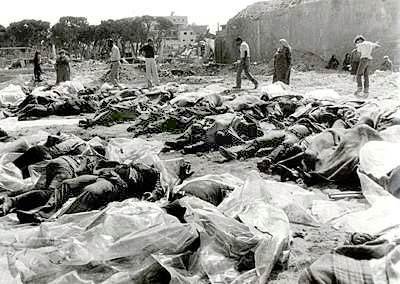

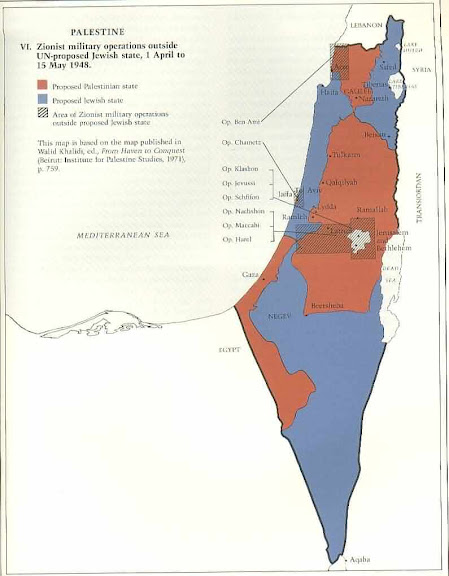
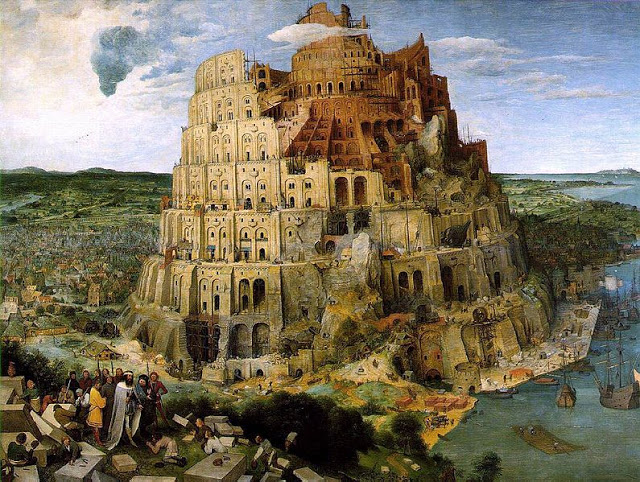
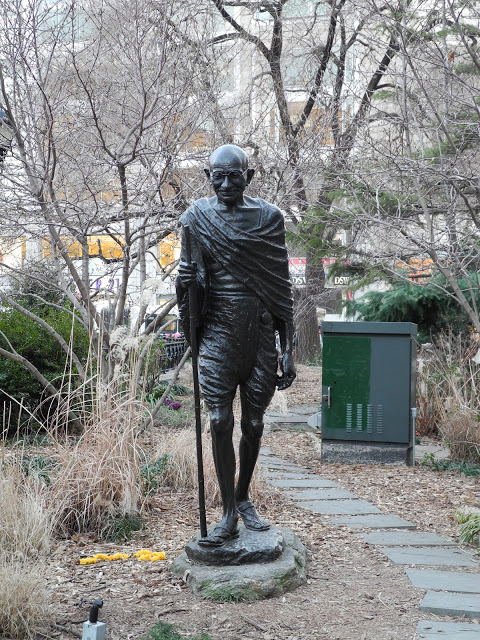


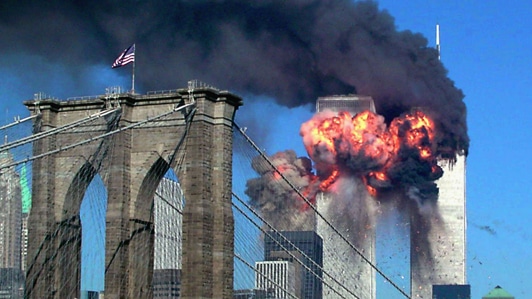




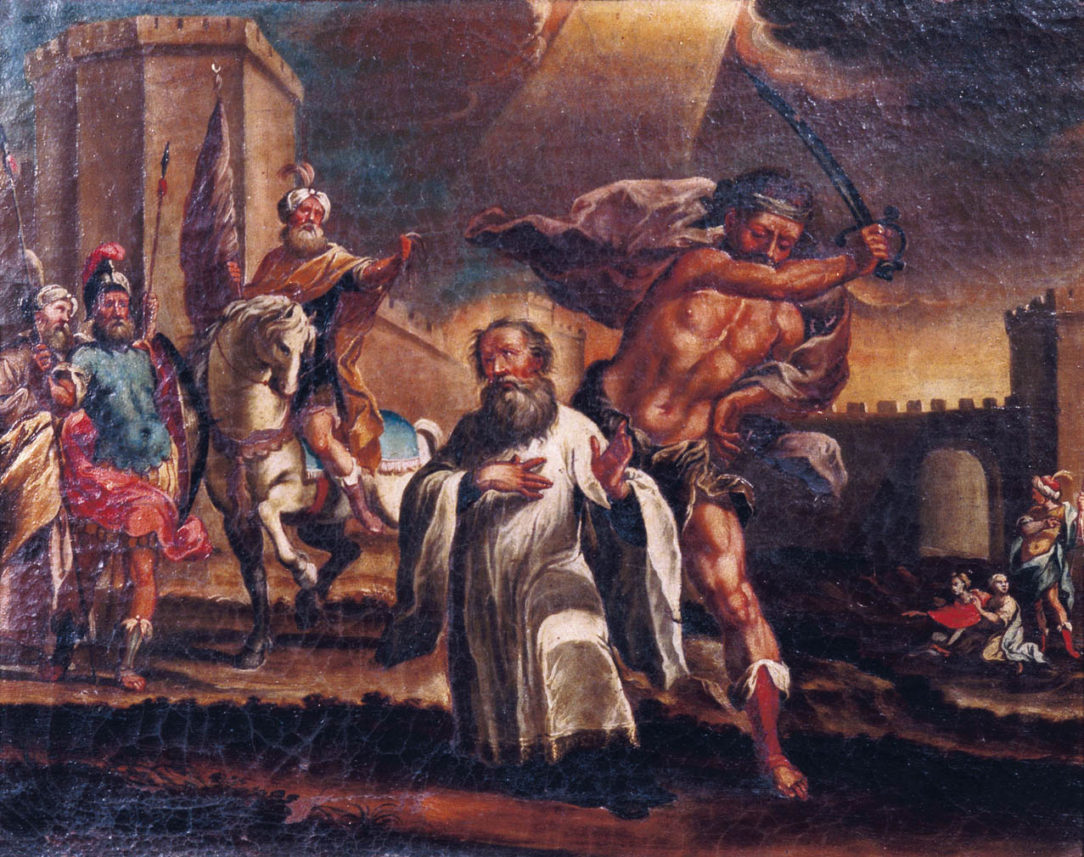




 Bradley's Old Fashioned Weblog