Don’t Pee in the Lift

Don't Pee in the Lift

From country to country you find a lot of laws and rules that don’t seem to make much sense to you at the time, but they’re usually laws like women having to cover themselves in public (Saudi Arabia), or it being illegal to step on the local currency (Thailand).  They even make sense, given the cultural background of the area, or in the sense that stepping on the currency could be construed as a gesture of stepping on (disrespecting) the leader whose image is on that currency note.

Don't Pee in the Lift
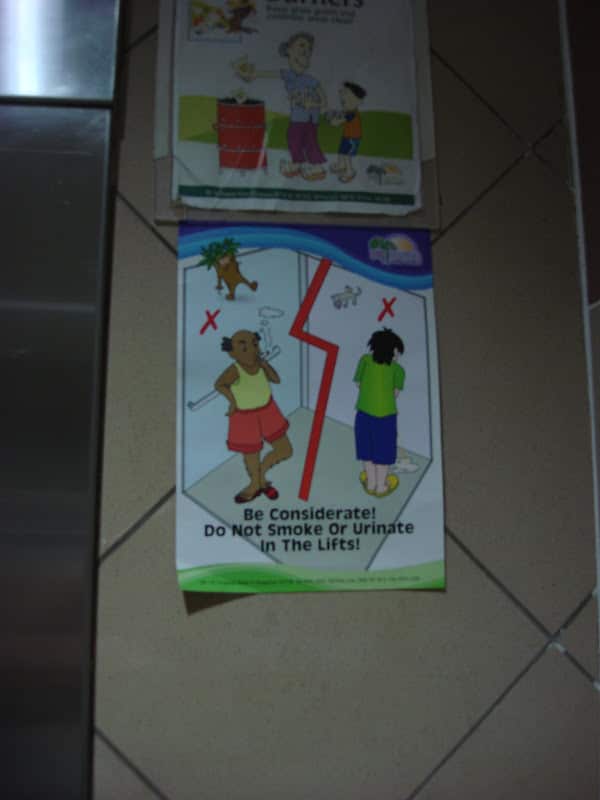
Don’t Pee in the Lift sign in an elevator in Singapore

I found a law in Singapore that kinda just blew my mind though.  It is unlawful to urinate or smoke in the lifts (elevators), and there are signs posted by most lifts to remind you of the fact, as seen above.  Reminding people to not smoke in an elevator is something I can understand.  It’s a matter of common courtesy to non-smokers who have to share those same elevators, possibly with children, to get home.  On the other hand, urinating in an elevator is just something that never crossed my mind.  It’s just not something I’d ever even thought of.  Are people’s mentalities really that different from country to country, that something as basic as only urinating in a toilet (or maybe in the bushes) is something a person has to be reminded of?

When I first saw these signs I was more amused than anything, but I recently stumbled across a forum where an instance of a person urinating in a lift was actually recorded on camera.  And, to top it off, it was a woman.

Saw this in Xin Ming Ri Bao (17th Nov 2008).

A Gril was caught urinating in a HDB lift and it’s caught by the hidden camera.

The girl is believe to be in her 30s.

It happen in Sembawang GRC, but not sure where. Because the offender is facing away from the camera, they can’t identify her. The newspaper report that the town council is going to put up notice with her picture beside lift of HDB (Most likely Sembawang GRC) to warn others not to do it….

==============================

I thought only boys or some dogs will do such thing in HDB lift… didn’t know girls also so daring….

I’m actually at a loss for words on this one.  Is this just a cultural thing, or is it an individual fault?  I would typically lean towards the latter, but the fact that there are signs up means that this must happen, or must have happened before, quite often.

New Business Flower Arrangements

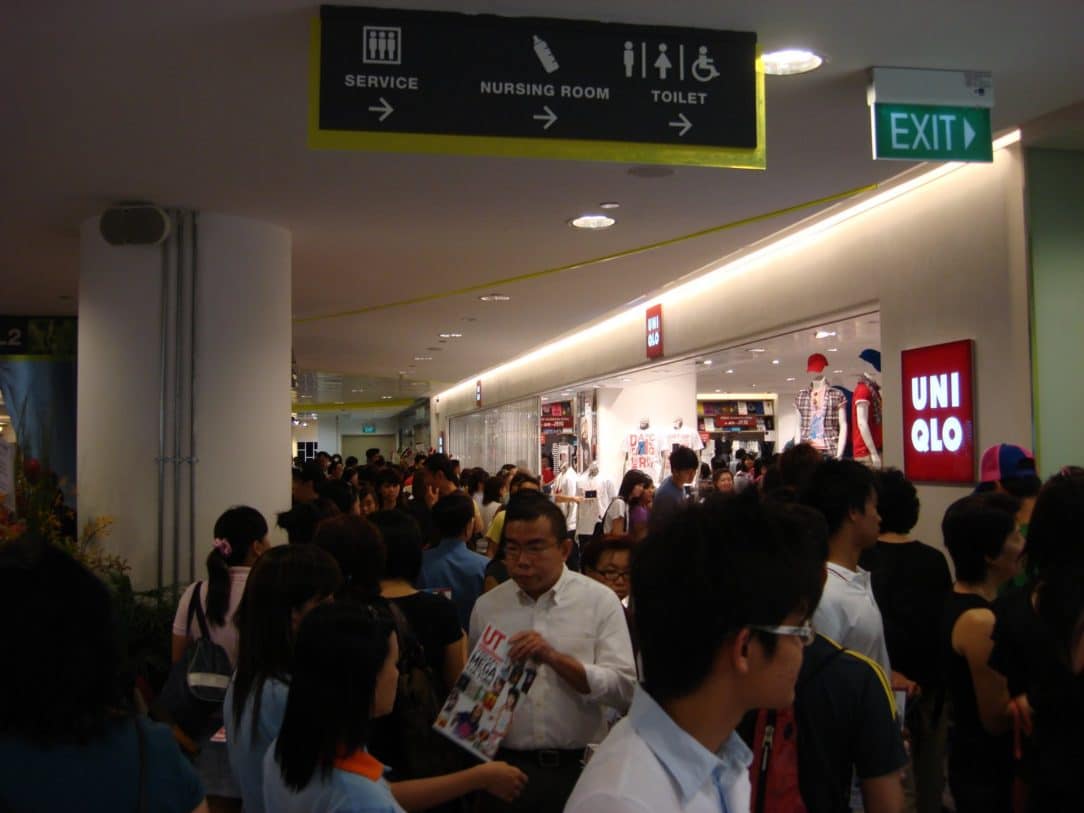
Yesterday, the new mall, Tampines 1, was packed with these flower arrangements to the point that they had to be shifted around constantly to make room for customers.

In fact, the store that seemed to be drawing the largest crowd, UNI QLO, actually moved their arrangements to a column in the center of the walkway in front of their store to make way for a line of people waiting to get in. I’m not too sure what the deal is with UNI QLO, except that it’s supposed to be a premier fashion line in Japan and people seemed particularly excited to get in. I’ll have to take a look around there soon, but I’ll wait until it’s not so crowded.

Apparently these flower arrangements are significant enough to keep on display even though it impedes customer traffic. Most are marked with cards from other business, or perhaps financial backers, offering “best wishes” and “luck.” Maybe that’s all it really boils down to? The concept that having these arrangements in front of your business on opening day is good luck? Sort of like how most Singaporeans and Filipinos I’ve met have a fear of black cats?

The last US business I went to on opening day was quite a few years ago. It was a Johnny Carrino’s in Columbus, Georgia.  I don’t recall seeing anything like this there, so I’m wondering if it’s particular to Singapore, to Chinese culture, to Asia, or if I’ve been living under a rock and just never noticed them in the US before.

Cosplayers at Tampines 1

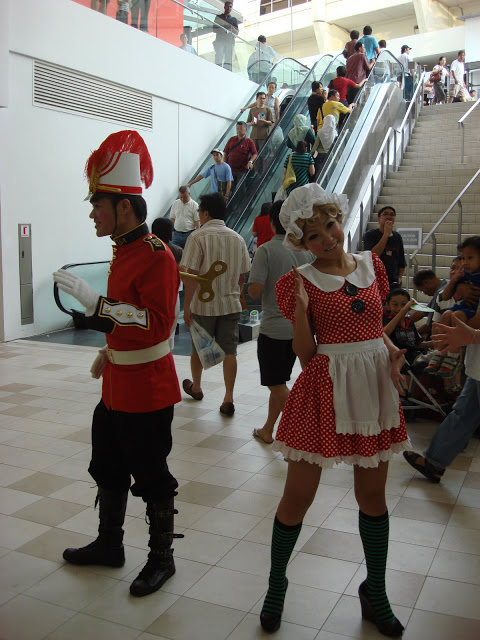
I’m not entirely sure what they were advertising, but their outfits were really great, so I took some photos.

Toy Soldier and Toy Maid
Toy Soldier and Toy Maid Routine
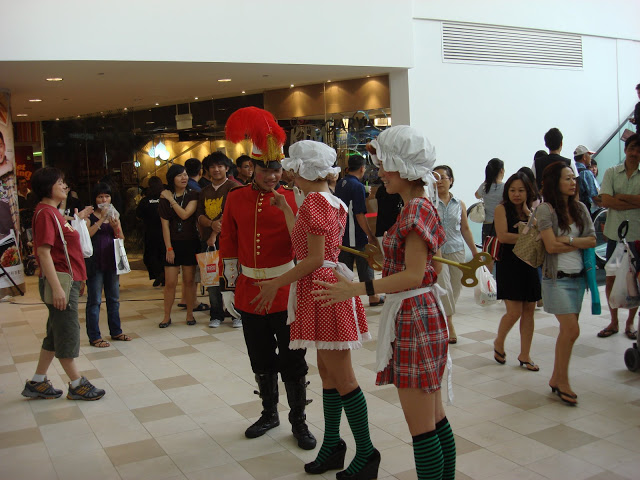
Toy Soldier and Toy Maids

They were even acting the part!  They would only move when someone “wound up” the key on their backs and then after a while they would stop again.  It was very fun to watch for a while!

By the way, in that third photo, the guy is totally checking out that girl’s “buttons”!  Ha ha ha!

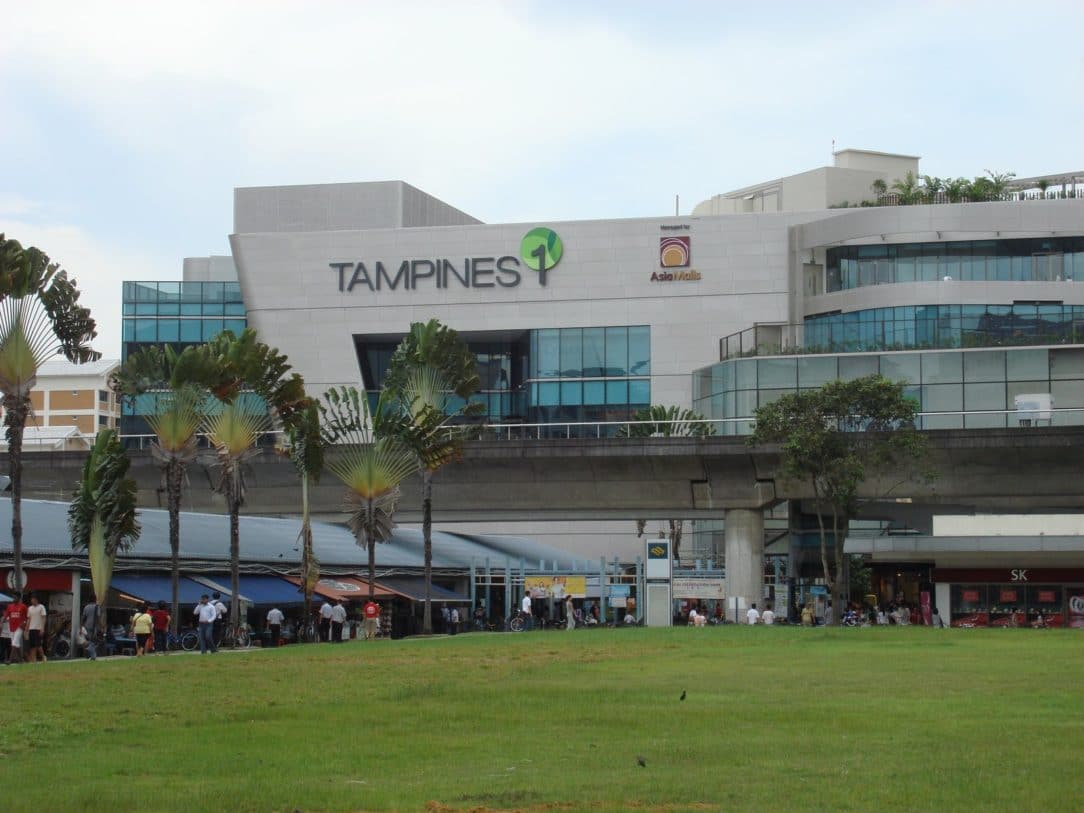
Tampines 1 Open For Business

Singapore has a heavy shopping culture. Imagine your high school days when you had to wear the right clothes to be part of the “in” crowd. Now imagine that experience on crack. You’ll sort of get the picture. Most of the younger Singaporeans pride themselves on their handbags, mobile phones, shoes or having the newest Mango apparel. They crave the latest and greatest items and pursue the hottest fashion trends. I suppose there’s nothing inherently wrong with the Singaporean love for shopping, but it definitely takes some getting used to. Keeping that in mind, imagine the chaos that surrounds the opening of a new mall, especially one in a prime location.

The mall was packed tight with people and everyone was excited to explore the mall and see all of the new shops. While walking through the mall I saw people of all ages, as if elderly mothers and fathers had been dressed and dragged out of the house for the big event. I also saw quite a few foreigners wandering around, which is highly unusual for an area so far from downtown Singapore. In fact, the people were almost as fascinating and entertaining as the mall itself.

Unfortunately, it seems that there was such a rush to cash in on the excitement and newness factor that the mall was opened before it was completely finished. With the interior of the mall not quite polished, the “Wow” effect wasn’t as great as it could’ve been. For example, the tile flooring was still a bit dusty and the fountain on the bottom floor seemed more like it was leaking than running. While I was walking around the mall I sneezed frequently and I was happy to be able to blow my nose when I got home later.

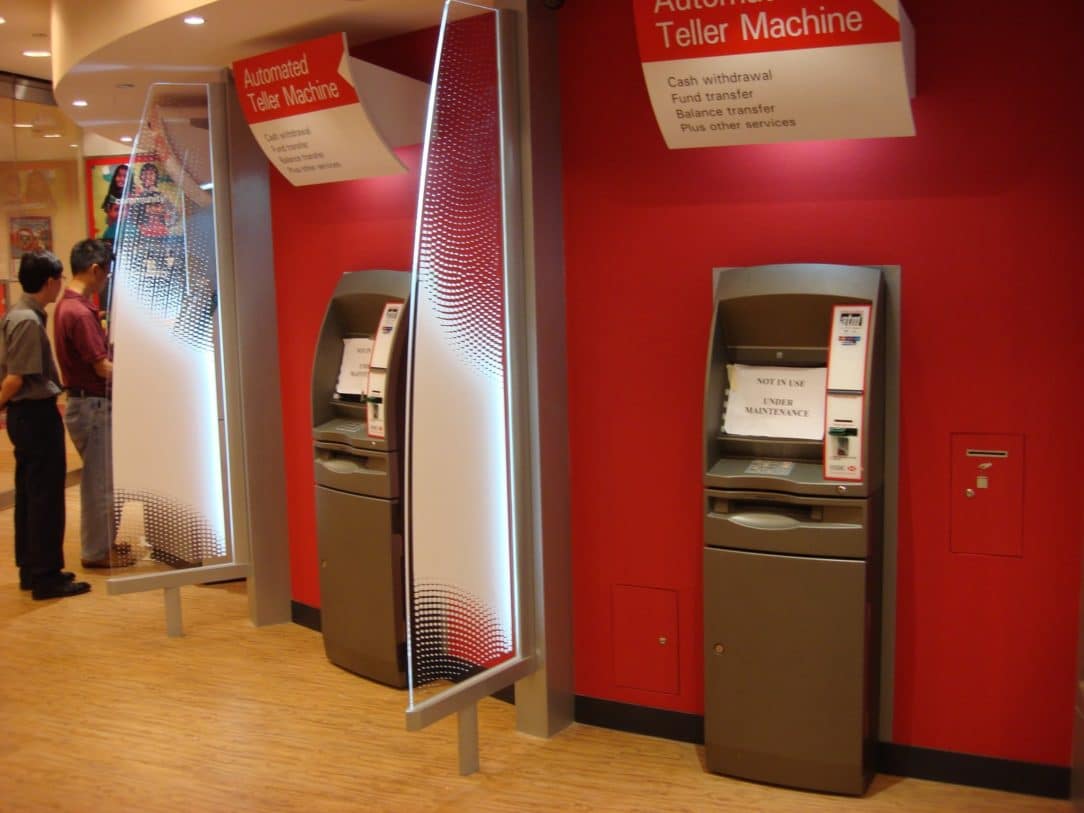
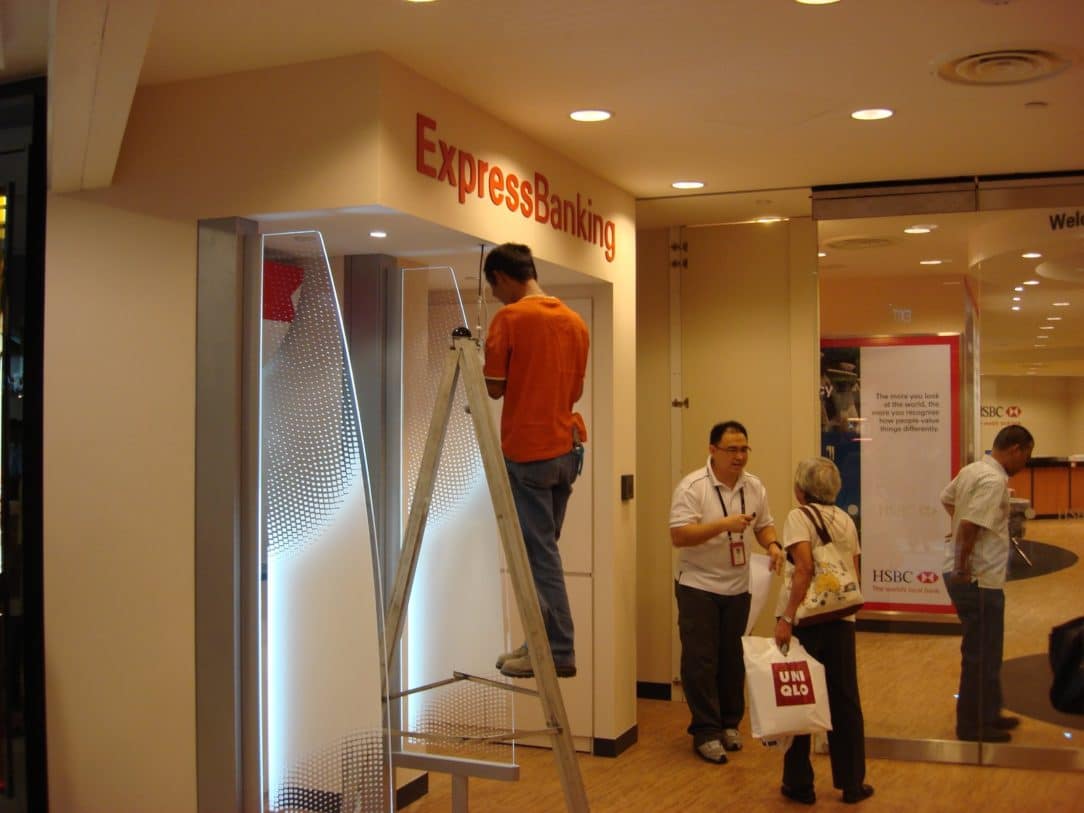
Besides the incompleteness of the mall itself, not all of the stores were open. In fact, some were still under construction, including the HSBC bank pictured below, which is on the lower level. Hope you brought cash with you, because these ATMs are still down for the count!

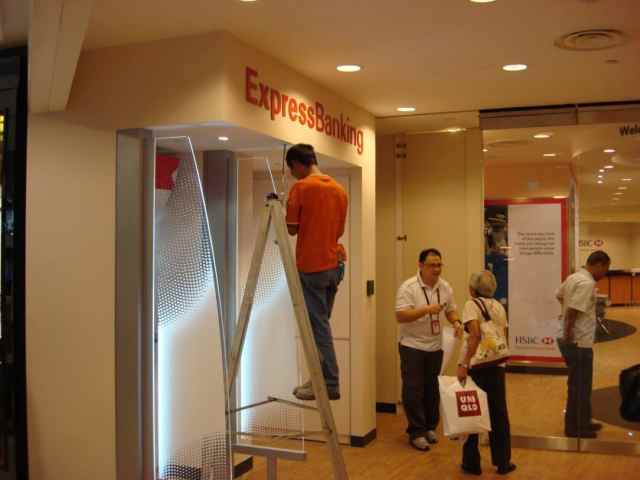
Handling all of these minor (and in some cases major) issues, work crews were scattered throughout the mall, hurriedly trying to apply their finishing touches. Still, they did a great job getting the place ready before opening the doors today. Just a week ago I would have said that the mall couldn’t have been opened any earlier than the end of the month, judging by the exterior and what I could see through the windows. They must have been pulling all-nighters to make sure they met their opening deadline, or at least partially met it.

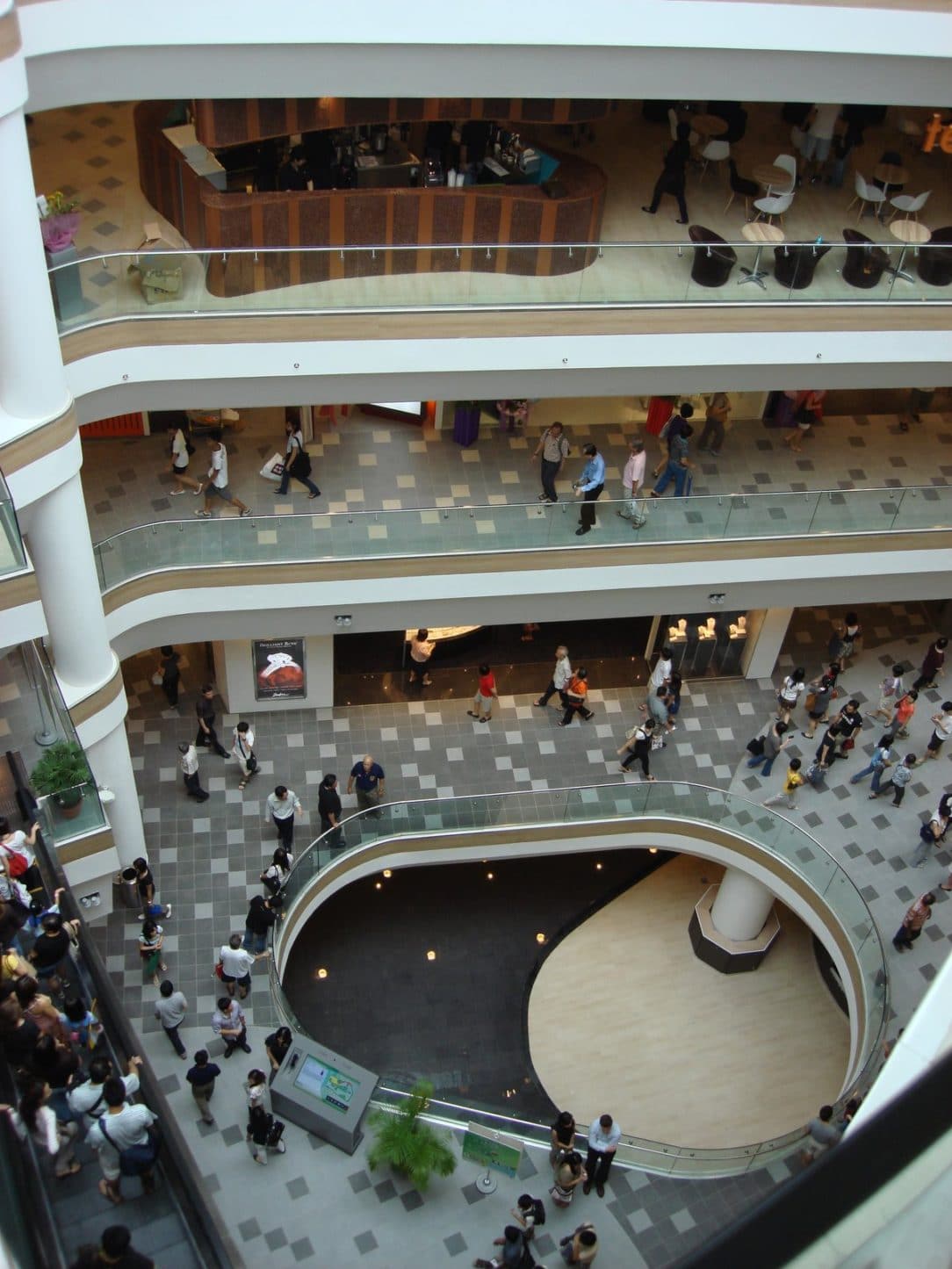
Still, those minor eye sores didn’t detract from the overall appearance of the mall. Have a look at the shot below, which was taken from the top floor near the Petstation store.

The overall effect of the mall and the quality of the decor in the shops is reminiscent of the malls you find along Orchard. When the interior of this mall is actually completed, it should be fantastic!

Also, as a side note, if you take a close look in photo above (click it for a larger image) you’ll see an information panel on the ground floor near the round railing that lists the stores in the mall. Going a step beyond the average poster board, this little marvel is completely touch screen and interactive. Despite its lonely appearance in this photo, every time I tried to get near it there was a mob of people trying to play with it, so I couldn’t really dig into it to see if it went further than just listing locations. It does feature a nifty “You Are Here” arrow though!

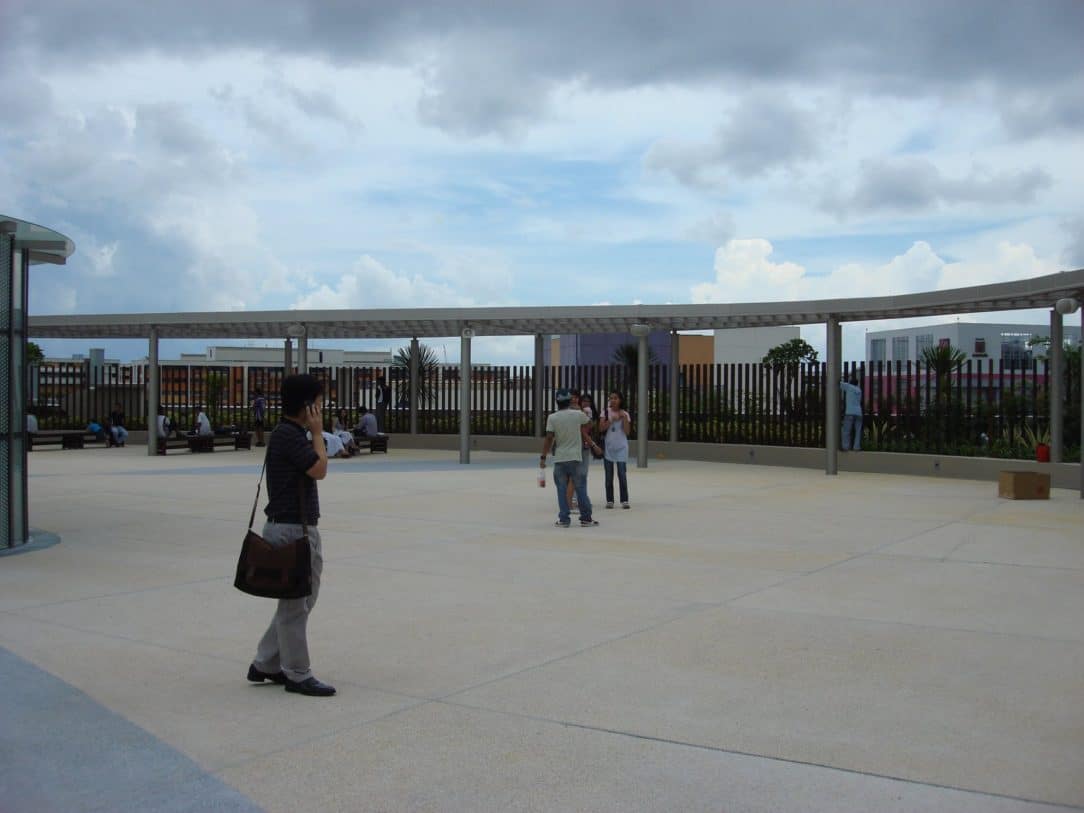
One of the special things about Tampines 1 is that the building designers seemed to have recognized peoples’ desire to just hang out at the mall and incorporated it into their building plans. Tampines 1 has multiple outdoor viewing decks that you can relax on. The lower viewing deck offers a very nice, mostly unobstructed view of the Tampines Central area as well. As with the rest of the mall, these areas seemed a bit unfinished, especially in the lack of benches, but there’s definitely potential in these areas for cart vendors and perhaps an outdoor coffee shop.

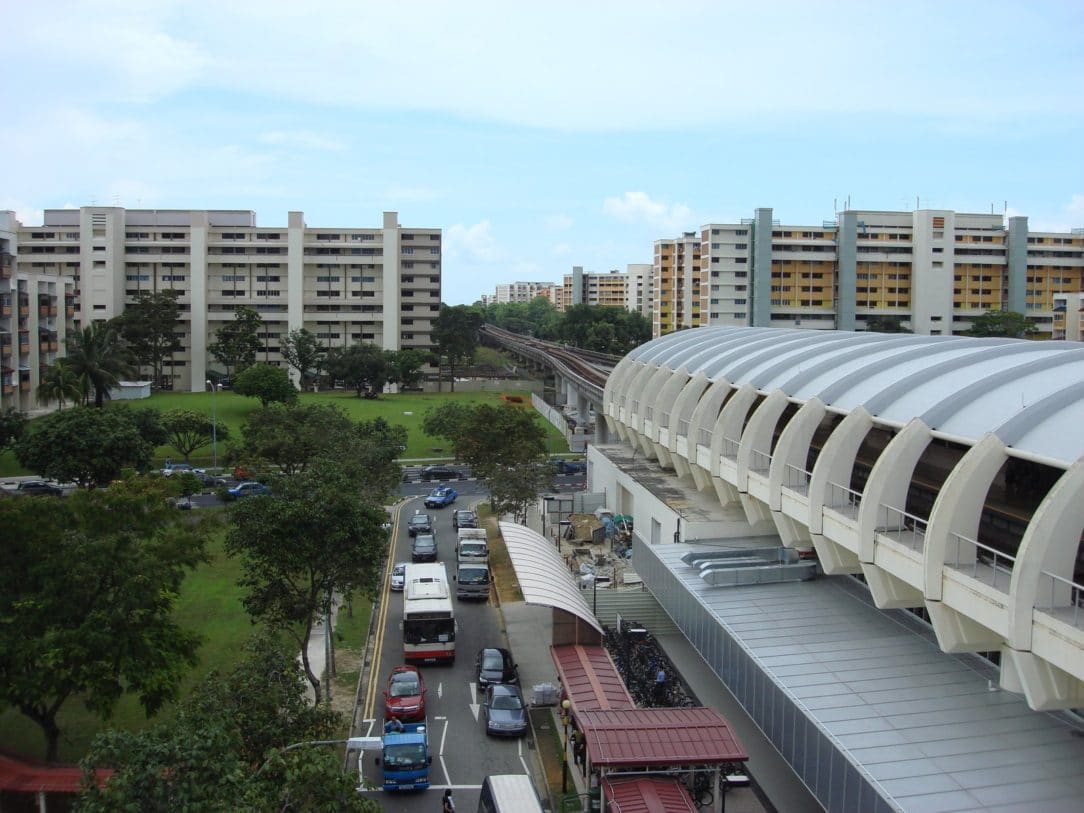
Also, here’s a shot I took of the Tampines MRT station from the lower viewing deck:

One of the great things about this mall is the variety of stores. I was somewhat concerned that this mall would be just a rehash of what was already available in the two existing malls: Tampines Mall and Century Square. Thankfully, this didn’t turn out to be the case. There are a few stores that seem to have migrated over, Times being the one that sticks out most in my mind. It was a good choice for them to make the move. One of the problems with Century Square and Tampines Mall is that the store spaces were just too small. Tampines 1 is generous with its floor space and Times took advantage of that to bring in a wider variety of books, which will be better for their business in the long run. Like I said, though, there are plenty of new stores, or new to Tampines anyways, and I’m glad that I have one less reason to have to venture all the way down to Orchard just for shopping.

Something my wife and I love to do is eat out at good restaurants. The few that were previously available in the malls in Tampines were starting to get old, so I’m glad to see that there are some new options. Here are some I’m very excited to try in the near future:

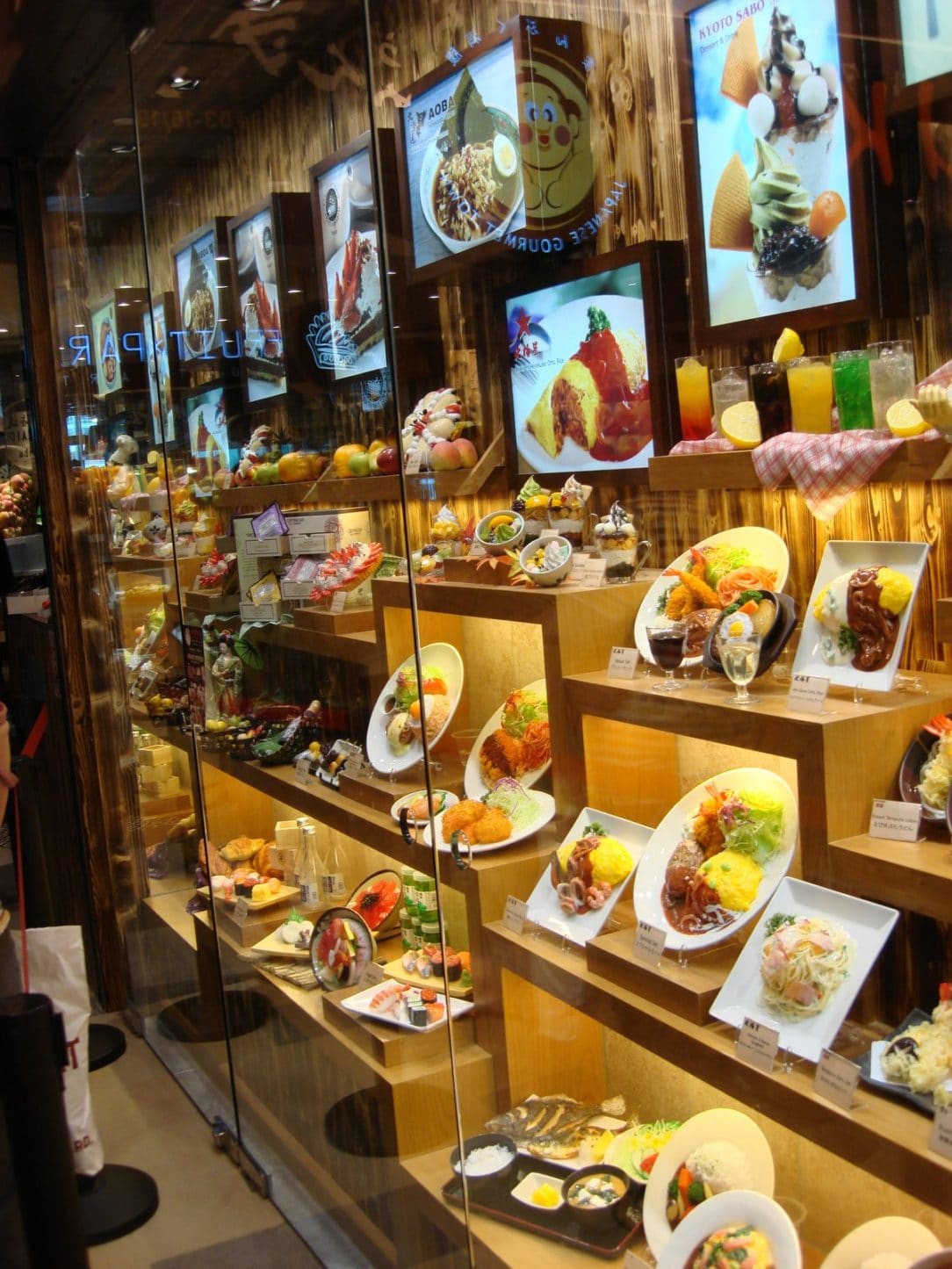
This first one is called Manpuku, and is a Japanese food restaurant. In the second photo you can see some of the menu items. The wall to the right of the restaurant entrance is a glass display area that showcases their offerings. It’s really a great way to encourage people to try the food and keep coming back for more.

This second restaurant is called Sushi Tei. Looking into the restaurant, the first thing you’ll notice is the conveyor belt of sushi dishes sliding past the bar. It’s a very entertaining and engaging setup and reminded me of the sushi restaurant located near the gym and pool just a short distance from Century Square. I took a look at the menu and the prices are reasonable for most of the items, though the food at the sushi place by the gym looked better and is better priced. I wish I could remember the name of the place.

There were a few other restaurants I noticed but most of them were generic.

The last place I want to mention is called “teadot”. My wife and I enjoy having tea in the evening sometimes, so I’m excited to try this place out. Coffee Bean and Starbucks serve tea, but more as just an option than with any real focus. “teadot” should be a nice treat, and besides that, look at the furnishings. It would be cool just to sit there.

Overall, Tampines 1 is a fantastic addition to the shopping scene in the Tampines area and I’m sure my wife and I will be spending a lot of time there in the future, window shopping and actually shopping too!

I hope you enjoyed my review of Tampines 1 and I hope you enjoy your first trip there!
Beer & Cigarettes in Singapore

Differences in prices between locations is nothing new to me, but I was shocked to see the price of alcohol and tobacco products in Singapore.

I spent most of the years I lived in the US in the southern states, where prices are more reasonable, due to lower taxes. I won’t go into the “when I was younger” stuff, but when I left the US in 2008 you could get a pack of cigarettes for about 3 dollars in Texas. It was about the same in Georgia. When I would visit my mother in New York City I would typically bring cigarettes with me, because they’re about 7 dollars a pack there, which I thought was ridiculously expensive. Beer is about 5 to 6 bucks a pack regardless of where you are in the States.

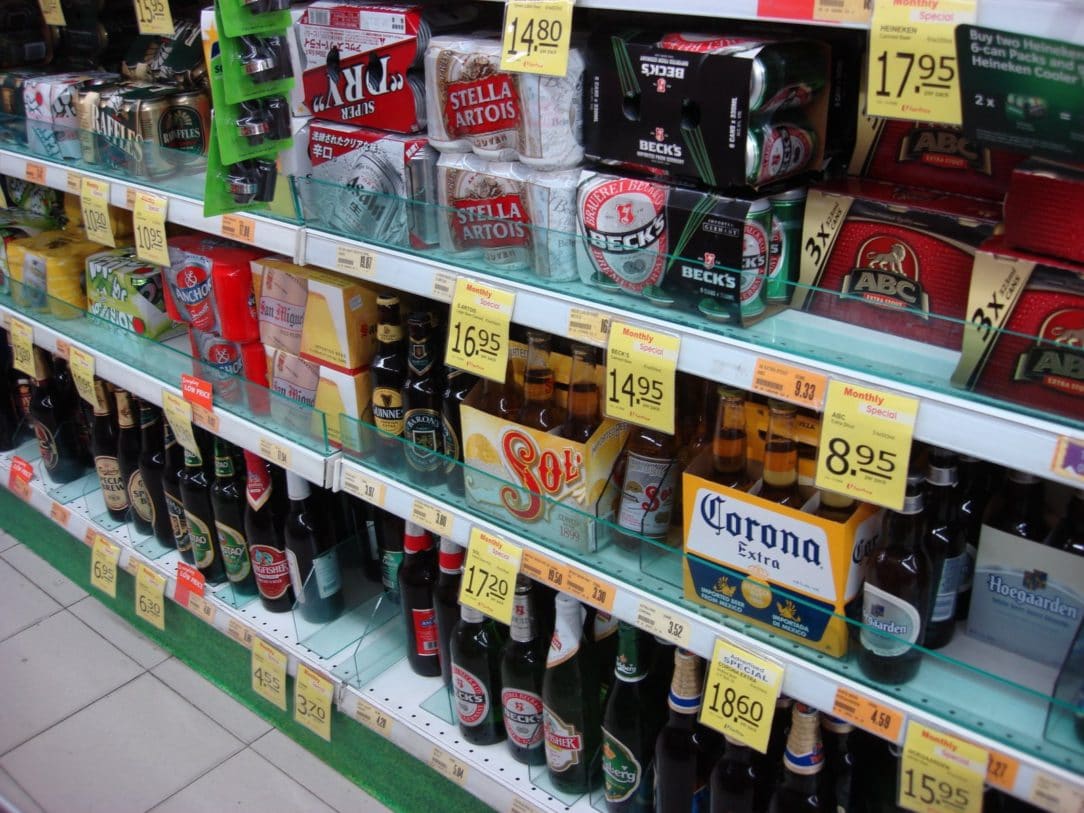
So, like I said, I was used to seeing different prices for these items. Still, I was shocked when I saw that in Singapore the average price for a pack of cigarettes is 11 Singapore dollars and the average price for a six pack is about 15 to 18 Singapore dollars. I had to wonder why the prices were so high, and after having spent some time here, I think I’ve found the reason. Singapore is a country that prides itself on cleanliness and that carries over into a push by the government to promote healthy living.

That’s not all bad, of course. I’ve never seen a place with so many parks, free work-out areas, and playgrounds, all of which are kept in near pristine condition. On top of that, each regional area has a gym and pool, which have very low entrance fees. If you’re a swimmer or you like to work out in a gym then you’ll definitely appreciate the Singapore government’s health initiatives.

On the other hand, the Singapore government has also put steep taxes on the alcohol and tobacco, to influence people to use them less, if not quit entirely. Again, that’s not exactly a bad thing. However, for foreigners who come to Singapore to live, it requires a slight lifestyle modification.

I never really drank much anyways, so cutting alcohol almost completely out of my life didn’t phase me. The cost of the cigarettes, though, makes my wallet cry. It’s hard to go from carefree smoking to counting your cigarettes and counting your puffs. I remember tossing half smoked cigarettes into butt cans on my way into buildings, but now I stop to finish the cigarette before continuing.

So, if you move to Singapore and like to drink and smoke, expect the amount of time you spend partying to get cut down. On the bright side, you can take advantage of the convenience of the gyms and pools to get back into shape, so you can look good when you take vacations to the numerous, gorgeous beaches in the Southeast Asia area.

Whitening Products in the Philippines

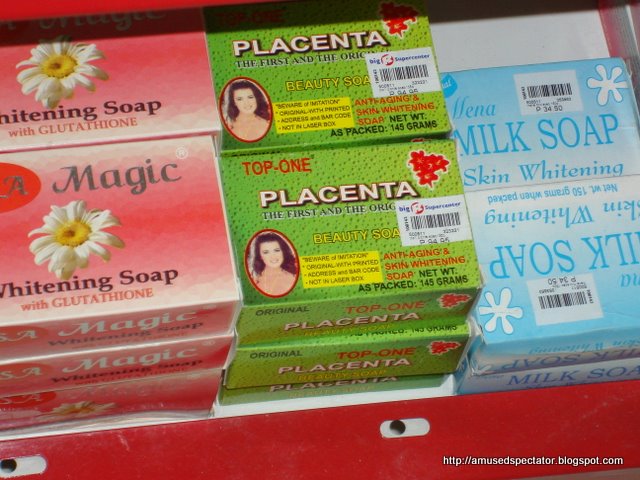
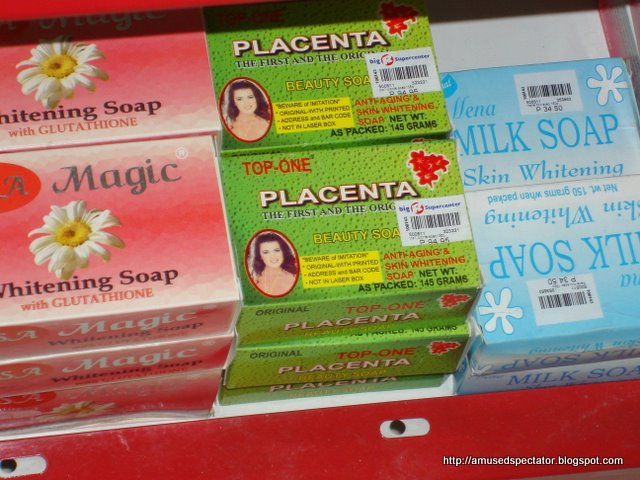
One of the most peculiar things I found in the Philippines is the array of whitening products available in the stores. The range of the products is impressive to the point of national obsession. There are whitening soaps, whitening creams, whitening powders, whitening deodorants, whitening pills, etc etc.

(And as a side note, you can see in these commercials that most of their actors / actresses are mixed Filipino / Caucasian, further promoting the white is better mentality.)

It took me a while to wrap my mind around the purpose of these products, because the concept of wanting to whiten your skin was entirely foreign to me. In the US, people like to have a tan, and on the extreme side may visit tanning beds occasionally. Plus, becoming more tanned due to sun exposure is natural and normal. The idea of popping pills (or using any of these other products) to try to force your skin to turn a color it’s not meant to naturally be is absurd.

First of all, how healthy can it be to use these products to change the color of your skin? Second of all, there’s nothing wrong with the color of Filipinos’ / Filipinas’ skin in the first place! That naturally tanned skin is part of a Filipina’s appeal, at least from my perspective anyways. It’s part of what makes them unique and desirable. I’m not a make-up artist or expert, but beauty products should be used to augment your natural beauty, not change it entirely.

My wife explained what she thinks is the reasoning behind this fashion trend. The Philippines has been repeatedly dominated and/or occupied by other countries, including Spain (300 years of occupation), the US and Japan. This constant domination by fair skinned peoples may have caused a “whiter is better” mentality to set in and eventually become part of the national media/pop/fashion mainstream. My wife went on to say that fair skin has an impact on social status as well. The darker your skin is, the more likely you are to be ridiculed or socially ostracized from your peers. This perception is also carried over to visiting foreigners, in that white foreigners are placed on a pedestal and black foreigners are seen simply as a curiosity and an opportunity to try to make some money.

Sent Off In Style

Remember how I said in an earlier post that Filipinos will use a motorbike for just about anything?

Well, when my wife and I flew back out of the Philippines, we had to leave through Clark Air Base, since that’s where we arrived at. We spent most of our stay in Antipolo and had to commute back to Pampanga for our flight. The original plan was to leave Antipolo the day before, spend the night in Pampanga and then head back to the airport the next day. We just couldn’t bring ourselves to leave Antipolo though, so we wound up leaving the morning of our flight.

Our trip back to Pampanga was a bit hectic. We stopped by my brother-in-law’s restaurant to have a meal first and then we headed to Manila. Before leaving Manila we had to stop by POEA. That’s the Philippine Overseas Employment Administration, or in other words, another place to get slammed by senseless fees. We had a bit of baggage with us, so my wife deposited me at the nearest Starbucks, told me to have a coffee and surf the net on my laptop and then disappeared for a while. I think she knew I would have fun surfing the net on my own laptop for the first time in 8 days and she probably didn’t want me in the POEA. If I were there, they might have tried to hit her with more fees, just because, and then I would get pissed off, and it would have led to me making a scene and being aggravated for the rest of the day.

After that we had to find our way to a bus terminal. So, we jumped in a cab. Unfortunately, the cab deposited us at a bus terminal that only had routes going in the opposite direction from where we wanted to go, so we had to do some walking. It was hot that day, and we wound up being a little toasted by the sun while we trudged up the street. Luckily, a bus going to Pampanga happened to be stopped on the side of the road, trying to pull in more passengers before it hit the highway. We hopped on and relaxed.

By this time, we were counting the hours. We weren’t sure we were going to make it on time. The bus was kind of puttering around too, stopping everywhere to find more passengers and we started to get nervous, but once we hit the highway this guy’s foot turned to lead. He laid on the horn and tailgated people to get them out of his way and we reached Angeles City in a short 55 minutes.

Now, it was time for another headache. When we got off at Angeles City we realized we didn’t remember exactly how to get back to my father-in-law’s house so we could get the rest of our baggage and freshen up a bit. After a furious texting session, we finally gave up on outside help and took our chances. We hopped onto a Jeepney that deposited us at what looked like a Jeepney terminal. Then we just asked around until someone pointed us in the right direction. The ride on the 2nd Jeepney was a bit long, and we were nervous because we weren’t sure we were going the right way, but eventually we saw things that looked familiar and we got off in the right place. A short tricycle ride later and we were at my father-in-law’s house.

So, the hard part should be over right? Well, not quite. The yard is walled and the gate was locked. My father-in-law wasn’t answering his phone, so we wound up leaning up against the wall by the house, yelling for him. We knew he was there, since the house’s windows were open and the gate was locked from the inside. I was about to look for a place to climb the wall when we heard him call out from inside the house that he was coming. Turns out he caught a cold and was laid up in bed, passed out.

Once we got in we packed our things together and then took showers. Yup! Showers! We got to enjoy the first pay-off of fronting the money to have the water connection hooked up! The water was cool, which was refreshing on a hot day. I prefer hot showers usually, but anything is preferable to dragging water in from the well and washing out of a bucket. In Asia, “central” anything is rare. As in, there’s no central A/C. There’s no need for central heating of course. Also, there’s no central water heater. The only place you usually get hot water is in the showers, and that’s only if you spend extra cash on a wall mounted water heating unit.

So, after we freshened up, we began our journey to the airport at Clark Air Base, accompanied by my father-in-law, who wanted to see us off. My mother-in-law was still on her way from Manila and said she would catch up with us at the airport. So, how did we get from the house in Pampanga to Clark? Here’s where the motorbike comes in. Part of our trip was on a modified motorbike that had a frame built around it, including a passenger area/cargo area in the back. I was amused, and impressed, by the owner’s ingenuity.

On the trip, I had the pleasure of seeing this pigs riding in the sidecar of another motorbike (which I also showed in Part 9).

The ride in the modified motorbike was fun, but it was incredibly slow. By the time it dropped us off outside the main gate to Clark Air Base, I was almost sure we’d rode all the way back to Antipolo. Outside the gate, we had one more Jeepney ride to go before we made it to the terminal.

We went ahead and checked in as soon as we got there. We arrived at 7:30 PM, and check-in had started at 7:00 PM. Afterward, we came back out and talked for a while and waited around for my wife’s mom. She must have gotten hung up in traffic though, because at 7:55 PM we gave up and went inside to finish the check in process and move to the departure gate area. We didn’t want to risk missing our flight. We wound up saying our goodbyes to her over the phone. She arrived at the terminal at about 8:05 PM, but by then we’d already gone through immigration.

Corruption in the Philippines

I was told that in the Philippines, making money depends on how inventive you are, and how entreprenuerial you can be.  The average salary in the Philippines doesn’t count for much when converted to almost any other foreign currency, and most salaries in the Philippines don’t count for much there either.  This is especially true in the provincial areas, where an average salary might be 7,000 – 12,000 PHP (144 USD – 248 USD) per month.

Even the police and military in the Philippines receive low wages and have to do extra jobs on the side just to get by.  To me, this seems detrimental to the overall health of the nation, especially in regards to the military and police.  If the people who are meant to protect you can’t concentrate on their jobs because they’re so poor, they’ll either become ineffective or they’ll exploit their position, leading to corruption.

It’s no secret that the Philippines already has problems with corruption. The Philippines should be listed as an example of political corruption in encyclopedias, as it’s almost become a tradition for politicians in power to screw over the citizens. According to agencies like Transparency International, and Filipinos, the current president, Gloria Arroyo, is considered to be the most corrupt president in the history of the country. So, where do you lay the blame? The people who elected her? Well, maybe in a country like the US, where there are actually checks and balances and a somewhat fair election, but Gloria openly admitted to cheating during the 2004 election to win the presidency.

So, was the corruption in the Philippines evident even to me? Sure it was. The poor quality of public works like roads, phone and water services, the low quality of life, the rampant inflation between my first visit a year ago and this visit, and fees, fees, and more fees. Did you know you even have to pay a fee just to leave the country? It applies to tourists and Philippine nationals alike, except it’s higher for foreigners, because like I said before, all foreigners are rich in the eyes of Filipinos. They like to call it a “Terminal Usage Fee” and it comes up to something like 16 USD. What’s this fee going to? It’s certainly not going towards improving the terminals I’ve used there. That’s for damn sure. Again, I’d like to point you back to a prior post I made about NAIA, in Manila, here. For my wife, the fee is only 100 pesos (about 2 USD) but to get the paperwork done she has to travel to an office in Manila and sit around for an hour or more. On top of that they regularly charge Filipinos who work overseas exorbitant fees for something called the Overseas Workers Welfare Administrations, and Filipinos are required to upkeep their domestic Philhealth healthcare, even though they’re abroad and don’t need it. It’s all just ridiculous. When I left the US, I wasn’t required to pay extra fees. I’m not required to join an organization just because I left the country and have plans of working abroad. In fact, my foreign earned revenue won’t even be taxed up to a certain point (which is pretty high).

The Philippines is a country with a lot of potential that will never be realized as long as people like Arroyo sit in office, embezzling money from the people for the purposes of self-enrichment (and not the good kind like learning a second language either) and self-aggrandizement. It’s almost disgusting to look at. In fact, it’s almost like watching a large group of schoolyard bullies fight for authority, not realizing that there’s so much more beyond the schoolyard fence.

Montage of Poverty and Upscale Construction

While we were commuting back and forth through the Philippines I noticed something that I haven’t seen anywhere else.  The Philippines is like a montage of poverty, middle class, and upper-class establishments and homes.

What I mean is that in, say, the US, you have neighborhoods that are well-to-do.  The houses are all very nice.  Then you have middle class neighborhoods, lower class neighborhoods, and poverty level neighborhoods.  In the commercial areas, everything is fairly well put together.  Everything has a sort of continuity to it.  You see what you expect to see for the area of town you’re in.  Maybe it has something to do with zoning, or with developers buying large plots of land.  I don’t know.

In the Philippines, however, there doesn’t seem to be any kind of zoning.  There doesn’t seem to be any sort of building code either.  You might be standing in front of a popular mall that’s as modern and attractive as any mall in the US or Singapore, but right next to it, or across the street, are buildings that look like they were constructed entirely of plywood and sheet metal.  You could be standing in front of a McDonalds, but when you look down the alley next to it, you see shanties that would make the Red Cross cringe for the lack of quality of life.  It’s an incredibly jarring experience.

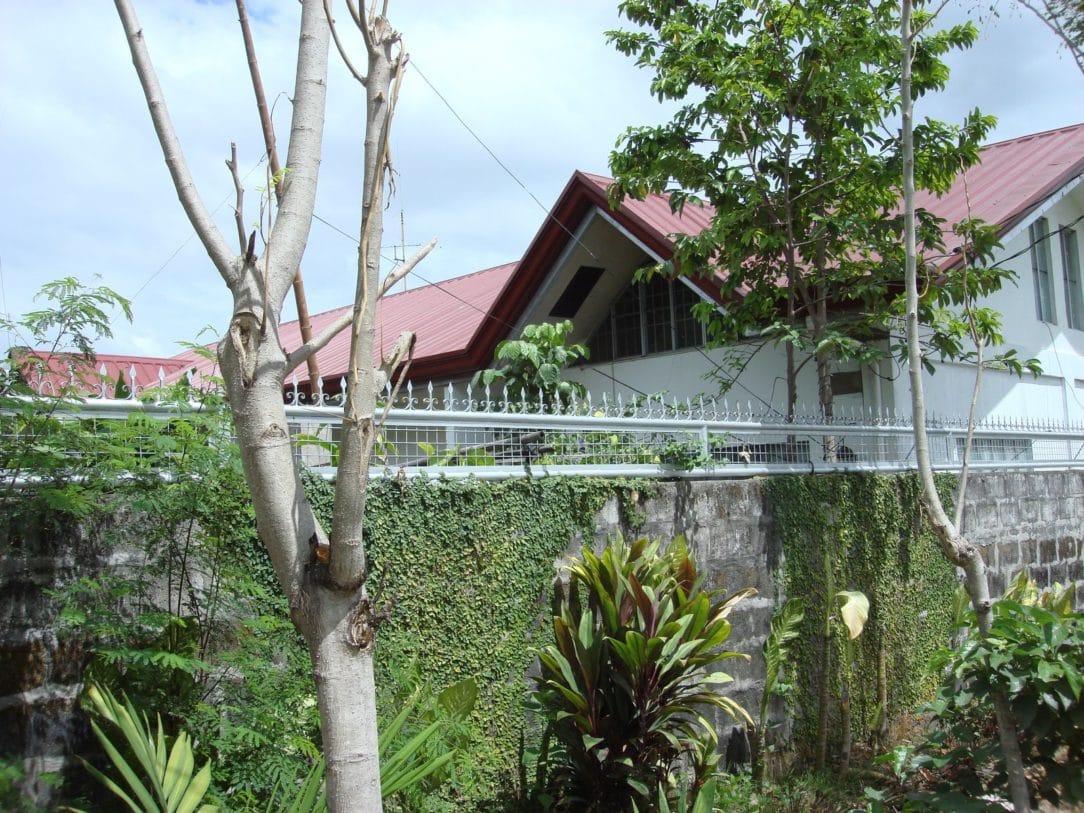
This seems to be common to almost every part of the Philippines.  The old and the new, the ultra-poor and the ultra-posh, set up right next to each other.  You can even see this in the housing areas, such as they are.  You might have a nicely built home right next to a house that even bums wouldn’t want to live in, in the US.  From what I can see, as long as the land is yours, you can put whatever you want to on it, of whatever quality you want.  There was one instance where I wondered about whether or not the homes were built legally.  We were riding a bus on the highway between Angeles City and Manila.  The portion of the highway we were on was raised about two stories above the ground.  I’m not sure why it was raised, except maybe that there were quite a few little streams passing below the road.  What caught my attention is that people who were farming the land had set up their houses below the road, in the shade it created.  Maybe laws are different in the Philippines, but I assumed that doing something like that would be considered unsafe and illegal.

There are areas where land developers seem to be trying to build a more modern type of sub-division.  One in particular comes to mind, near the housing area where my wife’s family lives in Antipolo.  It’s walled off, gated, and the houses inside have a modern construction to them.  Just outside the wall, though, is the normal eye-jarring experience.  I’ve also seen posh, walled and gated apartment complexes situated in the middle of an area that looks like a slum.

On my next trip I’ll try to take a few pictures to add to this post as examples.

Standing Out Like A Sore Thumb

When you’re a white guy and you’re in the Philippines you’re something like a superstar.  It feels like you’re being followed around by the paparazzi or something.  This isn’t really the case in the Manila area, well not so much anyways, but out in the provincial areas, everyone takes a look at you.

I get the feeling that in the Philippines people who live in the provincial areas don’t travel too much, so they probably don’t see foreigners very often.  When I was walking around the Pampanga area people would sometimes plainly stare.

There was an instance where I was riding on a Jeepney with my wife and my father-in-law.  Two Filipinas were sitting across from us at opposite ends of the bench.  Every time I looked their way they were eyeing me.  One of them had a distasteful or maybe a hateful look on her face.  Maybe she had something against me being there, or maybe the look was aimed at my wife, who’s also a Filipina.  The other one looked like she was hoping I would come talk to her.  When the latter one got off the Jeepney and walked past us, she gave me a funny looking smile, like she was trying to be cute.  I thought it was even more strange, because she didn’t seem to care that my wife was sitting there with me.  It’s not as if I was trying to hide my ring or anything.  My wife told me that it’s normal.  Just the fact that you’re from another country makes you extra attractive in the Philippines and she says a lot of the girls there are very unscrupulous when it comes to married men.

Other times the stares weren’t quite so pleasant.  When we were traveling from Porac to Antipolo I was carrying my laptop in a bag.  Quite a few people looked me up and down like they were sizing me up and contemplating what might be in my bag and whether or not it might be worthwhile to try to rob me.  My wife says that a lot of Filipinos have the mentality that all foreigners in the Philippines must be rich.

That mentality definitely has its downsides.  Everywhere you go people call out “Hey mister! Hey mister!” to you, trying to get you to purchase something from their stall or something they’re carrying around.  Like I mentioned in a previous post, it’s like having a cloud of mosquitoes buzzing around you all the time.

Being a foreigner in the Philippines has its ups and downs.  Sometimes you feel like a superstar.  Other times you wish you could just blend in and enjoy the scenery without being bothered.