
These roses under my window make no reference to former roses or to better ones; they are for what they are… There is simply the rose; it is perfect in every moment of its existence.
Ralph Waldo Emerson
Bradley's Old Fashioned Weblog
A serious and sometimes not so serious personal blog
These roses under my window make no reference to former roses or to better ones; they are for what they are… There is simply the rose; it is perfect in every moment of its existence.
Ralph Waldo Emerson
America is the wealthiest nation on Earth, but its people are mainly poor, and poor Americans are urged to hate themselves. To quote the American humorist Kin Hubbard, ‘It ain’t no disgrace to be poor, but it might as well be.’ It is in fact a crime for an American to be poor, even though America is a nation of poor. Every other nation has folk traditions of men who were poor but extremely wise and virtuous, and therefore more estimable than anyone with power and gold. No such tales are told by the American poor. They mock themselves and glorify their betters. The meanest eating or drinking establishment, owned by a man who is himself poor, is very likely to have a sign on its wall asking this cruel question: ‘if you’re so smart, why ain’t you rich?’ There will also be an American flag no larger than a child’s hand – glued to a lollipop stick and flying from the cash register.
Americans, like human beings everywhere, believe many things that are obviously untrue. Their most destructive untruth is that it is very easy for any American to make money. They will not acknowledge how in fact hard money is to come by, and, therefore, those who have no money blame and blame and blame themselves. This inward blame has been a treasure for the rich and powerful, who have had to do less for their poor, publicly and privately, than any other ruling class since, say Napoleonic times. Many novelties have come from America. The most startling of these, a thing without precedent, is a mass of undignified poor. They do not love one another because they do not love themselves.
Kurt Vonnegut, “Slaughterhouse Five”, 1969.

This quote could have been published yesterday and it would still be just as true, though it would probably apply to more countries than just the United States now as Capitalist ideals have become more prevalent in other cultures.
No one wants to admit that they’re poor, even if they are, in the United States because there is still an assumption that poverty and unworthiness go hand in hand. If you’re poor, you must be stupid, as Vonnegut wrote, or lazy, or ridden with vices. I wonder how much of this idea is genuinely out there circulating among average people these days.
It seems like more people are starting to understand that you can work hard every day and still have nothing to show for it at the end of the month. That’s how the system is set up, and with increasing wealth disparities and higher prices for even necessary goods, let alone “luxury” items like basic entertainment, almost everyone is starting to feel the pinch. Even the faltering middle-class.
I don’t think the American poor hate themselves, though. I think the American poor hate being poor. I think the problem is just that people tend to think they need to be wealthy before they can be happy. It’s definitely easier to be happy when you can pay all of your bills and live comfortably, but I think we need something more than just material comfort for happiness. It would be incorrect to say that the poorest people in the country need assistance to reach a basic level of security, but I also think there has to be a change in mindset in terms of what we see as worthwhile ways to live.
Think of the people we idolize on television. Think of the Kardashians. They’re wealthy, but are they really role models? Are they what people should aspire to be? Are they worth glorifying? Are they better just because they’re wealthy? I don’t think so. There’s nothing necessarily good about being wealthy and there’s nothing necessarily bad about being poor. The goodness and badness of a person is based on more than that and value in life comes from more than the thickness of a person’s wallet.
I particularly enjoy the bit Vonnegut added about the tiny, poorly put together American flag attached to the register. I see it as symbolizing an idea that continually contributing to the current economic system is essential patriotism, even when you’re barely hanging on. There’s really no reason for our country to be this shabby when the country as a whole has so much wealth to go around. I’m not saying we should be wholly socialist, but I am saying we should have caps on wealth generation that force company executives to fairly distribute company earnings to all employees, say by limiting top earners to a percentage of what the bottom earners receive, including both real wages and stock options, bonuses, etc.
People who start businesses often come to the table with wealth in their pockets. They have ideas, but the employees who help them realize their vision are an essential part of the process. It’s absurd that people working at some of the most successful companies on Earth receive government subsidies because they’re paid poverty wages.
Money is definitely hard to come by and easy to spend. Depending one your circumstances in life, where you were born and what family you were born into particularly, you may never become wealthy, but that doesn’t mean you’re stupid, or not worthwhile. And fuck feeling grateful for being paid minimum wage. It’s called the minimum wage because it’s supposed to be the bare minimum a person should earn to be able to live. It’s not a requirement. It’s a choice. And employers should choose to reward employees who work hard to keep them rich.
The cherry on this quote from Vonnegut, though, is the comment about a pub owner being poor. If Vonnegut thought a small business owner was poor, then what would he think of the rest of us?
Never forget that the universe is a single living organism possessed of one substance and one soul, holding all things suspended in a single consciousness and creating all things with a single purpose that they might work together spinning and weaving and knotting whatever comes to pass.
Marcus Aurelius
This is an interesting take on the nature of reality, because I wouldn’t expect to hear it from someone with Aurelius’s background. I guess I hadn’t put much thought into the idea of an afterlife from a Stoic point of view, because the philosophy predominantly addresses how to live in and enjoy the present.
What Aurelius is expressing is known as Pantheism, “the belief that God consists of everyone and everything. For example, a tree is God, a mountain is God, the universe is God, all people are God.” 1 It reminds me of the popular quote about how we are all the universe experiencing itself.
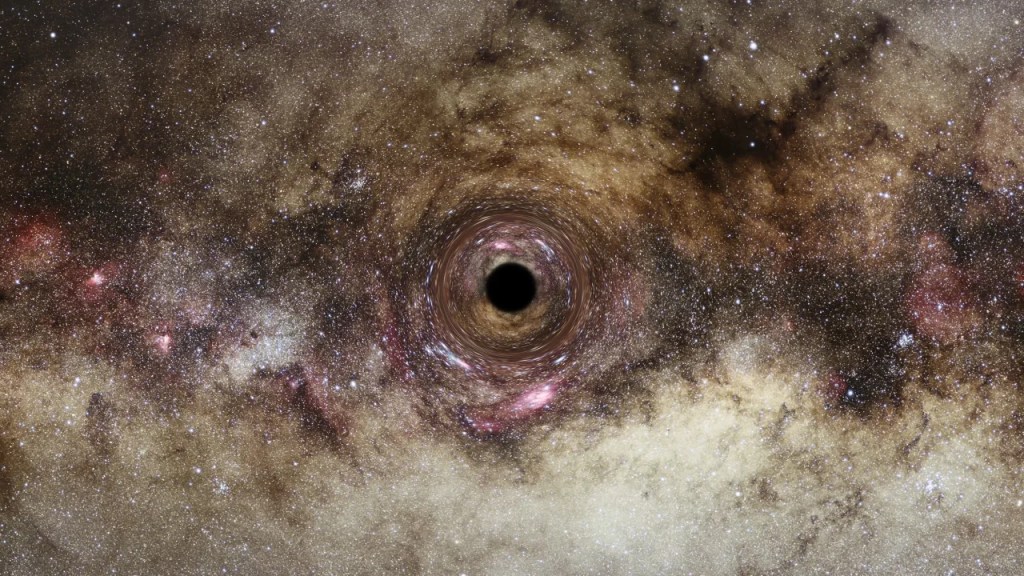
I’m also reminded of the fact that people are made up of smaller communities of creatures and systems that developed into humans over time, and then I think about the universe as a whole and wonder if the universe is some larger being, or part of a larger being. What if we’re actually just part of a digestive tract and black holes are how the energy we produce is passed on to the other systems of the larger organism? What if our universe is a marble in a sack of marbles? You never know.
But in terms of pantheism and how it was understood, that we are all manifestations of the divine or that some divine essence undergirds and flows through all existence, the idea seems to be common to some Buddhists, Hindus, and some forms of Christianity, like Unity, Christian Science, and Scientology. There is also some overlap between Stoicisms understanding of the soul returning to the Cosmic Fire and being reforged as a new soul and the Buddhist idea of the soul reaching Nirvana, escaping the cycle of rebirth and permanently reuniting with the divine essence. Early Christians believed in reincarnation as well, and the Christian idea was probably closer to the Stoic conception because in Buddhist reincarnation there is an expectation that souls retain something from previous lives, even if it’s just karma.
The concept of pantheism also has parallels with mainstream beliefs about Jesus being an expression of God in the physical realm. And of course, there’s the idea that God blew his breathe into humans to give us sentience, but humans carrying a divine spark is a bit different from the idea that all things are God.
Still, it’s interesting to see how ideas about divinity and existence develop over time, often overlapping, and have common themes between the past and present.
1 Zavada, Jack. “What Is Pantheism?” Learn Religions, Feb. 16, 2021, learnreligions.com/what-is-pantheism-700690.
2 Strickland, Ashley. “Hubble spies stellar ‘ghost’ wandering the Milky Way galaxy” CNN, June 14, 2022, cnn.com/2022/06/14/world/wandering-black-hole-milky-way-scn/index.html.

Hither came Conan, the Cimmerian, black-haired, sullen-eyed, sword in hand, a thief, a reaver, a slayer, with gigantic melancholies and gigantic mirth, to tread the jeweled thrones of the Earth under his sandalled feet.
Robert E. Howard, The Phoenix on the Sword, 1932

But sometimes it’s really hard to not say something, isn’t it? Especially when you’re in a group and you want to contribute something to the conversation to indicate that you’re participating, so you just throw some random comment out there and, a moment later, you realize that what you said sounded out of place, or worse, derails the conversation. Or is that just an introvert problem?
I suppose you could apply this quote to a lot of political speeches too, now that I think about it. Overly verbose language and long winded nonsense where the person doesn’t really commit to anything or say anything concrete. The whole point of the speech is to give the appearance of competency and “getting things done”.
Maybe that’s the bedrock of modern American politics though. Nothing ever gets done. I mean, look at today. We had the Daylight Savings Time adjustment again because Congress won’t do even something simple that a majority of people would appreciate. I know I’d appreciate not having to get up what is essentially an hour early tomorrow, because I know I won’t fall asleep on time tonight.
I was looking at the list of courses available on Joint Knowledge Online, an education site for military and government employees, called (iirc) “Using Plain Language”. I think I’m going to enroll in it. When you’re in the Army, you’re encouraged to use basic, plain English so as many people as possible understand what you’re saying. I’m not in the Army anymore, but I can see how the course would be helpful to me. I still interact with the public, after all, and in New York City quite a few people only have a basic English proficiency because they’re still learning.

And then the day came,
Anaïs Nin
when the risk
to remain tight
in a bud
was more painful
than the risk
it took
to blossom.

“Life is a series of natural and spontaneous changes. Don’t resist them; that only creates sorrow. Let reality be reality. Let things flow naturally forward in whatever way they like.”
Lao Tzu
“Not only is there no attempt to hide the damage, but the repair is literally illuminated… a kind of physical expression of the spirit of mushin…. Mushin is often literally translated as “no mind,” but carries connotations of fully existing within the moment, of non-attachment, of equanimity amid changing conditions. … The vicissitudes of existence over time, to which all humans are susceptible, could not be clearer than in the breaks, the knocks, and the shattering to which ceramic ware too is subject. This poignancy or aesthetic of existence has been known in Japan as mono no aware, a compassionate sensitivity, or perhaps identification with, [things] outside oneself.”
Christy Bartlett
The appreciation of something worn and used and well-cared for. The appreciation for what we have. An acknowledgment that real life is rough around the edges and everything is transient, and that transience makes each moment more meaningful. An acceptance of reality as it is instead of the idealized form that exists in our minds, and making the best of our situations.
Those are just a few things that come to mind when reading the above quote.

“Get rid of all that is unnecessary.
Wabi – sabi means treading lightly on the planet and knowing how to appreciate whatever is encountered, no matter how trifling, whenever it is encountered.
[…] In other words, wabi – sabi tells us to stop our preoccupation with success — wealth, status, power, and luxury—and enjoy the unencumbered life.
Obviously, leading the simple wabi – sabi life requires some effort and will and also some tough decisions.
Wabi – sabi acknowledges that just as it is important to know when to make choices, it is also important to know when not to make choices: to let things be.
Even at the most austere level of material existence, we still live in a world of things.
Wabi – sabi is exactly about the delicate balance between the pleasure we get from things and the pleasure we get from freedom of things.”
Leonard Koren
I wonder about that last line. Did he mean, “freedom from things”? As in too many things? Or freedom to have things without being burdened by them? I suppose they’re both similar concepts.
I often feel like I’m trying to do too much in too little time and I’m constantly working to pare down what I have and what I do. I think that if I focus more precisely on the things that are actually meaningful to me, I’ll get more enjoyment out of life.
And, importantly, the paring down process helps me to fully realize what actually is important to me, because it removes things that obviously didn’t make the cut from my life and my mind.
Things that we own, plans that we worry about making or keeping, items on our to-do lists, they all have weight and are a burden on our minds, even when we’re not actively thinking about them. I want to live a life where I’m not constantly worrying about stuff and things that I need to do because the stuff and things that I need to do are proportionate to my ability to manage them in a meaningful way.
As an aside, the Japanese wabi-sabi aesthetic is really wonderful and worth the time to learn about.

“To be is to be perceived, and so to know thyself is only possible through the eyes of the other. The nature of our immortal lives is in the consequences of our words and deeds, that go on apportioning themselves throughout all time. Our lives are not our own. From womb to tomb, we are bound to others, past and present, and by each crime and every kindness, we birth our future.”
Sonmi-451


That’s a very dark and simultaneously hopeful message about personal responsibility and duty to others. Our lives are not our own. We exist in relationship to other people and everything we do affects everyone and everything around us now and in the future. Those that came before us influenced us. What an interesting idea, that we’re like ripples in space and time that never end.
 Bradley's Old Fashioned Weblog