It was intresting to me that Disney released three episodes up front, but I think it might have been symbolic of the three storylines that were being told, and it seemed like Cassian’s storyline was unnecessarly drawn out to fit into the 3×3 structure they created. His whole ‘adventure’ on the planet was sort of amusing, but mostly annoying, and doesn’t seem to have added anything to the overall storyline. Maybe I’m wrong and those guys will show up again later on and do something meaningful, but from the way they were portrayed, I really doubt it.
What was more interesting was the three layers of the rebellion they portrayed. First, you have Cassian and Bix, representing the foot soldiers and common people. Second, you have Mon and Luthen, representing the wealthy patrons of the rebellion. Third, you get Dedra and Syril, though that story seems to be mostly about Dedra at this point, representing the complexities of working for the government. There also seems to be an emphasis on class/economic differences, contrasting the struggle on the ground with the ‘struggle’ represented by Tay’s threat at the rave/wedding celebration.
The first three episodes jumped back and forth between Cassian’s, Mon’s, and Dedra’s storylines so you walk away not having seen as much as you think you might have. There were a few things that jumped out at me though. Bix’s encounter with the Imperial inspector was intense. I wonder if this storyline was inserted as a way of alluding to current politics in the US. I don’t recall any previous references to people being on other planets in the Federation/Empire ‘illegally’, or any mention of work visas. It’s been a while since I saw the movies, so maybe I’m wrong, but there seemed to be an effort to equate Bix’s situation with that of illegals in the United States, but it seems like a reach to suggest that illegals are being sexually assaulted prior to deportation. Maybe I’m reading too much into this, though. Another thing I wondered was, is Syril’s mother supposed to be the Jewish mother caricature? And finally, that floating party ball was really banging.
Overall, the show seems to be off to a really good start. I’m enjoying it more than The Last of Us season 2 so far, though I was glad to see the final scene of season 2 episode 2. That dude is getting annoying.
This was a really interesting look at JK Rowling’s life. I wasn’t aware of what kind of background she came from, other than that she wasn’t well off financially before publishing the Potter series.
When I first started listening to this, I was under the impression that it was just going to address the recent issues that Rowling has had with trans activists, but it also addresses the initial reception to her books in the United States in the 1990s, which was the tail end of a decade-long Christian religious revival.
I remember that period. Everything was the Devil. Everything was Satan trying to lure you away from the right path. Harry Potter books were a gateway into witchcraft and selling your soul to Satan. Once you’d read about the Sorcerer’s Stone, you were only one step away from sacrificing children. Or so the reasoning went. Well, not really. I think older religious people at the time had this fear that if kids found something they loved then they wouldn’t love the Bible and they would replace the Bible as the guiding influence in their life. I can see how that would be a valid concern, but trying to get your kids to love a book that’s 2000ish years old that doesn’t speak directly to modern day issues is a hard sell.
I never read the Harry Potter books because of the stigma that was associated with it. It wasn’t socially acceptable. Later, when the movies came out, I didn’t watch them because I thought they were just for kids. I was in my early 40s when I watched all of the movies and read all of the books, and realized just how much I’d missed out on. It’s an incredibly fun story with amazing characters and the stories would have been very meaningful to me as a kid.
Coming back to the podcast, there is a fair amount of discussion about how J.K. Rowling anticipated the reaction to her books because of the reaction from Christian conservatives. There is a fair amount of discussion about the abusive relationship she was in that was very inspiring. There is also a discussion about her stand regarding trans people, where she elaborates her thoughts more clearly than is possible on Twitter.
It was interesting and enlightening and I recommend it. Along with the Harry Potter books. But not the Fantastic Beasts and Where to Find Them movies. Those are terrible. Hopefully the new Potter series coming to HBO Max will be worthwhile.
I’m not usually a fan of constant flashbacks intermixed with the present, but this story was just too well done. I particularly enjoyed Grace’s character progression, though in a way, his first choice (you’ll know what I mean if and hopefully when you read it) didn’t seem to fit his character history, so the surprise twist didn’t land quite the way the author probably intended for me.
The scientific explanations the author included were technical enough that I felt like I was learning something without the mini lessons wrapped in the story becoming overbearing. It made me interested in learning more about science, which is cool. It made me interested in learning whether or not some of what he uses in the story is true or possible. It made me interested in space and what it will mean for the humans when we start thinking of ourselves as a species in competition with other species in the universe, or universes.
It’s sort of a backhanded compliment to humanity, but I think we could really come together when we have a common “other” to all turn against instead of each other.
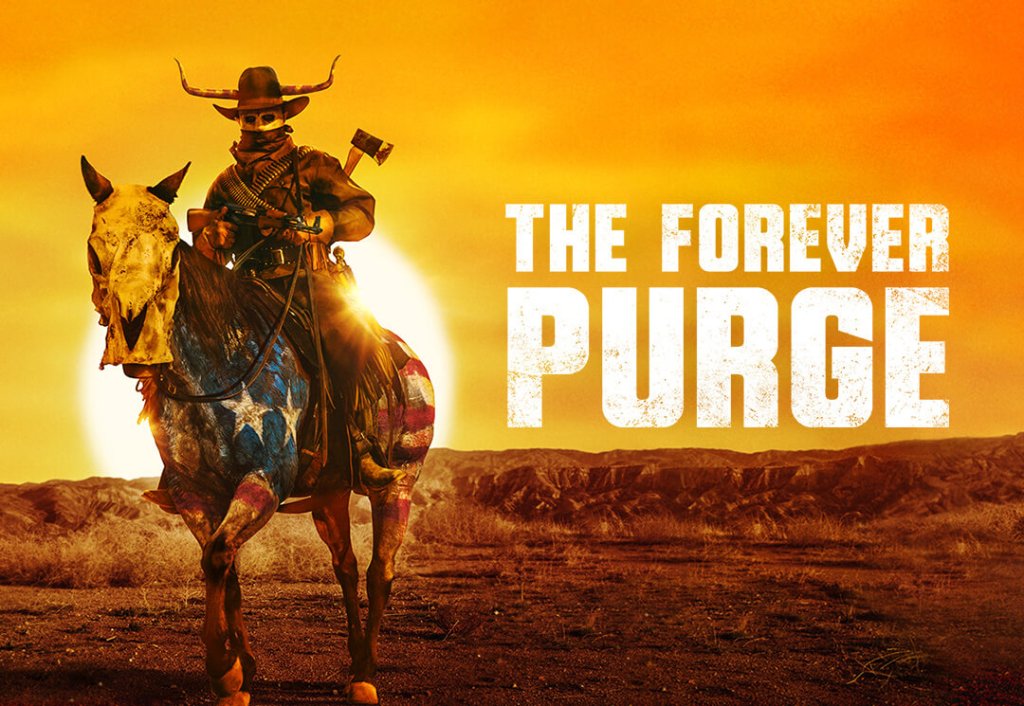
We watched “The Forever Purge” a few days ago and I felt like it was the weakest in the series so far. The acting was good. The sets and costumes were amazing, though there were quite a few instances where scenes and shots were lined up and slowed down as if in anticipation of screenshots, Wonder Woman style, which is a trend that is starting to get tiresome.
The main problem I had with the film is that social commentary was just too heavy-handed and clumsy. At some points, I expected all of the action to stop, the character to turn and look full into the camera, and for a “So kids…” monologue to ensue. It was too preachy.
This movie was a deviation from the rest of the series, which focused on human nature and what people would do in severe circumstances. It was obvious that this movie was about Trump and Trump’s perceived cultural legacy, and it’s a shame to see how much Trump affected the minds of so many people.
I enjoy social commentary in movies, but make it a part of the movie itself instead of being explicitly stated. Make it complex and provoking, but let us figure it out as we digest the story and relate it to our own lives.
I’m tired of this idea that specific narratives and ideologies need to be shoved in people’s faces all of the time, baldly and without nuance. I’m reminded of the actions of certain groups who migrated from Twitter to Mastodon (Fediverse) after Elon Musk’s acquisition of Twitter. They had an explicitly stated desire to politicize everything on Mastodon as much as possible with current and former US political issues. One user commented that Mastodon users wanted to have a quiet space to discuss hobbies and interests and they had to specifically disrupt that to amplify their message. How vulgar. How perverse. How ironic!
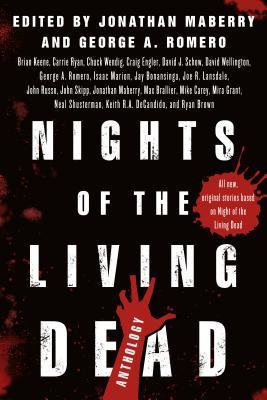
An image of the book cover of “Nights of the Living Dead”, edited by Jonathan Maberry and George A. Romero
This was my first book finished in 2023, though not my first book started and finished in 2023.
It wasn’t great, but it wasn’t bad either. As an anthology, it was kind of a mixed bag and it felt like a lot of the stories focused too heavily on the experience of being bitten and changing. It also has plenty of stories containing the classic horror trope of running towards danger when a real person in the situation would clearly go another way. Maybe asking for that to not be there is like asking for a red shirt to not die in Star Trek, but I prefer situations to play out in a believable way, for the sake of immersion in the story.
There were also quite a few mentions of the smell associated with zombies that I hadn’t really noticed in other stories about zombies, though it makes sense after hearing it, but it was odd that so many authors focused on it. To me, anyway, but maybe that’s just because it seems like an obvious thing. I wonder if it was ever mentioned in “The Walking Dead”? I don’t think so, but those huge zombie herds would certainly have dragged an odor with them.
This collection is pretty long and a lot of the stories are pretty short and forgettable, so I don’t remember them all. It felt almost like some of these stories were concepts or exercises instead of fully fleshed out ideas. By that, I mean there were logical gaps in the stories, even within the conceptual framework of a zombie outbreak, like being safe within a ring of fire but not having food available. Maybe that was intended? To emphasize the grimness and desperation of the situation? I don’t know, but I wanted more from these stories. Some of them felt like they could have been more, could have been better, but were cut short.
The one story that stands out to me is the one that takes place in the zoo. The actions of the protagonist are actions that I feel like I would have taken as well.
I’m going to try listening to some zombie podcasts on #audible to see how they are. I’m not quite over last decade’s zombie fascination. I think I’ll let that genre go for a few months though. I want to lean more heavily into fantasy and science fiction this year. It feels like I’ve been reading outside of my comfort zones a lot for the last few years and I want to settle into something more familiar. Something more positive for this year, maybe.
Matrix Resurrections was ok. It was quite a bit better than I expected and I appreciated the self-deprecating humor in the scenes discussing a possible fourth Matrix video game and the direction it should take. I kind of wonder if the dialogue about it moving forward with or without Keanu’s approval was something that actually happened. It was kind of high brow, but in the right way.
The movie really fleshes out the relationship between Neo and Trinity in a complicated, thought-provoking way that fits into the world of the Matrix and makes me hungry for more of the story. I’m definitely going to be re-watching the original series again. The fight scenes were well choreographed, though it felt like they were relying very heavily on ‘look this is just like how it happened in the first movie’ for quite a few things, like the first “bullet time” scene. Speaking of bullet time, it was interesting to see that certain programs in the Matrix were able to utilize that in new and interesting ways.
Where the script falls off the rails is when, instead of just showing women doing things and being things because that’s how it is, an explicit call to Liberal Social Justice is made by adding the buzzword “agency” in the scene where Naiobi tells Neo to not take “her captain’s agency away from her”.
Why not just say, “Don’t apologize for her Neo. She can speak for herself!”?
It would have been more powerful and more real. Have you ever heard people in the street yelling at each other about taking each other’s agency away from them? Who talks like that? No one except Far Left activists and people caught up in the Academia mindset.
Presenting women in positions of authority should be done without apology or comment, as the way it just is, that women doing those things is ordinary, normal, common, etc, exactly the same way that men doing things is presented. The moment you add a political qualifier to the dialogue, you pull viewers out of the fantasy of the movie and detract from the possible impact of the scene. For me, it left me critical of the scene and then I started being critical of everything else in the rest of the movie, which left me enjoying it quite a bit less than I could have. Movies are ultimately entertainment, not soap boxes for political agendas. When you blur the line, you risk losing your audience.
I was also a little disappointed in the replacement actor for Agent Smith. He wasn’t bad, but he didn’t live up to Hugo Weaving’s portrayal. I also could have done without the bootleg Morpheus. That character being called Morpheus didn’t add anything to the story other than a call to nostalgia, though there were quite a few calls to nostalgia in the movie, both verbally and with cut scenes of footage from the earlier films. It felt like the directors weren’t sure the film could survive on its own without being propped up by the first 3 movies, which is a little weird, considering it’s a sequel and the viewers would, presumably, already be familiar with the first three movies. It was like watching one of those previous episode recaps but mixed into the movie itself instead of at the beginning.
>>>>Spoilers ahead<<<<
The Spoilers. Just kidding, but really there are spoilers below this.
Finishing the movie out by placing Trinity on a level with Neo makes sense for the plot of this particular movie, but I’m not sure it makes sense when placed alongside the original story line. I’d have to re-watch the original movies to be sure, but I was under the impression that Neo was “The One” because there could only be one “The One”. Maybe he was just The One that would have enough ability to manipulate the Matrix to balance the scales of power between humans and the machines. That wouldn’t necessarily preclude other people from achieving that level of ability, and varying levels of ability were hinted at by the people at the Oracle’s apartment in the original trilogy, but why would Neo and Trinity together create overwhelming power or trigger Trinity’s ability to act on par with Neo? Are they really implying that love is the magic ingredient? I mean, it’s a beautiful idea, but it doesn’t seem to fit the themes of the original trilogy.
Finally, the story felt a little loose to me in terms of restrictions on the movements of average freed people in the Matrix. Obviously, they had to take into account modern wireless technology and mobile phones, but if a land line wasn’t required to get in or out of the Matrix, what was the point of the hacked doors and mirrors? Couldn’t they just use WiFi to appear in the Matrix anywhere they wanted?
Another movie is implied by Smith’s getaway at the end and, hopefully, if more movies are made, the above questions will be addressed in a way that doesn’t turn the logic if the story into soup. There are a lot of criticisms here, but it was still fun and I’d watch it again after re-watching the original 3.
Also, and this is on a tangent, maybe, but watching this movie really makes me want to play Grand Theft Auto V again.
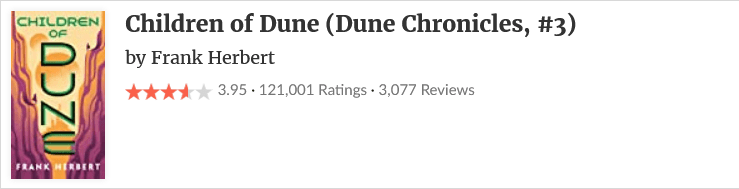
I’m surprised by how well the story has held up, considering that it was written in the 70s.
I need to reread the part about the transformation in the desert, because I’m not sure how or if that really fit into the story’s world. It felt more like magic than science or evolution.
The author describes patterns of human activity that repeat over eons. He approaches the idea that people need to stay connected to the immediacy of life and human nature. Somehow, the story strikes me as being anti-technology and a call for people to be spiritual but not religious. There are also constant criticisms of the role of religion in creating excuses for, and a need for, violence.
The end of the story gave me some ideas about Shai-Hulud. Unless I really misread things, the goal of the Dune story is to describe replacing the big worm or driving force below the desert, which makes me wonder if this is a repeating cycle that has happened before.
Herbert draws heavily on various religions in the creation of his universe, so a circular conception of time and the embodiment of “divinity” in an actual character whose existence becomes the literal and spiritual foundation for galactic civilization would be right up his alley. It would also make for a really epic story.
The scale and complexity of the ideas the author is tackling grows in each new Dune book. Some people may not like it or understand a lot of it. I know I didn’t when I tried to read these books at 13, but they are thought-provoking and fascinating to me now, 27 years later and being much more well-read. There are obvious, like really obvious, references to Islam, Judaism, and Christianity, but also hints of Hinduism and Buddhism as well.
For someone like me that has been interested in religions for their entire life, this series is exceptional.
“Every day is a new day. It is better to be lucky. But I would rather be exact. Then when luck comes you are ready.” ― Ernest Hemingway, The Old Man and the Sea
I never thought I’d be this interested in a book that is all about a guy on his boat catching a fish. Of course, there are themes about the importance of community, tradition, dedication, and the reality that hard work sometimes ends in failure, but it’s really just a book about some guy getting into his boat and trying to reel in a fish for almost 100 pages.
And it was amazing.
I’ve read almost 800 books, not counting comics and manga and portions of books that I read for college, and after a while it seems like almost all books are basically the same story, just in different settings and with differently named characters, so it’s nice to read something a bit different for a change. I’m finding that I want to read classic literature more now when I want a novel because the books that have lasted tend to be books that focus on human nature and the human condition and I appreciate that the books are offering something deeper and more meaningful to me than just entertainment.
“You did not kill the fish only to keep alive and to sell for food, he thought. You killed him for pride and because you are a fisherman. You loved him when he was alive and you loved him after. If you love him, it is not a sin to kill him. Or is it more?”
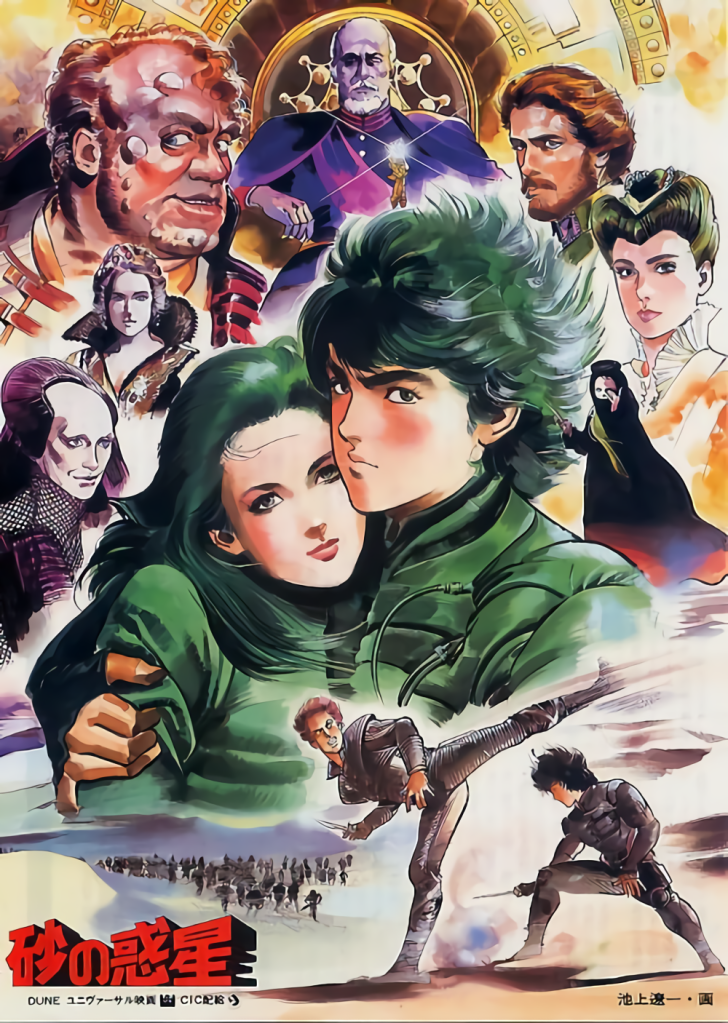
I’m looking forward to the new movie version. I read the book when I was a teenager and again this year. It was and still is excellent, even knowing the real world cultural inspiration and background for the idea of the Fremen.
I was a little conflicted when I heard that they were going to remove the term “jihad” from the movie, but after reading the book again and thinking about it, I think it was the right move. The word has too many connotations and baggage now that didn’t exist when the story was written. Using it would give the movie meaning that wasn’t intended in the original story.
“It is bad psychology to tell people who do not believe that they are racist—who may even actively despise racism—that there is nothing they can do to stop themselves from being racist—and then ask them to help you. It is even less helpful to tell them that even their own good intentions are proof of their latent racism. Worst of all is to set up double-binds, like telling them that if they notice race it is because they are racist, but if they don’t notice race it’s because their privilege affords them the luxury of not noticing race, which is racist.”
This is the best book I’ve read that tackles the issues related to postmodernism and social justice activist politics, and it clearly expresses a lot of ideas that I’ve had myself but didn’t take the time to really research or fully articulate.
This should be required reading to graduate college. When I was in college, a lot of the courses I took relied heavily on postmodernism, identity politics, and social justice ideology, but I didn’t realize it because I didn’t have a name for it. Also, it was taught as fact and reality rather than just as a theory, or as the authors would say, as Theory, and it was part of everything from classes on sociology to government to history. At some point, I realized that things weren’t quite right, but you have to go along with what the professor is advocating if you want to be assured of getting a passing grade.







 Bradley's Old Fashioned Weblog