Response: Donald Quataert’s “The Ottoman Empire, 1700-1922”

Donald Quataert’s book, The Ottoman Empire, 1700-1922 (New Approaches to European History), is an engaging overview that challenges popular (mis)conceptions about internal dynamics of the empire in regards to inter-communal relations and the role it played internationally. Throughout the text, Quataert takes care to place the Ottoman Empire in context, something which he seems to believe has been rarely done in past historical works, resulting in inflated claims of both power and weakness, as well as claims of undue cruelty both to its own citizens and its enemies. In short, while providing a good overview of the empire, Quataert also does an effective job in leveling the playing field so that the reader is able to understand that both the perceived negative and positive actions of the empire are not unique to the Ottoman Empire, cutting through caricatures to present a balanced view of history.

Having never read anything regarding the Ottoman Empire before, the text was very instructional. I was previously under the impression that the Ottoman Empire was a primarily Middle Eastern, Muslim empire that was organized along monarchical and religious lines. The information presented about the gradual shift in power from the sultan to the viziers/pashas and then to the Jannisaries was interesting. What sort of authority did the office of sultan still hold that it was maintained for the purposes of political legitimation? Why was there never an attempt to restructure the central government? Or was the sultan a political figurehead in a similar way to modern Prime Ministers and Presidents?

I was also very interested to find out that for a large portion of the empire’s existence, the vast majority of the population resided in the European provinces, making the empire more European than Middle Eastern. The fact that the Ottoman Empire expanded so far into southeastern Europe helps to explain the modern mistrust and fear of Turkey and, as the author says, the hesitance the European Union is displaying regarding Turkey’s application for membership. It’s a hesitancy and fear that’s a legacy of the Ottoman Empire’s initial military successes, but why does Turkey bear the legacy of that fear? Is there something about Turkey that makes it different from the other former Ottoman lands? The Ottoman’s central administration was located in Turkey, but in the formation of the modern Republic of Turkey, the Ottoman legacy was almost completely abolished. Is there some fear that Turkey might use the European Union to ascend economically and politically and once again pose a political threat to the European nations?

One thing that I wish had been better addressed in the text was the legal system in the Ottoman Empire. How heavily did it rely on religious law? How much was secular law? Was there a process where the ulema approved the laws, or was religious validation not required? Was religious law widely applied or was it limited to civil courts? Also, how heavily were communal religious courts used, and how often were there appeals to Islamic courts? What did sectarian (non-Muslim) courts use as a basis for law and are any of the law books they used still existent? Or were they more informal? The particulars of the law systems is probably a subject for a separate book, but the author didn’t seem to spend too much time discussing the court system in general, and the fact that non-Muslim citizens often appealed to the Islamic courts for ‘justice’ makes it a point of interest.

Overall, Donald Quataert’s book tackles a subject that, judging by his text, has often been unfairly maligned in popular media due to old biases and fears. His attempt to overcome those misconceptions are obvious throughout the text, where he constantly makes comparisons between the Ottoman Empire’s methods or actions and those of other contemporaneous political entities. The division of the book into sections that generally cover time periods, followed by chapters that address certain aspects of Ottoman society helps the reader to place the more detailed information into the greater framework of events. The Ottoman Empire: 1700-1922 is an excellent introduction to an important period of history.

Response: Cemal Kafadar’s “Between Two Worlds: The Construction of the Ottoman State”

Cemal Kafadar’s book, Between Two Worlds: The Construction of the Ottoman State, is an attempt to find a middle-ground between existing theories that paints a more realistic picture of a dynamic and fluid process that didn’t exist in polar opposites, as presented in the theories put forward by Herbert Gibbons, Paul Wittek and M. F. Koprulu. By that, I mean their theories seem to be presenting history in a way that supports a contemporaneous need to justify the superior role of one group or another, or a particular aspect of a group, rather than in a way that produces a realistic and sufficiently complex set of events. Cemal Kafadar recognizes this and, rather than producing another theory and trying to prove it, he attempts to reconcile the theories presented by Gibbons, Wittek and Koprulu into something that might better approximate the truth of the origins of the Ottoman state.

Kafadar tells us that very little written documentation exists from the foundational period of the Ottoman state, and what does exist is only useful up to a certain point because of the possibility of the text being altered to fit the author’s needs. According to Kafadar, it’s possible that the Ottomans didn’t know where they came from. When attempting to establish an empire, however, it’s important to have political legitimacy and creating a new historical narrative is one way to establish the right to rule. Attempts to establish that right are obvious in the creation of false lineages that allowed the Ottomans to trace their descent to Noah (Islamic legitimacy) and to the Oghuz Turks through the Kayi tribe (ethnic legitimacy?). Regardless of whether or not these lineages are accurate, knowing that they were important at the time as symbols of political legitimacy can help explain the problems the Ottomans were facing at the time. Why did they feel that they needed to shore up their right to rule at those particular times?

It was especially interesting to see the changing role of Islam and the gradual shift from a localized version of Islam to a more orthodox Sunni version of Islam. How important was Islam in the beginning of the Ottoman’s attempt to found a state? Did they even conceive of it as ‘gaza’ at the time? Or was it later legitimated as gaza by historians seeking to shore up the Ottoman’s Islamic credentials? Kafadar mentioned that religious identities at the time were very fluid and often Muslims would ally with Christians for the sake of raiding and battling rivals. It’s likely that the Ottomans also engaged in that practice. And, it’s also likely that they didn’t feel any less Muslim for doing so, given that they had Islamic titles, like “Champion of the Faith.” What made a good Muslim in that period? It’s probably not even possible to make that distinction today, but it’s interesting to see how much more cavalier the reality was, compared to the supposed Islamic norms.

Kafadar made a brief mention of the similarity between events in Anatolia and the events in the Iberian peninsula, where the remnants of the Umayyad dynasty were slowly being whittled down by the Catholics in the Reconquista. In that conflict, there were also Muslim mini-states that would ally with Christians against a rival Muslim mini-state, with the end result being that Ferdinand and Isabella expelled the last Muslims from the Iberian peninsula in 1492. The rulers of the Muslim mini-states in the Iberian peninsula had to know what would eventually happen to them, so why did they continue to ally with Christians? How important was religion to them, compared to politics and political power? In the same way, modern thinkers were probably reading too much into the religious aspect of the frontier warfare in Anatolia.

The literature concerning the frontier area is especially interesting in how it depicts the role of women. If Islam were a driving force in Turkish expansion in the area, then why were women depicted in roles that supposedly broke Islamic norms? Efromiya is depicted as a woman convert to Islam that battled alongside men she wasn’t related to, kept their company at night, and didn’t cover herself, and likely had a lover for a while before being married to him (Artuhi). Similarly, in the Book of Dede Korkut, Kan Turali sets out to look for a woman that is good at cutting the heads off of infidels, which isn’t a role traditionally filled by a Muslim woman, or at least not the way we think of a Muslim woman today. He eventually marries a Christian woman, Princess Saljan, who is presented as strong-willed and highly sexual (“she went weak at the knees, her cat miaowed, she slavered like a sick calf…[ and] said, ‘If only God Most High would put mercy into my father’s heart, if only he would fix a bride-price and give me to this man!’”, p 69). How do these stories fit into the actual history of the region? Are they complete fictions that only represent the general fantasies of men at the time for foreign women? Was this considered legitimate behavior in that time and place?

The only thing that could have made reading his book clearer and more readily understood would have been an introduction that spelled out their theories before Kafadar launched into his own interpretation of them and the events that surround the founding of the Ottoman state. Since there is as yet very little existing documentation from that period, the best we can do is make conjectures about the period and Kafadar does a good job in reducing Wittek, Gibbons, and Koprulu’s one dimensional theories into something more life-like and believable.

Holy Family Church’s Frozen Garden

On Sunday afternoon, my wife and I were by the United Nations to take advantage of a Groupon deal I got for the Indigo Indian Bistro on East 50th Street. We didn’t realize the place closed for a while after lunch and before dinner, so we found ourselves standing in the cold with an hour and a half to kill.

I thought about going to the United Nations for a tour, since we were right next to it, but it looked like it was closed too. There weren’t even flags up on the poles. So, we started walking around. First, we poked our heads in at the Japan Society to see if there was anything going on (and to warm up a bit), but they were just finishing up a New Year’s celebration for kids. Then we went next door to look in the Holy Family Church. The building is really weird looking from the outside.

Turns out it’s a Catholic church. It’s sort of nice inside. The giant Jesus on the wall above the priest leading the service was a little scary looking. It made me think about the conflict inherent in the concept of a trinity model of monotheism, and whether or not a distant and cold concept of God was being replaced by the warm and gentle spirit of a man, someone that people could understand and empathize with. That’s a subject for another post, though. I’ve been doing a lot of theological reading that I’ve been slowly digesting, mentally.

Sculpture of an angel (I think)

After warming up in the church foyer, we went back out to find our next opportunity for passing time. As we were walking away, I noticed a side path that led into a garden that was covered in snow and ice. We figured it was worth a few minutes to go in and look around.

Frozen waterfall in the Holy Family Church garden.

What really peaked my interest was the fact that the garden pool was covered in a layer of ice and snow, and so was the artificial waterfall. I don’t suppose there’s anything unusual about a waterfall icing over in winter, but it’s not something I really expected to see in the middle of Manhattan; not even an artificial one. So, I think the unexpectedness of seeing what I didn’t expect to see made it more worth seeing, if that makes any sense. I’ve also always enjoyed religious settings and architecture, of a certain type. The more solemn and thoughtful type. I’ve always thought religion should be a solemn, thoughtful and meaningful thing.


Tickets!? Got your tickets!? (AirTrain from Newark to Penn Station)

When we were on our way back from our vacation in Georgia, I realized that I’d accidentally selected a return flight that would have us landing at Newark Liberty International Airport in New Jersey. I didn’t realize this until we were at Hartford International Airport in Atlanta, checking in. I couldn’t figure it out at first. When I picked these tickets, I’d selected to see only flights for “NYC” on the website. Why would the Delta site show Newark in New Jersey as a NYC airport? It’s not even the same state!

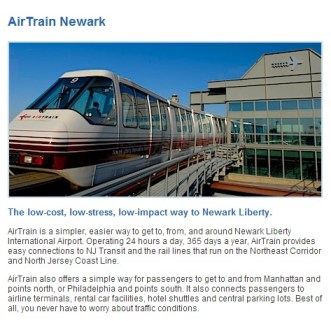
AirTrain Newark Description

So, while we were sitting in Hartford, waiting on our flight, we had to do a quick check to see what sort of transportation was available from Newark into the city. I did NOT want to spend 70+ dollars on a taxi. Luckily, there was another, affordable option: the AirTrain. On the website, it looked fairly new and the tickets weren’t that expensive. It’s been a few weeks, but I think they were only 11 dollars apiece to get to Penn Station.

The thing is, the site is a little misleading. I saw that shiny train and thought that’s what was going to take us to Penn Station. The reality is that it just drops you off at another train platform where you get on this old-timey looking train where conductors come through the cabs hollering to see your tickets.

Old NJ Transit train from Newark to Penn Station.

I couldn’t help but think of that scene in the Indiana Jones movie where Jones threw the bad guy off the zeppelin and then told the stunned crowd that he didn’t have his ticket.

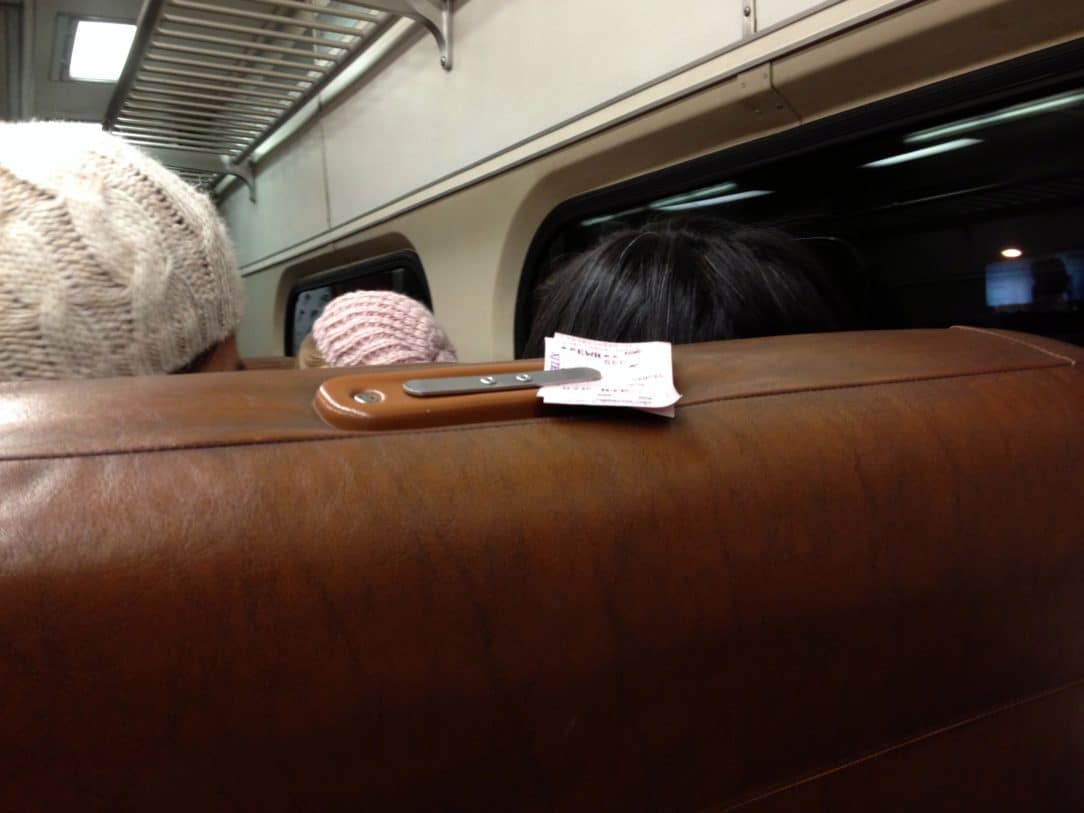
Train tickets
We had our tickets!
Train tickets clipped to the back of the seat in front of us.

It wasn’t a bad experience. It’s really convenient, even. But, from now on I’ll definitely be double-checking that the travel websites are actually showing me NYC airports that are in NYC. Landing at Newark, as opposed to landing at LGA, added about an hour to our total travel time.

Way Down Yonder on the Chattahoochee…

So, down in Georgia, there’s a river called the Chattahoochee. According to Alan Jackson, it gets hotter than a hoochee coochee and it’s a great place to learn to swim, love, and live.

Back in the 70’s, which is when I assume he’s talking about, that might have been true, but these days there’s so much industrial pollution and waste water run-off in the Chattahoochee that if it’s hot, it’s because it’s burning your skin. Atlanta pumps a lot of waste into the river, ruining it for all of the cities downstream.

Chattahoochee River, River Walk, Phenix City side.

That hasn’t stopped both Columbus (on the Georgia side of the river) and Phenix City (on the Alabama side of the river) from both trying to develop the area. One of their projects is a river walk. I remember when the Columbus government first started building the river walk back in the mid 90’s. If I remember right, I did a March of Dimes event there when I was a sophomore in high school. It was pretty nice. The view was good. Even going back there now, after having seen the skylines of so many cities in and outside the US, it’s still good, though that may be partly the nostalgia.

Blown dam on the Chattahoochee River

The other project that Columbus is working on is something to do with white water rafting. The city government has this idea in their head that if they build it, ‘they’ will come, in the hundreds of thousands, so, sure enough, several historic dams that were built to power factories that used to operate along the waterfront were blown open to create a ‘white water’ effect in the river. Personally, I think it looks more like a ‘lazy river’ ride at a theme park, way too tame for someone seeking a real white water thrill, but maybe they haven’t opened up all the dams yet.

My wife and I went down the Phenix City riverwalk with my dad and he was telling us about how the city made a big deal out of blowing the dam we happened to be looking at, at the time. It was televised and people were expecting a large explosion, but it wasn’t really anything special. I still wish I’d been there to see it, but mostly because I’d have been interested to see what was at the bottom of the river. I bet they pulled a lot of neat stuff out of there.

Covered over square tunnels visible in far walls.

Across the river from where we were, for example, there was a wall built of large square stones that was previously submerged. In the side of that wall there were square tunnels running back into the bank. I wonder what’s in there? Was it used fro waste run-off or sewage? The way it was built, with two walls in terraced set-up, it seemed like there used to be a road down there.

Old factories and a power station (small building 1/4 from the right)

Anyway, there’s a lot of history in that area. One of the last major wars of the Civil War was fought in Phenix City. Columbus used to produce most of the boots and swords for the Confederate Army. Columbus was also the end of the line for river cargo from the Gulf of Mexico, since it sits on the fall line. Now, those old factories are being converted into expensive lofts and the river is being turned into a commercialized tourist attraction (which will probably fail due to health concerns), but at least the river has a bit more character now. I wish I could get down in there with a metal detector…

The National Infantry Museum at Fort Benning / Columbus, Georgia

While my wife and I were down in Georgia, it wouldn’t have made sense for me to not show her around Fort Benning. I did my basic training there in 1998, after all, on Sand Hill at 2/54 (2nd Battalion, 54th Infantry Regiment). After spending some time driving around Sand Hill, getting lost, using my phone to consult Google Maps and then finding our way back to the highway, we got over to the National Infantry Museum. Technically, it’s not on Fort Benning; it’s just out the gate in Columbus, Georgia.

The National Infantry Museum at Fort Benning Georgia.

I wasn’t really expecting much when we drove up to the parking lot. I’d heard good things about the NIM but I remembered how decrepit the old museum building was. I’d only gone there once when it happened to be closed and spent my time outside looking at the tanks. From the moment we walked up to the building entrance, though, I could tell the planners had put quite a bit of effort into making the NIM a place worth visiting.

Statue at the front of the National Infantry Museum

There was no fee to get in. That was a bit of a surprise. I guess I’m used to New York City, where every museum and art gallery wants to push you to the brink of poverty with their entrance prices, though those prices are usually just recommended donations, meaning you can give less and still get in. Anyway, there were donation boxes scattered around the lobby and we gave about ten bucks.

Information marker stone in front of the eight historic battle recreations.

The most visually appealing part of the museum is the ramp that stands directly ahead of the entrance. It takes you up through recreated scenes of eight famous battles that were decisively won by the infantry, from Redoubt #10 in the American Revolution to WWs I and II and up to the recent invasion of Iraq in 2003 (of which I was a part). There’s no Natural History Museum or any serious art galleries in Columbus, but having a military history museum available must be nice, especially considering that quite a few people in the area are military or military dependents (wife/husband/kids). While we were looking at the recreations, a man was walking up the ramp with what I assume were his sons, telling them about the battles and why they were significant. The kids looked really impressed. I wonder why it is that war is always such a hook for people (especially kids) when studying history?

Behind the ramp of the eight historic battles was an area that had a lot of photos and videos about drill sergeants and infantry training on Fort Benning, called OSUT now, which stands for One Station Unit Training. Unlike other job specialties in the military, infantryman do all of their training in one spot, from beginning to end as one unit. For example, I wasn’t infantry, so while I did my basic training in an infantry training battalion on Fort Benning, I did my advanced training at Fort Lee, Virginia.

Statue of mother and child left behind by soldier at war.
Statue of mother and child left behind by soldier at war at the entrance to a small gallery about soldier’s families during deployments.

After you finish looking at the training stuff, you can go down to the lower level and look at thematic galleries that address different periods, wars, or theaters of war. Those were pretty cool. There were a lot more artifacts there than I expected, the most surprising of which to me was Hermann Goering’s Nazi baton.

Hermann Goering's Nazi Baton, crusted in diamonds.
Hermann Goering’s Nazi Baton, crusted in diamonds, presented by Adolph Hitler in February, 1938.

The baton made me think about how these days you can’t keep anything you find on the battlefield. Now they call them “war trophies” and a soldier can face legal action under the military justice system for sending that type of stuff home. I don’t know why. If you’re going to ask soldiers to do something stupid for ambiguous reasons, you ought to at least let them keep a souvenir. Not that I think wholesale looting should be allowed, either, though. I suppose the problem of where to draw the line led them to think it would be better to ban it all together.

Mock trench
Mock trench

My favorite parts of the display were the mock trench from the trench warfare in World War I and the explanations of how the 3rd Infantry Division got its motto: “Rock of the Marne”. I was in a unit attached to the 3rd ID during my first enlistment and while I was in Iraq. At Fort Stewart, Georgia, where the 3rd ID used to be based out of, we’d sing the Dog Faced Soldier song every morning before PT, and Rock of the Marne was a go-to phrase when greeting officers (ex: “Rock of the Marne, sir.”)

Captured artifacts from the Philippines Insurrection and Moro Wars in the late 19th / early 20th century.

I also enjoyed seeing the stuff from the war between America and the Philippines, which mostly revolved around fighting the tribes in Mindanao who refused to be subjugated. The information placards there indicated that the US eventually won that fight, though my wife disagreed and said that’s wrong, that those people were never conquered; they resisted the Spanish, the Japanese, the US, and even the national Philippines government. I think just recently the Philippines government had to grant them limited autonomy to get them to stop blowing stuff up.

A POW - MIA memorial outside the NIM.
A POW – MIA memorial outside the NIM.

A family member told me that a person could probably look through the entire place in about 4 hours, but I have to disagree. If we stopped to read and look at each exhibit thoroughly, we could easily spend two days there and not get bored. When we went, two of the galleries, the ones for the earliest periods of US history, weren’t even open yet. That would make the trip even longer. We wished we had more time to enjoy the museum, but we’d only set aside one afternoon of our vacation for the museum. We’ll have to go back again next time.

The Great Cat Reunion and Christmas in Georgia

View from plane window.
The view from the plane window en route from New York City’s LGA to Atlanta’s Hartford Airport.

For the week of Christmas, my wife and I flew down to Georgia to visit relatives. It was the first time I’d been there in about two years. It was really nice to get out of the city, see my family and relax. Going around town, looking at the places I went to school, the places I used to hang out, and sharing those memories with my wife was a good experience for both of us. She left feeling like she knew me better and I came away from the trip feeling a bit more grounded. Going to college and taking heavy course-loads with only short breaks between (I’ve been cramming in Summer and Winter classes as well) had me feeling like I was mentally flying off the rails for a while there. I’m also not taking a class this Winter. That’s mostly because I have Grand Jury Duty but I don’t think I would have taken a course anyway. I just need time to let everything I’ve learned sink in, and time to just unwind.

Highway signs in Alabama. Some of my family lives over there too, right on the border with Georgia.
The National Infantry Museum at Fort Benning Georgia.

While we were in Georgia, my wife and I visited Sand Hill on Fort Benning, where I did my basic combat training back in 1998. We also went to the National Infantry museum. I’ll be posting about those experiences over the next couple of days. I can’t believe how much Sand Hill has changed, or how nice the Infantry Museum turned out to be. I was expecting something, but not something that well put together. It’s the Army, after all!

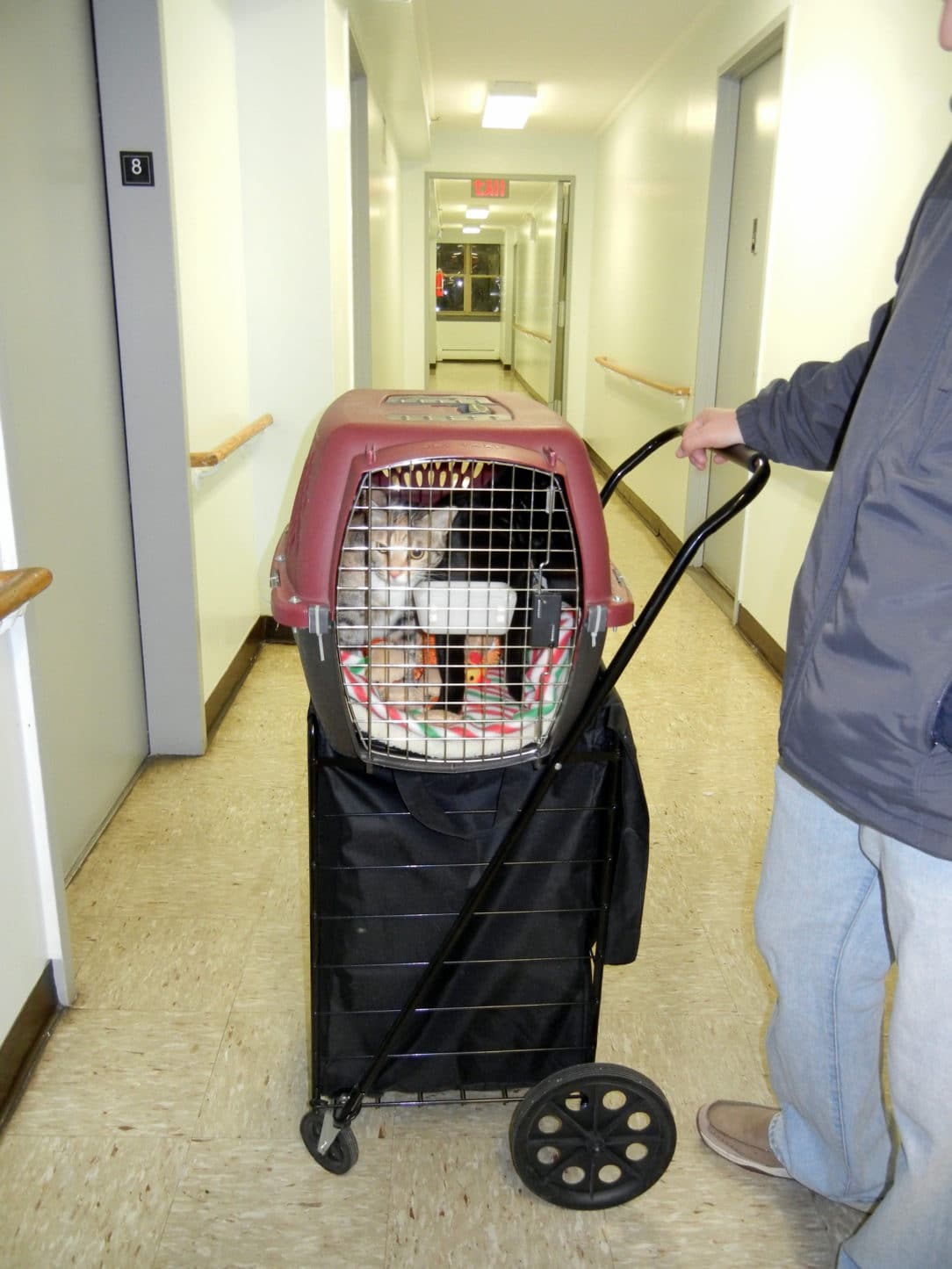
Carting our cats over to my mom's apartment.
Carting our cats over to my mom’s apartment.

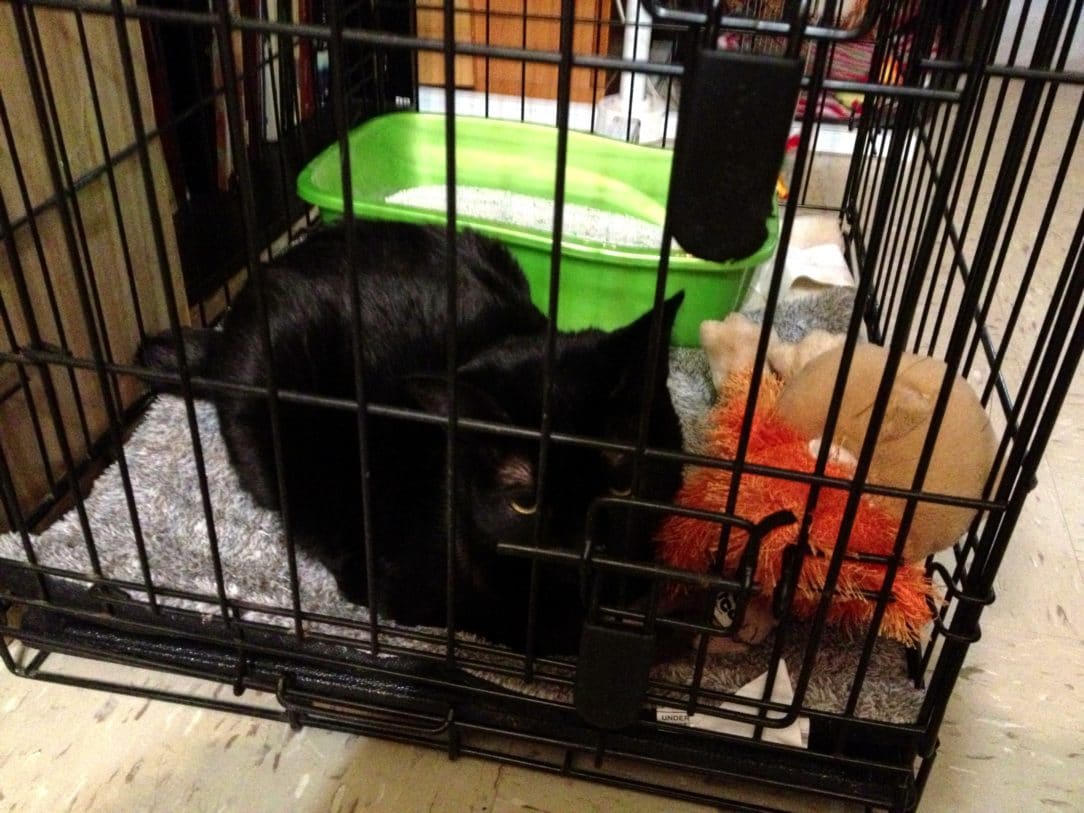
Anyway, before we left for Georgia, we had one small issue we had to take care of: the cats. Dapper and Thumper probably wouldn’t have wanted to fly with us to Georgia, even if it had been affordable, not to mention the fact that I don’t think my family would want cats running around their houses anyway. So, they had to stay at my mom’s place with their long-lost sister, Marble. They hadn’t seen each other in about six months and Thumper hasn’t gotten along with Marble since I left the Philippines with Marble instead of her back in 2010 and she had to sit there for a year waiting on me to bring her to NYC. I think she got jealous!

Marble, pissed off about unwanted house guests.
Dapper, taking up a position on the high ground.
Thumper, in solitary confinement because she likes to fight.

So, throwing them all back together for a week was probably not the best idea, but cat-sitting is so expensive these days, and I trust family more than I trust a pet-sitting service anyway. I figured they’d be ok. Everything seemed to have gone ok, anyway. Bringing them back was entertaining. We had to wrap the carrier up in blankets because it was about 24 degrees outside that night with a brisk wind. When we exited my mom’s building, one of our cats gave this horrified meow when she felt the breeze. Then she buried herself in blankets!

I hope everyone had as good a time over the holidays as we did, and that everyone’s year is off to a good start!

The National September 11 Memorial, December 2012

One World Trade Center, still under construction.

The National September 11 Memorial in New York City is still under construction, but my wife and I decided to head down there and look around earlier this week. We’re going down to Georgia this coming week for the holidays and a relative asked us to take some photos of the site for her. We’d been meaning to go, so that was a great opportunity for us to stop being lazy and get off our butts and head downtown.

When we got there, I was a little concerned that we wouldn’t be able to get in. There were signs posted in the surrounding streets that said that tickets were available online and in limited quantities at the 9/11 Memorial Site Preview office on Vessey Street between Church Street and Broadway, across the street from St. Paul’s Chapel. Luckily, when we got to the office, we were informed that there were free tickets from the 2:30 PM entry to the WTC site. It was about 2:05 PM at the time, so I guess they were passing out the extras that didn’t sell. I have no idea why the tickets were free, really, except that it probably had something to do with lack of demand at that time of day on a Thursday the week before Christmas. It seems as though you get a ticket that’s good for entry to the site only at a certain time. I assume they expect people to leave after a certain amount of time and the tickets being separated by an hour keeps the site from becoming too crowded.

The line for security screening at the World Trade Center site.
Pictures on the wall in the security screening room.

After we got our tickets we had to walk down Church Street, which turns into Trinity Place, until we got to Thames Street, where we made a right. The entry to the site is at the corner of Albany and Greenwich Streets. Getting into the site is a long process. First, we had to show our tickets of course. Then, since there wasn’t much of a crowd, we walked past the back-and-forth roped off area for long lines and went straight to the line for security screening. While we were waiting, I joked that we were going to get free sexual assaults along with our free tickets and if we were suspicious (like most people are), maybe a free cavity search, MRI and X-Ray. Luckily, the airport style security screening went fairly quickly. The only interesting thing that happened was when one of the guards was complaining to her coworker that another guard never took a turn at the door directing people to the metal detector lines. I imagine the guard in question was avoiding that particular job because it was cold out that day.

The entire area of the National September 11 Memorial is sealed off from the rest of the city by security fences. After getting tickets, walking to the entry area, and then following the lines, by the time we actually walked into the site itself, we had almost gone all the way around it in a circle. It would be nice if at some point the site could be truly free and open, so people could walk through the area and look at the monuments, like any other monument in the country, but people are still so afraid of terrorism that it’s likely the site will stay walled off. Then, of course, there’s also the fact that the city wants to use it as a way to make money, charging an admission. To me, that seems borderline disrespectful, that the city wants to use a tragedy that caused the deaths of almost 3000 people and the injury of about 6000 more as an opportunity to make a buck. It also seems to defeat the purpose of building the memorial, which I assumed was meant to be a testament to the strength and power of the country, as well as a memorial for those who died in the terrorist attack. Instead, our testament to the strength of our country will remain hidden behind fences and barriers. It’s tough to say whether or not those barriers are necessary. On the one hand, it would be a symbolic victory for terrorists to strike the site again. On the other, the monuments in Washington DC don’t have fences and guards around them and they’re just fine.

September 11 Memorial Plaza

During Winter, the memorial site is a pretty chilly place, both figuratively and literally. With no tall buildings in the area, the wind rips through the plaza non-stop. The reflecting pools are sunk down into the ground and the wind was getting caught down in the north pool, turning the water falling down the sides into a fine mist that blew across the plaza, adding to the chill.  The leaves on the trees were brown and falling. The sky was overcast. Everything looked a little grey.

World Trade Center Memorial, South Reflecting Pool 1
World Trade Center Memorial, South Reflecting Pool
World Trade Center Memorial, South Reflecting Pool 2
World Trade Center Memorial, South Reflecting Pool
World Trade Center Memorial, South Reflecting Pool 3
World Trade Center Memorial, South Reflecting Pool
World Trade Center Memorial, South Reflecting Pool 4
World Trade Center Memorial, South Reflecting Pool

My wife and I went in different directions around the south reflecting pool. I took my time, taking photos, looking down into the hole that used to be a foundation, looking at some of the names on the railing that surrounded the pool. The only word I can think of to describe the mood of the place is that it was not depressing, but sort of subdued. But, it should be a little subdued. I don’t know that the place will ever be one where people go to picnic and laugh during my lifetime. Maybe. Maybe in 60 years, when the memories have faded and most of the people who were alive at the time have passed on.

Construction surrounded the September 11 Memorial Site.
The September 11 Memorial Museum that hasn't opened yet.
The September 11 Memorial Museum that hasn’t opened yet.

Because of the construction going on all around the site, it was hard to appreciate the place for its architectural beauty. One World Trade Center isn’t even finished yet. The museum on the site hasn’t opened yet either. I remember reading that there was some delay due to money problems. I’m looking forward to going back again in a year or so, hopefully during the summer or spring. My wife was impressed by the reflecting pools, but she was mostly too cold to enjoy the trip like she wanted to. She wants to go back again, too, when it’s warmer. Maybe we’ll get lucky and get some more free tickets!

Some random guy photobombing my shot.
The 9/11 Memorial Motorcycle in the Gift Shop


St. Paul’s Chapel and Cemetary next to the World Trade Center Site

St. Paul's Chapel and Cemetary
St. Paul’s Chapel and Cemetery

Last Thursday my wife and I went downtown to the National September 11 Memorial site. To get to it, we had to walk past St. Paul’s Chapel and Cemetery and my wife was interested in having a look around, so we went in.  I’ve been there a few times before, but it was her first time. She remembered hearing about the chapel in the news and wanted to see it first-hand.

St. Paul's Cemetery
St. Paul’s Cemetery

We walked through the cemetery first. She was impressed by how old the headstones are. I am too. It’s weird to see gravestones still erect for people that died in the 1760s next to so many buildings of modern construction. It’s so out of place. It’s nice to see that the chapel and the cemetery survived and weren’t torn down to build something new, especially in considering the important role the chapel played during the September 11th tragedy, when rescue and aid workers used the sanctuary as a place to rest and recover for a few hours before going back out to look for survivors again.

Memorial to September 11 Victims in St. Paul's
Memorial to September 11 Victims in St. Paul’s
George Washington's Pew at St. Paul's
George Washington’s Pew at St. Paul’s
Oldest painted seal of the United States

When you walk through the chapel, it’s hard to not be touched by the memorials set up around the outer edge, artifacts left behind by people looking for loved ones mixed in with older stuff, like George Washington’s pew and what is touted as the oldest painting of the seal of the United States, which looks more like a turkey than an eagle, probably due to influence from Benjamin Franklin, who wanted the national bird to be the turkey. On a side note, it’s good that he didn’t get his way, or else what would we eat on Thanksgiving? It would be a federal crime to roast our turkeys!

Rosaries on wooden hands in St. Paul's Chapel
Rosaries on wooden hands in St. Paul’s Chapel
Rosaries on wooden hands at St. Paul's Chapel
Rosaries on wooden hands at St. Paul’s Chapel

Seriously, though, on my previous trip I never really stopped to considering and think about the people in the photos set up on the alters, or the stuff that was moved inside from where it used to be posted on the fences around the church. It’s hard to stand there and think about the people, on an individual level, that died there that day. It’s easy when you’ve only got this vague idea in your head of some 3000 people. It’s harder when you look at the photos and wonder what their life was like and who they left behind. Who cried for them? What were there final moments like? How has the event changed the lives and world views of those closest to them?

Police and Search and Rescue unit patches left behind as symbols of solidarity
Sanctuary of St. Paul's Chapel
Sanctuary of St. Paul’s Chapel

The informational plaques were nice. It helped tell the story of the place. It explained why there are no pews left in the center of the building, and where all the patches on the priest’s garment (I forget the actual name of it) came from.

Pilgrimage Altar at St. Paul's Chapel
Pilgrimage Altar at St. Paul’s Chapel

I thought the “Pilgrimage Altar” was especially interesting. Is St. Paul’s a site of pilgrimage now? It’s hard to think of it that way, in the same category as Canterbury, Santiago de Compostela, or Jerusalem. But perhaps it is a place of pilgrimage in a broader sense of the word. People were encouraged to leave behind thoughts and prayers for those who perished at the nearby Trade Center site, which they did, covering the altar in notes.

St. Paul’s is an important site of remembrance that has surpassed its role as a Christian church. It is now a site of tourism and pilgrimage for people of all faiths or no faith, to remember the loss suffered by so many on that day, to contemplate how the world changed, and maybe to hope for something better in the future.

5 Napkin Burger at 14th and 3rd Ave

Holiday decorations inside the 5 Napkin Restaurant at 14th Street

I don’t remember exactly when the place opened, but for the past few months the 5 Napkin Burger restaurant has been full of people almost every time I’ve gone by. The smells of cooking hamburgers wafting out of the restaurant onto 14th Street made it hard to walk by without getting hungry. So, it wasn’t much of a surprise when my mom asked me and my wife to take her there for her birthday dinner.

Christmas ornaments hanging from the pipes on the ceiling
Chalk board covered with drawings, including a flask and Bunsen burner.

The holiday decorations inside the restaurant are nice. It felt festive. My wife pointed this out to me later, but it looks like the restaurant has a biology lab decor underneath the Christmas decorations. I don’t really get it. Is the implication supposed to be that they’ve used science to perfect their burger recipes? It feels like a bit of a mental stretch and personally I don’t want to think about biology labs or what might be festering in Petri dishes while eating.

5 Napkin's signature 5 Napkin Burger
5 Napkin’s signature 5 Napkin Burger
5 Napkin Steak and Eggs (Eggs hidden behind fries)

My mom and I opted for the signature 5 Napkin Burger. I figured I might as well get what should be their best dish. My wife opted for the steak and eggs. I was tempted to join her. We’ve been watching King of the Hill on Netflix and the night before we’d seen an episode about Hank, his propane and propane accessories and grilling steaks.

The 5N burger costs about 15 bucks. That’s steep, but they do give you a very, very large portion of food. I cleared the plate but my mom took half of her burger home for dinner. I should have done the same because later I wound up with a stomach ache that left me incapacitated on the couch for about two hours. The burger sat in my stomach like a lead weight for most of the day and then just sort of knocked me down for a while late in the evening. Luckily, everything cleared up the next day. If you know what I mean.

Anyway, the food quality is decent.  According to the missus, the steak and eggs were good, but she’s had better.  She said the portion was a good size, but it wasn’t extraordinary and the quality wasn’t comparable to the price. The 5N burger itself was tasty, but the portion was so big it was hard to hold it all together, especially when the juices from the meat started to run out onto my hand. Not that I’m advocating dry burgers, but I think the whole thing would come together better if the portion was just a more… normal size. The heavy garlic butter stuff (I forget the fancy name) along with the extra juiciness (grease?) and the lack of vegetables in the burger caused it to have a very unbalanced taste, and it might also be what led to my discomfort later in the day.

Some bizarre "cocktail" that tasted like flat champagne and cost 10 dollars.
Some bizarre “cocktail” that tasted like flat champagne and cost 10 dollars.

The worst part of the meal was this holiday cocktail that was supposed to be a mix of champagne, some essence of elder flower, mulled ginger and some other essence of something that came in a tiny glass (that I got charged 10 bucks for…) and tasted like flat champagne. The only bubbles in the glass were coming from the interaction between the ‘champagne’ and the translucent slice of ginger in the bottom of the glass, which didn’t seem to help the taste of the drink at all. I can’t figure out why it cost so much, either. Do essences of stuff that add no flavor to a drink cost a lot? It certainly wasn’t costly because of the size of the drink. We mentioned the lack of taste to what I assume was a manager, since I think I remember him wearing a suit, and he said he appreciated the suggestion.

The best part of the meal was the onion rings. I’d go back for the onion rings. The chunks of onion are big and they’re not buried in batter. When I bit into them I could taste the onion and the batter instead of heavy oil. The other good thing about the meal was the service, up until the end when we were getting ready to leave. Some server had added an extra table to the booth across from where we were sitting that took up more than half of the walking space, so when we were trying to get out and leave, waiters and waitresses kept asking us to move out of their way. It was slightly annoying.

Thinking about the meal as a whole, we didn’t dislike it at the time. We didn’t have a ‘bad’ experience. I mean, no one left the restaurant upset, angry or disappointed. But, I don’t know that I’d want to go back and get what might be another mediocre steak and eggs or heavy (flavor-wise) burger, or flat champagne cocktail, all of which are highly (over) priced, just to get good onion rings. With three entrees, three sodas, one cocktail and two extra sides of onion rings, plus a tip, our bill wound up being 98 dollars. We could probably have been just as happy for half of the cost at any number of other burger places. So, while I think 5 Napkin is a decent meal, it’s not a decent meal that’s worth the price and I don’t think we’ll going back.