AI generated image, but pretty close to what was actually received.
With the government shutdown stretching into its third week, government employees on a bi-weekly pay schedule received their last paycheck this past Thursday. It was an abbreviated paycheck as well, for only 56 hours instead of a regular 80 hours, because 24 hours of the pay period were in the new fiscal year. Active duty service members received their check on the 15th because of money being diverted from other programs, but there’s no guarantee that there will be more money available on the 1st to cover the next military pay check. Essentially, money is getting short and its time to start cinching our belts.
Federal Credit Unions like USAA and Navy Federal CU have 0% interest loan programs to help cover people’s expenses until they receive their next deposit from DFAS. However, I’ve heard some people saying that they’ve been denied these loans. Apparently, credit scores are being taken into consideration, so some people, and probably those most likely to need assistance, as lower enlisted and younger federal employees generally have lower credit scores, won’t be able to take advantage of these loans. So, there’s still a gap that needs to be filled to keep bills paid and keep food on the table.
The MWR and the chapel on Fort Hamilton (and those who support them) have stepped in to help fill that gap. This past week, the MWR and chapel distributed household goods and groceries to military families and select federal employees who are in an excepted status. Items distributed by the MWR included toilet paper, paper towels, tooth brushes, toothpaste, bars of soap, laundry detergent, frozen pizza, frozen vegetables, frozen chicken nuggets, frozen hash browns, and canned vegetables. Items distributed by the chapel included bags of potatoes, apples, rice, carrots, and onions.
Next week, another program called Blue Star Families will be distributing food to military families and select excepted federal employees, sponsored by Amazon, HelloFresh, and the New York City Department of Veterans Services.
It’s amazing that so many people and organizations are stepping up and making resources available to military service members and excepted federal employees in the Fort Hamilton community. Their efforts are greatly appreciated and go a long way towards easing the burden created by the government shutdown.
I’m not sure I’ve ever seen a political ad this uplifting before. Or that I’ve ever seen an uplifting political ad. This ad makes you feel good. It promotes the idea of leaving behind the fringe lunacy of online political discourse and coming back to a middle ground that advocates for something better, something normal, something genuine. And something that makes sense for the country as a whole.
Thinking about Kamala’s campaign and how she constantly lied, from outright lies like working at McDonald’s to how she changed her accent depending on her audience, to her non-answers about any question other than if she came from a middle-class family, the difference between Kamala and Trump is crystal clear. I couldn’t even tell you what Kamala stood for because she didn’t know what she stood for, and she wasted over $1bn USD letting us know it. The only things that stood out about her campaign to me is her horrible irritating cackle, how Beyonce snubbed her, and her saying she wouldn’t change a thing regarding Biden’s presidency, which tells me that four years of Kamala would be another four years of Biden’s disastrous policies.
Trump is what you see is what you get and, despite the lunatic ravings of the far left, what you get is a guy that wants to get the US back on track by securing our border, improving the economy, and by no longer pandering to far-left ideologies when it flies in the face of common sense. He can carry a conversation, make decisive decisions, isn’t afraid to tell it like it is, respects American traditions, and has charisma.
We need the return to normalcy that Biden promised but never delivered. We need the government to work for the majority of Americans and to create a narrative that unites people, instead of promoting the divisiveness of identity politics. We need a President that recognizes all Americans as people united by common ideals and goals, instead of one that would promote the interests of one group over another based-on race, sex, or ambiguous gender identity politics. And we need a President that will govern based on the will of the majority instead of the crazed rantings of the very loud minority.
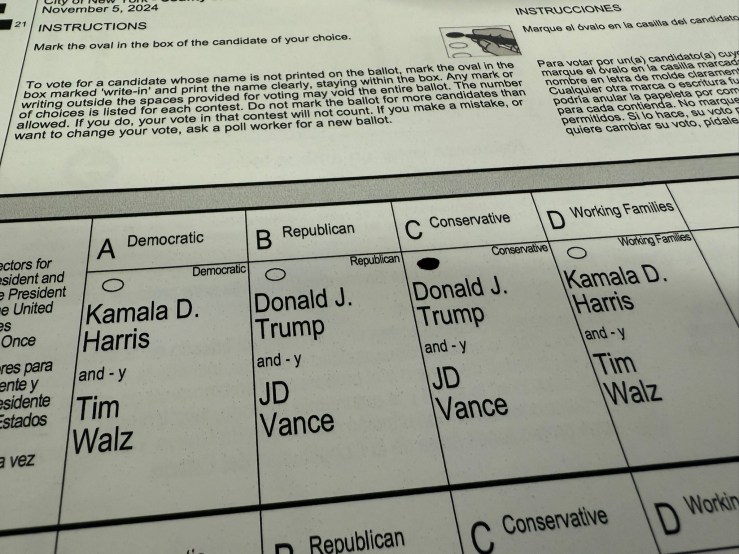
I voted for Donald Trump because I believe that the United States is a country that can and should be proud of itself, despite its flaws. I believe that the United States is a country that should work on behalf of its citizens, instead of crushing citizens to take care of the rest of the world. I believe the United States is a place of opportunity and could be a place of prosperity again, if we refuse to let the Democratic establishment tear it down.
I want a secure border instead of an open border so my family will be safer. I want prices to go back down so I can afford to put away money for the future. I want housing to be affordable. I want a strong military that doesn’t have to be used because we’re respected in the world. I want common sense laws, rules, and regulations where criminals aren’t hailed as heroes and victims are helped instead of being prosecuted. I want the rights of women to be respected and to not have their accomplishments taken away by men in cosplay. I want children to be allowed to be children without having their parents manipulate them into making life altering and debilitating medical choices.
Trump was the obvious choice. I voted for Donald Trump, and I’m glad he won.
The man is articulate, respectable, well-spoken, and knows how to carry and handle himself during a friendly interview and a hostile debate. I almost wish he was running for President now, and I’m pretty sure he’ll be the nominee in 2028.
Do yourself a favor and listen to the actual debates and speeches. Put the TikTok down.
We know that they are lying, they know that they are lying, they even know that we know they are lying, we also know that they know we know they are lying too, they of course know that we certainly know they know we know they are lying too as well, but they are still lying. In our country, the lie has become not just moral category, but the pillar industry of this country.
Source unknown, but attributed to Aleksandr Solzhenitsyn
Wherever this quote originated, it’s definitely relevant to the United States today. They lie. We see the lies. They know we see them lying. They keep moving on as if the lie is reality and they haven’t been caught. Why? Because there’s nothing we can do.
We can’t even be sure the elections are fair anymore. Diane Feinstein was in office until she died, but she’ll probably get reelected anyway.
It’s incredibly discouraging to have no faith in one’s own government and realize that the founding ideals of your country have been completely shattered by the institutions designed to protect them. We’re going somewhere other than intended now, and it’s not going to be pretty.
A World of Warcraft virtual pet offer to “support Ukraine”
This is getting ridiculous. Can we find a cause to virtue signal about that benefits the United States and its citizens in a more direct way? Can we let Europe take care of Europe for a while and instead take care of the United States before our country falls apart we need Europeans to buy virtual pets in online games to help support us?
This post was written in February 2020 but I left it sitting as a draft until now. I’m trying to get more involved with my blog again so I’m going back through old drafts these days.
I was thinking about Buddhism and Stoicism and how these philosophies might apply to current events, and after reasoning it out, I came to some conclusions that make sense, but aren’t exactly comfortable. Essentially, I focused on the idea that it’s not possible to solve all suffering immediately, so a “middle way” should be found that allows for the most good while making progress towards better solutions. Or, in other words, accept reality while striving towards ideals.
I’ve done a fair amount of reading about both, and I know more about Buddhism than Stoicism, but I don’t claim to be an expert in either. I group them together, because a lot of the ideas in both philosophies tend to overlap.
Buddhism certainly talks about doing the least amount of harm possible, to limit the amount of negative karma that you carry with you into your next life, but when we’re talking about an issue like restricted immigration in the United States, or unrestricted immigration, I think you have to look at the levels of harm caused by both positions.
On the one hand, restricting immigration causes harm to those people who are denied entry, possibly, because they would be forced to face whatever drove them to migrate to the United States in the first place. On the other hand, unrestricted immigration to the United States would also cause harm, a greater harm, because the negative ramifications of that policy would be much greater.
As a nation, the United States doesn’t really have a cohesive national narrative or national myth that binds us all together. We are a nation of multiple groups of ethnicities and religions all competing with each other for limited resources within a system that promotes competition and allows for great suffering for those on the losing end of social and legal policies. Unrestricted immigration would add to the suffering of those on the bottom rungs of society by creating more competition for resources among “low-skill” laborers. Arguably, the scarcity of resources in the United States is artificial, but that issue would need to be corrected before, not after, adding more people to the population. The mere fact of the scarcity of resources being artificial wouldn’t change the fact that people would struggle to make ends meet and would suffer as a result of these policies being implemented in the wrong order.
Unrestricted immigration would also strengthen existing divisions within the nation, both political and cultural. The United States needs time to develop a national character and a common narrative that serves as the foundation for our aspirations and ideals as a nation. By adding a large amount of new immigrants to the population, the country weakens itself from within and guarantees that the population remains fractured and easily controlled by the government and its corporate backers.
A weakened United States could also have international ramifications. The United States currently serves as a buffer for many smaller nations in the world that would be invaded and essentially destroyed culturally and ethnically by other nations who are hungry for resources. China’s destruction of Tibet and their attempts to take over Africa is one example. Russia’s current desire (this post was written in February 2020 but not published until now) to invade Ukraine is another good example. You could say that the fact that these events have already happened or are happening now means a strong United States isn’t really a deterrent, but I would say it’s because the United States is already declining due to internal divisions that would only be exacerbated by essentially not having borders.
I’m not arguing for a unitary State like China, where there’s no such thing as a dissenting opinion that isn’t State-approved. I’m saying that we need to correct our current system to take care of the people that are already citizens and take the time to build a common national identity by limiting the amount of in-migration to a reasonable amount. I’m not naive enough to think that the United States government is some sort of bastion of goodness, but I think the existence of the United States acts as a barrier against greater suffering, so we need the United States to be united and strong.
In other words, I’m in favor of balance, of accepting the reality of the situation and understanding that we can’t stop all suffering, and the way to stop the most suffering is not always the most obvious choice.
March 2023 update: ironically, Canada is implementing stronger policies against illegal immigration to stop the flow of migrants into their country. I mention this, because for a long time, liberals in the United States pointed to Canada’s supposed laxer attitude towards immigration as a role model to be followed, ignoring the fact that even then Canada has a merit-based immigration system.
I think there should be limits and incumbent responsibilities for people who want to immigrate here. I don’t think it should be a free for all. For example, make immigrants serve in the military as a path to citizenship. You really want to be here? Show it. Serve the country. Even kindness has to have limits.
But sometimes it’s really hard to not say something, isn’t it? Especially when you’re in a group and you want to contribute something to the conversation to indicate that you’re participating, so you just throw some random comment out there and, a moment later, you realize that what you said sounded out of place, or worse, derails the conversation. Or is that just an introvert problem?
I suppose you could apply this quote to a lot of political speeches too, now that I think about it. Overly verbose language and long winded nonsense where the person doesn’t really commit to anything or say anything concrete. The whole point of the speech is to give the appearance of competency and “getting things done”.
Maybe that’s the bedrock of modern American politics though. Nothing ever gets done. I mean, look at today. We had the Daylight Savings Time adjustment again because Congress won’t do even something simple that a majority of people would appreciate. I know I’d appreciate not having to get up what is essentially an hour early tomorrow, because I know I won’t fall asleep on time tonight.
I was looking at the list of courses available on Joint Knowledge Online, an education site for military and government employees, called (iirc) “Using Plain Language”. I think I’m going to enroll in it. When you’re in the Army, you’re encouraged to use basic, plain English so as many people as possible understand what you’re saying. I’m not in the Army anymore, but I can see how the course would be helpful to me. I still interact with the public, after all, and in New York City quite a few people only have a basic English proficiency because they’re still learning.
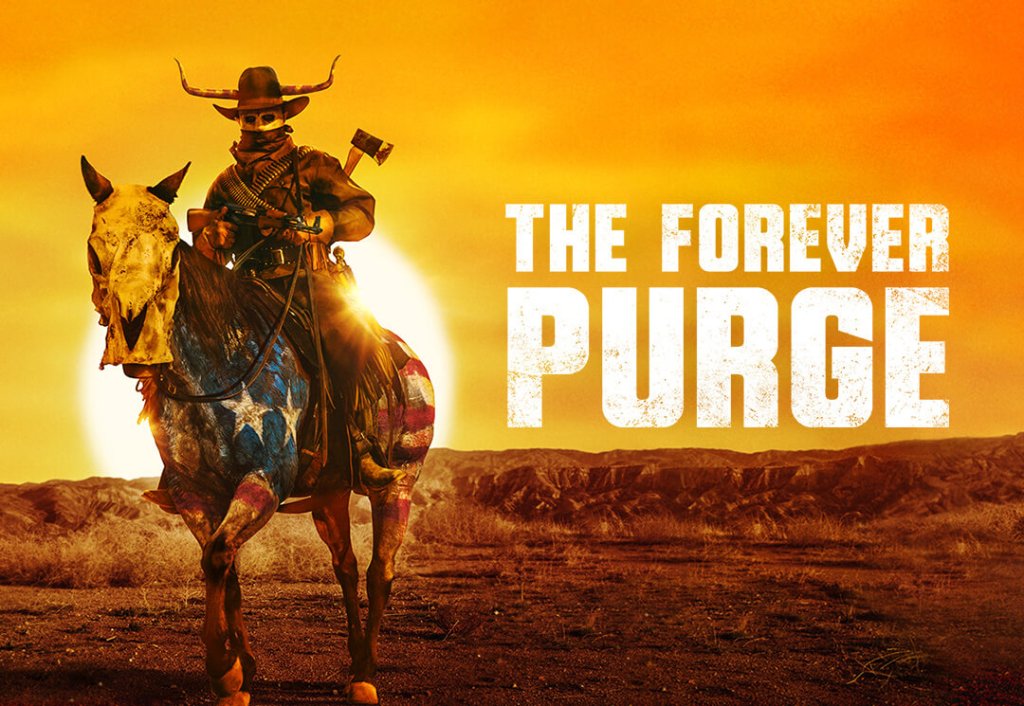
We watched “The Forever Purge” a few days ago and I felt like it was the weakest in the series so far. The acting was good. The sets and costumes were amazing, though there were quite a few instances where scenes and shots were lined up and slowed down as if in anticipation of screenshots, Wonder Woman style, which is a trend that is starting to get tiresome.
The main problem I had with the film is that social commentary was just too heavy-handed and clumsy. At some points, I expected all of the action to stop, the character to turn and look full into the camera, and for a “So kids…” monologue to ensue. It was too preachy.
This movie was a deviation from the rest of the series, which focused on human nature and what people would do in severe circumstances. It was obvious that this movie was about Trump and Trump’s perceived cultural legacy, and it’s a shame to see how much Trump affected the minds of so many people.
I enjoy social commentary in movies, but make it a part of the movie itself instead of being explicitly stated. Make it complex and provoking, but let us figure it out as we digest the story and relate it to our own lives.
I’m tired of this idea that specific narratives and ideologies need to be shoved in people’s faces all of the time, baldly and without nuance. I’m reminded of the actions of certain groups who migrated from Twitter to Mastodon (Fediverse) after Elon Musk’s acquisition of Twitter. They had an explicitly stated desire to politicize everything on Mastodon as much as possible with current and former US political issues. One user commented that Mastodon users wanted to have a quiet space to discuss hobbies and interests and they had to specifically disrupt that to amplify their message. How vulgar. How perverse. How ironic!
When I picked up The View From Flyover Country by Sarah Kendzior, I thought the book was going present a conservative or at least rural perspective on life and politics in the United States. I’m bombarded with the liberal and progressive viewpoint every day in almost every single news broadcast and social media post. The right-leaning viewpoints that do get airtime seem to be too far to the right of the political spectrum to be worth listening to. I was hoping for something center right, or traditional right, I guess.
Unfortunately, this book is written by a liberal from a Midwest city. Not that there’s anything inherently wrong with that. It’s just not what I wanted. The book is a collection of essays and, after having finished reading the book, they come across as kind of mixed bag. The most impressive point of the book so far is how prescient some of the author’s insights were, considering that she wrote most of the essays prior to the 2016 election cycle for Al Jazeera.
Kendzior’s diatribe against gentrification is well-intended but comes across as shallow and offensive. She had an opportunity to look at how class differences and the concentration of wealth were playing out in urban environments. Instead, she uses the issue to present whites as evil oppressors of minorities, forgetting that not all gentrifiers are white because not all wealthy people are white. “Hipsters” are a visible and catchy way to present gentrification but it ignores economic realities. Gentrification isn’t a race issue; it’s an economic issue and a class issue. Kendzior could have used gentrification as a segue into a discussion of income inequality but she chose to go the easy and provocative but less informative route of blaming white people.
The section on underemployment and low pay are masterful. Kendzior isn’t saying anything that I haven’t heard before, but she said it before it was common discourse and her arguments are clear and well made. The situation she describes is maddening. Kendzior’s essay sounds more like she’s describing the plot of a dystopian fiction than reality.
How does an adjunct lecturer work for a college for decades and die making penniless while still only making $10k a year? It sounds like the money in universities, like in the rest of US society, is being funneled into bureaucratic bloat instead of into paying educators. It should be illegal for companies to pay wages so low that costs are shifted onto taxpayers in the form of social welfare programs.
But how can we implement a system of enforcement that won’t result in companies further reducing their workforces and overworking those who remain? It is something that will have to be forced. And it can be done. Companies paid living wages before. We had living wages and dignity. We can get there again. Will it take massive riots and strikes before our aristocratic Congress finally acts on behalf of the American people? Before they remember that they work for us and not for corporations?
Regarding how Islam is portrayed, she writes under the assumption that US news organizations want to tell the news in an accurate and unbiased way, but they don’t. Of course, she probably had her suspicions about that when she was writing, but the true extent of the news industry’s dishonesty didn’t become apparent until after the 2016 election, when people simply couldn’t reconcile Hillary’s guaranteed win with the actual outcome. It’s almost as if the media industry was trying to create reality and expected the American people to act according to the narrative that they had presented.
The disillusionment and shock people felt after the 2016 election cycle was heightened all the more by the clash between what they thought the US was, what they thought it stood for, and the reality of the country’s situation. Honesty and complex reporting don’t get clicks. It doesn’t generate ad revenue. It doesn’t sell because most people don’t want to read the truth. They don’t have time. With the wealth disparity in this country, most people spend so much time working or thinking about working, that they can’t find the energy or will to engage with social or political discourse in any meaningful way. So, they look for cheap entertainment that doesn’t require thought. They want to hear about Snooki’s butt implants, so news producers have turned reporting news into another form of reality entertainment. The more spin there is, the better for ratings, ad impressions, and revenue.
For me, there were two big takeaways from The View From Flyover Country. One, the impact of income inquality, the wealth gap, on US society has far reaching consequences. Combined with a failure by our news organizations to maintain journalistic principles and keep the public informed can undermine our republic and cause more damage to US society than any foreign attacker.
My wife and I were walking down 116th Street this past Saturday on our way towards Target and ALDI. Between 3rd and 2nd Avenues we noticed a group of people painting a mural on a wall, so we crossed to take a better look.
The mural primarily addresses U.S. immigration policy and seems to be an expression of the idea that “we are all immigrants.” One of the installations under the “Galerie De Guerrilla Gallery” section of the mural is a mirror with the word “Immigrant” in English under it. Another section of the mural shows a set of butterfly wings with the caption “La Migracion Es Beautiful” (Immigration is Beautiful). The point seems to be to remind English speakers that they are also immigrants while reminding immigrants that they are beautiful parts of a local immigrant society.
Maybe the mural isn’t about how we’re all immigrants, though. The butterfly wings contain pictures of a wide range of people, but almost exclusively depict Hispanics and African Americans, interspersed with what appears to be a few South Asian Muslims and Native Americans. One of the larger panels shows a Native American woman lying down by a river with teepees in the background next to a quote from an Ogala Lakota Native American. A section of the mural shows the face of an African American woman wearing an Indian feather in her hair.
It seems odd to include Native Americans and African Americans in a mural about how we are all immigrants. The Native Americans were the first people on the land. You can’t immigrate into a place that doesn’t have people in it before you arrive. And, unlike Ben Carson, I would hardly consider the enslavement and forced migration of Africans to be an act of immigration.
Maybe my first impression was wrong. Maybe the message isn’t about inclusivity but is rather about a unified confrontation between minority groups and those viewed as Caucasian. If that’s the case, the mural is eye-catching but is a missed opportunity for emphasizing shared belonging in the national community. Or maybe I’m just over-thinking the artists’ use of the word “immigrant.” Maybe the message of the mural is just protesting in general all of the morally reprehensible things that Trump (and the Republican party) has said and done without explicitly naming him. That would explain the quote by the Lakota Native American about the destruction of the environment. That, along with the slogan “El agua es vida” (Water is life) would be a reference to Standing Rock and DAPL. The inclusion of African Americans would be a reference perhaps to Trump calling for the death penalty for the wrongly accused Central Park Five. The inclusion of Hispanics and Muslims would be a reference to Trump’s constant vitriolic rhetoric and jingoism about Mexicans and Executive Orders that target Muslims.
Either way, immigration is a beautiful thing. Beyond the economic necessity of continued immigration, the diversity that immigrants bring to American life is what makes this country an amazing place to live, at least in major cities and on the coasts. I believe that intellectual and spiritual progress (and lofty goals like world peace) are dependent on having our comfort zones challenged. Encountering and understanding people from other parts of the world forces us to reevaluate and adjust our ideas and beliefs, both about others and about ourselves. I think that only happens when you’re forced to personally confront difference, in person. A book can only explain so much and never requires you to actually self-examine and defend your point of view. I also don’t see anything intrinsically worthwhile in resisting change or trying to hold onto an idealized vision of America that never existed in the first place.






 Bradley's Old Fashioned Weblog