Exporting Cats From the Philippines to the USA (via Delta Airlines)

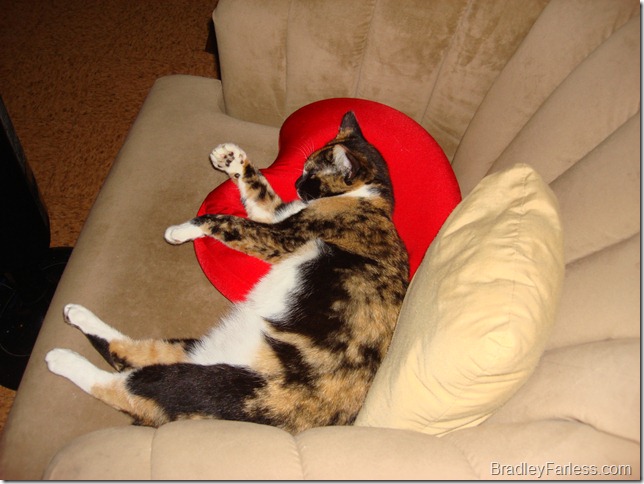
Meet Marble.  Marble was born in Singapore, has lived in the Philippines and is sleeping in an armchair in Manhattan, New York City, in the above picture.  She’s an international cat and probably has more Sky Miles than most human beings.  She’s also a lucky cat, having started out her life as a stray under a building near the train station in Pasir Ris, Singapore.  Now she lives a life of relative luxury on the other side of the world with canned food every day, lots of attention and love and a safe environment.

So, how did she get here?  Well, it’s a long story, but first we exported her from Singapore to the Philippines and then when it was time to move on, we exported her again from the Philippines to the US.  (If you want to read about how to get your cats from Singapore the Philippines, click here.)  Compared to the process of getting Marble from Singapore the Philippines, bringing her to the US was relatively painless.

U.S. Requirements:

Just to give you an idea, the requirements set forth by the CDC (Center for Disease Control, which regulates animal imports) for bringing your pet cat into the US are that the cat has to be in apparent good health and, depending on the state of entry, updated on rabies shots.  That’s it.  Here’s the exact quote from the CDC’s page on cat importation:

A general certificate of health is not required by CDC for entry of pet cats into the United States, although some airlines or states may require them. However, pet cats are subject to inspection at ports of entry and may be denied entry into the United States if they have evidence of an infectious disease that can be transmitted to humans. If a cat appears to be ill, further examination by a licensed veterinarian at the owner’s expense might be required at the port of entry.

Cats are not required to have proof of rabies vaccination for importation into the United States. However, some states require vaccination of cats for rabies, so it is a good idea to check with state and local health authorities at your final destination.

All pet cats arriving in the state of HawaiiExternal Web Site Icon and the territory of GuamExternal Web Site Icon, even from the U.S. mainland, are subject to locally imposed quarantine requirements.

Delta Requirements:

An additional requirement from Delta (the airline I used) was that she needed a government health certificate and to get her out of the country we had to get an export permit.  In the Philippines, you’ll get your export permit and government health certificate at the same time.  They’re the same form in fact.

Philippines Bureau of Animal Industry - Image provided by commenter Lou Cep (1/26/2017)
Philippines Bureau of Animal Industry – Image provided by commenter Lou Cep (1/26/2017)

So, here’s a step-by-step for what you’ll need to get your pet cat out of the Philippines:

  1. When you book your flight, do it with a live person and inform them that you’ll be taking a pet cat with you on the flight.  This is necessary, because not all planes are equipped to carry live animals.  The fee for carrying pet cats is 200 USD each, flat rate.  You pay this later.  I’m not aware of any limit to the number of cats you can bring at one time, but I’m sure there is one.
  2. Within 10 days of your flight, take your cat to a vet and have her updated on all shots.  Depending on what state you go to, your cat may need a rabies shot.  Also, regardless of US requirements, the BAI staff asked to see proof of rabies vaccination.  Get your cat the other shots he or she should have anyway, because it’s just healthier that way and will help your cat avoid disease and live longer.  Depending on what vet you use, costs may vary.  Our cat had her rabies shot in Singapore in May, so it was still valid.  Her feline leukopenia booster was 750 pesos.
  3. Request a Veterinary Health Certificate.  You may need to explain what this is and what it’s for and what it needs to say.  The vet we went to didn’t seem to know, which isn’t surprising.  Cats aren’t popular pets in the Philippines and I imagine exporting them to other countries by owners is rare.  We paid 500 pesos for our Health Certificate at Our Lady of Assumption Dog and Cat Clinic – Antipolo:
    • Contact Person: Oscar Macenas
    • Address: Joren Building, Circumferential Road, Marville Park Subdivision, Antipolo, Rizal
    • Contact Numbers: (02) 697-1896, (02) 697-3378
    • Accreditation: Philippine Animal Hospital Association (PAHA)
  4. Take your Veterinary Health Certificate (within 3 days of issue!!!) and your cat’s shot record, showing the valid rabies vaccination, to the BAI building on Visaya’s Avenue in Quezon City, Manila. Please note that BAI will only consider your veterinary health certificate valid for three days after issue. You must bring it to them within that timeframe.  They’ll process your combo export permit/government health certificate in an hour or less.  Take the form they give you and go around to the back of that building (to the left as you exit the door).  Go into the building there on your left (there’s only one) and up to the 3rd floor to the records unit.  They’ll put a ‘dry seal’ (raised notary seal) on your export permit.  All of this is free. The forms you receive from the BAI will be valid for 10 days. (Confirmation that the veterinary health certificate is still only valid for 3 days after being issued and updated information on the length of time that the BAI documents are valid provided by commenter Lou Cep 1/26/2017).
    • Contact Person: Virgie Tiong or Maynard Lagmy
    • Address: National Veterinary Quarantine Services, Bureau of Animal Industry, Visayas Avenue, Diliman, Quezon City, Manila
    • Contact Numbers: Phone: (632) 920-0816; Fax: (632) 920-0815
    • UPDATE (1/15/2017): BAI now has a Facebook page with up-to-date contact information in the About section. Click Here.
  5. When you get to the airport, check in as usual at Delta’s ticket counter.  They’ll ask to see the documentation, make photocopies, and collect your pet there after you make your payment of 200 USD, which can be made in cash or by credit card.  Delta doesn’t accept carry on pets on international flights.
  6. Collect your pet in the baggage claim area at your destination airport.

Timeline for Rabies Vaccination (Updated 4/20/2017):

According to the CDC in the United States:

An animal can be considered immunized within 28 days after initial vaccination, when a peak rabies virus antibody titer is reached. An animal is considered currently vaccinated and immunized if the initial vaccination was administered at least 28 days previously or booster vaccinations have been administered in accordance with recommendations. Because a rapid anamnestic response is expected, an animal is considered currently vaccinated immediately after a booster vaccination.

So, what does that mean? If your pet is receiving its initial rabies vaccination, the pet won’t be considered inoculated until 28 days have passed. If your pet is receiving a booster shot, the CDC says the inoculation is considered valid immediately.

When I went through the export process, I remember there being some confusion about how much time had to pass between the vaccination and the export permit being issued. My cats had all been previously vaccinated and the vaccination was still considered valid.

Some rabies vaccinations are valid for one year, while others are valid for three. It depends on the type of vaccine used. Please check with your veterinarian to determine whether or not your pet(s’) vaccination against rabies is still valid. Please get the vaccination at least 30 days before your trip.

During the Flight:

You won’t see your pet during the flight at all, even if you have a layover.  What comfort you will have comes in the form of little cards:

Delta provides this card to you on the plane to let you know your pet is onboard.

These cards come off of a form that is stuck to the side of your pet cat’s carrier.  You’ll be given one by a flight attendant prior to the plane leaving the gate area.  If you have a layover, you’ll be given another one before the plane takes off again.  My flight was from Manila to Tokyo to New York, so I received two of them.  The fact that it comes from the sticker form stuck to the carrier at the check in counter is what gives you the assurance that your pet is in fact on the plane.

If you’re wondering how a cat holds up under a plane for 20 hours, I would tell you that it depends on your cat’s temperament.  Each cat is different and some are more skittish than others, but Marble was just fine.  She was a little nervous and hid under the blanket I put in there for her, but that was about it.  Please do leave a blanket in the carrier.  Despite being air conditioned, the plane gets cold.  My advice to anyone, though, is to not drug your cat prior to the flight.  Besides the fact that it’s not healthy for the cat, if he or she looks dopey or messed up on arrival you may wind up with your cat being quarantined to make sure it’s not sick with some disease.

On Arrival at JFK International in New York City:

If you’re flying this exact route, you can collect your cat in JFK’s baggage claim area.  Just past the baggage carousels, there is a locked door with a keypad.  Above it, there is a light with a yellow cover.  When a pet shows up on a flight, it’s taken to this room and the warning light is turned on to alert the owner that the cat (or dog) is available for pick-up.  When I picked up my cat I wasn’t required to show any documentation at all, because Delta had copies that were likely handed over when the cat was unloaded.

I hope this guide gives you some insight into the process of getting your cat from the Philippines to the US!  Below is a map showing the location of the BAI office on Visaya’s Avenue.  If you have any questions, don’t hesitate to ask and I will answer to the best of my ability.
Getting an Export Permit from the Philippines BAI for Marble

Getting Marble’s export permit was a bit difficult, but not because of the process itself.  It was getting there that was annoying.  Before we headed down to the BAI, we had to stop by the vet to pick up her health certificate.  The vet didn’t have a printer in the office so we couldn’t get it on the spot.  The problem with that is that the vet is sort of out of the way when it comes to getting transportation to Manila from Antipolo.  It is on the road that leads out of town though, so instead of backtracking to the center of town to get an air conditioned FX (a passenger SUV that’s been converted for public transportation) we walked out to the curb and flagged down a Jeepney instead.  Thankfully, it was overcast and kinda cool with the breeze since the windows stay open in the passenger area except when it’s raining.  Unfortunately, that also meant we got dusty and had black boogers later.

After a tricycle to the vet, a jeepney to Manila, the train to Quezon Ave and then 2 more Jeepney’s to Visaya Avenue by the Quezon Memorial, we finally arrived at our destination.

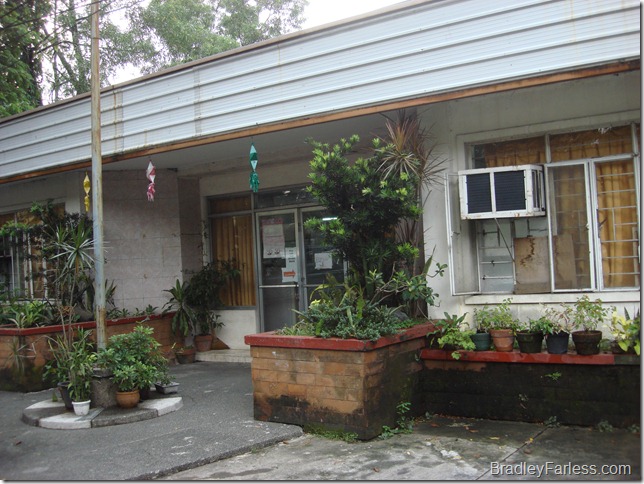
The Bureau of Animal Industry, National Veterinary Quarantine Services building.

After seeing the AVA’s offices in the Ministry of National Development building in Singapore, I was a bit underwhelmed by the appearance of the building, but I suppose it’s no worse than some of the building’s I’ve seen used as government offices in the US.

Despite the appearance of this place, the people inside were very efficient and very friendly.  The e-mail I’d received from one of the people that works there said the wait time for the export permit was about an hour, but I had everything I needed and was out the door in about 20 minutes.  I did have to go around the back of the building to get a dry notary seal stamped into the form, but that only added another 10 minutes, most of which was walking.

Vet health certificate, BAI health certificate and export permit, plus shot records.

The best part of it was that I got the export permit and they converted the veterinary health certificate to a government health certificate (which I didn’t expect), all for the low, low price of free.  That’s surprising.  The import permit was 650 PHP (about 15 USD).  The export permit fee and the fee for the government health certificate in Singapore were 50 SGD (about 38 USD) apiece.  I guess that’s how they paid for that big fancy building.

With this out of the way, the only thing left to do with Marble is to stick her in a carrier and show up at the airport with her.  I do have to find a hotel that will let me stay there with her in Manila for the night before the flight though.  It’s at 7:30 in the morning and it’s impossible to make the commute to Manila at 3:30 AM (it’s 2 hours one way, roughly).

UPDATE (2016): BAI Philippines has a Facebook page with updated contact information available. Click here.

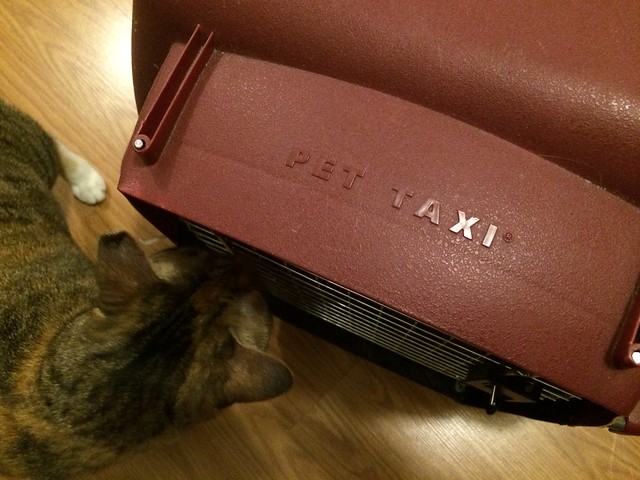
Update (2017): This is a Flickr slideshow of pictures of the cat carrier my wife used in 2011 to bring two cats from the Philippines to New York City. Please note the bolts that were added to the carrier after-market. Make sure you do that. Also, zip-ties were added at the built-in latch points to further secure the carrier. I would bring zip-ties to the airport so that you can secure the door after the airport personnel are satisfied that they don’t have to open the door. Include a bowl for water and food. Ask that your pet be provided with water. Put blankets in the carrier so your pet(s) can stay warm.

Most importantly, keep this as your second or last option. Check with your airline to see if you can bring your pet in the cabin with you in a smaller pet carrier. Check with your airline for permission and/or requirements and fees.

Pet Taxi Cat Carrier for an International Flight//embedr.flickr.com/assets/client-code.js

Marble Took a Trip to the Vet Today!

I have three cats: Marble, Dapper and Thumper.  When I leave for the US next week Marble is going to be coming with me, while the other two remain in the Philippines to keep my wife company.  Obviously, you can’t just show up at the airport with your cat and expect to hop on the plane.  It takes some preparation and that preparation began today.  The process for taking a cat out of the Philippines and into the US is mercifully painless compared to how hard it was to bring my cats here from Singapore.  I’m going to write up another comprehensive guide to exporting cats from the Philippines to the US later, but for now I thought I’d share this.

Part of getting Marble ready for her trip was getting her clean and presentable to minimize the chances of her being deemed unhealthy during the inspection at the vet for a health certificate.  She was overdue for a bath anyway.  In fact, all three of my cats were overdue, so yesterday we forced them to endure a good scrubbing.

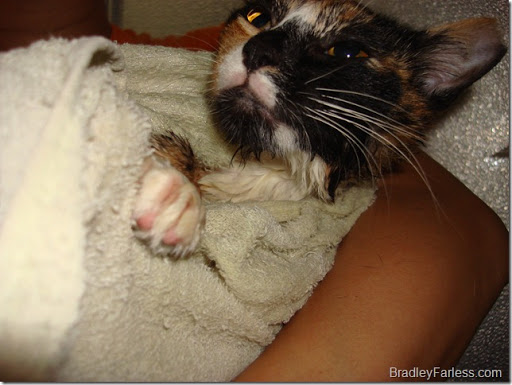
Marble getting toweled dry after a bath.

Marble gave us the least trouble with her bath, though she was the only one to inflict damage.  I have a nice new scratch on my left foot from her trying desperately to evade the water we were pouring on her from a dipper.

Thumper licking herself dry after her bath.

Thumper never stopped struggling during her bath and wound up looking like a drowned rat by the end of it.

Dapper getting brushed after her bath.

Dapper wasn’t too bad during her bath, but she was the noisiest.  She made sure we knew how pissed she was by continuously growling.  She even hissed at us once.  I thought for sure she was going to turn into a whirling ball of claws and shred our legs, but we escaped without injury.  The cats kept jumping up onto the bed while they were still wet.  They usually do that, so we decided this would be a good day to wash our sheets and just left the new sheets off the bed until after they were dry.

I’ve heard a lot of people talk about the horror of giving their cats a bath, but ours aren’t too bad.  I think the reason for that is that we’ve gotten them accustomed to it.  We typically give them baths about once every two or three months, sometimes more often depending on how quickly they get that nasty greasy feeling on their fur.

Marble in her carrier, on the way to the vet.

Today, Marble went on a big adventure.  She didn’t seem too thrilled about being in the carrier again, after the fiasco that happened at Changi Airport a few months ago.

Tricycles, a popular mode of transportation in the Philippines.

Overall, she was pretty behaved as long as she could see us, though she didn’t care for the tricycle ride.  I don’t blame her.  Sometimes riding those tricycles can be a little stressful for me too.  At first, she kept looking around to try to find a way out of the carrier, but eventually settled into a corner and just looked at us with pleading eyes.

The actual visit at the vet wasn’t too hard on her at all.  We took her to the Our Lady of Assumption Dog and Cat Clinic in Antipolo.  Ya… like I’ve said before, religious terms and phrases are everywhere in the Philippines.  Her booster shot was pretty quick and didn’t seem to bother her too much.  I was surprised at how behaved she was.

Something that concerned me about our visit there was the type of shots they had available.  In Singapore, our cats got a Fort Dodge Felovax 4 in 1 shot and a rabies vaccination.  The next shot they were supposed to get was a booster for the 4 in 1.  The vet didn’t recognize it though and after placing a call found out that the 4 in 1 isn’t supplied in the Philippines at all.  He said it’s because those types of problems aren’t present in cats here.  I don’t know about that for sure.  Maybe they’re just not treated here.  Hopefully this won’t cause me to run into a problem of her having to be quarantined in NYC until she gets a proper booster shot.

Regardless, she got her panleucopenia booster and we’ll be picking up her health certificate tomorrow to take to the BAI in Manila for her export permit.  They do 1 hour processing on the export permit and it’s supposedly free.  Not bad!  So far, from what I can see, the total cost for exporting a cat from the Philippines to the US is about 230 USD.  Of course, I have to stay in a hotel in Manila the night before my flight and I’ll need to find one that will allow me to have her there, so the price difference might up my total cost.  We’ll see how that goes.  I need to start calling around to hotels tomorrow.

The Fudgee Barr Incident

92030107In the Philippines there is a snack cake called Fudgee Barr.  It comes in a variety of flavors including chocolate and vanilla and some green one.  I don’t remember what that’s called.  I’ve had the chocolate and vanilla flavored Fudgee Barrs and they’re both tasty but I prefer the chocolate one.

A few weeks ago, my wife was walking through the hallway eating a chocolate Fudgee Barr.  She was really enjoying herself.  I was following her and happened to look down and noticed that she’d dropped a piece on the floor.  So I said to her, “Honey, you dropped some of your Fudgee Barr.”  She said, “Oops!” and bent over and picked it up.

Her face went from happy to shocked to disgusted.  Well, it wasn’t Fudgee Barr.  At least it wasn’t the kind of fudgy bar she was eating anyway.  The piece of “Fudgee Barr” was on the floor in the hallway next to the storage room where the cats’ litter box is.  I think you can see where I’m going with this.  The moist brown morsel in her fingers was cat shit.

(Image via PinoyShopNSave)

Do you like cats? Do you like Japan and anime? Check this out!

I just stumbled across this trailer for an anime called The Cat Returns, from Studio Ghibli.  They always put out quality stuff, so this should be a lot of fun to watch, especially for my wife who loves cats much more than I do.  ^_^

The Cat Returns Trailer

Speaking of cats, I just started looking into the convoluted process of transporting my cats from Manila to New York City in the US via Singapore Airlines.  In some ways it looks like it’s going to be even easier than getting them from Singapore to the Philippines.  The US doesn’t require a lot of documentation to import them and the Philippines doesn’t require too much documentation to export them.  The Assistant Animal Transport Office at Frankfurt’s international airport assured me that all they need are their vaccination records and health certificate to be transported through Germany on the layover there.  The trouble seems to be Singapore, though I’m not entirely sure yet what all paperwork I’ll need.

I’ll go into that more later!

Our Cats Have Adjusted to the Philippines

For any of you that have been following my blog for a while you’ll know that I have cats and that they’re very much a part of the family.  We had cats the entire time we lived in Singapore and while some of them passed away due to illness or accident, we love them and didn’t want to leave them behind when we moved to the Philippines.  Getting our 3 ‘babies’ here from Singapore was a real pain in he ass, and a costly one too, but it’s been rewarding and it’s great to see that they’ve adjusted well to their new environment.

Things didn’t go quite as planned.  We’re staying at my in-law’s place temporarily and there are other cats here.  They haven’t had shots, they’re aggressive and they’re dirty.  We don’t want our relatively pampered cats to mix with them because we don’t want them getting sick or injured.  The area of the house we’re staying in is sort of a mini-suite.  It has its own bathroom and mini-kitchen along with a bedroom, so it’s spacious enough I suppose.  We’re keeping our cats isolated from the others in our area.  They don’t seem to mind too much, though I think they wish they had more room to play.  Eventually, we’ll be moving to a place in Manila where they’ll be able to roam the whole house, once we get window screens installed.

DSC05357 DSC05360 DSC05372

Thumper, the black cat, seems the least concerned with her change of location.  Even though she’s got sort of a weird, gimpy way of walking due to a birth defect she always seems to be the most confident, even after moving to another country.  She also seems to be the least concerned with the other cats in the house.  Marble, the one in the middle, is busy being fat.  When we first adopted her she was pretty skinny but now she spends most of her time laying around doing nothing and when it’s feeding time she tries to push the other cats out of the way to eat their food before eating hers.  That’s a problem because she’s gaining weight rapidly and the other two cats are going hungry.  I’m thinking about putting her in a cat carrier during feeding time to make sure everyone gets their fair share.  Dapper is still the big sissy she always was, but as long as she has a blanket to hide under at night she’s ok.

One of the weirdest things these cats do now is that they like to chase and eat bugs.  In Singapore, even though there were no window screens, we rarely found a bug or flying insect indoors.  There was one incident with a gecko in the room, but that’s about it.  Here, there are always moths and beetles flying around and all three cats find them incredibly fascinating.  They chase them around and when they manage to catch one, they gobble it up like it’s candy.  Kinda gross, but it doesn’t seem to be making them sick, so I’ll let them do what they want.

They also compete for the platform at the top of their scratch post / gym, because it gives a view out the window.  Things outside are a lot more lively here than in Singapore and they want to be able to watch.  They can sometimes see and hear chickens, other cats, dogs, children playing and people hanging out in the street.

I’m glad to see how well they’ve adjusted and that they’re having a good time.  I hope they’ll be just as quick to adapt the next time we make an international move.  Hm.  That reminds me, it’s almost time for them to get more shots!

For more information on importing cats to the Philippines from Singapore, click here.

Rapists on the Rooves

DSC05206

Not quite what you were expecting, is it?

I don’t know the name of those cats, but we call the black and white one Rapist #1 and the orange one Rapist .  It was actually my sister-in-law that came up with those names.

There are a few female cats in the house here.  Common knowledge about spaying to control breeding isn’t quite as common here as it is in other parts of the world, so none of them have been ‘fixed’.  Also, the way the houses are constructed here often leaves openings where gates have been installed rather than doors, so it’s pretty easy for male cats to make their way into a house.

The first time I saw them I wasn’t sure why they were there.  I had to ask if my in-laws had picked up new cats, but that’s when they told me that they’re the rapists that are always getting the house cats pregnant.

So, I’ve been trying to take measures to keep them out.  I put mesh over the gates by the kitchen and I try to keep the doors closed, but since there’s a big wall in the backyard, people often leave the back gate open anyway.  So, I’m constantly shooing them out.  Or throwing slippers at them to get them to run.

Making things even more complicated is the fact that there’s an old female cat living here.  Rapist looks just like her, except for the balls.  I’ve gotten to where I can tell them apart on first glance, but at first I had to double check to see if it was the rapist or Glory, the orange cat that lives here.

Eventually, I want to get the cats in this house spayed.  There are even free ‘spay days’, or so I’ve heard.  That’ll have to wait though.  First off, I want to get a steady income before worrying about transporting these cats into the city for spaying.  Second, two of them are taking care of kittens and one of them might be pregnant again.

Getting kittens adopted out is hard work…

Importing Your Cats To The Philippines From Singapore

Note: Most recently updated with new information on June 17, 2021. I very much hope that this proves to be a useful resource for anyone trying to get their pets out of Singapore and/or into the Philippines. Please keep in mind that a lot of the information is dated, but I’ve provided links to updated government websites where possible. Thankfully, a lot of the paperwork on the Philippines side can be done online through forms now, instead of having to contact actual people by email.


The process of importing cats from Singapore to the Philippines can seem like a lot of trouble, and it gave us a headache trying to figure out what is, and isn’t, necessary.  The embassy website for the Philippines and the website for BAI (when it’s even up) even had some contradicting information.  So, I’m writing this guide in the hopes that other people will benefit from my experience.

Picking an Airline

This is one of the most obvious things, but I thought it was worth mentioning because if you’re planning on taking pets from Singapore to the Philippines you only have two options: Singapore Airlines or Philippine Airlines.  The budget carriers don’t allow pets at all.

With both Singapore Airlines and Philippine Airlines, pets are transported in the belly of the plane as cargo.  Pets aren’t allowed in the cabin (in 2010, not sure about now).  Don’t worry.  My cats unfortunately went through hell prior to take-off, but they made it through just fine and are relaxing on my bed while I type this.

The real decision here comes down to how much money you want to spend.  Both airlines will get you to the Philippines.  Both airlines will carry your pets.  Philippine Airlines is quite a bit cheaper, though.

Picking your Carrier

IMG_0036

That’s not my cat at the top of the photo.  He’s a cat that lived in our building on the 6th floor somewhere, but came downstairs during the day to lounge around and people-watch.  He was checking out my cats, who were in the carriers, just prior to our boarding a taxi for the airport.

When you take your cats on a plane, an IATA certified carrier is required.  We used the Ferplast Atlas Deluxe 20 Open Top to ensure that our cats had proper ventilation during the trip.  Check out any of Pet Lover’s Centre’s many locations for a wide variety of carriers.  Be sure to ask if the carrier is IATA approved before buying it though or you may be disappointed later.

Vaccinations

Before starting the export process, you’ll need to make sure your cats have been immunized.  They don’t need to have been immunized more than once, so if they don’t have a booster shot that’s ok.  When we imported our 3 cats to the Philippines, they had all received their first shots less than a month prior to the flight date.  The shot you’ll have to get them is the standard 4-in-1 shot, which contains vaccines for feline rhinotracheitis, calici, panleukopenia, and chlamydia psittaci.  There is no specific time frame for when, in relation to your flight, these shots have to be received by your cats.  You just have to have them current.

One thing I would like to suggest is that before you head to your nearest vet, do some calling around.  Prices vary quite a bit in Singapore for the same veterinary services.  You can use the Singapore Veterinary Association site’s list of clinics as a good starting point to find a certified vet for your needs.  We lived in the East area of Singapore and found Clinic for Pets to have the cheapest rate on vaccinations, and Mount Pleasant Animal Medical Centre (Bedok) Pte Ltd to have the best rate on the rabies vaccinations and Health Certificates.  (More on that later in the post).

Philippines Pet Import Permit

Update (June 17, 2021):

Important update : pets being imported into the Philippines now require microchips. For more information, please see the Philippines Embassy in Singapore’s information page by clicking here: Bringing Pets to the Philippines

Update (March 12, 2019):

I’ve been made aware that requesting an import permit, or import clearance, from the BAI is now done through the BAI web portal (link updated 6/17/2021).

Detailed instructions on how to do this are found in the PDF below, which was created by BAI:


Previous application process:

Within 60 days prior to your flight you’ll have to request, either in writing or by e-mail, an import permit from the Bureau of Animal Industry (BAI).  The BAI website has been down recently for upgrading and the email address that is listed on the Singapore embassy website is incorrect.  We were actually told (after a month of waiting) that the email address listed there is not used and won’t return an invalid email address message to your inbox.  To actually get a message to BAI via email you have to use the following email address: quarantine_bai@yahoo.com [Commenter “Allem” alerted me to the fact that the previous email address is no longer valid, and recommended the following: baiquarantine@hotmail.com].  The point of contact at that email address is either Maynard Lagmay or Virgie Tesoro, both of which were very helpful in sending us our import permit.

[Update (Feb 18, 2013): The BAI has a new webpage with a contact form and updated phone numbers: http://www.bai.da.gov.ph/index.php/contact-us ]

The written request for the import permit is very informal.  Just write a standard business letter requesting the permit.  Include the following details about your pets:

  1. Type of animal (cat, dog, etc.)
  2. Number of animals. (If more than 5, they will have to be inspected at the quarantine site).
  3. Breed
  4. Gender
  5. Age
  6. Coloration
  7. Date of arrival

The permit is usually mailed I think, but due to our circumstances (the incorrect email address) they helped us out by scanning and e-mailing the import permit to us.  When you get it, it should look like this:

Republic of the Philippines Veterinary Quarantine Clearance to Import Dogs and Cats (List of Requirements for Importing Cats and Dogs Included in Document)
Republic of the Philippines Veterinary Quarantine Clearance to Import Dogs and Cats

The import permit will be valid for 60 days you don’t have to worry about making any payment until you land in the Philippines.  As you can see from the example permit above, you’ll be charged 350 PHP on arrival if you have 2 cats or less, or 650 PHP if you have two cats or more.

Singapore Pet Export Permit

Update (June 17, 2021):

A checklist is now available from Singapore’s Animal & Veterinary Services, which can be found by clicking here: Preparing to Leave Singapore.

Detailed instructions from Singapore’s Animal & Veterinary Services on how to apply for the export permit:


Within 30 days prior to your flight, you’ll have to request an export permit from Singapore’s AVA (no longer exists as of 2019) AVS (Animal & Veterinary Services), which will cost you 50 SGD (in 2010 with multiple cats allowed on one permit). 

This export permit is independent of the Veterinary Health Certificate and you request it (and should request it) prior to getting your Health Certificates done.  Getting the export permit is as simple as filling out an online form, which you can get started on by clicking this link (link updated June 17, 2021).


Information below in this section is probably all outdated at this point:

Once the page loads, scroll down until you see this:

AVA Export Pick

As indicated in the image above, pick the situation that applies to you.  Both options will lead to the same form, but if you’re not a foreigner you’ll have to enter your SingPass to proceed.  Getting a SingPass is as simple as going to the CPF Building in Tampines.  It takes about 5 minutes and you’ll leave with the SingPass in your hand.

Either way, you’ll be presented with a disclaimer that you’ll have to agree to and then you can begin filling out the form.  The form is simple but it can be confusing at times.  The same form is used for all situations, as well as importing and exporting, so the key is to just fill out the sections that apply to you and your situation.

Here’s an example on the first page of the form:

Form Example

On the first page, as an individual exporting personal pets, the bottom details don’t apply.  Don’t enter anything into the fields at the bottom of the form will fail in the end.  The best thing to remember is that just because it has a red asterisk, it doesn’t mean you have to fill it out if that box doesn’t apply to you.

In the end, you should be presented with a confirmation page (step 7) that looks something like this:

AVAConfirmationPageEdited

The following day, you can go back to that first page where the green links are and click on “Enquire on my Application’s Status Now”, or just click here.  You’ll be required to give the Application Number from the Submission Page, which comes after the Confirmation Page above, so be sure to write that down.  It’ll be a long number that starts with a letter, like this one:

AVASubmissionLastPageEdited

In the following screen you’ll be able to see if your permit is processing, approved or denied.  Once it’s approved, payment is simple.  You follow the link at the beginning of this post to go back to the AVA page with the green links and this time click on “Pay for my New Licence now”, or just click here.  The payment is handled by a third party, but the payment should credit instantly.  It did for me!  They accept NETS and MasterCard.  I can’t remember if I saw a Visa logo or not.

After making your payment you’ll be directed to a page where you can download your Export permit for printing.

Health Certificates & Rabies Vaccination

When you’re 7 days out from your flight, you’ll have to take the final steps to ensure your cats are ready to go.

One thing you’ll have to consider is whether or not to get your pet a rabies vaccination.  This is one of the points where I got a bit confused, because some sources I read said it was required, and others didn’t.  I played it safe and got my cats their rabies vaccinations.  Technically, I don’t think it’s required because rabies has been eradicated in Singapore.  However, there are rabies in the Philippines and if I was going to put this much effort into bringing them with me, I didn’t want them to get sick and die after arriving safely.  The rabies vaccinations cost me 48 SGD apiece.

To get our Health Certificate, we went to Mount Pleasant Animal Medical Centre in Bedok.  The vet will inspect your cat to make sure they don’t have any weird bumps, open wounds, or signs of any infectious diseases.  If they appear to be in good shape, she’ll authorize the counter clerk to print up a health certificate, which she’ll sign.

Before she does that, ask her to apply Frontline to your cats and have it annotated on the health certificate.  One of the requirements for importing pets into the Philippines is proof that they’ve been treated for parasites.  I actually forgot to have her administer dewormer and annotate that as well, but we had some on hand to administer to the cats when we landed at NAIA, in case they asked.

Your journey isn’t over quite yet!

Update (June 17, 2021): The Philippines Embassy in Singapore’s website now reads:

Obtain a Veterinary Health Certificate issued by a private veterinarian by bringing your pet to any AVA-licensed veterinarian for examination.

https://www.philippine-embassy.org.sg/the-philippines-2/bringing-pets-to-the-philippines/

So, it seems that you no longer need a certificate issued by the AVS (new AVA), but just one issued by an AVS-licensed veterinarian. I would double-check with the Philippines Embassy or by contacting the BAI directly to be sure. Or, you could play it safe and just apply for the AVS Veterinary Certificate.

Importing pets to the Philippines from Singapore requires an AVA Veterinary Health Certificate, which is 23 dollars per certificate (with multiple cats allowed on one certificate).  Once you have your regular health certificates, you need to scan them and then head back to the AVA’s site to request the AVA certificate (link updated June 17, 2021).  Click that link, scroll down and you’ll see the following:

HC Capture

Filling out this form is similar to filling out the export request form.  It also offers the same method of payment.  There’s just one catch.  You have to pick this one up in person.  The AVA Veterinary Health Certificate comes with a special watermark that only certain printers can properly reproduce.  An average printer will print the form, but it will have a watermark that says “copy copy copy” in a ring, instead of the proper image.  The airline you choose and Customs in the Philippines will require the original.

At some point while filling out this form you’ll see a check box that you either select or de-select to indicate that you’ll pick it up in person.

When you’re ready to go pick up your form, head to the Tanjong Pagar MRT station (EW15 on the Green Line).  Exit towards Maxwell Road and you’ll find yourself at an intersection with Maxwell Road crossing just in front of you.  Cross the small street just to the left of the MRT exit and follow Maxwell Road.  After about one block you’ll see the Ministry of National Development across the street, with a pedestrian crossing leading right to the front doors.

IMG_0018

Go up to the second floor, hang a right at the information desk and you’ll walk right into the office.  You should leave with a form that looks like this:

ava veterinary certificate 2010-001
ava veterinary certificate 2010-002

Note that the watermark says “copy”, since this is a scanned copy of the original.  Pretty cool how it does that!

Presenting Your Paperwork To The Airline Travel Office

No later than two days prior to your flight, you’ll have to present your completed documents to the airline office for validation.  I’m not sure if Singapore Airlines has the same stipulation, but this was required by Philippine Airlines.  The documents I was required to show were the Import Permit, Export Permit and the AVA Veterinary Health Certificate.  The guy also asked me the weight of the cats and the dimensions and the weight of the carriers I was using.  Be sure to have that information on hand.  I had to waste a lot of time looking up the carrier dimensions and weight on my iPhone because I wasn’t prepared.

After the guy looks over your documents he’ll fax them to the airline office in the airport.  Once that’s done you’ll be good to go.

The Philippine Airlines office I went to is located at Parklane Shopping Mall, which is close to Dhoby Ghaut MRT station:

It’s not too hard to find.  There’s a Singapore Arts school on the corner of Orchard and Selegie.  You just turn up the road and then look for this facade:

IMG_0022

The entrance is located between the DBS sign and the McDonald’s sign there on the left.  When you enter the mall go down the first hallway on the right and it should be the 2nd or 3rd storefront on your right.  They close at 5 PM.

Changi Airport

Once you’ve presented your documents to the airline office, you can kick back and relax.  The next thing you have to do with your cats is get them ready for their trip on the day of the flight.

When you arrive at the airport and get in line to check-in, an attendant will likely usher you into the Business Class line for prompt handling of your cats.  Since the documents are faxed in ahead of you, they’ll be watching for you.  The clerk will weigh your cats and perform your usual check-in process, but before giving you your boarding pass you’ll have to go to the excess baggage counter to pay for your cats trip.  The rate was 20.50 per kilo when we traveled on May 6th, 2010 and we paid 330 SGD total for three cats and carriers.  Once you’ve paid the excess baggage fee you’ll receive your boarding pass and your cats will be wheeled away on a trolley.  They won’t be placed on the conveyor belts.

After this, it’s a typical flight.

NAIA

When you get to NAIA, you’ll probably rush off the plane like we did to catch up to your cats.  We got through immigration and customs pretty quickly, but they were already waiting for us at the baggage claim area.  The paperwork process at NAIA is extremely painless.  They even came out to the claim area to take our paperwork and payment from us.  Our cats were never put in a quarantine area and they didn’t make us cart them over to the desk.  Everyone seemed really amused to see them.

We paid our 650 PHP and then all 5 of us walked out into the bright Filipino sunshine to start the next chapter in our lives as residents of the Philippines!

Conclusion

Exporting your cat(s) from Singapore to the Philippines can be a long, complicated and very expensive process but it’s also very rewarding.  I think we spent upwards of 1200 SGD (including vaccination fees).  I encourage anyone who has pets to take them with you when you leave Singapore.  Cats aren’t emotionless beasts that should be tossed out on the street after you’re done ‘using’ them.  After two years of cat ownership I know that each one of my cats has a very different personality and that each one reacts differently to different situations.  If we’re gone for a while, they show that they missed us when we come back. A cat will ‘feel’ it if you abandon it in the street, the same way any other member of the family would.  Love them, protect them, and definitely take them with you and they’ll be your faithful companions for many years.

DSC04868
IMG_0069

LBC and the Cat Welcoming Committee

Slowly but surely we’re making minor improvements to our living arrangements.  It’s something of an uphill battle and I’ve been trying to clean and organize as I go, with short dedicated periods of cleaning up every day.  Parts of the house seem to have not been used in months or years.  That was the case with the room we cleaned up during our first visit.

I haven’t gotten back to organizing the bookshelves on the second floor.  There are still books all over the place as well as files and random bits of paper that will probably wind up as tinder for the fire I plan on making to burn quite a bit of this junk.  I really want to get back to that, but other things keep popping up.

LBC Shipping Box

The day after we got here, the first box we shipped from Singapore arrived.

Cat Welcoming Committee 1

Cat Welcoming Committee 2 

After the welcoming committee finished using the outside of the box as a scratching board, we started to unpack it and bring everything upstairs.

Cats on the Gym

It was a pretty happy occasion for all of us, since there were things in it we could put to immediate use, like the cats’ gym, some cables I was looking for, clothes, and the tool that you have to use to remove a SIM card from an iPhone.

We’ve been doing a lot of shopping as well.  Living here is temporary, but it’s just not going to work if there’s no furniture, which there wasn’t.  Luckily, furniture is cheap in the Philippines, if you know where to go and shop around for good deals.  The problem we’re facing now is overcrowding, and we haven’t even received the 2nd and 3rd boxes we sent from Singapore yet, so we’ve been buying plastic boxes to organize everything.  We’ll put them on top of the dresser and under the bed.  That should help us utilize the space effectively.  When we move to Manila, pretty much all of this stuff will go with us and we’ll have more room for it.  For now we’re staying in my wife’s old room, so it’s understandable that there’s not much space.

Computer Desk

One lucky break is that I keep finding scrap metal everywhere.  I’m going to make quite a hefty sum when I sell all of it, which I can then reinvest into further renovations around the house.  I swear there are half a dozen unfinished projects in here and for every unfinished one I see, there are that many more that I’d like to start on.  I’m not willing to make that large of an investment here, but we’ll do what we can while we’re here.