“Europe’s Angry Muslims” (2005), by Robert S. Leiken – Response Essay

Europe's Angry Muslims Book Cover

In “Europe’s Angry Muslims” (2005), Robert S. Leiken analyzes the presence of Muslims in European countries from the perspective of international security, or specifically the security of the United States, which has visa-waiver agreements with the European Union. According to his article, Muslims are able to easily enter the European Union due to lax rules regarding who is allowed in. Islamic radicals are allowed to enter one European country and, because of the lack of border controls between European Union members, they are then able to travel to all European countries in the EU. Besides the risk to the European Union member states, Leiken sees this as a problem because these radicals are recruiting jihadis who are second generation immigrants and have European citizenship, allowing them to freely travel to the United States.

Leiken’s article emphasizes the role that being a minority in Europe plays in enabling the radicalization of Muslims. Across different contexts, Leiken finds a common thread of estrangement from the dominant culture that turns into disillusionment and anger in Muslims who are born in Europe and have European citizenship, but are socially excluded based on their ethnic and religious backgrounds.

Leiken’s use of statistics to demonstrate the threat of Europe-born Muslim jihadis is flawed. He states that the number of mujahideen who identified as European nationals in North America and Europe in a 1993-2004 survey was roughly 25% of the total, representing the largest demographic within the group. What does that prove, really? It would stand to reason that there would be more local-born Muslims than immigrants in a given time period. This does not, however, call into question the seriousness of the problem of radicalization of domestic Muslims.

Another problem with Leiken’s analysis is his Mecca vs. Medina analogy which, while illustrative, is historically incorrect and misrepresents the foundational period of Islamic history which is significant in terms of his topic: conflict between Muslims and Westerners. In his analogy, he states that Mohammed “pronounced an anathema on [Mecca’s] leaders and took his followers to Medina … [where] he built an army that conquered Mecca in AD 630…” (127). Mohammed fled Mecca in the face of persecution, and by all accounts was among the last to leave, having first sent a group of followers to Ethiopia and then having sent the remainder to Medina ahead of himself. In Medina, he did not “[build] and army” (127), he built a community and engaged in the common raiding practices of the Arabian Peninsula. He also built political alliances which were useful when hostilities did break out. Leiken’s misrepresentation of the situation and glossing over of the long hostilities, political treaties and eventual surrender of Mecca to Mohammed’s men paints Muslims as naturally violent from the beginning of their history, leading to the teleological conclusion that they must be dealt with in some way to make Europe and the United States safe from their barbarism.

Leiken discusses the ways that European countries have engaged with their Muslim populations, noting that all attempts to integrate them have failed, from Belgium’s active attempts to socially support and integrate all comers to Germany’s separation to Britain’s multiculturalism. He then herald’s the United States’ as being the most successful with a policy of toleration while allowing the maintenance of social distinctions. He does not describe how the policy in the US is really that different from the policies of Britain. What Leiken does do, however, is discuss boundaries created by geography that prevent the type of radicalism spreading throughout Europe from reaching the United States. He notes that Muslims in Europe can see radical speeches on satellite and the Internet, but fails to note that those same mediums are available in the United States. By claiming logistical difficulties, Leiken gives too little credit to terrorist organizations and too much credit to the Atlantic and Pacific oceans in preventing terrorism.

The conflict between Muslims and Westerners is sometimes framed as a battle of civilizations, with the implication being that one must wipe out the other to survive. Leiken’s analysis posits Muslim minorities as unassimilable, even in the best case scenario of the United States, where they are “tolerated” but socially distinct (133). This, combined with Leiken’s presentation of Muslims as historically and uniquely violent through a distorted retelling of the religion’s foundational history perpetuates the notion that they are outside of Europe and cannot be brought inside; they must be contained because they cannot be European.

In War’s Wake: Europe’s Displaced Persons in the Postwar Order – Response Essay

A DP camp possibly near Hallendorf, Germany

*The image above is of a displaced person’s camp, possibly near Hallendorf, Germany. The image is from a blog about a family’s history. One of the members of the family, Janis, was a POW and later lived in a displaced persons camp. Click here for more information and more images.


In In War’s Wake: Europe’s Displaced Persons in the Postwar Order, Gerard Cohen analyzes the creation and evolution of the concept of a “displaced person.” He shows that the term arose in a specific context to describe a specific set of people and, because of the role that Europe and America played in post-World War II international politics, the definition of what it meant to be displaced was applied universally. He also shows how the term was politicized and evolved based on the strategic needs of competing world powers during the Cold War, leading to the commodification of displaced persons. The most important contribution of the book, however, is the development of the idea of what it means to be a citizen of a state.

One of the most interesting, though perhaps least clearly explained, ideas in the book is that people underwent a commodification. Conceptually, they stopped being actors receiving aid and became statistics that had to be managed, from counting caloric intake to disposing of displaced persons in the most expeditious fashion possible. Cohen shows that the way people in dire circumstances were thought of underwent a conceptual shift during the period between the World Wars and again after World War II. Initially people were recipients of “Victorian charity,” a concept that Cohen fails to adequately explain. One can infer from the text that it had little to do with attempting to give the poor the means by which they could advance themselves economically. Food or money was provided, but there was no intent to actually eradicate poverty. The new form of care provided after World War I by UNRRA was designed to elevate people by providing them the means to support themselves and become productive and economically successful members of society. This new conception of relief was adopted later by the IRO and informed later definitions of humanitarian relief work. It wasn’t enough to simply “throw” resources at populations in need of relief. To truly alleviate the situation, one had to give people the means to reestablish a sense of community, of dignity, and the means to become economically self-sufficient.

This new form of help required new forms of monitoring and categorizing people. Cohen cites Foucalt’s theory of “governmentality,” which posits government intrusion into people’s lives as a form of violence. While there was a great deal of intimidation, I’m not sure Foucalt really applies in this situation. According to Cohen, displaced persons were able to forge a history if necessary and still receive benefits. One could argue that requiring detailed information and the history of a person is a form of violence, but in the case of providing that information to receive benefits, it becomes a transaction, albeit an uneven one, with the government, or in this case the IRO, holding all of the power in the situation. Additionally, as the situation evolved, a person’s history was not necessarily as important as where he came from, or what his religion was.

The most pressing issue addressed in Cohen’s work is the conflict and debate revolving around where people belong. It is obvious that by the time World War II ended, the idea of nationalities had become firmly entrenched in people’s minds, but that the exact definition of nationality was still in flux. This is no surprise, since the idea of nationality is still hotly debated today. Nation and state were becoming synonymous in people’s minds. Poland’s demands that all Polish displaced persons be returned while simultaneously working to prevent the return of Jews to Poland is evidence of this. Was there a place for minorities in a state? Do people have to become assimilated to the culture and language of the dominant nation in a state to truly belong? Given the current situation in Europe with Muslim and/or North African minorities being targeted, especially in France, it would seem that people in general still see nation and state as essentially the same. Myths about the ideals and values that a state stands for are typically based on the values and ideals of a particular nation within the state, so expecting people to adhere to them is an expectation of assimilation. Is there room for difference?

Cohen’s book raises many other issues, especially moral issues about the rights of displaced persons in migration, what it means to form an international community, and the hegemonic role of the West in defining what it means to be displaced, a refugee, or entitled to special consideration. The way that the West has defined displaced persons has implications for the internal operations of all states. However, in showing that the definition of a nation was still in flux, and that nationality and belonging can be decided and changed with mere paperwork, Cohen undermines the immutability of nationhood or belonging.

Policing Paris: The origins of modern immigration… – Reaction Essay

In Policing Paris: The origins of modern immigration control between the wars, Clifford Rosenberg looks at the creation of a complex policing apparatus in Paris and how this institution helped to define the roles of citizenship and nationality in the French public’s mind. He does this by analyzing the context in which the institution was created and how social controls were adapted to changing ideas of who belonged and who was a foreigner.

Rosenberg’s book opens up questions about the nature of belonging to a state. There is an assumption that there is something intrinsic to belonging to a state. France was historically defined as being a nation state constituted by and from the French nation, but Rosenberg’s work calls into question the very Frenchness of the state. He lists the numbers of immigrants that arrived in France from various countries, mostly European but also some Asians and North Africans. If all of these people became French, then what is “French”? Why were certain groups, like the Russians, assumed to be capable of assimilating into the society while others were not? One politician quoted by Rosenberg says that being French is not a matter of blood, but rather one of education, so why were North Africans considered unable to be educated? It seems that targeted surveillance of North Africans had more to do with the need to keep them subjugated to the French state than it had to do with security.

An idea that features prominently in Rosenberg’s work is Foucault’s theory of “governmentality” as a form of violence by the state against a population. Rosenberg spends much of the first half of the book praising the card catalogues and indexing systems created by the French to monitor population subsets and showing that they were models that were emulated by the rest of the world. It is unclear whether or not Rosenberg subscribes to Foucault’s theory. He both criticizes the use of surveillance against specific groups (the North Africans) and also praises the ability of these identification systems to allow for the creation of welfare systems. Rosenberg probably has socialist leanings, which influenced his analysis. However, his work does raise the question of whether or not identification systems are useful, or even good. Should the state know everything about everyone? Are the benefits of social welfare programs worth the cost of giving up one’s identity to the state?

Rosenberg shows that prior to modern immigration control, borders were much more fluid. Attaining what we think of as citizenship today was much easier and the flow of people around the world followed a much more natural process of migrating to areas where labor was needed, contrary to the assumption that rural residents were tied to the land. The changing nature of the labor market seems to have had the biggest impact on how and why states control the flow of people. Rosenberg emphasizes this by showing that immigration control was initially meant to protect the domestic French labor market from foreign competition that entered French territory. With the state of the world today, including outsourcing and a global economy, it calls into question the necessity or relevance of borders, which greatly illuminates modern debate surrounding illegal immigration into the United States from South America.

While not conclusively taking a stance on the rightness or morality of modern identification systems, Rosenberg opens up many question about citizenship, nationality and what it means to belong to a sovereign political body. He uses the Paris specifically and France generally to illustrate how the idea of borders and belonging have changed over time, making it easier to understand the nature of labor migration and the process of naturalization, as well as shedding light on why current debates call into question the very nature of political borders.

Tsirk – 1936 USSR Film – Reaction Essay

A scene from Tsirk


The film “Tsirk” was produced in the USSR in 1936. The film contains a large amount of propaganda that is presented in the format of a comedy. The film deals primarily with issues of race and nationalism and how citizenship is defined. The producers were implicitly comparing the way that minorities are treated in the USSR to how they are treated in the United States and Europe. The main character, Marion Dixon, has a relationship with an unnamed black man which results in a child. In the United States, this is treated as a major scandal and Marion is chased by a mob. In the beginning of the film, Marion’s manager is identified as German. He also has a negative view of Marion’s previous relationship and uses the existence of her child to control her. These views are sharply contrasted with the Soviet ideal, which is inclusive and does not discriminate based on race.

While the film may not accurately depict the status of minorities in the USSR, it provides the viewer with an opportunity to understand early Soviet views on race relations in two ways. First, the film presents the Soviet view of being inclusive as both positive and better than views on race held by Europeans, represented by the German manager, and Americans, represented by the mob in the opening sequence and Marion’s feelings of shame and fear in respect to her child. Race was not something that should be used to differentiate or exclude people from society. Second, the film provides the viewer with a glimpse of how the Soviets attempted to shape their national narrative, to create a cohesive whole from a mix of racial and ethnic groups that fell under the sovereignty of the USSR.

During the French revolution, French nationality was defined as being contingent upon being ethnically French. Putting aside the ambiguity and arbitrariness of how the standard for “Frenchness” was defined, the state was built on the foundation of the nation. Italy, England and Germany are also similarly built on the idea of a cultural, racial or ethnic group that compose a nation banding together to form a state. The USSR, on the other hand, was composed of many different ethnic and racial groups. This is similar to how the United States was formed, but the difference was in how minorities were (theoretically) treated. At the time, being American meant being white. Racial boundaries outside of the USSR in general were firm, represented by the German manager’s declaration near the end of the film that Marion’s sexual relationship with a “Negro” was a “racial crime”.

Soviet ideology, represented by the closing sequence in the Circus, is racially and ethnically inclusive. The Soviet Union is represented as being composed of many racial and ethnic groups, without racial boundaries or divisions. Each person is considered based on merit, rather than simply skin color. Whether or not this view of racial inclusiveness had any substance beyond this and similar films is questionable, but it was the image that the Soviets wanted to present to the world and to their own public. “Tsirk” represents the Soviet attempt to bring nations of people together in a common cause.

Also interested was the focus on technology and advancement. The acts in the circus revolved around cannons, space flight and reaching for the stars. This was perhaps symbolic of industrialism and was meant to inspire people to conform to Soviet industrialization policies. This ties in with the idea of all racial groups working together in the Soviet Union, because of the ways that local economies were reoriented to encourage industrial growth in the Russian Metropole. Of course, that also contradicts the ideal presented by the film, since these economic policies negatively impacted local non-Russian economies and would later lead to famine and impoverishment.

Whether or not “Tsirk” was an attempt to accurately reflect Soviet ideas or purely propaganda, it reveals quite a bit about the nature of race relations in the world at the time. It shows that ideas of citizenship and belonging were still very much tied to ideas of belonging to the same race or ethnic group. The Soviets understood this and, in this state sponsored film, were simultaneously criticizing other state’s treatment of their ethnic minorities while constructing a standard of belonging for Soviet citizens that contradicted prevailing norms.

Creating the “Other” in Colonial Taiwan: Comparative Article Review

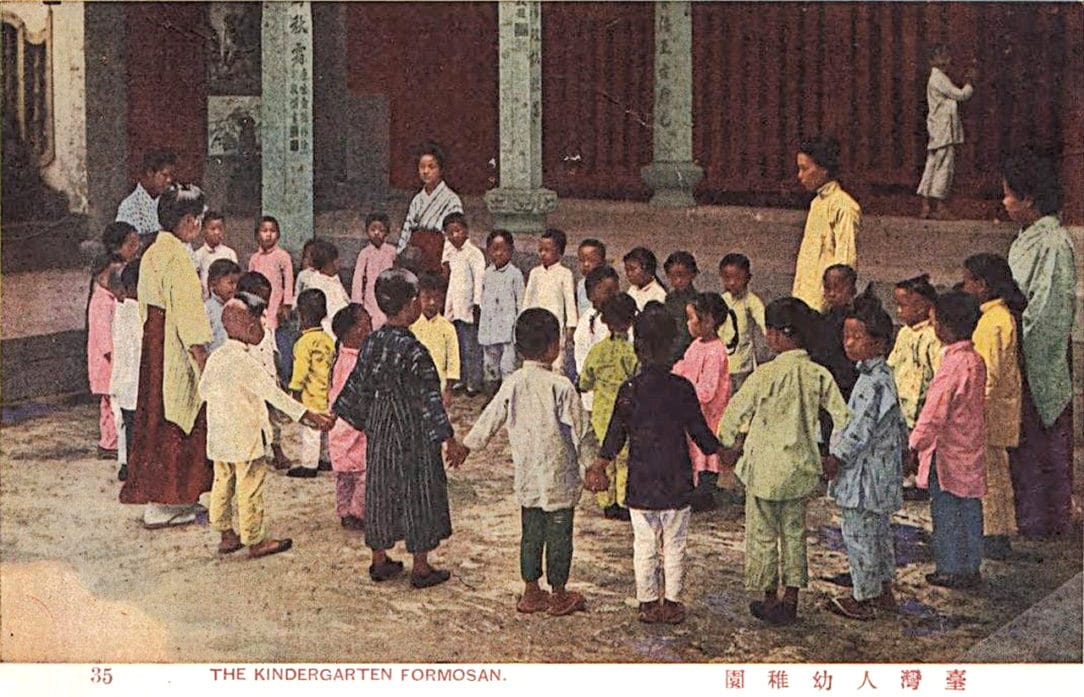
tumblr_nugx43CRCj1qaiafbo1_1280 (1)

Paul D. Barclay’s “Peddling Postcards and Selling Empire: Image Making in Taiwan under Japanese Colonial Rule” and Leo Ching’s “Savage Construction and Civility Making: The Musha Incident and Aboriginal Representations in Colonial Taiwan” are both articles that deal with the creation and distribution of propaganda in and about Taiwan. Specifically they both focus on how the aboriginal population was represented to the outside world to suit the needs of the colonial government. Paul Barclay focuses on the use of visual imagery through commercial postcards as propaganda, produced and distributed by the colonial government to generate a specific image of the aboriginal population. Leo Ching writes about the use of stories as propaganda, both to reinforce an image of the noble untamed savage and later as an attempt to generate feelings of loyalty in the Taiwanese population. Both authors make strong cases to support arguments while also touching on deeper issues concerning modernity and colonialism itself.

In “Peddling Postcards and Selling Empire: Image-Making in Taiwan under Japanese Colonial Rule,” Barclay examines the role that picture postcards played in promoting Japanese colonial rule in Taiwan. Specifically, he argues that picture postcards were used to promote a particular view of the Han Taiwanese and the aborigine Taiwanese populations that legitimated Japanese colonial rule. The vast majority of the available postcards depicted aborigine populations even though they were a small fraction of the population and depicted those aborigines as untouched by modernity, savage, and isolated. In other words, aborigines were presented to the world as the true Taiwanese and as backward, pre-modern people they were used as justification for Japan’s supposed civilizing mission.

Barclay’s main sources of primary material are postcards and personal photographs collected by US Consul Gerald Warner during his tenure in Taiwan from 1937 to 1941. Warner possessed both commercial postcards and personal snapshots that were placed together in the same collection, sometimes side-by-side. This collection was later donated to the Special Collections library at Lafayette College. The author argues that given the quantity of material provided by Warner, the collection “constitutes a body of ‘related and contextualized’ visual documents” that he believes can be used to understand the difference between reality and the official narrative of indigenous life in Taiwan.[1]

Barclay’s examination of the images in the Warner collection is broken down into three general categories: images of martial masculinity, images of “savage beauty,” and images that reinforce stereotypical beliefs about the division of labor in indigenous societies. Barclay argues that in the first two of these categories, the subjects of the photos were anonymized. The subjects were also presented in traditional or prestige garments that did not accurately depict what they actually wore on a day-to-day basis in an attempt to make them appear exotic. Warner’s personal snapshots showed a much more integrated and modern indigenous population, but images of mixed dress or use of modern items was absent from the commercial images, all of which were derived from official outlets or government sources.

The colonial government was preventing people from taking photographs of their own while handing out postcards that perpetuated the narrative of the timeless native. Why would the colonial government be interested in presenting the aborigines as timeless and pre-modern? How would images showing the successful modernization efforts of Japan’s colonial government not have served Japan’s purposes? Would it not have validated their position as bringers of civilization? The answer can perhaps be found in Leo Ching’s analysis of “The Savage,” in which Ching attempts to set the psychological backdrop for his later analysis of Japanese propaganda stories.

Like Barclay, in “Savage Construction and Civility Making: The Musha Incident and Aboriginal Representations in Colonial Taiwan,” Leo Ching analyzes media to uncover the propaganda narrative being promoted by the colonial government. Rather than examining images and postcards, Ching focuses primarily on two popular representations of aborigines from the 1910s and 1930s, “The Story of Goho” and “The Bell of Sayon.” First, however, he tries to explain the Japanese mentality towards colonialism through an analysis of “The Savage,” a story that shows the Japanese understood the inherent contradictions in using colonialism to become part of the civilized world.

The main character, Takawa, strives to become more savage because in savagery he sees an inherent nobility. He finds himself repulsed by the indigenous woman who is mimicking Japanese civility, because in her, he sees a reflection of the colonial Japanese, civilized on the outside, savage on the inside. This story helps to explain why so many Japanese visitors to aboriginal areas, like those mentioned in the travel accounts analyzed by Naoko Shimazu in “Colonial Encounters: Japanese Travel Writing on Colonial Taiwan,” found it so deeply unsettling to see the aborigines becoming assimilated into Japanese culture. Without the stereotypical savage as a counterpoint to Japanese civility, the Japanese were forced to confront the savage nature of subjugating another people. Perhaps this is why the image of a timeless savage was so popular as a postcard motif, or why it was used so prolifically by the colonial administration to maintain that distinction between Japanese and Other.

Ching argues that ‘The Story of Goho” represents the initial colonial construction of the martial savage, like those represented in the Warner collection’s pre-1930s postcards. “The Bell of Sayon” represents the tendency after the Musha (Wushe) uprising to idealize the primitive nature of the aborigines and emphasize their potential for a transformation into loyal imperial subjects. The postcards that Barclay examined show a similar trend. However, he attributes the disappearance of martial scenes and the inclusion of Japanese, but not Chinese, garments in images of indigenous peoples to official anti-Chinese paranoia. After reading Ching’s explanation of the meaning of “The Bell of Sayon,” it seems more likely that these postcards reflected the administration’s new goal of building loyalty to the empire, assimilation and eventual conscription into the military.

One point not addressed by Ching is how these stories were distributed and how well they were received. The story about Goho was produced during campaigns by the colonial government to subdue the aborigines. They were simultaneously attempting to get financial backing from local Han Taiwanese. Neither audience was likely to be receptive to a propaganda folk story produced by the Japanese. Similarly, “The Bell of Sayon” was meant to inspire loyalty to the Japanese empire. Was it successful? By what measure? Ching writes that Sayon was targeted at Japanese as well as aborigines, so was the purpose of the story more to reassure Japanese that aborigines could be trusted to serve a military purpose?

Though Barclay’s argument could have been strengthened by using more personal snapshot sources, through careful art analysis he reveals how a romanticized image of Taiwanese aborigines was created, packaged and sold. The impact of these images on world public opinion was meant to legitimize Japanese colonial rule by emphasizing the need for a civilizing mission, but he misses the mark when interpreting post-1930s postcards which are better understood in light of Leo Ching’s analysis of “The Savage.”  Leo Ching’s analysis of propaganda stories reveals how the Taiwanese aborigines’ image was manipulated to reflect the changing needs of the Japanese empire, first to maintain difference in order to legitimize colonization and later to instill loyalty to bolster the empire’s military forces.


References

Barclay, Paul D. 2010. “Peddling Postcards and Selling Empire: Image-Making in Taiwan Under Japanese Colonial Rule.” Japanese Studies 30 (1): 81-110.

Ching, Leo. 2000. “Savage Construction and Civility Making: The Musha Incident and Aboriginal Representations in Colonial Taiwan.” Positions 8 (3): 795-816.

Naoko, Shimazu. 2007. “Colonial Encounters: Japanese Travel Writing on Colonial Taiwan,” in Refracted Modernity: Visual Culture and Identity in Colonial Taiwan: 21-38.

Footnotes:

[1] Paul D. Barclay, “Peddling Postcards and Selling Empire: Image Making in Taiwan Under Japanese Colonial Rule,” Japanese Studies 30:1 (2010): 85.

Reading Response: Modernization in Egypt, 19th Century

A reading response I wrote for a graduate class, based on four articles or selections about modernization in Egypt.


In “An Irrigated Empire: The View from Ottoman Fayyum,” Alan Mikhail uses agriculture in Fayyum and the maintenance of dikes and dams to make a larger argument about the balance of power in the Ottoman Empire as a whole. Mikhail is arguing against Karen Barkey’s hub and spoke model which posits that all power is in the center and all resources flow through the center. Instead, Mikhail shows that Fayyum acted as its own power center with its own peripheries. One way he demonstrates this is by explaining Fayyum’s traditional role as the grain-supplier of the Hijaz region. Istanbul never attempted to reorganize this regional dynamic and instead supported it because maintaining Fayyum’s productive power was in the best interests of the empire as a whole. More importantly, Mikhail’s article challenges the top-down power dynamic associated with empires by showing that the Fayyumis, the peasants, were able to wield power of their own by using their agricultural production and local expertise as leverage. In Fayyum, the peasants, though at the bottom of the social and power structure, were able to manipulate that structure to their advantage.

Khaled Fahmy’s article “The Nation and Its Deserters: Conscription in Mehmed Ali’s Egypt,” while not making the same argument as Mikhail, plays to the same theme. Fahmy is arguing against the modern historiographical narrative that presents Mehmed Ali’s modernization of the Army as an expression of Egyptian nationalism. He shows quite convincingly that Egyptians saw military service as an onerous burden and went to great lengths to avoid being drafted. The draftees were subject to a modern medical examination to see if they were fit for duty. Understanding this, draftees manipulated the system through self-mutilation, forcing the government to make changes to its policies. While their resistance was not effective or successful, this shows that draftees, like the Fayyumis, understood and engaged with state institutions in ways that made them political actors, rather than passive recipients of top-down power.

In the second article by Fahmy, “The Anatomy of Justice: Forensic Medicine and Criminal Law in Nineteenth-Century Egypt,” Egyptian peasants are shown to have engaged with and used the new siyasa legal system instituted by Mehmed Ali to their advantage as well. The article presents a historical narrative that is similar to the one presented by Milan Petrov in “Everyday Forms of Compliance: Subaltern Commentaries on Ottoman Reform, 1864-1868,” which discusses the way that people in the vilayet of Danube engaged with the new nizami courts. In this article, Fahmy is arguing against the prevailing teleological narrative of a steady progression from “backwards” shariah law to “modern” secular law. He argues instead that the government introduced these legal reforms not for the purpose of enlightenment or justice, but to improve state control over the population. In other words, this wasn’t European light illuminating the darkness of Arab backwardness. It was a carefully thought out plan meant to enhance the efficiency of the state. Fahmy focuses on autopsies and how they were used by the state and understood by the average person. Generally it seems that people understood the benefits of autopsies as a means of ensuring justice in areas that the shariah did not address or did not address adequately.

Brown’s article, “Who Abolished Corvee Labour in Egypt and Why?” is the only article that takes away agency from the common people, who are depicted as a formless mob who act only when ordered to act. In his article Brown is making the argument that corvee labor was not abolished for enlightened reasons, but because it became more profitable for the peasants to remain on their lands to harvest crops after year-round growing became established. The peasants were always being used to serve the greater interests of the state (or the landholders, who in turn produced revenues for the state), and even after the supposed renouncement of corvee labor, there were projects that necessitated the use of forced labor, especially in terms of the maintenance of the irrigation system.

It is interesting how great a role the irrigation system played in influencing policies in Egypt. Egypt’s agricultural output was its greatest asset when it was part of the Ottoman Empire and served as a vital part of the Empire’s infrastructure. After Egypt was separated from the Empire, agriculture was still of vital interest to the state. There were apparently conflicting interests, however. How was the irrigation system maintained when Mehmed Ali depleted the countryside of men to fill the ranks of his army?

Women and Law in the Ottoman Empire

The following content was written as a paper for a graduate history course on the Ottoman Empire. It was the final paper, so I didn’t see the results of my professor’s critique, but I finished the course with an A-. That takes into account factors other than just this paper, so take what’s written with a grain of salt. My personal opinion is that I could have (and should have) incorporated more sources, and more fully incorporated ideas from the sources I did use. I perhaps should have focused more on how law was practiced in the Ottoman Empire, and a bit less on the legal foundation for those laws in Islam.


Women’s status in the Islamic legal structure of the Ottoman Empire is a complicated issue, the examination of which does not lead to solid, black and white conclusions. The Ottoman Empire as a political entity spanned a vast territory and existed for approximately six-hundred years, making it impossible to say precisely how women were treated in the Ottoman legal structure as a whole. Beyond the issue of time and distance, the way women were treated in Islamic law at any given time often varied from one legal school to another, or from one jurist to another within the same legal school. Woman as a legal subject is also a very broad topic, which can be addressed using issues as wide-ranging as marriage law, property law, the legal capacity to testify in court, and adultery laws. This is by no means an exhaustive list, but these are the issues that this paper will explore by examining how the topic has been addressed in recent scholarship.

Judith E. Tucker approaches the subject of women in Islamic law by posing the question, “…how could a legal system that attempts to follow the will of God, a God who is compassionate and just, permit and even facilitate the expression of such rampant misogyny and unbounded patriarchal privilege?”[1] Because of how poorly Muslims have been depicted in popular media, Tucker wants to understand how it is that people today are able and willing to defend Islam as the fount of goodness and righteousness, so she begins an investigation of women’s historical place in Islamic law, and how that has developed over time. She believes that it is important to look at not just what the shariʿa says, but at how the shariʿa has been lived and understood by both jurisprudents and laypeople.[2] Through an examination of how Islamic law was implemented in the Ottoman Empire, as well as the justifications used to modify the law, it becomes apparent that many of the misogynistic tendencies Tucker found confusing, when placed in a modern context, are actually accretions of social practice that have become part of the Islamic legal tradition. These social practices became part of the legal tradition both to support the patriarchal structure of society and as a reflection of that society. Ironically, the modification of Islamic law that has so greatly changed its meaning for women and women’s place in society is justified through an Islamic legal concept known as istiḥsān, which allowed formulating law on the basis of the public good. Unfortunately, the public good became skewed due to the male dominance of society, which is perhaps not what the Prophet Muhammad envisioned when he (depending on one’s perspective) relayed God’s message of expanded rights for women in society, but theorizing about what Muhammad may or may not have wanted is beyond the scope of this essay. Instead, I will examine the conflict between Islamic law and how it was modified and implemented in the Ottoman legal system, if at all, and what those changes meant for women’s status in society.

To do this, I will look at a selection of recently written works that address gender and law in the Islamic empire. In Women, Family, and Gender in Islamic Law, Judith Tucker sets out to investigate the historical circumstances behind the development of Islamic law, which she then applies specifically to the Ottoman experience in In the House of the Law: Gender and Islamic Law in Ottoman Syria and Palestine. In Morality Tales: Law and Gender in the Ottoman Court of Aintab, Leslie Peirce addresses how Islamic law was implemented in the court of one small village over the course of a year, from 1540 to 1541. This micro-history closely examines how an Islamic court was used and can help reveal how women engaged with a court on a regular basis and how their interactions with the court defined their place in society. In Family & Court: Legal Culture and Modernity in Late Ottoman Palestine, Iris Agmon discusses a divorce case in Jaffa in 1900 CE, explaining how women’s place in society was defined in relation to the male who happened to be responsible for her at the time. In contrast to Leslie Peirce’s micro-history, in Off the Straight Path: Illicit Sex, Law, and Community in Ottoman Aleppo, Elyse Semerdjian looks at a much larger span of time by examining 359 years of court records from Ottoman Aleppo to discover how the laws regarding sexual indiscretion in the Ottoman Empire were typically applied. She does this to break down the “pervasive discourse of Muslim sexuality that has real effects on the way shariʿa is interpreted today”.[3] I will also introduce a counter-argument to Elyse Semerdjian’s conception of how Islamic law was skirted to allow for flexibility, written by James Baldwin in an article titled “Prostitution, Islamic Law and Ottoman Societies” from the Journal of the Economic and Social History of the Orient.

Islam, like most religions, puts a strong emphasis on tradition, with much of Muslim life revolving around emulating the sunna (the traditional life and sayings) of the Prophet Muhammad. Oddly enough, that concept of emulating traditional rulings was not present in the Islamic legal system. Judges may have referred to a fatwa (religious opinion) issued by a mufti (a religious scholar) presented during a hearing, but the judge’s opinion was not restricted to following past rulings. He was allowed quite a bit of leeway, though he was expected to operate within certain norms set by the community. The closest thing to legal precedents in the Islamic legal system were court records that attested to events and were witnessed to by male, free-born Muslims. These records, or court registers, are what many historians study today to discover how people may have interacted with the courts.

Islamic law, instead of being based on legal precedents, was based on the foundational texts of the religion: the Qur’an and the Hadith (also known as the sunna, or traditions of the Prophet). The Hadith, despite having gone through a lengthy verification process known as isnad, were often contradictory, which led to the possibility of multiple interpretations of law. Over time, multiple major schools of legal thought emerged, with most Sunni jurists falling into one of four categories: Hanafi, which was the dominant school of the Ottoman Empire; Hanbali; Shafiʿi; and Maliki. The Shiʿa developed their own legal traditions based on the Qur’an and Hadith that were approved by their religious leaders.

In all of these legal systems, women played an important role, but the level of participation allowed to a woman, and how she was conceived of in terms of legal capacity, varied widely depending on the school. Analyzing a work by Haim Gerber, Tucker wrote that women were very active in the court system throughout the Ottoman period, despite the fact that they were an “underdog.”[4] The Ottoman court system was, in fact, a place where the ordinary citizen fought for their legal rights, which, in regards to women, showed clearly that they were aware of their legal rights and were willing to use them. Upper-class women often presented their views in court through male intermediaries, but middle- and lower-class women often appeared themselves.

Leslie Peirce wrote that upper-class women voluntarily refrained from using the court system and opted for arbitration instead. She explained that many women wrote to Ebu Suud, the Ottoman chief mufti from 1545 to 1574, asking what identified one as privileged, and he confirmed that female seclusion was, in his opinion, a marker of elite status.[5] This indicates that there was a level of class distinction involved in who used the court system among women, with women’s ability to exercise their legal rights being curtailed by the idea that by presenting themselves in court they would be violating social norms associated with being privileged. Leslie Peirce wrote that this conundrum bothered Ebu Suud, who was concerned that the removal of elite women from the court might cause them to be deprived of their rights.[6] Tucker explained that when women appeared in court and received validation of their rights by the judges, it helped to ensure that women’s legally guaranteed rights remained active in the community consciousness, despite the fact that men had been actively attempting to silence women and remove them from the public sphere for centuries.[7] Also working against attempts to remove women from the public sphere are the foundational texts of Islamic law themselves, which theoretically give women inalienable rights, or leave enough ambiguity to give women an opportunity for more representation. The fact that women’s rights are embedded in the foundational documents hasn’t stopped men from continually attempting to align the law with patriarchal standards, however. The most prominent area of gender conflict in Islamic law is probably marriage, since it is by definition a legal agreement between a man and a woman.

Judith Tucker writes that the doctrinal basis of marriage, as conceptualized in Islam, is found in both the Qur’an and the Hadith. For example, the Qur’an contains verses that describe wives as “a vestment for you and you [men] are a vestment for them” (2:187). Men and women were both informed that “He created for you, of yourselves, spouses, that you might repose in them, and he has set between you love and mercy” (30:21). These verses described marriage as something positive for both parties, but the Hadith presented a contradictory view of marriage. Some Hadith claimed that Muhammad would have ordered wives to prostrate to their husbands, had it been permissible to prostrate one’s self to another human being. Other Hadith claimed that women should be sexually available to their husbands at any time, even when riding a camel (!).[8]

Hadith are not as reliable as the Qur’an, which is considered to be the word of God, so the fact that there are contradictions between the Hadith and the Qur’an, and between different Hadith, left room for jurists to come to widely different conclusions about how to address the role of women in society. This was especially prominent in terms of how women’s sexuality was controlled, the primary vehicle of which was marriage. Because of the patriarchal structure of the system of jurists that developed, the laws governing women in marriage ultimately privileged men.[9]

Though Islamic marriages were presented as opportunities for two people to create a loving relationship, marriages were established as economic contracts that bound two people together in pledges of mutual support. These marriages were often arranged, and it was hoped that feelings of mutual affection would come later in the relationship. Marriage entailed trade-offs. For the woman, there was guaranteed economic support, a place to live, and a right to inheritance. In exchange, the man received sexual access, domestic labor and a woman to raise his children. In the Hanafi legal tradition (the official legal school in the Ottoman Empire), the nikāḥ, the marriage contract between a man and a woman, was specifically intended to legalize sexual intercourse. Specifically, Hanafis believed that “marriage is ownership by way of owning sexual pleasure in a person and this right is established by marriage.”[10] This conceptualization of marriage presented women as containers for their sexuality, turning their bodies into a commodity, passed from the family of birth to the husband.

Though women were technically required to give their consent to a marriage, their voices were typically silenced through a complex set of rules governing the giving away of brides to husbands. The most egregious example is that of the Shafiʿi jursits, who empowered a virgin woman’s guardian to compel her to marry against her will. Girls in their legal minority (pre-pubescent) could be married off at will by their legal guardian. This rule also applied to underage males, but in actual practice girls were more typically married off before puberty. A non-virgin woman did have some room for maneuver; she could only be married with her vocal consent. Also, if a girl was married before she reached puberty, she could sue for annulment upon reaching her age of legal majority (puberty or fifteen years of age).

Even when a woman was given a choice in terms of her marriage partner, that choice was restricted by the imposed constraints of kafāʿa, or the suitability of her choice, which was determined by her guardian (nearest male relative) and essentially restricted her to a man of the same economic and social background or better. A woman was only allowed to marry laterally or to someone of a higher status; to do otherwise would bring shame to the family.[11] Women were very much considered to be vessels carrying the family honor, a tradition that continues in modern times and results in the “honor killings” of daughters by their fathers for a perceived looseness of morals that stains the family’s name.

Judith Tucker wrote that it is hard to say with any certainty what Islamic law says about marriage due to the complexity of the legal traditions and the often contradictory sources. The growth of differences between and within the different Islamic legal schools further complicated the issue, though most of the differences revolve around minor issues. There are constants, like nafaqa (maintenance of the wife), but Tucker believed that Islamic marriage was inherently discriminatory, with women not always having an equal say in the making of a marriage contract or in how the household would be run. Islamic law also placed heavy burdens on men in a marriage, making him responsible for the material support of his wife, children, and all household expenses.[12] Essentially, what income a woman had belonged to the woman, and what income a man had also belonged to the woman, in the form of legally mandated material support. This legal requirement of maintaining the wife was a significant curb to polygamy, which required equal maintenance of all wives and balanced a man’s legally recognized right to sexual variety with a woman’s legally recognized right to maintenance.

Marriage status and the life-cycle of a woman indicated a perceived legal capacity. Leslie Peirce described this as part of a gendering and social stratification of society, which was reflected by court records in Aintab in 1540-1541. The court records of Aintab seemed to indicate that the free-born Muslim male was considered the default individual, to which people of all other social statuses were measured. Peirce reached this conclusion by examining the notations next to people’s names in the court registers from Aintab.[13] People were either male, in which case they were noted by their name, or they were something else, in which case they would be labeled by whatever set them apart from the free-born male Muslim: sex, religion, status as a slave or freed-person, nomadic tribal affiliation or status as a minor.[14] The largest category of “other” was female. This status was further broken down to indicate the age of a woman: “kiz, the female child or unmarried adolescent; gelin, the newly married young woman; and avret or hatun, the female adult, married or once-married and now divorced or widowed.”[15] Males had designations as well, but only for adolescents and the senile, indicating that the default and standard legal identity is the legally mature Muslim male. The fact that senile men had a separate category also indicates that the concept of being legally mature required mental maturity and ability as well, making the free-born Muslim male the standard against which women would be judged, or perhaps reflecting the fact that the Qur’an indicates that Muslim men are more competent to give testimony than women through its requirement of additional female witnesses. This issue will be addressed in greater detail below.

The changing life-cycle notations in the Aintab registers for women could also indicate how women’s status in society was conceptualized. It is interesting to note that a woman’s designation changed based on her physical location, whether in her parents’ home, her new husband’s home, or in a home that she and her husband had created together. Each of these situations were given attention in the court registers, indicating that they had some bearing on the validity of a woman’s testimony. Additionally, they demonstrate how a woman gained value in society, not through her own means, but in how she related to a male: as a father’s daughter, a husband’s new wife, or a husband’s children’s mother.[16]

Because a woman’s status as a householder rested on her having dependents, Peirce argued that infertility had to be overcome so she could establish herself as mature according to social standards. To do so, Peirce said she had to use social means, because legal means were not available to her. Where men could resort to using the existing legal structure to gain heirs through multiple wives or concubines (slaves were permissible for intercourse and produced legitimate offspring, as opposed to bastards as found in European traditions), women had to resort to adoption. I would argue that adoption was a legal structure as well, since Peirce reports that adoptions were recorded in courts by the new guardian, who agreed to take on responsibility for the child’s maintenance, which is a legal agreement between the guardian and the court. Peirce also mentions that a household could be constituted in other ways, such as having domestic slaves, so instead of giving birth to a child, a newly married couple could obtain slaves and then create a new household.

These life-cycle stages and the way they were observed in the Aintab court records do not coincide with the shariʿa concept of female maturity, but they were in use nonetheless, showing that social customs could and did elaborate on or modify legal theory.[17] They also demonstrated the emphasis on maturity being equated with the formation of a household, which for a woman meant being married and having dependents. Peirce argued that social practice in Aintab and elsewhere indicated that people were unwilling to designate any female but a householder as legally mature, indicated by the fact that the vast majority of the women who used the court in Aintab were labeled as avret or hatun.[18]

So, for women in Aintab, and presumably elsewhere in the Ottoman Empire, marriage was seen as an important stepping stone that allowed access to the legal structure of the court, where they could make their voices heard. This social restriction essentially placed women’s legal capacity under the power of men, encroaching on what should have been their inalienable rights to access to the courts without a guardian, as long as she had reached the age of legal majority. An example of where this might not be the case is one that Peirce gives. Suppose a girl is married prior to her age of legal majority and upon reaching that age she rejects her marriage in court and requests an annulment. Technically, that should leave her in a state of being legally and socially mature, but according to the prevailing social customs in Aintab, she would likely have fallen into a gray area where she was neither recognized as kiz, gelin, or hatun.

Writing about a divorce case in Jaffa in 1900 CE, Iris Agmon wrote that women were also disadvantaged in divorce. A regular divorce was always initiated by the man, because a divorce required the man’s consent, which was indicated by his proclaiming the divorce declaration loudly three times at court. Additionally, he was required to pay alimony to his wife for about three months, the period during which she was not allowed to remarry. This was supposedly for her benefit, to determine whether or not she was pregnant before the divorce became final. The reason this was important is because women were not expected to provide for anyone, not even for themselves, and if she were pregnant then the man who fathered the child would be required to provide maintenance until the child reached the age when he would pass from the mother’s care into the father’s.[19]

So, even though shariʿa law regarding divorce was obviously biased in favor of the male, it allowed a woman to demand maintenance, which seems to be practical and beneficial, except that in actual practice women sometimes forfeited their rights to financial maintenance to convince the husband to agree to the divorce.[20] And, because women were required to be under the protection of a male, this would require her to either remarry or return to her family of birth. So, like the young girl that Leslie Peirce described as receiving an annulment from a marriage formed before she reached the age of legal majority, divorce did not necessarily lead to liberation for women.

Women also faced difficulties in retaining control of their children after a divorce, despite it being mandated in Islamic law. Children were thought to be their father’s, not as jointly belonging to the couple, or to the mother. The woman’s job was simply to bear them and raise them to a certain age. This stemmed from the conception of society as being composed of patrilineal families.[21] A woman married into a man’s family, and she returned to her father’s family after divorce. She did not constitute her own family by herself. Even after divorce, during the period she retained custody of her children, she relied on maintenance supplied by her former husband. In other words, her place in society was still defined by her relation to a male. Men were conceived of as being responsible for themselves and their dependents, whereas women were not ultimately responsible for anything. Because of this, Agmon wrote that women were conceived of as “creatures who needed guidance, protection, and supervision—in other words, not responsible or “incomplete” human beings.”[22]

Incomplete is exactly how a woman would be described when giving testimony in court. A woman’s legal capacity to act on her own behalf in court was another area where Judith Tucker felt that women were clearly disadvantaged. Rules governing women’s testimony insinuated that they were less credible than men and some legal schools made women wards of male relatives while simultaneously limiting their ability to be guardians of their own children. After analyzing the writings of Islamic scholars on the topics of women’s property rights and ability to testify before the court, Tucker wrote that Islamic law, both in theory and in practice, suffered from inherent contradictions when confronted with matters of female legal capacity.[23]

Take the following verse from the Qur’an, for example:

And call into witness

Two witnesses, men; or if the two

Be not men, then one man and two women,

Such witnesses as you approve of,

That if one of the two women errs/ the other will remind her. (2:282)[24]

As shown in the verse above, the Qur’an provides for a less than equitable dynamic for women offering testimony. By requiring two female witnesses for every one male witness, a woman’s mental ability is called into question. Judith Tucker argued that this insinuated that women were less trustworthy and less appropriate as legal witnesses than men.[25] But, she also described the situation as being much more complex than it at first seems, with women’s ability to navigate the courts being largely determined by the school of Islamic law the presiding qadi, or Islamic judge, followed.

She questioned whether the fact that most jurists were uncomfortable with having women in the courts was due to the social context, where women were, as much as possible, prevented from entering public spaces, or whether jurists simply felt that women were mentally inferior. Agmon believed that judge’s understood themselves to be fulfilling the role of a kind of guardian of social equilibrium, who sought to remedy situations at court by reinforcing the social equilibrium that existed in the patrilineal family unit.[26] To maintain a stable society, patriarchal norms were reinforced using interpretations of shariʿa as a justification. Because most schools and even jurists within schools differed widely in interpretation of the law on issues relating to a woman’s ability to present herself in court, Tucker believed it would be hard to come to any solid conclusions about exactly how women should be treated in court according to prevailing legal opinions.[27]

For example, Shafi claimed that women were not suited to give testimony in cases that resulted in serious consequences, such as adultery, fornication, theft, alcohol consumption and apostasy, because they suffered from weak intellects, deficient accuracy, and were incapable of ruling. Al-Marghinani, a Hanafi, engaged with this idea and claimed that women were capable of processing information just as well as a man, as evidenced by the acceptance of Hadith transmitted by women, but backpedaled a bit and admitted that women may have some lapses in memory that prevented them from being reliable witnesses, requiring them to have a second woman to corroborate their story. Additionally, Hanafis did not recognize the testimony of women in cases of hudūd and qiṣāṣ (laws with prescribed punishments). Al-Marghinani did not explain why women would be less capable of testifying in these cases, when their testimony was accepted in property cases.[28] Why would a woman be able to clearly process and understand information related to property disposal, but not criminal actions?

Women’s authority to testify concerning issues specific to women was accepted, such as in matters related to childbirth, or for establishing paternity based on the date of a child’s birth, or in determining whether or not a child was stillborn or died after birth. On the other hand, when two men testified against a man and two women, the testimony of the two men was held to be more valid, even though two women were established as having testimony equally valid as one man.[29] Whether because women were thought to be mentally inferior, or due to some concern with women being seen in public too much, women were deprived of their rights as often as possible and with any excuse possible, leading to further male privilege in a patriarchal society and legal system.

In terms of handling the disposal of property, jurists made little distinction between males and females. As long as a person was of the age of legal majority, he or she was fully empowered to enter into contracts and exercise sole control over the property that he or she owned. This opinion was derived from an exhortation in the Qur’an, which stated, “if you perceive/ in them right judgment, deliver to them/ their property” (4:6).[30] There were, however, qualifications as to what constituted legal majority beyond simply being pubescent. One was also required to demonstrate “rationality, good sense, and mental maturity.”[31] Tucker wrote that this additional qualification of legal majority could be proved through testimony of close relatives or even through hearsay. Tucker doesn’t address this issue in her chapter about Islamic marriage, but it is possible that the need for a woman to be recognized as mentally mature before she was allowed to manage her own property was an opportunity for abuse by male relatives who wanted to prolong their control of the woman’s assets. In the Maliki school of thought, a legal justification was created to alleviate this problem (for the male), allowing the guardian to continue managing the mature woman’s property, even after she was married. Even if a woman had witnesses testify to her mental maturity, a father still might legally impose himself on his daughter’s property for up to seven years, according to Maliki jurists. While there may have been some justification for this, it is hard to see one that does not clearly advantage the male guardian over the female’s rights to her own property.[32]

In the Hanafi Ottoman tradition, the concept of legal maturity was flexible. Both males and females were considered to have come of age when signs of physical maturity were observed (puberty) or, at the latest, at the age of fifteen. However, Ebu Suud, the Ottoman chief mufti from 1545 to 1574, raised the age of legal majority to seventeen for females and eighteen for males. Whether he did this to satisfy his own desire to raise the legal age of majority or because it reflected the popular will of the people to lengthen the period of legal minority is unknown.[33] But generally, once a woman’s legal majority was established, a woman could not be prevented from exercising her legal rights. In most cases, marriage had no impact on a woman’s rights to manage her own property. While a father may have continued to impose himself on his daughter by using a legally justified extension of his guardianship rights to maintain access to her property, the husband was theoretically never able to assume full control of his wife’s property. Most schools of Islamic law decided that a husband’s right to his wife’s sexuality in no way gave him a right over his wife’s money or other property. This ruling was challenged, but always held firm, because jurists could find no clear connection between rights to sexual availability and rights to take another person’s property, since a woman who was married was, by legal definition, her own guardian.[34] The Maliki school of law was again the exception, which gave a husband power over how his wife disposed of her property. He was able to prevent her from donating one-third of her property or from acting as a guarantor for one-third of a given sum. Maliki jurists justified this by claiming that a woman’s relationship to her husband was similar to that of a slave for her master, or a debtor for a creditor, and said the loss of wealth would damage the husband’s material well-being, which inherently assumed that a man had a right to benefit from his wife’s wealth, which was not supported by the other schools of law or the foundational documents of Islam.[35]

Property acquisition was another area of Islamic law where men and women were unequal. In different circumstances, both men and women had clear advantages over the other, but taken as a whole, the rights men and women had to gain property was probably established to compensate for the structure of society, which required men to expend more on maintenance of family members. For example, Islamic law specified that every wife should receive a mahr, or dower from her husband that became a part of her property. This property could not be accessed by anyone else unless the woman chose to share it of her own free will. Ideally, this property would become part of her untouchable property, but that may not have always been the case. If a woman fell under Maliki law, she might have been forced to concede property rights to a domineering father or she might have been prevented from disposing of her property as she saw fit by her husband.

Property laws also differed in terms of inheritance, which was an extremely complicated system that distinguished inheritance shares based on the number, gender, and relationship of surviving kin. What impacted women most, however, was that they were legally restricted to only receiving one-half of a share of inheritance, compared to their male relatives, which parallels the limitation of a woman’s testimony as being equal to one-half that of a man’s. Despite being explained as referring to economic issues of men providing maintenance, this conception of woman in Islamic law reinforced the idea of a woman being worth only half the value of a man. Additionally, inheritance laws heavily favored the paternal line of surviving kin. This was tempered by the fact that women were designated by law to inherit from many of their male relatives and they could not legally be disinherited. They also had free reign to dispose of their property.[36]

Whether or not women benefited from laws concerning sexuality and zina crimes is questionable. Zina, as defined in volumes of juridical writings produced by Muslim scholars, encompassed a wide range of sexual violations, including adultery, prostitution, procurement, abduction, incest, bestiality, sodomy and rape.[37] In the legal discourse concerning sexuality and reproduction, human sexual desire was conceived of as being equally “powerful and ubiquitous” in men and women and was designed to prevent undesirable social pairings that would result in children of uncertain parentage who would cause “social and economic liabilities in a kin-based society.”[38] This theoretically placed women on an equal footing with men, but the actual implementation of law in society was modified by social customs.

The muftis who formulated laws governing sex crimes believed that they were taming something that they had helped to create, because “sexuality is constituted in society and history, not biologically ordained.”[39] Their approach to controlling desire was not to try to reform or eliminate what was considered a powerful and universal urge, but rather to create social constraints that would channel sexual desire into socially useful directions, rather than allowing it to cause disorder.[40] This may have been why, rather than punishing women guilty of adultery by death, judges in Aleppo chose instead to banish them to other neighborhoods. Prostitutes did, after all, serve what they considered a socially useful purpose: they curbed the sexual appetites of men who might otherwise engage in rape, including the Janissaries.[41]

The overwhelming amount of thought put into the construction of legal theory regarding sexuality catered to the idea that male sexuality was more active and demanding than that of females, though there was no real differentiation between ideas of heterosexual and homosexual desire.[42] In some instances, a pretty boy was considered to be sexually dangerous, but he was not required to be veiled or separated from men during prayer because sexuality was something that was attributed to him only because of his likeness to a woman. In other words, it was something separate from himself, whereas sexuality was considered to be an inherent part of what a woman was, “always present and powerful, always to be guarded against.”[43] This conceptualization of sexuality was inherently disadvantageous to women, who found themselves bearing the brunt of managing sexuality and desire by covering themselves, remaining secluded, and avoiding contact with or being alone with unrelated men.

Shariʿa law regarding inappropriate relationships was structured in a way that attempted to prevent illicit unions, but that did not prevent them from happening. However, it was rare that actual hadd (prescribed) punishments were carried out. Typically, the judges had enough leeway to give lighter punishments that were more in line with community ideals, which they justified as being for the good of the community.[44] Local neighborhood representatives approached the courts with reported violations of the moral code, reflecting both the action of the community in the court system and the role of the court as a mediator of public affairs, or as Iris Agmon put it, maintainers of the established patrilineal social equilibrium, also attested to by the notations of social position that Leslie Peirce discovered the Aintab registers.[45]

To demonstrate the flexibility of the court system, Elyse Semerdjian examined sets of court registers from Ottoman Aleppo that covered a span of 359 years in an attempt to create a more realistic narrative about the relationship between sexuality and shariʿa law, revealing the sharp distinction between the prescribed hadd penalties for sexual offences and the actual punishments meted out by judges.[46] Rather than stoning or lashing offenders, penalties usually included eviction from the neighborhood or fining. Deflecting corporal punishment was accomplished through various methods, including shubha (the introduction of legal doubt), the legitimation of a conversion from physical punishment to fines, the requirement of the four witnesses to actually see the act of penetration, and by justifying prostitution as quasi-ownership and therefore not subject to hadd penalties.

Ottoman laws concerning punishment differed so drastically from shariʿa law that Semerdjian speculated that it might have been an attempt to reconcile the law with the empire’s diverse population, since the shariʿa courts, though belonging to the Muslim community, were open to anyone. She also argued that the concepts of istiḥsān and istiṣlāḥ (forming laws based on public interest) played an important role in allowing judges to pass rulings that did not comply with traditional understandings of shariʿa law. She believed that no matter how widely practices had diverged from previously accepted norms, legitimation for the changes in punishments all had their foundations in principles of Islamic jurisprudence.[47]

James Baldwin disagreed with how Semerdjian conceptualized Islamic law and found her explanation of how Ottoman judges were able to evade handing out hadd punishments for prostitution offenses unsatisfactory. He wrote that Semerdjian’s arguement that judges made rulings based on local custom, rather than Islamic law, framed the discussion in a way that depicted shariʿa law as a problem that had to be skirted in order to pass more humane sentences.[48] Baldwin argued that almost all major Hanafi jurists of the period had excluded prostitutes and their clients from fixed penalties, which is something that Semerdjian acknowledged as well, but he elaborated on this point by expanding his definition of what constituted Islamic law.[49] Instead of arguing that there was a gulf between Islamic law as an ideal and actual practice, he instead argued that that all of the different components of legal writing at the time, including matn (manual), sharḥ (commentary), fatwa (opinion) and ḳānūnnāme (codified orders of the Sultan), together with the day-to-day practices of the judges, litigants and state officials all collectively constituted Islamic law.[50] He understood Islamic law as a working system, rather than as an inert body of knowledge, judicial practices, or as an exertion of state power.[51]

James Baldwin’s approach to Islamic law might be the best method for women today to positively address Judith Tucker’s question, presented at the beginning of this paper, that questioned how women, and people in general, could hold up Islam as a fount of righteousness when the history of the religions legal system is riddled with gender inequalities. Throughout this paper, I’ve examined the ways that gender, and women specifically, have been approached in Ottoman legal history. In each situation, for better or worse, shariʿa has been molded and adapted to local concerns, and if one imagines Islamic law as a living system that evolves through opinion and discourse to remain relevant, then there is reason to believe that a generation of Islamic feminists can help redefine shariʿa and women’s place both within the legal system and in their societies.


[1] Judith E. Tucker, Women, Family, and Gender in Islamic Law (New York: Cambridge University Press, 2008), 1.

[2]Ibid., 19.

[3] Elyse Semerdjian, Off the Straight Path: Illicit Sex, Law, and Community in Ottoman Aleppo (Syracuse: Syracuse University Press, 2008), Kindle eBook Location 125.

[4] Judith E. Tucker, Women, Family, and Gender in Islamic Law (New York: Cambridge University Press, 2008), 18.

[5] Leslie Peirce, Morality Tales: Law and Gender in the Ottoman Court of Aintab (Berkeley: University of California Press, 2003), 144.

[6] Ibid.

[7] Judith E. Tucker, Women, Family, and Gender in Islamic Law (New York: Cambridge University Press, 2008), 30-34.

[8]Ibid., 40.

[9]Ibid., 50.

[10]Ibid., 41.

[11]Ibid., 42-46.

[12] Ibid., 82-83.

[13] Leslie Peirce, Morality Tales: Law and Gender in the Ottoman Court of Aintab (Berkeley: University of California Press, 2003), 144-149.

[14] Ibid., 145.

[15] Ibid., 149.

[16] Ibid., 149-150.

[17] Ibid., 150-151.

[18] Ibid., 152.

[19] Iris Agmon, Family & Court: Legal Culture and Modernity in Late Ottoman Palestine (Syracuse: Syracuse University Press, 2006), 129-133.

[20] Ibid., 130-131.

[21] Iris Agmon, Family & Court: Legal Culture and Modernity in Late Ottoman Palestine (Syracuse: Syracuse University Press, 2006), 132-134.

[22]Ibid., 133.

[23] Judith E. Tucker, Women, Family, and Gender in Islamic Law (New York: Cambridge University Press, 2008), 135.

[24] Ibid., 140.

[25] Ibid., 141.

[26] Iris Agmon, Family & Court: Legal Culture and Modernity in Late Ottoman Palestine (Syracuse: Syracuse University Press, 2006), 139.

[27] Judith E. Tucker, Women, Family, and Gender in Islamic Law (New York: Cambridge University Press, 2008), 149.

[28] Ibid., 141.

[29] Ibid., 142.

[30] Ibid., 135.

[31] Ibid., 136.

[32] Ibid., 146.

[33] Leslie Peirce, Morality Tales: Law and Gender in the Ottoman Court of Aintab (Berkeley: University of California Press, 2003), 151.

[34] Judith E. Tucker, Women, Family, and Gender in Islamic Law (New York: Cambridge University Press, 2008), 137.

[35] Ibid., 146-147.

[36] Ibid., 138-139.

[37] Elyse Semerdjian, Off the Straight Path: Illicit Sex, Law, and Community in Ottoman Aleppo (Gender, Culture, and Politics in the Middle East) (Syracuse: Syracuse University Press, 2008), Kindle eBook Location 90.

[38] Judith E. Tucker, In the House of the Law: Gender and Islamic Law in Ottoman Syria and Palestine (Berkeley: University of California Press, 2000), 148.

[39] Ibid., 149.

[40] Ibid., 150.

[41] Elyse Semerdjian, Off the Straight Path: Illicit Sex, Law, and Community in Ottoman Aleppo (Gender, Culture, and Politics in the Middle East) (Syracuse: Syracuse University Press, 2008), Kindle eBook Location 1758.

[42] Judith E. Tucker, In the House of the Law: Gender and Islamic Law in Ottoman Syria and Palestine (Berkeley: University of California Press, 2000), 152-153.

[43] Ibid., 154.

[44] Elyse Semerdjian, Off the Straight Path: Illicit Sex, Law, and Community in Ottoman Aleppo (Gender, Culture, and Politics in the Middle East) (Syracuse: Syracuse University Press, 2008), Kindle eBook Location 164-181.

[45] Iris Agmon, Family & Court: Legal Culture and Modernity in Late Ottoman Palestine (Syracuse: Syracuse University Press, 2006), 139, and Leslie Peirce, Morality Tales: Law and Gender in the Ottoman Court of Aintab (Berkeley: University of California Press, 2003), 149.

[46] Elyse Semerdjian, Off the Straight Path: Illicit Sex, Law, and Community in Ottoman Aleppo (Gender, Culture, and Politics in the Middle East) (Syracuse: Syracuse University Press, 2008), Kindle eBook Location 165.

[47] Ibid., Kindle eBook Location 735-762, 1424.

[48] James E. Baldwin, “Prostitution, Islamic Law and Ottoman Societies,” Journal of the Economic and Social History of the Orient (2012): 119-120.

[49] Elyse Semerdjian, Off the Straight Path: Illicit Sex, Law, and Community in Ottoman Aleppo (Gender, Culture, and Politics in the Middle East) (Syracuse: Syracuse University Press, 2008), Kindle eBook Location 735-750.

[50] James E. Baldwin, “Prostitution, Islamic Law and Ottoman Societies,” Journal of the Economic and Social History of the Orient (2012): 120-121.

[51] Ibid., 148.

References

Agmon, Iris. 2006. Family & Court: Legal Culture and Modernity in Late Ottoman Palestine. Syracuse: Syracuse University Press.

Baldwin, James E. 2012. “Prostitution, Islamic Law and Ottoman Societies.” Journal of the Economic and Social History of the Orient 117-152.

Peirce, Leslie. 2003. Morality Tales: Law and Gender in the Ottoman Court of Aintab. Berkeley: University of California Press.

Semerdjian, Elyse. 2008. Off the Straight Path: Illicit Sex, Law, and Community in Ottoman Aleppo. Syracuse: Syracuse University Press.

Tucker, Judith E. 2000. In the House of the Law: Gender and Islamic Law in Ottoman Syria and Palestine. Berkeley: University of California Press.

—. 2008. Women, Family and Gender in Islamic Law (Themes in Islamic Law). Cambridge: Cambridge University Press.

Response: Selim Deringil’s “The Well-Protected Domains: Ideology and the Legitimation of Power in the Ottoman Empire 1876-1909”

By Uncredited [Public domain], via Wikimedia Commons
Abdulhamid II in 1908. By Uncredited [Public domain], via Wikimedia Commons

Selim Deringil’s book, The Well-Protected Domains: Ideology and the Legitimation of Power in the Ottoman Empire 1876-1909, is an attempt to find a more balanced and realistic interpretation of the reign of Abdulhamid II than that proposed by either the Turkish left, which demonizes the period, or that of the Turkish right, which places Abdulhamid II on a pedestal. He accomplishes this by stepping outside of the modern argument and presenting Abdulhamid II’s reign and the Ottoman state in the context of the larger world, as perceived by the Ottoman elite in Istanbul. According to Deringil, the main problem facing the Ottoman Empire during this period was one of legitimation, a problem faced by all autocratic empires during that time period, and Abdulhamid II’s reign was an extended period of contest with other Great Powers to legitimate and protect the image of his Well Protected Domains.

To legitimate his rule of the multiethnic Ottoman state in a period that showed increasing signs of national consciousness and hostility from outside powers, Abdulhamid II had to manage his government’s image on two fronts: internally and externally. He had to ensure loyalty from his diverse citizenry and manage the empire’s public image abroad. Essentially, he was focusing on maintaining the three pillars of the Ottoman Empire as posited by Reşid Paşa: the Islamic nature of the state, Ottoman rule, and the continuity of Istanbul as the capital of the empire.

Within the empire, Abdulhamid II focused on efforts at reforming the sharia and the educational systems, both for the purposes of maintaining the Islamic character of the state and both as a response to Western influences. Western legal codes had become codified, so the Ottomans felt compelled to codify the sharia as well, to justify its image as a modern state. Unfortunately, the unintended consequence of codifying the sharia was that it removed a lot of the leeway individual jurists previously had when interpreting the law and applying it to cases. Also, the appearance of missionary schools created a problem for the Ottomans. Part of the state’s legitimacy was based on the Islamic character of the majority of the Ottoman’s subjects. Abdulhamid II feared that missionary schools would lead to large conversions of Muslims to Christianity, both removing his base of legitimacy and creating a situation where Ottoman subjects might feel greater loyalty to a foreign government.

One of the examples used, to justify this belief, was when the Maronite community bodily supported the French state during a war, but did not volunteer to enlist during the Ottoman’s war with Russia. To prevent this from happening, the Ottomans monitored, regulated and attempted to prevent missionary schools from being opened, utilizing many resources and man-hours on what ultimately proved to be a waste of time. The Ottomans realized the only way to compete with foreign education was to provide better local, Muslim services. Perhaps they could have done that if they hadn’t invested so much time, effort and resources into trying to prevent missionary schools from opening?

In a related push for domestic legitimacy, Abdulhamid II’s pushed for Islamic orthodoxy through education and forced conversion. A carrot-and-stick method was used to gain a conversion and then education facilities were established and teachers were posted to the areas to ensure the locals followed state Hanafi Islam. Deringil discusses the case of the Yezidi Kurds at length, showing how this policy of ensuring the conversion or correction of local Muslims could result in unintended consequences. In the case of the Kurds, mixed signals led to junior Ottoman officers engaging in violent behavior that only solidified resistance to central authority among Kurds. This also resulted in a loss of image in the international community.

International image management was also an important part of maintaining political legitimacy for the Ottomans. International press was closely monitored with the Sublime Porte frequently instructing local consulates and ambassador’s to issue rebuttals. The Ottomans also ensured that they were represented in any event that other Great Powers were participating in, such as World Fairs and Expos. The Ottomans often used their influence to shut down productions that they felt would insult the national honor and integrity of the Ottoman Empire. There was a Western tendency to make exotic the normal life of the Ottoman Empire, and to some degree the Ottomans internalized those images while fighting against them, as shown by their willingness to name their horses in World Fair exhibitions. The Ottoman’s preoccupation with ensuring a positive image in the world press was an effort to present themselves as a modern state, with just as much right to exist as a Great Power as Germany or Russia.

Selim Deringil’s book is a valuable and interesting resource that sheds light on how the Ottoman Empire interacted with other world powers in the late 19th to early 20th centuries, how it was similar to other world powers and how it guarded its political legitimacy both domestically and abroad. His attempt to humanize and normalize the Ottomans is an important step in breaking the stereotype of the Oriental ‘other’, so that we can better understand the development of the modern Middle East.

Response: Cem Behar’s “A Neighborhood in Ottoman Istanbul: Fruit Vendors and Civil Servants in Kasap Ilyas Mahalle”

In A Neighborhood in Ottoman Istanbul: Fruit Vendors and Civil Servants in Kasap Ilyas Mahalle, Cem Behar attempts to reconstruct the life of an Ottoman Istanbul neighborhood through the use of an exceptional collection of records that he claims are unique to Kasap Ilyas. The records he uses as a primary source for his reconstruction of the mahalle are the notebooks and records of the neighborhood’s imam and (later the) muhtar, which he supplements with data from the 1885 and 1907 censuses and Islamic court records from 1782 to 1924. Additionally, the author attempts to recreate the atmosphere of the neighborhood in the late Ottoman, early Republic period, by interviewing elderly residents of the modern neighborhood.

When considering the information used to create this account, one has to wonder how representative of Istanbul life in general it can possibly be. Behar is careful to point out that Kasap Ilyas’s history and circumstances are certainly unique, and while his findings cannot be used to generalize about Istanbul life, it can be used as a tool to essentially guess at what life in other parts of the city might have been like, given similar circumstances. How many other neighborhoods were there that could have replicated the situation in Kasap Ilyas, however? It does seem to have had many peculiarities, including the large public bath, the nearby wharf, and later the influx of a large population of immigrants from Arapkir. Certainly other parts of Istanbul must have had immigrant populations who were incorporated into society in a similar manner (claims of lost identity papers glossed over by local sponsorship), but how many other neighborhoods also had access to a wharf and warehouses, or to large gardens that provided work opportunities and properly accommodated a working class population? Certainly the elderly inhabitants of the modern neighborhood felt that there was something unique about their neighborhood when they bitterly complained about the destruction of the warehouses and the ‘upper mahalle’ as destroying something essential to their neighborhood.

The unique combination of people and resources (the wharf, gardens, and bath) created a sustainable neighborhood in a city where neighborhoods were routinely absorbed into neighboring mahalles. What I found most interesting about the structure of the neighborhoods, however, is both the diversity of economic classes and the living arrangements. Coming from a Western society, I took for granted that the division of neighborhoods by economic class was a universal occurrence. What factors influenced social norms in Istanbul that made it ok to live in socioeconomically diverse neighborhoods, with beggars living right next to mansions? What made Western society so different? Behar mentions that socioeconomic divisions of neighborhoods didn’t occur until the twentieth century, in response to Western influence. Was it really just as simple as people from similar ethnic and religious groups living together, as a priority over people of similar economic classes living together? Was this common in Islamic cities, or just Ottoman cities, or just in Anatolia? Regarding living arrangements, it was interesting to see that people would often list their business as their residence, but that speaks directly to the economic situation in the neighborhood.

Behar used the itinerant vending of fresh fruits as an example of an informal trade network and then used it to describe the difference between the common activities of recent immigrants from Arapkir to Kasap Ilyas and the more established Istanbulites who had stable businesses governed by regulations and guild organizations. He described an informal network as requiring little or no skill, no permit or license, and little to no startup costs. The only true requirement is that one have a customer base, which Behar describes as a “solid network of personal relations” (115). Behar’s point was probably to show what factors made Kasap Ilyas such an attractive point of entry to Istanbul for the Arapkir immigrants. The Arapkirlis had previously established a system of patronage through the retinue of a pasha who brought his household back to Kasap Ilyas. Alone, this would not have been enough, but because of the presence of the large vegetable gardens, like the Langa gardens, the Arapkirlis were able to incorporate themselves into the larger Istanbul economy through “entry-level” work. Certainly many maintained that lifestyle. Behar describes fathers and sons performing this work together, but Behar also describes other Arapkirlis using fruit vending as a starting point for upward mobility through civil service. I’m sure that there are many cities in many parts of the world that have experienced similar patterns of immigrant exploitation of a resource to establish an ethnically homogenous presence in a city where greater opportunities for social mobility are present. Considering the high rate of population turnover in the neighborhood, it is likely that not only the Arapkirlis were taking advantage of the neighborhood’s usefulness as a socioeconomic stepping stone.

One area of Behar’s work that I found problematic was his assumption of familiarity with foreign language terms. Of course, when writing this type of history, it would be fair to assume that the reader has some familiarity with ‘Islamic’ terms, but Behar’s text is liberally sprinkled with Latin phrases and words that have been borrowed from German. He places these phrases in Italics, signaling their rare usage, but then fails to give a definition. Admittedly, a reader could simply pick up a dictionary to learn the meaning on his own, but if Behar knew the usage of those phrases was problematic and put them in italics, he could have gone the extra mile and defined them at their first usage as well. There were also instances where he deliberately used a Latin word where an English word would have sufficed, like on page 40 where he uses nomenklatura instead of “nomenclature”. Given the context, it is unclear whether he is using the Latin term to replace the English term or if he is making a reference to different statuses within the elite classes of Communist bureaucracies. Another problematic use of language is on page 90, where Behar indicates that the ‘surname’ “binti Abdullah” is significant in connoting conversion to Islam, but does not explain why.

Overall, Cem Behar’s work does an outstanding job of using records to create an image of what Kasap Ilyas might have looked like over the course of Ottoman control of Istanbul. It helps the reader to understand the social and economic dynamics at play in the neighborhood and the city in general, as well as how neighborhoods operated internally.

Response: Norman Itzkowitz’s “Ottoman Empire and Islamic Tradition” and Leslie Pierce’s “The Imperial Harem”

In Ottoman Empire and Islamic Tradition, Norman Itzkowitz presents an account of the period traditionally considered to be the rise of the Ottoman Empire. His account is complex, explaining that the ghazis weren’t driven by a purely religious zeal for the conquering of new territories, though that was certainly a part of it, but also for economic and psychological reasons (11). He explains the process by which new areas were incorporated into the empire and ends his book with an explanation of the Ottoman world view at the height of their power, thinking little of Europe and only then as a backward place of no consequence, which Itzkowitz claims resulted in a feeling of complacency reinforced by the Islamic abhorrence for bid’a, or innovation (105-107).

In the reading, I was struck by the fact that much of the land the Ottomans gained in Europe was done through a long process of vassalage and annexation. Even more so, I was surprised to see that many lords offered their allegiance to the Ottomans willingly, as in the case when Stephen Dushan died (14). Obviously there were still wars, but when compared with other empire builders, the Ottoman’s methods come across as more gradual, purposeful and efficient. If local lords were convinced they wanted to be a part of the empire, then there wasn’t as much chance of them quickly rebelling, though according to Itzkowitz’s account, there were plenty of times when land and cities were reconquered multiple times. I also found it to be very telling of the status of corruption in local Balkan governments, that the Orthodox church peasants often preferred Ottoman rule to Christian rule because the taxes were more fair. Reading modern ideas back into Ottoman times, I’ve heard people say that it wasn’t good to be a religious minority in the Ottoman empire, because no matter how good they were treated, they were still considered second class citizens, and treated as such, but if that’s the case, then how much worse were they treated by their governments prior to becoming Ottoman citizens? And was it really a bad move?

I found it interesting that the fact that some families tried to safeguard their positions by converting their lands into waqfs, which the sultan Mohammed II then began confiscating anyway (29). It made me wonder if there were different tax codes relating to property that was in waqf status, and if this was an ancient form of tax evasion that the sultan became aware of and tried to stop. Also, the author characterized Suleiman the Magnificent’s anti-Hapsburg alliance with France in the early-mid 1500s as being in the “ghazi spirit” (34). Was this stated in some primary source document? Or is this the author applying the complicated idea of what ghaza is that he developed to describe behavior in the early Ottoman period to the ongoing conflict for political and territorial gain in the 1500s?

Itzkowitz mentions that the period during which Kosem and Turhan were competing for power was known as “The Sultanate of the Women,” but I think Leslie Pierce would disagree and argue that this period began with Hurrem, almost a hundred hears earlier in the 1520s. Hurrem gained Suleiman’s undivided attention, causing him to break with tradition and give her multiple sons, marry her and move her into his palace.

Pierce’s descriptions of how sexuality and reproduction were used for political purposes was extremely detailed and extremely informative regarding the evolution of the nature of succession practices in the Ottoman empire. I found it extremely interesting that sexual control was exerted not just over women, as is popularly depicted, but also over men, to render them politically insignificant. It’s easy to see an essentially captive male offspring as unthreatening, but I think it was a bad solution to the problem of creating stability, because the confinement seemed to weaken the Ottoman line physically and mentally and almost led to its collapse. It’s odd to think that the Ottoman empire was saved by the sexual ability of a mentally retarded man who was the last living Ottoman male.