The Butcher’s Tale: Murder and Anti-Semitism in a German Town (2014), by Helmut Walser Smith – Reaction Essay

The Butcher’s Tale: Murder and Anti-Semitism in a German Town Book Cover

In The Butcher’s Tale: Murder and Anti-Semitism in a German Town (2014), Helmut Walser Smith uses the murder of Ernst Winter in Konitz in 1900 as a lens through which to examine the historical place of the Jews in German and Christian society. The narrative is constructed like a murder-mystery novel that contains analysis both of the event itself and historical anti-Semitism. Smith does an excellent job of interjecting his analysis into the narrative in a way that maintains the pace and “action” of the story, with the exception of Chapter 5, “Performing Ritual Murder,” which is necessarily more abstract, but feels out of place, as if it just happened to find itself in the middle of an otherwise fluid narrative.

Through his examination of Winter’s murder and the reaction of the people of Konitz, Smith touches on the idea of nations, nationalism and state formation. Who gets to be German? What are the criteria? In a period of crisis, clear lines were drawn between “us” and “them,” with the Jews being clearly placed outside of German society. Based on Smith’s work, the majority of the Jews in Konitz led what might be called average lives. Many did not see themselves as very different from their neighbors. Some rejected Judaism and Jewishness altogether, like the boy that incriminated his father in an 1882 trial regarding a ritual murder charge in Tisza-Eszlar in Hungary (Kindle location 1801). Reform Judaism was on the rise. Most Jews clearly wanted to separate themselves from their past and become German, to one degree or another. What stopped them was latent anti-Semitism that continued to come to the fore during times of crisis.

Another important force that buttressed anti-Semitism during the early 1900s was the press. Because of Germany’s high literacy rates and the apparent freedom to publish uncensored material, “journalists” like Bruhn were able to cater to a demographic that craved news that satisfied their existing world view that supposed Jews really did commit ritual murders. Bruhn, and others like him, leapt on every opportunity to publish sensational stories, much like modern tabloids, invariably making the situation for Jews worse. It makes one question how free the press should be allowed to be. Why does the free press work in the modern US, but so obviously failed in Germany in 1900? One possibility is that the people were not so far removed from natural, learned behaviors imparted to them by their religious affiliation and past.

Smith attempts to explain this by looking at the history of ritual murder accusations and their relationship to the idea of host desecration. The idea that Jews might desecrate the “host” through desecrating a cracker perpetuated the image of Jews as Christ-killers, as people beyond the pale of civilization. Ritual murders were supposedly re-enactments of the murder of Christ. In a period of secularization, where highly educated people were denouncing ritual murder as a myth from an age of barbarism, average people were still by-and-large defining themselves based on religious affiliation. It is interesting that when it came to Jews, Christians in general united in hatred against them, regardless of their personal denominational affiliation.

One of the weak points of Smith’s work is the failure to more clearly link the events that happened in Konitz with Hitler, whom he discusses in the opening of the book as representing the fringe, rather than the mainstream of German society (Kindle location 152). In fact, Smith’s narrative, which shows a nearly united Christian front, ready to accept and lie to support ritual murder charges, seems to contradict that statement. Like the ritual murder charge, anti-Semitism in general did not die out, but rested “in repose,” both among Catholics and Protestants and served as the unifying factor that excluded Jews from belonging to the nation, which in turn constituted the imagined state (Kindle location 1552).

“Europe’s Angry Muslims” (2005), by Robert S. Leiken – Response Essay

Europe's Angry Muslims Book Cover

In “Europe’s Angry Muslims” (2005), Robert S. Leiken analyzes the presence of Muslims in European countries from the perspective of international security, or specifically the security of the United States, which has visa-waiver agreements with the European Union. According to his article, Muslims are able to easily enter the European Union due to lax rules regarding who is allowed in. Islamic radicals are allowed to enter one European country and, because of the lack of border controls between European Union members, they are then able to travel to all European countries in the EU. Besides the risk to the European Union member states, Leiken sees this as a problem because these radicals are recruiting jihadis who are second generation immigrants and have European citizenship, allowing them to freely travel to the United States.

Leiken’s article emphasizes the role that being a minority in Europe plays in enabling the radicalization of Muslims. Across different contexts, Leiken finds a common thread of estrangement from the dominant culture that turns into disillusionment and anger in Muslims who are born in Europe and have European citizenship, but are socially excluded based on their ethnic and religious backgrounds.

Leiken’s use of statistics to demonstrate the threat of Europe-born Muslim jihadis is flawed. He states that the number of mujahideen who identified as European nationals in North America and Europe in a 1993-2004 survey was roughly 25% of the total, representing the largest demographic within the group. What does that prove, really? It would stand to reason that there would be more local-born Muslims than immigrants in a given time period. This does not, however, call into question the seriousness of the problem of radicalization of domestic Muslims.

Another problem with Leiken’s analysis is his Mecca vs. Medina analogy which, while illustrative, is historically incorrect and misrepresents the foundational period of Islamic history which is significant in terms of his topic: conflict between Muslims and Westerners. In his analogy, he states that Mohammed “pronounced an anathema on [Mecca’s] leaders and took his followers to Medina … [where] he built an army that conquered Mecca in AD 630…” (127). Mohammed fled Mecca in the face of persecution, and by all accounts was among the last to leave, having first sent a group of followers to Ethiopia and then having sent the remainder to Medina ahead of himself. In Medina, he did not “[build] and army” (127), he built a community and engaged in the common raiding practices of the Arabian Peninsula. He also built political alliances which were useful when hostilities did break out. Leiken’s misrepresentation of the situation and glossing over of the long hostilities, political treaties and eventual surrender of Mecca to Mohammed’s men paints Muslims as naturally violent from the beginning of their history, leading to the teleological conclusion that they must be dealt with in some way to make Europe and the United States safe from their barbarism.

Leiken discusses the ways that European countries have engaged with their Muslim populations, noting that all attempts to integrate them have failed, from Belgium’s active attempts to socially support and integrate all comers to Germany’s separation to Britain’s multiculturalism. He then herald’s the United States’ as being the most successful with a policy of toleration while allowing the maintenance of social distinctions. He does not describe how the policy in the US is really that different from the policies of Britain. What Leiken does do, however, is discuss boundaries created by geography that prevent the type of radicalism spreading throughout Europe from reaching the United States. He notes that Muslims in Europe can see radical speeches on satellite and the Internet, but fails to note that those same mediums are available in the United States. By claiming logistical difficulties, Leiken gives too little credit to terrorist organizations and too much credit to the Atlantic and Pacific oceans in preventing terrorism.

The conflict between Muslims and Westerners is sometimes framed as a battle of civilizations, with the implication being that one must wipe out the other to survive. Leiken’s analysis posits Muslim minorities as unassimilable, even in the best case scenario of the United States, where they are “tolerated” but socially distinct (133). This, combined with Leiken’s presentation of Muslims as historically and uniquely violent through a distorted retelling of the religion’s foundational history perpetuates the notion that they are outside of Europe and cannot be brought inside; they must be contained because they cannot be European.

In War’s Wake: Europe’s Displaced Persons in the Postwar Order – Response Essay

A DP camp possibly near Hallendorf, Germany

*The image above is of a displaced person’s camp, possibly near Hallendorf, Germany. The image is from a blog about a family’s history. One of the members of the family, Janis, was a POW and later lived in a displaced persons camp. Click here for more information and more images.


In In War’s Wake: Europe’s Displaced Persons in the Postwar Order, Gerard Cohen analyzes the creation and evolution of the concept of a “displaced person.” He shows that the term arose in a specific context to describe a specific set of people and, because of the role that Europe and America played in post-World War II international politics, the definition of what it meant to be displaced was applied universally. He also shows how the term was politicized and evolved based on the strategic needs of competing world powers during the Cold War, leading to the commodification of displaced persons. The most important contribution of the book, however, is the development of the idea of what it means to be a citizen of a state.

One of the most interesting, though perhaps least clearly explained, ideas in the book is that people underwent a commodification. Conceptually, they stopped being actors receiving aid and became statistics that had to be managed, from counting caloric intake to disposing of displaced persons in the most expeditious fashion possible. Cohen shows that the way people in dire circumstances were thought of underwent a conceptual shift during the period between the World Wars and again after World War II. Initially people were recipients of “Victorian charity,” a concept that Cohen fails to adequately explain. One can infer from the text that it had little to do with attempting to give the poor the means by which they could advance themselves economically. Food or money was provided, but there was no intent to actually eradicate poverty. The new form of care provided after World War I by UNRRA was designed to elevate people by providing them the means to support themselves and become productive and economically successful members of society. This new conception of relief was adopted later by the IRO and informed later definitions of humanitarian relief work. It wasn’t enough to simply “throw” resources at populations in need of relief. To truly alleviate the situation, one had to give people the means to reestablish a sense of community, of dignity, and the means to become economically self-sufficient.

This new form of help required new forms of monitoring and categorizing people. Cohen cites Foucalt’s theory of “governmentality,” which posits government intrusion into people’s lives as a form of violence. While there was a great deal of intimidation, I’m not sure Foucalt really applies in this situation. According to Cohen, displaced persons were able to forge a history if necessary and still receive benefits. One could argue that requiring detailed information and the history of a person is a form of violence, but in the case of providing that information to receive benefits, it becomes a transaction, albeit an uneven one, with the government, or in this case the IRO, holding all of the power in the situation. Additionally, as the situation evolved, a person’s history was not necessarily as important as where he came from, or what his religion was.

The most pressing issue addressed in Cohen’s work is the conflict and debate revolving around where people belong. It is obvious that by the time World War II ended, the idea of nationalities had become firmly entrenched in people’s minds, but that the exact definition of nationality was still in flux. This is no surprise, since the idea of nationality is still hotly debated today. Nation and state were becoming synonymous in people’s minds. Poland’s demands that all Polish displaced persons be returned while simultaneously working to prevent the return of Jews to Poland is evidence of this. Was there a place for minorities in a state? Do people have to become assimilated to the culture and language of the dominant nation in a state to truly belong? Given the current situation in Europe with Muslim and/or North African minorities being targeted, especially in France, it would seem that people in general still see nation and state as essentially the same. Myths about the ideals and values that a state stands for are typically based on the values and ideals of a particular nation within the state, so expecting people to adhere to them is an expectation of assimilation. Is there room for difference?

Cohen’s book raises many other issues, especially moral issues about the rights of displaced persons in migration, what it means to form an international community, and the hegemonic role of the West in defining what it means to be displaced, a refugee, or entitled to special consideration. The way that the West has defined displaced persons has implications for the internal operations of all states. However, in showing that the definition of a nation was still in flux, and that nationality and belonging can be decided and changed with mere paperwork, Cohen undermines the immutability of nationhood or belonging.

Policing Paris: The origins of modern immigration… – Reaction Essay

In Policing Paris: The origins of modern immigration control between the wars, Clifford Rosenberg looks at the creation of a complex policing apparatus in Paris and how this institution helped to define the roles of citizenship and nationality in the French public’s mind. He does this by analyzing the context in which the institution was created and how social controls were adapted to changing ideas of who belonged and who was a foreigner.

Rosenberg’s book opens up questions about the nature of belonging to a state. There is an assumption that there is something intrinsic to belonging to a state. France was historically defined as being a nation state constituted by and from the French nation, but Rosenberg’s work calls into question the very Frenchness of the state. He lists the numbers of immigrants that arrived in France from various countries, mostly European but also some Asians and North Africans. If all of these people became French, then what is “French”? Why were certain groups, like the Russians, assumed to be capable of assimilating into the society while others were not? One politician quoted by Rosenberg says that being French is not a matter of blood, but rather one of education, so why were North Africans considered unable to be educated? It seems that targeted surveillance of North Africans had more to do with the need to keep them subjugated to the French state than it had to do with security.

An idea that features prominently in Rosenberg’s work is Foucault’s theory of “governmentality” as a form of violence by the state against a population. Rosenberg spends much of the first half of the book praising the card catalogues and indexing systems created by the French to monitor population subsets and showing that they were models that were emulated by the rest of the world. It is unclear whether or not Rosenberg subscribes to Foucault’s theory. He both criticizes the use of surveillance against specific groups (the North Africans) and also praises the ability of these identification systems to allow for the creation of welfare systems. Rosenberg probably has socialist leanings, which influenced his analysis. However, his work does raise the question of whether or not identification systems are useful, or even good. Should the state know everything about everyone? Are the benefits of social welfare programs worth the cost of giving up one’s identity to the state?

Rosenberg shows that prior to modern immigration control, borders were much more fluid. Attaining what we think of as citizenship today was much easier and the flow of people around the world followed a much more natural process of migrating to areas where labor was needed, contrary to the assumption that rural residents were tied to the land. The changing nature of the labor market seems to have had the biggest impact on how and why states control the flow of people. Rosenberg emphasizes this by showing that immigration control was initially meant to protect the domestic French labor market from foreign competition that entered French territory. With the state of the world today, including outsourcing and a global economy, it calls into question the necessity or relevance of borders, which greatly illuminates modern debate surrounding illegal immigration into the United States from South America.

While not conclusively taking a stance on the rightness or morality of modern identification systems, Rosenberg opens up many question about citizenship, nationality and what it means to belong to a sovereign political body. He uses the Paris specifically and France generally to illustrate how the idea of borders and belonging have changed over time, making it easier to understand the nature of labor migration and the process of naturalization, as well as shedding light on why current debates call into question the very nature of political borders.

Tsirk – 1936 USSR Film – Reaction Essay

A scene from Tsirk


The film “Tsirk” was produced in the USSR in 1936. The film contains a large amount of propaganda that is presented in the format of a comedy. The film deals primarily with issues of race and nationalism and how citizenship is defined. The producers were implicitly comparing the way that minorities are treated in the USSR to how they are treated in the United States and Europe. The main character, Marion Dixon, has a relationship with an unnamed black man which results in a child. In the United States, this is treated as a major scandal and Marion is chased by a mob. In the beginning of the film, Marion’s manager is identified as German. He also has a negative view of Marion’s previous relationship and uses the existence of her child to control her. These views are sharply contrasted with the Soviet ideal, which is inclusive and does not discriminate based on race.

While the film may not accurately depict the status of minorities in the USSR, it provides the viewer with an opportunity to understand early Soviet views on race relations in two ways. First, the film presents the Soviet view of being inclusive as both positive and better than views on race held by Europeans, represented by the German manager, and Americans, represented by the mob in the opening sequence and Marion’s feelings of shame and fear in respect to her child. Race was not something that should be used to differentiate or exclude people from society. Second, the film provides the viewer with a glimpse of how the Soviets attempted to shape their national narrative, to create a cohesive whole from a mix of racial and ethnic groups that fell under the sovereignty of the USSR.

During the French revolution, French nationality was defined as being contingent upon being ethnically French. Putting aside the ambiguity and arbitrariness of how the standard for “Frenchness” was defined, the state was built on the foundation of the nation. Italy, England and Germany are also similarly built on the idea of a cultural, racial or ethnic group that compose a nation banding together to form a state. The USSR, on the other hand, was composed of many different ethnic and racial groups. This is similar to how the United States was formed, but the difference was in how minorities were (theoretically) treated. At the time, being American meant being white. Racial boundaries outside of the USSR in general were firm, represented by the German manager’s declaration near the end of the film that Marion’s sexual relationship with a “Negro” was a “racial crime”.

Soviet ideology, represented by the closing sequence in the Circus, is racially and ethnically inclusive. The Soviet Union is represented as being composed of many racial and ethnic groups, without racial boundaries or divisions. Each person is considered based on merit, rather than simply skin color. Whether or not this view of racial inclusiveness had any substance beyond this and similar films is questionable, but it was the image that the Soviets wanted to present to the world and to their own public. “Tsirk” represents the Soviet attempt to bring nations of people together in a common cause.

Also interested was the focus on technology and advancement. The acts in the circus revolved around cannons, space flight and reaching for the stars. This was perhaps symbolic of industrialism and was meant to inspire people to conform to Soviet industrialization policies. This ties in with the idea of all racial groups working together in the Soviet Union, because of the ways that local economies were reoriented to encourage industrial growth in the Russian Metropole. Of course, that also contradicts the ideal presented by the film, since these economic policies negatively impacted local non-Russian economies and would later lead to famine and impoverishment.

Whether or not “Tsirk” was an attempt to accurately reflect Soviet ideas or purely propaganda, it reveals quite a bit about the nature of race relations in the world at the time. It shows that ideas of citizenship and belonging were still very much tied to ideas of belonging to the same race or ethnic group. The Soviets understood this and, in this state sponsored film, were simultaneously criticizing other state’s treatment of their ethnic minorities while constructing a standard of belonging for Soviet citizens that contradicted prevailing norms.

Creating the “Other” in Colonial Taiwan: Comparative Article Review

tumblr_nugx43CRCj1qaiafbo1_1280 (1)

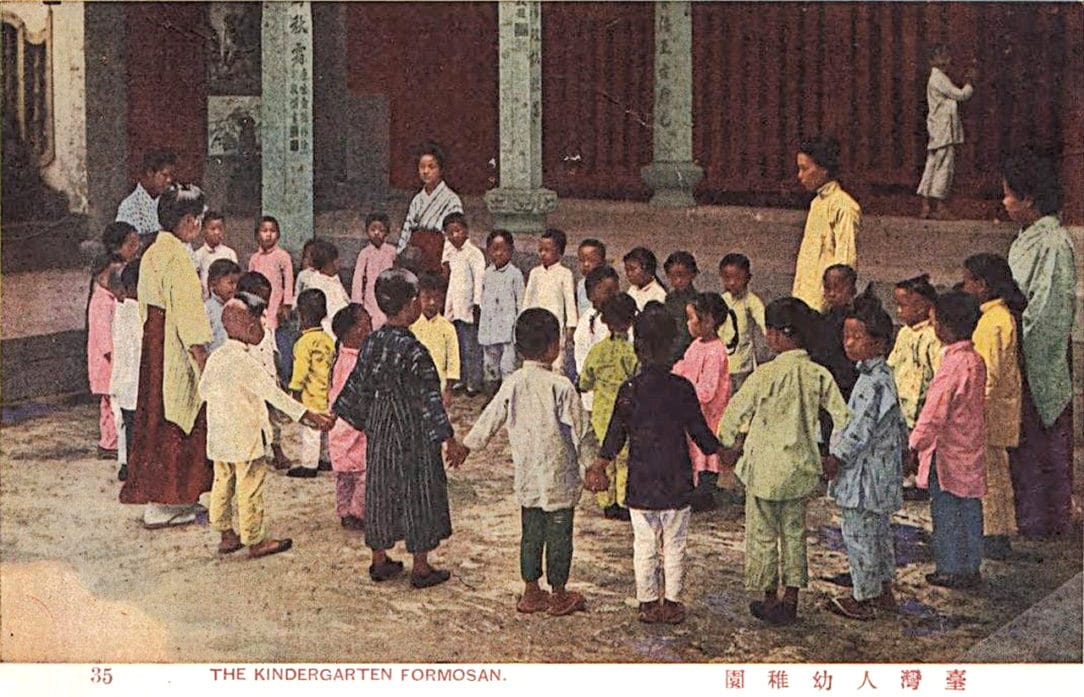
Paul D. Barclay’s “Peddling Postcards and Selling Empire: Image Making in Taiwan under Japanese Colonial Rule” and Leo Ching’s “Savage Construction and Civility Making: The Musha Incident and Aboriginal Representations in Colonial Taiwan” are both articles that deal with the creation and distribution of propaganda in and about Taiwan. Specifically they both focus on how the aboriginal population was represented to the outside world to suit the needs of the colonial government. Paul Barclay focuses on the use of visual imagery through commercial postcards as propaganda, produced and distributed by the colonial government to generate a specific image of the aboriginal population. Leo Ching writes about the use of stories as propaganda, both to reinforce an image of the noble untamed savage and later as an attempt to generate feelings of loyalty in the Taiwanese population. Both authors make strong cases to support arguments while also touching on deeper issues concerning modernity and colonialism itself.

In “Peddling Postcards and Selling Empire: Image-Making in Taiwan under Japanese Colonial Rule,” Barclay examines the role that picture postcards played in promoting Japanese colonial rule in Taiwan. Specifically, he argues that picture postcards were used to promote a particular view of the Han Taiwanese and the aborigine Taiwanese populations that legitimated Japanese colonial rule. The vast majority of the available postcards depicted aborigine populations even though they were a small fraction of the population and depicted those aborigines as untouched by modernity, savage, and isolated. In other words, aborigines were presented to the world as the true Taiwanese and as backward, pre-modern people they were used as justification for Japan’s supposed civilizing mission.

Barclay’s main sources of primary material are postcards and personal photographs collected by US Consul Gerald Warner during his tenure in Taiwan from 1937 to 1941. Warner possessed both commercial postcards and personal snapshots that were placed together in the same collection, sometimes side-by-side. This collection was later donated to the Special Collections library at Lafayette College. The author argues that given the quantity of material provided by Warner, the collection “constitutes a body of ‘related and contextualized’ visual documents” that he believes can be used to understand the difference between reality and the official narrative of indigenous life in Taiwan.[1]

Barclay’s examination of the images in the Warner collection is broken down into three general categories: images of martial masculinity, images of “savage beauty,” and images that reinforce stereotypical beliefs about the division of labor in indigenous societies. Barclay argues that in the first two of these categories, the subjects of the photos were anonymized. The subjects were also presented in traditional or prestige garments that did not accurately depict what they actually wore on a day-to-day basis in an attempt to make them appear exotic. Warner’s personal snapshots showed a much more integrated and modern indigenous population, but images of mixed dress or use of modern items was absent from the commercial images, all of which were derived from official outlets or government sources.

The colonial government was preventing people from taking photographs of their own while handing out postcards that perpetuated the narrative of the timeless native. Why would the colonial government be interested in presenting the aborigines as timeless and pre-modern? How would images showing the successful modernization efforts of Japan’s colonial government not have served Japan’s purposes? Would it not have validated their position as bringers of civilization? The answer can perhaps be found in Leo Ching’s analysis of “The Savage,” in which Ching attempts to set the psychological backdrop for his later analysis of Japanese propaganda stories.

Like Barclay, in “Savage Construction and Civility Making: The Musha Incident and Aboriginal Representations in Colonial Taiwan,” Leo Ching analyzes media to uncover the propaganda narrative being promoted by the colonial government. Rather than examining images and postcards, Ching focuses primarily on two popular representations of aborigines from the 1910s and 1930s, “The Story of Goho” and “The Bell of Sayon.” First, however, he tries to explain the Japanese mentality towards colonialism through an analysis of “The Savage,” a story that shows the Japanese understood the inherent contradictions in using colonialism to become part of the civilized world.

The main character, Takawa, strives to become more savage because in savagery he sees an inherent nobility. He finds himself repulsed by the indigenous woman who is mimicking Japanese civility, because in her, he sees a reflection of the colonial Japanese, civilized on the outside, savage on the inside. This story helps to explain why so many Japanese visitors to aboriginal areas, like those mentioned in the travel accounts analyzed by Naoko Shimazu in “Colonial Encounters: Japanese Travel Writing on Colonial Taiwan,” found it so deeply unsettling to see the aborigines becoming assimilated into Japanese culture. Without the stereotypical savage as a counterpoint to Japanese civility, the Japanese were forced to confront the savage nature of subjugating another people. Perhaps this is why the image of a timeless savage was so popular as a postcard motif, or why it was used so prolifically by the colonial administration to maintain that distinction between Japanese and Other.

Ching argues that ‘The Story of Goho” represents the initial colonial construction of the martial savage, like those represented in the Warner collection’s pre-1930s postcards. “The Bell of Sayon” represents the tendency after the Musha (Wushe) uprising to idealize the primitive nature of the aborigines and emphasize their potential for a transformation into loyal imperial subjects. The postcards that Barclay examined show a similar trend. However, he attributes the disappearance of martial scenes and the inclusion of Japanese, but not Chinese, garments in images of indigenous peoples to official anti-Chinese paranoia. After reading Ching’s explanation of the meaning of “The Bell of Sayon,” it seems more likely that these postcards reflected the administration’s new goal of building loyalty to the empire, assimilation and eventual conscription into the military.

One point not addressed by Ching is how these stories were distributed and how well they were received. The story about Goho was produced during campaigns by the colonial government to subdue the aborigines. They were simultaneously attempting to get financial backing from local Han Taiwanese. Neither audience was likely to be receptive to a propaganda folk story produced by the Japanese. Similarly, “The Bell of Sayon” was meant to inspire loyalty to the Japanese empire. Was it successful? By what measure? Ching writes that Sayon was targeted at Japanese as well as aborigines, so was the purpose of the story more to reassure Japanese that aborigines could be trusted to serve a military purpose?

Though Barclay’s argument could have been strengthened by using more personal snapshot sources, through careful art analysis he reveals how a romanticized image of Taiwanese aborigines was created, packaged and sold. The impact of these images on world public opinion was meant to legitimize Japanese colonial rule by emphasizing the need for a civilizing mission, but he misses the mark when interpreting post-1930s postcards which are better understood in light of Leo Ching’s analysis of “The Savage.”  Leo Ching’s analysis of propaganda stories reveals how the Taiwanese aborigines’ image was manipulated to reflect the changing needs of the Japanese empire, first to maintain difference in order to legitimize colonization and later to instill loyalty to bolster the empire’s military forces.


References

Barclay, Paul D. 2010. “Peddling Postcards and Selling Empire: Image-Making in Taiwan Under Japanese Colonial Rule.” Japanese Studies 30 (1): 81-110.

Ching, Leo. 2000. “Savage Construction and Civility Making: The Musha Incident and Aboriginal Representations in Colonial Taiwan.” Positions 8 (3): 795-816.

Naoko, Shimazu. 2007. “Colonial Encounters: Japanese Travel Writing on Colonial Taiwan,” in Refracted Modernity: Visual Culture and Identity in Colonial Taiwan: 21-38.

Footnotes:

[1] Paul D. Barclay, “Peddling Postcards and Selling Empire: Image Making in Taiwan Under Japanese Colonial Rule,” Japanese Studies 30:1 (2010): 85.

Reading Response: Modernization in Egypt, 19th Century

A reading response I wrote for a graduate class, based on four articles or selections about modernization in Egypt.


In “An Irrigated Empire: The View from Ottoman Fayyum,” Alan Mikhail uses agriculture in Fayyum and the maintenance of dikes and dams to make a larger argument about the balance of power in the Ottoman Empire as a whole. Mikhail is arguing against Karen Barkey’s hub and spoke model which posits that all power is in the center and all resources flow through the center. Instead, Mikhail shows that Fayyum acted as its own power center with its own peripheries. One way he demonstrates this is by explaining Fayyum’s traditional role as the grain-supplier of the Hijaz region. Istanbul never attempted to reorganize this regional dynamic and instead supported it because maintaining Fayyum’s productive power was in the best interests of the empire as a whole. More importantly, Mikhail’s article challenges the top-down power dynamic associated with empires by showing that the Fayyumis, the peasants, were able to wield power of their own by using their agricultural production and local expertise as leverage. In Fayyum, the peasants, though at the bottom of the social and power structure, were able to manipulate that structure to their advantage.

Khaled Fahmy’s article “The Nation and Its Deserters: Conscription in Mehmed Ali’s Egypt,” while not making the same argument as Mikhail, plays to the same theme. Fahmy is arguing against the modern historiographical narrative that presents Mehmed Ali’s modernization of the Army as an expression of Egyptian nationalism. He shows quite convincingly that Egyptians saw military service as an onerous burden and went to great lengths to avoid being drafted. The draftees were subject to a modern medical examination to see if they were fit for duty. Understanding this, draftees manipulated the system through self-mutilation, forcing the government to make changes to its policies. While their resistance was not effective or successful, this shows that draftees, like the Fayyumis, understood and engaged with state institutions in ways that made them political actors, rather than passive recipients of top-down power.

In the second article by Fahmy, “The Anatomy of Justice: Forensic Medicine and Criminal Law in Nineteenth-Century Egypt,” Egyptian peasants are shown to have engaged with and used the new siyasa legal system instituted by Mehmed Ali to their advantage as well. The article presents a historical narrative that is similar to the one presented by Milan Petrov in “Everyday Forms of Compliance: Subaltern Commentaries on Ottoman Reform, 1864-1868,” which discusses the way that people in the vilayet of Danube engaged with the new nizami courts. In this article, Fahmy is arguing against the prevailing teleological narrative of a steady progression from “backwards” shariah law to “modern” secular law. He argues instead that the government introduced these legal reforms not for the purpose of enlightenment or justice, but to improve state control over the population. In other words, this wasn’t European light illuminating the darkness of Arab backwardness. It was a carefully thought out plan meant to enhance the efficiency of the state. Fahmy focuses on autopsies and how they were used by the state and understood by the average person. Generally it seems that people understood the benefits of autopsies as a means of ensuring justice in areas that the shariah did not address or did not address adequately.

Brown’s article, “Who Abolished Corvee Labour in Egypt and Why?” is the only article that takes away agency from the common people, who are depicted as a formless mob who act only when ordered to act. In his article Brown is making the argument that corvee labor was not abolished for enlightened reasons, but because it became more profitable for the peasants to remain on their lands to harvest crops after year-round growing became established. The peasants were always being used to serve the greater interests of the state (or the landholders, who in turn produced revenues for the state), and even after the supposed renouncement of corvee labor, there were projects that necessitated the use of forced labor, especially in terms of the maintenance of the irrigation system.

It is interesting how great a role the irrigation system played in influencing policies in Egypt. Egypt’s agricultural output was its greatest asset when it was part of the Ottoman Empire and served as a vital part of the Empire’s infrastructure. After Egypt was separated from the Empire, agriculture was still of vital interest to the state. There were apparently conflicting interests, however. How was the irrigation system maintained when Mehmed Ali depleted the countryside of men to fill the ranks of his army?

Jesus’ World

A short essay I wrote for an undergraduate class called “Jesus the Jew” about a year ago.


Understanding who Jesus was is dependent on understanding the social context he was born into. What were the problems the Jewish people faced? What was the religious composition of the country? Was Jesus unique? Or were there others like him? After decades of Roman occupation, would Jesus’ message have been viewed favorably by his contemporaries?

When Jesus was born, Judea was occupied by the Romans. The invasion of the Romans was the last of many such occupations of Jewish lands by foreign powers that gradually diminished Jewish territorial control and sovereignty. Rome’s involvement with Judea began as an opportunistic intervention into a struggle over succession between Hyrcanus II and Aristobulus II. Pompey the Great, a Roman proconsul, backed Hyrcanus and restored him to the throne because he believed that Hyrcanus would be more likely to comply with Roman desires. The illusion of self-rule came to an end in 6 CE, when Judea was incorporated into the Roman empire as the province of Iudea and placed under direct Roman rule. By the time Jesus was born, there was widespread belief that the appearance of a messiah who would destroy the Romans and restore Jewish sovereignty was imminent. There were, in fact, many people wandering the desert claiming to be just such a person, and most of them were crucified by the Roman government.

Contemporary Jewish religion was very diverse, from established denominations to temporary movements built around charismatic individuals. The vast majority of the Jewish people were what today might be called mainstream practitioners. They were not heavily invested in the finer points of theology, but rather followed tradition and relied on instruction from those in their community with religious authority. This figure was usually a Pharisee. In contrast to the Sadducees, a group of priests who performed the required sacrifices at the Temple in Jerusalem, the Pharisees were accessible to the people. Sadducees were educated, but status as a Sadducee was inherited and could only be inherited. Pharisees were also educated, but could be anyone: your neighbor, your son, or your uncle, and they lived nearby and could answer your questions. Another popular denomination was the Essene community, which lived a celibate and missionary lifestyle. There were also Zealots, or Fourth Philosophy groups, and groups like the one at Qumran, which may have produced the Dead Sea Scrolls. There were also charismatic individuals, typically wandering the country or living in the desert. They usually inspired followers or students, like Bannus, a hermit that Josephus sought wisdom from, and John the Baptist. There was no sense of normative Judaism. Jewish religion covered a broad spectrum of beliefs centered on the acceptance of the Hebrew Bible as scripture.

Jesus, as a man that preached a messianic message about the imminent establishment of the kingdom of God on earth, would not likely have been a surprise to his contemporaries, since he was but one of many such men traveling the country preaching a similar message. He also would not have been seen as a heretic, necessarily. Years later, Josephus defended the Christians because they were viewed as another group of Jews. There is no contemporary record of Jesus’ life, so it is impossible to know for sure how he was received, but he would have been seen as acting within the limits of Jewishness and, chafing under Roman rule, a message that advocated the reestablishment of Jewish sovereignty probably would have been welcomed by the average person, or at least not a surprise.

Jesus in Modern Scholarship

This is a paper I wrote for an undergraduate course about a year ago called “Jesus the Jew”.


In The Historical Figure of Jesus, E. P. Sanders presents a very detailed examination of the evidence available for Jesus’ life. Of the three sources used for this paper, it is the most complete and the most scholarly in nature. F. E. Peters’ unpublished chapters on Jesus are very similar to Sanders’ work, though written in a more conversational way and with more emphasis on Jesus as the Gospels portray him, and on how Jesus viewed himself. Reza Aslan’s book, Zealot: The Life and Times of Jesus of Nazareth, is written for a mainstream audience and relegates complex arguments about sources to the endnotes, but it also presents a scholarly view of Jesus with an emphasis on social unrest.

Sanders is very clear about the evidence relating to Jesus. He writes that “the more or less contemporary documents, apart from those in the New Testament, shed virtually no light on Jesus’ life or death, though they reveal a lot about the social and political climate.”[1] He is probably referring to Philo, who did not mention Jesus, and Josephus, who was born after Jesus was crucified. Sanders explains that using the New Testament as a source is problematic because it was not written as a history; it was intended to be a theological document and though historians can glean information from it, as Sanders, Peters and Aslan all do, it is impossible to know whether the information is accurate or not.

A good example of this is the contradictory reasons given to explain why Jesus grew up in Nazareth in Galilee rather than in Bethlehem.[2] The device used to reconcile this apparent scriptural contradiction is a census that required people to travel to the hometown of their ancestor of forty-two generations. Sanders describes this method as being the result of a difference between how history is thought of today and salvation history, which required Jesus to be placed in a narrative that met traditional models or types based on scriptural precedents. Aslan also points out the obvious inaccuracy of the census but explains it as the inability of writers at the time to think of history scientifically because they were attempting to reveal truths, rather than facts.[3] Regardless, the point is that the New Testament is not a document that is meant to convey factual history; it is a theological document.

Sanders relies heavily on Josephus and also references Philo as a source of information to describe the historic and social setting that Jesus acted in. Sanders writes in detail about the problems of using the New Testament and explains how it was formed, starting out orally and evolving into pericopes that could be rearranged into stories depending on the author’s needs. Because of these issues, he believes that understanding Jesus can best be done by understanding the social and historical setting of first century Palestine. Aslan is also heavily invested in exploring the social setting of Palestine to try to understand how it may have influenced Jesus as a man. He also uses Philo as source for information about Judaism and Palestine, but does not mention him within the text of the book itself. Rather, he uses extensive endnotes to mention his sources. He seems to rely more heavily on Josephus and does not engage in the sort of literary critique of the New Testament that Sanders does, perhaps because his book was written for a less scholarly audience. Peters uses the same sources, but also references post-Biblical literature like the Book of Enoch.

The limited number of resources available results in all three authors having very similar arguments and conclusions about Jesus. Sanders presents Jesus as a man who had very little impact in his own society based on Jesus’ lack of a major following and Rome’s inaction in terms of suppressing him and his movement. Aslan mentions that the authorities were highly sensitive to any hint of sedition, but Sanders points out that, despite Josephus’ narrative of steadily increasing social unrest, this was just a plot device he used to build up to the revolt in 66 CE. Aslan’s interpretation implies that Jesus’ activities were more notable than Sanders believes they were, though Aslan also acknowledges the routine nature of Jesus’ crucifixion. All three authors agree that Jesus was crucified for political ideas that undermined Rome’s position, though Peters seems to place more blame on the Jews than either Aslan or Sanders.

Both Aslan and Sanders express similar ideas about the purpose of Jesus’ mission. Aslan writes that Jesus was not interested in gentiles, at least not during his ministry. He was solely concerned with the “lost sheep of the house of Israel” (Matthew 15:24).[4] Sanders is more specific and explains that Jesus was also concerned with Jews of a specific social class: poor, rural Jews like himself. He also examines the symbolism of Jesus’ use of terminology like “the Twelve” and “the kingdom” to try to discover what Jesus thought he was going to accomplish. We’re left with an image of a devout Jew that felt he was attempting to bring about a new Jewish kingdom of God on Earth that would appear soon after his death. According to Sanders and Aslan, Jesus was not trying to establish a heavenly kingdom and he did not anticipate the dissolution of the physical universe. He was attempting to recreate the golden age of Jewish sovereignty, which may be why he symbolically referred to his primary disciples as “the Twelve,” referencing the twelve tribes of Israel. Peters’ work seems to imply a more apocalyptic meaning (in the Christian sense) in Jesus’ message, but that may simply be due to the unfinished nature of his unpublished work.

Sanders spends the majority of his book whittling away at source material to try to find a believable middle-ground that describes who Jesus might have been and what he might have thought about his role in society. Aslan, on the other hand, spends more time focusing on the social conflict between the Jews and Rome and between different Jewish groups. Peters puts more emphasis on the content of the Synoptic Gospels and Jesus’ role as a messiah with a scriptural basis, but all provide similar images of a historical figure based on the limited sources available. Who Jesus was as a person is likely lost forever, buried in layers of theology, revision, addition, and interpretation by later writers. Most of what can be known about Jesus, barring a new discovery, is already available and all that is left to academia is creative interpretation.


Bibliography

Aslan, Reza. Zealot: The Life and Times of Jesus of Nazareth. Kindle Edition. New York: Random House, 2013.

Peters, F. E. “Chapters 1-5 concerning Jesus.” Unpublished Work. New York, 2012.

Sanders, E. P. The Historical Figure of Jesus. Kindle Edition. New York: Penguin, 1995.


[1] E.P. Sanders, The Historical Figure of Jesus (New York: Penguin, 1995), 3.

[2] Ibid., 85.

[3] Reza Aslan, Zealot: The Life and Times of Jesus of Nazareth (New York: Random house, 2013), Kindle Location 682-688.

[4] Quoted in Zealot…. The translation is the author’s own.

History in the “Confessions” of St. Augustine

St. Augustine in his study.
St. Augustine in his study. Source: Wikipedia

Saint Augustine’s Confessions is a book about the early life and conversion to Christianity of Augustine of Hippo, one of the most famous Christian scholars of antiquity. The book starts off with a description of childhood, then moves on to describe Augustine’s quest for knowledge both among the Manichees and through study of the traditional liberal arts, including oratory and rhetorical skills. An intensely personal account by design, Augustine reveals his internal struggle as he reminisces about the loss of his childhood friend, whose name he does not reveal, as well as his struggles with sexuality and his doubts about the nature of God. Essentially, the book is meant to show Augustine’s path from a confused childhood to a position of solid conviction in the Catholic faith, but Confessions can also be used as a source of historical information. This essay will examine the first seven chapters of Confessions to discover what it implies about the late 4th and early 5th century Roman society that shaped Augustine’s life.

One of the more interesting things that can be discerned from the book is the potential for mobility available in Roman society, both in terms of physical and social movement. Of course, Augustine’s case is not indicative of the norm, but he was able to advance from being the son of a modest family in Tagaste (in modern day Algeria) to being a well-respected and socially connected professor of rhetoric in Milan, before his conversion, which is related in chapters outside the scope of this essay. Augustine’s reasons for leaving his home village were originally related to study opportunities and a need to leave a place that reminded him strongly of the death of a childhood friend. His ability to travel within the empire for education purposes is interesting because it implies that there was a system in place that allowed for the boarding and education of students during his time. His ability to rise through the ranks of society based on his intellectual abilities shows that class distinctions were not set in stone and he specifically mentions that many Roman offices were available to anyone with the right amount of money. In a modern context, this has a negative connotation, and perhaps it did in Augustine’s time as well, because in his writing he felt the need to explain that as a system it allowed the state access to needed revenues and acted as a pathway to success for those born to lower classes.

In his writing, Augustine mentioned that not all families were willing to support their children’s education outside of their local towns, even when they were better-off economically than Augustine’s own family. Augustine did not go into detail about this point, but it leaves the reader wondering what motivations a family might have for not wanting to promote the education of their children at all costs, as Augustine’s did, when it might lead the family to greater success. If the story about Alypius and the responsibility of a “house” for a crime is any indication, the Roman family unit probably shared equally in success as well as culpability for crimes and failures.[1] Was it a cultural expectation that children would follow in the footsteps of their parents, leading to a lackadaisical attitude towards aggressive social advancement, or was the lack of interest in education outside of Tagaste something specific to that locality?

Much of Augustine’s writing in Confessions deals with education, because he wrote about both his time as a pupil and as an educator. His writing makes it clear that corporal punishment was a well-used form of discipline that acted as a motivator for children to pay attention to their studies. The fact that Augustine and, presumably, other children endured caning as a punishment and prayed for respite instead of abandoning school indicates that there was some measure of compulsion in attendance, either from families or from the state. Also, unless the phrase was added by the translator, the inclusion of the “three Rs” as a figure of speech (reading, writing, and arithmetic) shows that areas of study for primary school students in the late 4th century were fairly consistent with modern education standards.[2] His later education reveals a break with modern ideals about the purpose of studying the liberal arts, however. According to Augustine, forming logical arguments that revealed the truth about a matter were of secondary importance to style and delivery. Eloquence and the ability to convey a sense of conviction were more important than being able to logically argue a truth.

Similarly related to education, student culture in Roman society is revealed through Augustine’s writings. Bullying was alive and well in the 4th century. Schoolyard gangs even had nicknames, like “The Wreckers”, who would find “shy and unknown freshmen… to persecute…by mockery…to feed their own malevolent amusement.”[3] Augustine dealt with this group as a student by staying on friendly terms with them, but refused to participate in their mockery and acts of vandalism. Augustine wrote that in Carthage, students would burst into a classroom and purposely disrupt it with “mad behavior.”[4] Later, as an adult, Augustine complained of a practice common among Roman students, who would sit with a teacher for a number of classes and then transfer en masse to another instructor to avoid making payment.[5]

Augustine’s writing reveals quite a bit about religion during the late 4th and early 5th centuries in the Roman Empire, most obviously because the book is about his journey to conversion to Catholocism, but the first seven chapters of the book also discuss the Manichees and give an example of religious syncretism among professed Catholics. Augustine wrote that he spent nine years as a follower of the Manichee religion and through his writings, we can see that it was institutionally similar to the Catholic Church, including having Bishops, but professed very different concepts of God. The instance of religious syncretism that Augustine took time to mention was his mother’s practice of tomb veneration through the offering of plates of fruit and the ritual sipping of wine at the burial sites of Catholic martyrs. Augustine mentioned that his mother was not alone during these ceremonies, so the practice must have been widespread. I also make this conjecture based on the fact that in later centuries, and continuing up to the present, Islamic scholars in the Middle East have been condeming the same practice among Muslims regarding veneration of the tombs of saints, martyrs and especially Sufi pirs.

This brief selection of information from the first seven chapters of Saint Augustine’s Confessions shows how historical information about an author’s society can be revealed by analyzing that author’s work, even when recording historical information is not the main purpose of the work. This essay examines the chapters on their own, but by comparing what Augustine wrote to other available information, one could further the process of reconstructing Roman society and elaborate on the circumstances surrounding Augustine’s life and conversion to Catholocism.


[1] Saint Augustine, Confessions (Oxford University Press, 2009), 101.

[2] Ibid., 15.

[3] Ibid., 38.

[4] Ibid., 80.

[5] Ibid., 86.


References

Saint Augustine. 2009. Confessions (Oxford World’s Classics). Translated by Henry Chadwick. New York: Oxford University Press, Inc.