The Assassination of Lumumba, by Ludo De Witte – Reaction Essay

The Assassination of Lumumba, Ludo De Witte Book Cover

In The Assassination of Lumumba, Ludo De Witte analyzes the events and motivations surrounding the death of Patrice Lumumba, the first democratically elected Prime Minister of the Congo after the country’s supposed decolonization by Belgium. De Witte was arguing against popular historiography and sentiment and attempted to provide readers with a more complete understanding of the circumstances that led to Lumumba’s assassination. De Witte analyzes documents he is given access to by the UN and the Belgian government, as well as a dissertation thesis written by Jacques Brassinne and Jean Kestergat in 1991, which he regards with suspicion since Brassinne collaborated with the Katangan government, which could have had a serious impact on the interviews Brassinne conducted. De Witte’s work opens up many questions about the decolonization process, including the influence of the Cold War, the usefulness of the United Nations as an institution, and the value of humanitarian ideals relative to strategic interests in the eyes of the international community.

De Witte’s argument for outside involvement in Lumumba’s assassination rests on three pillars: UN complicity, Belgian initiative, and the involvement of the CIA in an aborted assassination attempt. The influence attributed to the United States by De Witte in Lumumba’s eventual death is weak. De Witte clearly shows that the United States’ government’s obsession with the Cold War and the possibility of the Congo aligning itself with the USSR was seriously discussed and resulted in the CIA developing assassination plans. Had this plan been carried out, the United States would certainly bear responsibility. However, the assassination was called off when Belgium and the United Nations managed to arrange Lumumba’s death. Morally, the US incurred guilt through planning the action and intending to commit the action, but in the purest legal sense, intent without action is not a crime.

De Witte’s accusations against the United Nations are in some cases circumstantial. For example, he places blame on the institution as a result of the actions, or inactions, of individuals. It is very significant that Dag Hammerskjold willfully influenced events in a way that ensured the collapse of the legally elected and legitimate government that Lumumba was a part of, and validated the illegal government set up by Tshombe in Katanga. It makes one questions whether or not there was some unrealized link between Hammerskjold and the Belgian government that gave him an incentive to undermine Lumumba. Or, perhaps, Hammerskjold was merely representative of a neo-colonialist element within the United Nations that worked for goals contrary to those officially stated by the United Nations.

In his introduction, De Witte notes that many have understood his book to be primarily laying blame at the feet of the Belgian government. He attempts to deflect by saying that he thinks blame lies with more than one party and while that is certainly true, it is obvious that the primary motivation for removing Lumumba was to restore Belgium’s control of the Congo by using a weak parliament as a façade. The media was expertly manipulated to reiterate racist rhetoric that reduced Lumumba to a reactionary, animalistic figure without any clear plan other than to kill Europeans, reminiscent of anti-Mau Mau rhetoric in Kenya. The presence of Belgians at all stages of Lumumba’s detention, transfer and murder, as well as Belgian initiation and reinforcement of the secession of Katanga, and the intentional attempt to stamp out popular political sentiment clearly put the majority of the blame and responsibility at the feet of the Belgian government, regardless of later revelations by the 2002 Belgian parliamentary commission’s findings of active conspiracy by the royal court to assassinate Lumumba.

What is the actual purpose and value of the United Nations? How often has the organization actually effected positive change? Are humanitarian values and decolonial rhetoric smokescreens meant to place a positive veneer on continued Western control of other countries? Belgium’s actions in the Congo are reminiscent of the CIA and MI6 overthrow of Mossadegh in Iran after he nationalized the oil company formerly controlled by Britain. Lumumba was written off as being unique or unusual but he had the support of the people and his ideas, to truly decolonize his country, were part of a larger stream of thought in much of the world at that time. Unfortunately, the West still held a disproportionate amount of international power and, despite the public outcry and later support for the Stanleyville government primarily by Communist bloc countries, the Congo was allowed to remain under Belgian control.

The Other Within: Can Muslims Be French?

Is the Hijab French?

Whether or not Muslims can be accepted into European countries as more than just itinerant travelers, whether that is possible or even desirable, is a question that has been addressed by scholars, “talking heads,” politicians, and average citizens the world over. The situation of Muslims in European countries is difficult to generalize, because each country has its own specific set of circumstances that led to the addition of immigrant populations. However, this paper will analyze how Muslims have been presented in Europe generally and then focus more narrowly on the specific context of France, which has Europe’s largest Muslim population. This paper will cover Europeans’ conception of what Europe is, what an authentic European is, and the role that Islam plays in creating that image.

Additionally, I will argue that Muslims in Europe, and specifically in France, have been subjected to a type of criticism that implies that Muslims are a homogenous and mutually responsible group that is inherently violent, with Muslims in France being held to a standard that is unachievable in terms of becoming truly French. I will argue that Muslims in France are already French, addressing their issues from a position of wanting their rights to be observed, rather than requesting rights in the sense of the American Civil Rights movement. Additionally, I will argue that France’s particular system of government and conception of laïcité (a type of secularism) precludes the successful integration of minorities.

In a book section titled “Muslims and European Identity: Can Europe Represent Islam?” written in 2002, Talal Asad analyzes the way that Europeans have traditionally understood Europe and what it means to be European in order to understand whether or not minorities can be successfully integrated. Asad belives that the modern discourse on European identity is concerned with exclusions and anxieties about non-Europeans and contains an implicit demand that the rest of the world recognize Europe based on its self-proclaimed identity.[1] In a sense, Europe is creating propaganda in order to shape world opinion about Europe’s role in world society. Asad begins his analysis by tracing the historical development of the concept of Europe to the Middle Ages, where Europe and Christendom were synonymous terms, often used in contradistinction to the Ottoman Empire, which was Islamic.

The idea of what Europe was, and is, inherently tied to religion and remains that way today, regardless of the new ascribed secular nature of states.[2] Asad develops this idea by noting that Balkan states who have populations that are indistinguishable from other white Europeans, that have secular political institutions and are geographically within Europe are still somehow not European. They can be in Europe, but not of Europe.[3]

Asad also introduces the idea of European civilization, which is based on the idea of a shared history that includes the Roman Empire, Christianity (as noted above), the Enlightenment, and industrialization.[4] The fact that Muslim immigrants have not shared in these experiences are what Asad believes creates a sense of Muslims not belonging in European society. This also disconnects the idea of Europe from a geographic space, explaining how it is possible to be in Europe but not to be of Europe. In other words, there is something essential to being European, but becoming fully European would require one to shed his or her own essential identity and replace it with a European one. If something is essential to one’s self, it is a defining factor in one’s identity. Can it be removed?

Asad builds on this understanding of essential qualities to argue that because assimilation requires the forfeiture of one’s self and the assumption of European identity, there is no place for minorities in Europe. An interesting quote found in Constructing Muslims in France: Discourse, Public Identity, and the Politics of Citizenship greatly illuminates this problem of secularism and personal identity. In her discussion on Muslim identity in France, the author, Jennifer Fredette, argues that “Karl Marx would tell us that pretending it is possible to separate the public from the private so neatly is secularism’s greatest conceit.”[5] Fredette is placing Muslim identity in Europe in perspective by first exploring the underpinnings of the modern conception of citizenship. She argues that it is impossible to separate the personal from the public, which agrees with Asad’s assessment of essential characteristics of people.[6]

What we are meant to understand from this is that one’s private beliefs and private nature influence our public behavior and the way we are perceived by others. In a secular state, there will still be some influence from privately held beliefs. This becomes important when one tries to understand why Muslims are considered unassimilable into European, and specifically French, societies. Secular, modern conceptions of citizenship in France are predicated on possessing a French passport and having some cultural attachment to the country, such as speaking French. The majority of Muslims in France, at this point, have never lived in another country. They were born in France, speak French as a first or only language, and have to search generations back into their ancestry to find a connection to immigration.[7] Some Muslims are converts and have no link to immigration, yet there is something about them nonetheless that causes them to be outside of the scope of French society. The qualifier has shifted from secular understandings of citizenship to personal beliefs, creating the idea of deserving and undeserving citizens.

Fredette situates her argument not in terms of whether Muslims can become French, but instead looks at why this question is being asked, how it affects Muslims in France and how they respond.[8] Fredette finds that most Muslims in France are, in their own understanding of themselves, integrated into French society. They identify as French and are capable of using the French political system, speaking French, and navigating French society. French Muslims’ complaints are not about receiving rights, in the sense of African Americans during the Civil Rights campaign, but rather are about having their rights respected. This is a nuanced but important difference. Muslims are demanding neutrality in law, in the sense of not having Islam be the focusing issue of political debates involving immigrants and descendants of immigrants. Muslims also demand recognition of the social abuses they suffer.[9]

Social abuses can elevate to an accepted discourse that becomes prevalent in society and creates a feeling of second-class citizenship. For example, a Muslim woman’s employer refers to all Muslim women as Fatima. Or, a Muslim woman helps an ethnically French woman lift her pram onto a bus and the bus driver closes the door on her, almost crushing the baby in the process, in order to slight her.[10] Fredette is drawing a distinction between integration and assimilation, as well as between political and social integration. She argues that it is possible to be integrated into a country politically and theoretically have equal protection under the law, but to be socially excluded based on personal beliefs in such a way that it undermines the conception of citizenship, leading to the previously mentioned discourse on deserving and undeserving citizens.[11] Fredette’s understanding of assimilation without integration builds on that presented by Sharif Gemie in French Muslims: New Voices in Contemporary France, where she defines integration as comprehending the manner in which society works, or the acquisition of that competence. She argues that this understanding avoids the ideological fog of ambiguous ideas revolving around values like “fair play,” “toleration,” “motherhood,” and “apple pie.”[12]

Understanding the way that discourse is produced and shaped in France is essential to understanding why Muslims feel socially marginalized. Fredette identifies three major groups as being responsible for producing and maintaining popular discourse in France: politicians, the media, and intellectuals, which she collectively refers to as the French elite. She argues that discourse production in France is unusually unified in that these groups of people are all from the same social strata, attend the same schools and share ideas with one another, creating a unified bloc of information producers.[13] The media are arguably the most important of these discourse producers, given their role in shaping and transmitting the messages of the other two groups to the public.

According to Fredette, today’s modern, elite conception of what it means to be a deserving French citizen involves the possession of five unique traits: complete liberality in sexual relations, refraining from references to religion in public and social affairs, an aversion to cultural pluralism (implying being strictly French in the full sense with no hyphenated identity), adhering to a theory of abstract individualism, and having an ancestral origin that is within the accepted boundaries of Europe.[14] This understanding of Frenchness is antithetical to minorities in general and Muslims in particular. There is no room for difference in this definition of being French. Because Catholicism is so ingrained in French culture, adherence to Islam in any shape or form is seen as cultural pluralism. Religiosity usually involves sexual restraint, which also infringes on the popular elite perception of fraternity, which has become inseparable from a notion of mixing of the sexes.[15]

Understanding the elite discourse on Muslims is important in understanding why they are thought to be unassimilable. In line with Talal Asad’s presentation of Muslims as existing outside of European civilization, the media has traditionally depicted Muslims as others, following a general pattern over time that shifted from a sensual, sexualized depiction of Muslims to one of Muslim fanaticism. In an article titled, “Comparative Analysis of Mainstream Discourses, Media Narratives and Representations of Islam in Britain and France Prior to 9/11,” Malcom Brown shows that while there was an academically accepted paradigm shift centered on the events of September 11, 2001, there has always been a wide variety of media presentations of Muslims.[16] Tellingly, however, these media presentations have always shown Muslims as “others”, outside of French society.

Brown notes that despite France’s close proximity to Muslim societies, which would lead one to expect a degree of familiarity that would prevent Muslims from being portrayed as exotic, media representations tended to follow this stereotype well into the 1970s. This was presented in two ways: a portrayed exoticism of the senses and a need to explain the “strangeness” of Muslim culture.[17] During the 1970s and into the 1980s, the common discourse on Muslims in French media highlighted ethnicity and nationality, rather than religion, though Brown notes that a shift towards depictions of fanaticism was underway as a result of the 1973 Oil Crisis.[18]

Brown notes that there is a tendency towards reactionary reporting in the French media. When crimes occur that involve Muslims (and presumably other minorities), the articles produced by the media not only report the event, but take on airs of superiority that place these minorities on a lower run of the civilizational order, or in other words, outside of French society. An example is when a girl was made to swallow several litres of salt water as a supposed Islamic home remedy for epilepsy, causing her death. The event was reported as “causing death by torture and barbaric acts.”[19] The event might have been interpreted and reported very differently if it had been a death caused by a French home remedy. The perpetrators were also accused of multiculturalism, calling into question their Frenchness.

By 1989, media depictions of Muslims in France had shifted and began to associate Muslims with fanaticism. An example is a Le Nouvel Observateur article that juxtaposed an image of Khomeini’s funeral in Iran with the establishment of “Islamist” groups in France.[20] The formation of Islamic groups in France was questioned because they received support from foreign countries, again calling into question the national loyalties and Frenchness of the Muslims who benefited from these institutions. By the early 1990s, French media was emphasizing problems of “integration” of Muslims, linking these problems with “fanaticism” and “fundamentalism.” Muslims began to complain that they were represented in French media by an “Islamalgame” of “terrorist, Islamist, Muslim, North African, Arab and immigrant.”[21] Brown does not fully explain the reasoning behind why this shift occurred, but according to John Bowen, there was a spillover of violence from the civil war in Algeria during this time period.[22] As a result, Muslims’ Frenchness was again called into question.

Another issue that Muslims had to deal with was their status as residents of the banlieues, neighborhoods constructed in isolation by the French government. These neighborhoods were filled with immigrant, mostly Muslim and Arab residents, who had poor employment opportunities because of unequal access to education. Combined with a universal slump in the French economy after the boom years following World War II, they became centers of poverty, drugs, crime and violence. This situation was used to attribute blanket accusations that associated all Muslims with violence, drug dealing, racism, gender violence, and delinquency (unemployment), despite the fact that similar situations, especially of gender violence, were prevalent in other parts of France.[23] It is interesting to note that these accusations are extremely similar to current media debates about the status of African American neighborhoods in the United States, meaning that the problems presented by these neighborhoods are not inherent qualities of the residents. However, French media began to present these problems as universal. Journalists were sent out to gather sensationalist stories that exacerbated the negative image of Muslims in the media.[24]

The exceptional poverty that exists in these neighborhoods, combined with the social exclusion of Muslims mentioned by Fredette, created barriers to successful integration in French society. Moreover, the situation intensified feelings of isolation and oppression that led to riots in October and November of 2005. Rather than the media and, by extension, the rest of the French insular elite recognizing and acknowledging the real problems faced by Muslims in these neighborhoods, references were made to Muslims’ failure to integrate into society, as if the socioeconomic positions they were born into was wholly their fault. Instead, Nicolas Sarkozy, then Minister of the Interior and later president, commented that he would wipe use a high-pressure hose to wipe the scum off the streets, causing even greater rioting and violence.[25]

Another significant way that Muslims have been depicted in the media which is related to the violence in the banlieues is as a security threat. One example of this viewpoint is that of Robert S. Leiken, which he presents in his article, “Europe’s Angry Muslims.” Using a wider interpretive lens like Talal Asad, Leiken analyzes the presence of Muslims in all European countries from the perspective of international security. Specifically, he is thinking of the border security of the United States and how allowing Muslims to live in Europe creates security risks because of the laxity of travel restrictions both within the European Union and between the European Union and the United States.

A look at Leiken’s analysis in detail is useful, in terms of helping one to understand the way that Muslims are thought of in relation to their status as residents of Europe. Additionally, this places the prevailing French media narrative in a larger context. According to Leiken, the laxity of some member states’ asylum laws allow Islamic radicals to enter the European Union, providing the catalyst for radicalization. Leiken’s argument portrays Muslims in a specific way, as a security threat that must be contained. His writing contains distortions and stretches meant to make the threat seem more plausible and imminent, playing to a discourse on Muslims that has become mainstream and widely accepted. His writing portrays Muslims as an intrinsic security threat who by their very nature cannot be part of the European community or Western “civilization.”

Another problem with Leiken’s analysis is his use of a Mecca vs. Medina analogy which, while illustrative, is historically incorrect and misrepresents the foundational period of Islamic history, which is significant in terms of his topic. In his analogy, he states that Mohammed “pronounced an anathema on [Mecca’s] leaders and took his followers to Medina … [where] he built an army that conquered Mecca in AD 630…”[26] Mohammed fled Mecca in the face of persecution and by all accounts was among the last to leave, having first sent a group of followers to Ethiopia and then having sent the remainder to Medina ahead of himself. In Medina, he did not “[build] and army”, he built a community and engaged in the common raiding practices of the Arabian Peninsula.[27] He also built political alliances which were useful when hostilities did break out.

Leiken’s misrepresentation of the situation and glossing over of the long hostilities, political treaties and eventual surrender of Mecca to Mohammed’s men oversimplifies a complicated process in a way that depicts Muslims as naturally violent from the beginning of their history, leading to the teleological conclusion that they must be dealt with in some way to make Europe and the United States safe from their supposed barbarism. This supposed innate violence is evident in the willingness of media to use blanket accusations against Muslims, as evidenced by the earlier complaint of being represented in the French media by an “Islamalgame”, and by the way that social issues in the banleiues are addressed. Leiken’s inability or unwillingness to approach the situation of Muslim minorities in Europe from a realistic position that sees Muslims as people, rather than as potential threats, is not unusual. It fits into a larger trend of using rhetoric rather complicated narratives to explain the situation of Muslims in France.

This trend is oddly not restricted to ethnic French people. There are cases where Muslims have built their careers around rejecting and denouncing Islam in the French media. One example is that of Chahdortt Djavann, a naturalized French citizen from Iran. She is very vocal about her hatred of Islam and writes extensively on her feelings of alienation, betrayal, and feelings of sexual repression based on veiling. For Djavann, there is no possibility of multiculturalism; one must either be French or Muslim.[28] Sharif Gemie refers to her polemics as simplistic, especially in comparison to the French literary giants that Djavann idolizes, and essentially accuses her of selling out to live the life she dreamed of: one of freedom and wealth. Gemie says that Djavann plays her part well, telling “nationalist-minded neo-republicans exactly what they want to hear. She tells them that France is right, and that it is morally and politically better than other countries.”[29]

One thing that Djavann’s choice should make clear, however, is that acceptance into French society as being truly French is absolutely predicated on a complete rejection of Islam, being Muslim, and being culturally and sexually different from the mainstream. French secularism is not about freedom of choice, at least not for Muslims. It is instead about conformity. Talal Asad, though addressing Europe as a whole in terms of democracies and Muslim minorities, would likely agree, because it fits the same model. Where Asad observed that there is no place for a minority voice in a democracy, there is no place for a minority group to find a voice within French society. To be French one must become an abstract part of the whole, subsuming oneself into another identity. Personally, this emphasis on creating a society full of identical abstract people comes across as incredibly dangerous to the mental health of a population. It subsumes individuality into a collective whole, and attempts to render the “self” meaningless.

The issue of Muslims in France and whether or not they can integrate is, like Fredette stated, the wrong way to approach the situation. Muslims in France are French Muslims. Their situations are not uniquely religious or unique to their social groups. They are issues that affect all Muslims in France, but because of their status as immigrants, they are seen as unique in all things. They are uniquely different, uniquely other, uniquely in need of being “civilized” and assimilated. The issues that are inherent to the Muslim condition in France are exacerbated by the media’s portrayal of them as being inherently violent and foreign. Their assessment as a security threat only serves to further isolate them. The elite discourse that demands that all French people be exactly the same is unproductive and unrealistic, and creates unachievable expectations for Muslims in French society, especially considering that there are many accepted French people who do not meet the five signifiers of being French. As the French republic currently exists, as the current definition of laïcité stands, it is not possible for Muslims to become part of France because there would be no such thing as a French Muslim. One would have to stop being Muslim to be French.


Footnotes

[1] Talal Asad, “”Muslims and European Identity: Can Europe Represent Islam?” in Idea of Europe: From Antiquity to the European Union, edited by Anthony Pagden (West Nyack: Cambridge University Press, 2002), 211.

[2] Ibid., 212-213.

[3] Ibid., 213.

[4] Ibid., 214.

[5] Jennifer Fredette, Constructing Muslims in France: Discourse, Public Identity, and the Politics of Citizenship (Philadelphia: Temple University Press, 2014), 53.

[6] Ibid., 52-53.

[7] Ibid., 39-40.

[8] Ibid., 21.

[9] Ibid.

[10] Ibid., 21, 23 & Sharif Gemie, French Muslims: New Voices in Contemporary France (Cardiff: University of Wales Press, 2010), 73.

[11] Jennifer Fredette, Constructing Muslims in France: Discourse, Public Identity, and the Politics of Citizenship (Philadelphia: Temple University Press, 2014), 21.

[12] Sharif Gemie, French Muslims: New Voices in Contemporary France (Cardiff: University of Wales Press, 2010), 44.

[13] Ibid., 32-33.

[14] Ibid., 54.

[15] Ibid.

[16] Malcolm D. Brown, “Comparative Analysis of Mainstream Discourses, Media Narratives and Representations of Islam in Britain and France Prior to 9/11,” Journal of Muslim Minority Affairs 26.3 (December, 2006): 297-298.

[17] Ibid., 299.

[18] Ibid., 300.

[19] Ibid., 301.

[20] Ibid., 303.

[21] Ibid., 304.

[22] John R. Bowen, “Recognizing Islam in France after 9/11,” Journal of Ethnic and Migration Studies 35.3 (March, 2009): 439.

[23] Ibid., & Sharif Gemie, French Muslims: New Voices in Contemporary France (Cardiff: University of Wales Press, 2010),78-79.

[24] Sharif Gemie, French Muslims: New Voices in Contemporary France (Cardiff: University of Wales Press, 2010), 70.

[25] Sharif Gemie, French Muslims: New Voices in Contemporary France (Cardiff: University of Wales Press, 2010), 74.

[26] Robert S. Leiken, “Europe’s Angry Muslims,” Foreign Affairs 84.4 (July-August, 2005): 127.

[27] Ibid.

[28] Sharif Gemie, French Muslims: New Voices in Contemporary France (Cardiff: University of Wales Press, 2010), 49.

[29] Ibid., 62.


References


Asad, Talal. 2002. “Muslims and European Identity: Can Europe Reprsent Islam?” Chap. 10 in Idea of Europe: From Antiquity to the European Union, edited by Anthony Pagden, 209-227. West Nyack, NY: Cambridge University Press.

Bowen, John R. 2009. “Recognising Islam in France after 9/11.” Journal of Ethnic and Migration Studies, March: 439-452.

Brown, Malcolm D. 2006. “Comparative Analysis of Mainstream Discourses, Media Narratives and Representations of Islam in Britain and France Prior to 9/11.” Journal of Muslim Minority Affairs, December: 297-312.

Fredette, Jennifer. 2014. Constructing Muslims in France: Discourse, Public Identity, and the Politics of Citizenship. Philadelphia: Temple University.

Gemie, Sharif. 2010. French Muslims: New Voices in Contemporary France. Cardiff: University of Wales Press.

Leiken, Robert S. 2005. “Europe’s Angry Muslims.” Foreign Affairs, Jul-Aug: 120-135.


The Butcher’s Tale: Murder and Anti-Semitism in a German Town (2014), by Helmut Walser Smith – Reaction Essay

The Butcher’s Tale: Murder and Anti-Semitism in a German Town Book Cover

In The Butcher’s Tale: Murder and Anti-Semitism in a German Town (2014), Helmut Walser Smith uses the murder of Ernst Winter in Konitz in 1900 as a lens through which to examine the historical place of the Jews in German and Christian society. The narrative is constructed like a murder-mystery novel that contains analysis both of the event itself and historical anti-Semitism. Smith does an excellent job of interjecting his analysis into the narrative in a way that maintains the pace and “action” of the story, with the exception of Chapter 5, “Performing Ritual Murder,” which is necessarily more abstract, but feels out of place, as if it just happened to find itself in the middle of an otherwise fluid narrative.

Through his examination of Winter’s murder and the reaction of the people of Konitz, Smith touches on the idea of nations, nationalism and state formation. Who gets to be German? What are the criteria? In a period of crisis, clear lines were drawn between “us” and “them,” with the Jews being clearly placed outside of German society. Based on Smith’s work, the majority of the Jews in Konitz led what might be called average lives. Many did not see themselves as very different from their neighbors. Some rejected Judaism and Jewishness altogether, like the boy that incriminated his father in an 1882 trial regarding a ritual murder charge in Tisza-Eszlar in Hungary (Kindle location 1801). Reform Judaism was on the rise. Most Jews clearly wanted to separate themselves from their past and become German, to one degree or another. What stopped them was latent anti-Semitism that continued to come to the fore during times of crisis.

Another important force that buttressed anti-Semitism during the early 1900s was the press. Because of Germany’s high literacy rates and the apparent freedom to publish uncensored material, “journalists” like Bruhn were able to cater to a demographic that craved news that satisfied their existing world view that supposed Jews really did commit ritual murders. Bruhn, and others like him, leapt on every opportunity to publish sensational stories, much like modern tabloids, invariably making the situation for Jews worse. It makes one question how free the press should be allowed to be. Why does the free press work in the modern US, but so obviously failed in Germany in 1900? One possibility is that the people were not so far removed from natural, learned behaviors imparted to them by their religious affiliation and past.

Smith attempts to explain this by looking at the history of ritual murder accusations and their relationship to the idea of host desecration. The idea that Jews might desecrate the “host” through desecrating a cracker perpetuated the image of Jews as Christ-killers, as people beyond the pale of civilization. Ritual murders were supposedly re-enactments of the murder of Christ. In a period of secularization, where highly educated people were denouncing ritual murder as a myth from an age of barbarism, average people were still by-and-large defining themselves based on religious affiliation. It is interesting that when it came to Jews, Christians in general united in hatred against them, regardless of their personal denominational affiliation.

One of the weak points of Smith’s work is the failure to more clearly link the events that happened in Konitz with Hitler, whom he discusses in the opening of the book as representing the fringe, rather than the mainstream of German society (Kindle location 152). In fact, Smith’s narrative, which shows a nearly united Christian front, ready to accept and lie to support ritual murder charges, seems to contradict that statement. Like the ritual murder charge, anti-Semitism in general did not die out, but rested “in repose,” both among Catholics and Protestants and served as the unifying factor that excluded Jews from belonging to the nation, which in turn constituted the imagined state (Kindle location 1552).

“Europe’s Angry Muslims” (2005), by Robert S. Leiken – Response Essay

Europe's Angry Muslims Book Cover

In “Europe’s Angry Muslims” (2005), Robert S. Leiken analyzes the presence of Muslims in European countries from the perspective of international security, or specifically the security of the United States, which has visa-waiver agreements with the European Union. According to his article, Muslims are able to easily enter the European Union due to lax rules regarding who is allowed in. Islamic radicals are allowed to enter one European country and, because of the lack of border controls between European Union members, they are then able to travel to all European countries in the EU. Besides the risk to the European Union member states, Leiken sees this as a problem because these radicals are recruiting jihadis who are second generation immigrants and have European citizenship, allowing them to freely travel to the United States.

Leiken’s article emphasizes the role that being a minority in Europe plays in enabling the radicalization of Muslims. Across different contexts, Leiken finds a common thread of estrangement from the dominant culture that turns into disillusionment and anger in Muslims who are born in Europe and have European citizenship, but are socially excluded based on their ethnic and religious backgrounds.

Leiken’s use of statistics to demonstrate the threat of Europe-born Muslim jihadis is flawed. He states that the number of mujahideen who identified as European nationals in North America and Europe in a 1993-2004 survey was roughly 25% of the total, representing the largest demographic within the group. What does that prove, really? It would stand to reason that there would be more local-born Muslims than immigrants in a given time period. This does not, however, call into question the seriousness of the problem of radicalization of domestic Muslims.

Another problem with Leiken’s analysis is his Mecca vs. Medina analogy which, while illustrative, is historically incorrect and misrepresents the foundational period of Islamic history which is significant in terms of his topic: conflict between Muslims and Westerners. In his analogy, he states that Mohammed “pronounced an anathema on [Mecca’s] leaders and took his followers to Medina … [where] he built an army that conquered Mecca in AD 630…” (127). Mohammed fled Mecca in the face of persecution, and by all accounts was among the last to leave, having first sent a group of followers to Ethiopia and then having sent the remainder to Medina ahead of himself. In Medina, he did not “[build] and army” (127), he built a community and engaged in the common raiding practices of the Arabian Peninsula. He also built political alliances which were useful when hostilities did break out. Leiken’s misrepresentation of the situation and glossing over of the long hostilities, political treaties and eventual surrender of Mecca to Mohammed’s men paints Muslims as naturally violent from the beginning of their history, leading to the teleological conclusion that they must be dealt with in some way to make Europe and the United States safe from their barbarism.

Leiken discusses the ways that European countries have engaged with their Muslim populations, noting that all attempts to integrate them have failed, from Belgium’s active attempts to socially support and integrate all comers to Germany’s separation to Britain’s multiculturalism. He then herald’s the United States’ as being the most successful with a policy of toleration while allowing the maintenance of social distinctions. He does not describe how the policy in the US is really that different from the policies of Britain. What Leiken does do, however, is discuss boundaries created by geography that prevent the type of radicalism spreading throughout Europe from reaching the United States. He notes that Muslims in Europe can see radical speeches on satellite and the Internet, but fails to note that those same mediums are available in the United States. By claiming logistical difficulties, Leiken gives too little credit to terrorist organizations and too much credit to the Atlantic and Pacific oceans in preventing terrorism.

The conflict between Muslims and Westerners is sometimes framed as a battle of civilizations, with the implication being that one must wipe out the other to survive. Leiken’s analysis posits Muslim minorities as unassimilable, even in the best case scenario of the United States, where they are “tolerated” but socially distinct (133). This, combined with Leiken’s presentation of Muslims as historically and uniquely violent through a distorted retelling of the religion’s foundational history perpetuates the notion that they are outside of Europe and cannot be brought inside; they must be contained because they cannot be European.

In War’s Wake: Europe’s Displaced Persons in the Postwar Order – Response Essay

A DP camp possibly near Hallendorf, Germany

*The image above is of a displaced person’s camp, possibly near Hallendorf, Germany. The image is from a blog about a family’s history. One of the members of the family, Janis, was a POW and later lived in a displaced persons camp. Click here for more information and more images.


In In War’s Wake: Europe’s Displaced Persons in the Postwar Order, Gerard Cohen analyzes the creation and evolution of the concept of a “displaced person.” He shows that the term arose in a specific context to describe a specific set of people and, because of the role that Europe and America played in post-World War II international politics, the definition of what it meant to be displaced was applied universally. He also shows how the term was politicized and evolved based on the strategic needs of competing world powers during the Cold War, leading to the commodification of displaced persons. The most important contribution of the book, however, is the development of the idea of what it means to be a citizen of a state.

One of the most interesting, though perhaps least clearly explained, ideas in the book is that people underwent a commodification. Conceptually, they stopped being actors receiving aid and became statistics that had to be managed, from counting caloric intake to disposing of displaced persons in the most expeditious fashion possible. Cohen shows that the way people in dire circumstances were thought of underwent a conceptual shift during the period between the World Wars and again after World War II. Initially people were recipients of “Victorian charity,” a concept that Cohen fails to adequately explain. One can infer from the text that it had little to do with attempting to give the poor the means by which they could advance themselves economically. Food or money was provided, but there was no intent to actually eradicate poverty. The new form of care provided after World War I by UNRRA was designed to elevate people by providing them the means to support themselves and become productive and economically successful members of society. This new conception of relief was adopted later by the IRO and informed later definitions of humanitarian relief work. It wasn’t enough to simply “throw” resources at populations in need of relief. To truly alleviate the situation, one had to give people the means to reestablish a sense of community, of dignity, and the means to become economically self-sufficient.

This new form of help required new forms of monitoring and categorizing people. Cohen cites Foucalt’s theory of “governmentality,” which posits government intrusion into people’s lives as a form of violence. While there was a great deal of intimidation, I’m not sure Foucalt really applies in this situation. According to Cohen, displaced persons were able to forge a history if necessary and still receive benefits. One could argue that requiring detailed information and the history of a person is a form of violence, but in the case of providing that information to receive benefits, it becomes a transaction, albeit an uneven one, with the government, or in this case the IRO, holding all of the power in the situation. Additionally, as the situation evolved, a person’s history was not necessarily as important as where he came from, or what his religion was.

The most pressing issue addressed in Cohen’s work is the conflict and debate revolving around where people belong. It is obvious that by the time World War II ended, the idea of nationalities had become firmly entrenched in people’s minds, but that the exact definition of nationality was still in flux. This is no surprise, since the idea of nationality is still hotly debated today. Nation and state were becoming synonymous in people’s minds. Poland’s demands that all Polish displaced persons be returned while simultaneously working to prevent the return of Jews to Poland is evidence of this. Was there a place for minorities in a state? Do people have to become assimilated to the culture and language of the dominant nation in a state to truly belong? Given the current situation in Europe with Muslim and/or North African minorities being targeted, especially in France, it would seem that people in general still see nation and state as essentially the same. Myths about the ideals and values that a state stands for are typically based on the values and ideals of a particular nation within the state, so expecting people to adhere to them is an expectation of assimilation. Is there room for difference?

Cohen’s book raises many other issues, especially moral issues about the rights of displaced persons in migration, what it means to form an international community, and the hegemonic role of the West in defining what it means to be displaced, a refugee, or entitled to special consideration. The way that the West has defined displaced persons has implications for the internal operations of all states. However, in showing that the definition of a nation was still in flux, and that nationality and belonging can be decided and changed with mere paperwork, Cohen undermines the immutability of nationhood or belonging.

Policing Paris: The origins of modern immigration… – Reaction Essay

In Policing Paris: The origins of modern immigration control between the wars, Clifford Rosenberg looks at the creation of a complex policing apparatus in Paris and how this institution helped to define the roles of citizenship and nationality in the French public’s mind. He does this by analyzing the context in which the institution was created and how social controls were adapted to changing ideas of who belonged and who was a foreigner.

Rosenberg’s book opens up questions about the nature of belonging to a state. There is an assumption that there is something intrinsic to belonging to a state. France was historically defined as being a nation state constituted by and from the French nation, but Rosenberg’s work calls into question the very Frenchness of the state. He lists the numbers of immigrants that arrived in France from various countries, mostly European but also some Asians and North Africans. If all of these people became French, then what is “French”? Why were certain groups, like the Russians, assumed to be capable of assimilating into the society while others were not? One politician quoted by Rosenberg says that being French is not a matter of blood, but rather one of education, so why were North Africans considered unable to be educated? It seems that targeted surveillance of North Africans had more to do with the need to keep them subjugated to the French state than it had to do with security.

An idea that features prominently in Rosenberg’s work is Foucault’s theory of “governmentality” as a form of violence by the state against a population. Rosenberg spends much of the first half of the book praising the card catalogues and indexing systems created by the French to monitor population subsets and showing that they were models that were emulated by the rest of the world. It is unclear whether or not Rosenberg subscribes to Foucault’s theory. He both criticizes the use of surveillance against specific groups (the North Africans) and also praises the ability of these identification systems to allow for the creation of welfare systems. Rosenberg probably has socialist leanings, which influenced his analysis. However, his work does raise the question of whether or not identification systems are useful, or even good. Should the state know everything about everyone? Are the benefits of social welfare programs worth the cost of giving up one’s identity to the state?

Rosenberg shows that prior to modern immigration control, borders were much more fluid. Attaining what we think of as citizenship today was much easier and the flow of people around the world followed a much more natural process of migrating to areas where labor was needed, contrary to the assumption that rural residents were tied to the land. The changing nature of the labor market seems to have had the biggest impact on how and why states control the flow of people. Rosenberg emphasizes this by showing that immigration control was initially meant to protect the domestic French labor market from foreign competition that entered French territory. With the state of the world today, including outsourcing and a global economy, it calls into question the necessity or relevance of borders, which greatly illuminates modern debate surrounding illegal immigration into the United States from South America.

While not conclusively taking a stance on the rightness or morality of modern identification systems, Rosenberg opens up many question about citizenship, nationality and what it means to belong to a sovereign political body. He uses the Paris specifically and France generally to illustrate how the idea of borders and belonging have changed over time, making it easier to understand the nature of labor migration and the process of naturalization, as well as shedding light on why current debates call into question the very nature of political borders.

Tsirk – 1936 USSR Film – Reaction Essay

A scene from Tsirk


The film “Tsirk” was produced in the USSR in 1936. The film contains a large amount of propaganda that is presented in the format of a comedy. The film deals primarily with issues of race and nationalism and how citizenship is defined. The producers were implicitly comparing the way that minorities are treated in the USSR to how they are treated in the United States and Europe. The main character, Marion Dixon, has a relationship with an unnamed black man which results in a child. In the United States, this is treated as a major scandal and Marion is chased by a mob. In the beginning of the film, Marion’s manager is identified as German. He also has a negative view of Marion’s previous relationship and uses the existence of her child to control her. These views are sharply contrasted with the Soviet ideal, which is inclusive and does not discriminate based on race.

While the film may not accurately depict the status of minorities in the USSR, it provides the viewer with an opportunity to understand early Soviet views on race relations in two ways. First, the film presents the Soviet view of being inclusive as both positive and better than views on race held by Europeans, represented by the German manager, and Americans, represented by the mob in the opening sequence and Marion’s feelings of shame and fear in respect to her child. Race was not something that should be used to differentiate or exclude people from society. Second, the film provides the viewer with a glimpse of how the Soviets attempted to shape their national narrative, to create a cohesive whole from a mix of racial and ethnic groups that fell under the sovereignty of the USSR.

During the French revolution, French nationality was defined as being contingent upon being ethnically French. Putting aside the ambiguity and arbitrariness of how the standard for “Frenchness” was defined, the state was built on the foundation of the nation. Italy, England and Germany are also similarly built on the idea of a cultural, racial or ethnic group that compose a nation banding together to form a state. The USSR, on the other hand, was composed of many different ethnic and racial groups. This is similar to how the United States was formed, but the difference was in how minorities were (theoretically) treated. At the time, being American meant being white. Racial boundaries outside of the USSR in general were firm, represented by the German manager’s declaration near the end of the film that Marion’s sexual relationship with a “Negro” was a “racial crime”.

Soviet ideology, represented by the closing sequence in the Circus, is racially and ethnically inclusive. The Soviet Union is represented as being composed of many racial and ethnic groups, without racial boundaries or divisions. Each person is considered based on merit, rather than simply skin color. Whether or not this view of racial inclusiveness had any substance beyond this and similar films is questionable, but it was the image that the Soviets wanted to present to the world and to their own public. “Tsirk” represents the Soviet attempt to bring nations of people together in a common cause.

Also interested was the focus on technology and advancement. The acts in the circus revolved around cannons, space flight and reaching for the stars. This was perhaps symbolic of industrialism and was meant to inspire people to conform to Soviet industrialization policies. This ties in with the idea of all racial groups working together in the Soviet Union, because of the ways that local economies were reoriented to encourage industrial growth in the Russian Metropole. Of course, that also contradicts the ideal presented by the film, since these economic policies negatively impacted local non-Russian economies and would later lead to famine and impoverishment.

Whether or not “Tsirk” was an attempt to accurately reflect Soviet ideas or purely propaganda, it reveals quite a bit about the nature of race relations in the world at the time. It shows that ideas of citizenship and belonging were still very much tied to ideas of belonging to the same race or ethnic group. The Soviets understood this and, in this state sponsored film, were simultaneously criticizing other state’s treatment of their ethnic minorities while constructing a standard of belonging for Soviet citizens that contradicted prevailing norms.

Creating the “Other” in Colonial Taiwan: Comparative Article Review

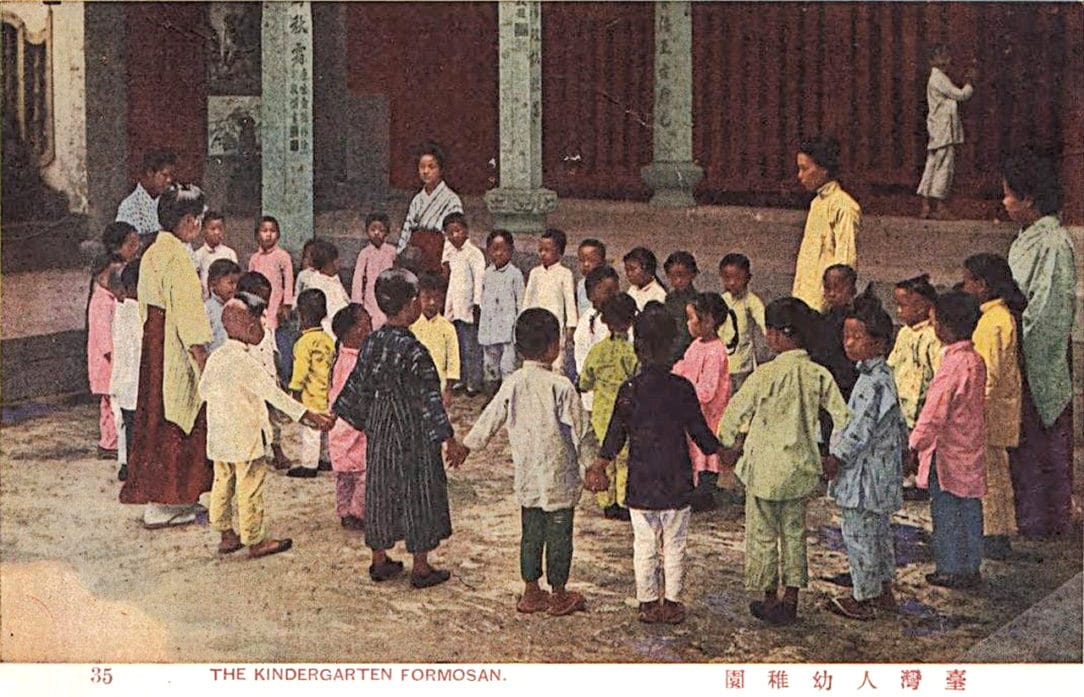
tumblr_nugx43CRCj1qaiafbo1_1280 (1)

Paul D. Barclay’s “Peddling Postcards and Selling Empire: Image Making in Taiwan under Japanese Colonial Rule” and Leo Ching’s “Savage Construction and Civility Making: The Musha Incident and Aboriginal Representations in Colonial Taiwan” are both articles that deal with the creation and distribution of propaganda in and about Taiwan. Specifically they both focus on how the aboriginal population was represented to the outside world to suit the needs of the colonial government. Paul Barclay focuses on the use of visual imagery through commercial postcards as propaganda, produced and distributed by the colonial government to generate a specific image of the aboriginal population. Leo Ching writes about the use of stories as propaganda, both to reinforce an image of the noble untamed savage and later as an attempt to generate feelings of loyalty in the Taiwanese population. Both authors make strong cases to support arguments while also touching on deeper issues concerning modernity and colonialism itself.

In “Peddling Postcards and Selling Empire: Image-Making in Taiwan under Japanese Colonial Rule,” Barclay examines the role that picture postcards played in promoting Japanese colonial rule in Taiwan. Specifically, he argues that picture postcards were used to promote a particular view of the Han Taiwanese and the aborigine Taiwanese populations that legitimated Japanese colonial rule. The vast majority of the available postcards depicted aborigine populations even though they were a small fraction of the population and depicted those aborigines as untouched by modernity, savage, and isolated. In other words, aborigines were presented to the world as the true Taiwanese and as backward, pre-modern people they were used as justification for Japan’s supposed civilizing mission.

Barclay’s main sources of primary material are postcards and personal photographs collected by US Consul Gerald Warner during his tenure in Taiwan from 1937 to 1941. Warner possessed both commercial postcards and personal snapshots that were placed together in the same collection, sometimes side-by-side. This collection was later donated to the Special Collections library at Lafayette College. The author argues that given the quantity of material provided by Warner, the collection “constitutes a body of ‘related and contextualized’ visual documents” that he believes can be used to understand the difference between reality and the official narrative of indigenous life in Taiwan.[1]

Barclay’s examination of the images in the Warner collection is broken down into three general categories: images of martial masculinity, images of “savage beauty,” and images that reinforce stereotypical beliefs about the division of labor in indigenous societies. Barclay argues that in the first two of these categories, the subjects of the photos were anonymized. The subjects were also presented in traditional or prestige garments that did not accurately depict what they actually wore on a day-to-day basis in an attempt to make them appear exotic. Warner’s personal snapshots showed a much more integrated and modern indigenous population, but images of mixed dress or use of modern items was absent from the commercial images, all of which were derived from official outlets or government sources.

The colonial government was preventing people from taking photographs of their own while handing out postcards that perpetuated the narrative of the timeless native. Why would the colonial government be interested in presenting the aborigines as timeless and pre-modern? How would images showing the successful modernization efforts of Japan’s colonial government not have served Japan’s purposes? Would it not have validated their position as bringers of civilization? The answer can perhaps be found in Leo Ching’s analysis of “The Savage,” in which Ching attempts to set the psychological backdrop for his later analysis of Japanese propaganda stories.

Like Barclay, in “Savage Construction and Civility Making: The Musha Incident and Aboriginal Representations in Colonial Taiwan,” Leo Ching analyzes media to uncover the propaganda narrative being promoted by the colonial government. Rather than examining images and postcards, Ching focuses primarily on two popular representations of aborigines from the 1910s and 1930s, “The Story of Goho” and “The Bell of Sayon.” First, however, he tries to explain the Japanese mentality towards colonialism through an analysis of “The Savage,” a story that shows the Japanese understood the inherent contradictions in using colonialism to become part of the civilized world.

The main character, Takawa, strives to become more savage because in savagery he sees an inherent nobility. He finds himself repulsed by the indigenous woman who is mimicking Japanese civility, because in her, he sees a reflection of the colonial Japanese, civilized on the outside, savage on the inside. This story helps to explain why so many Japanese visitors to aboriginal areas, like those mentioned in the travel accounts analyzed by Naoko Shimazu in “Colonial Encounters: Japanese Travel Writing on Colonial Taiwan,” found it so deeply unsettling to see the aborigines becoming assimilated into Japanese culture. Without the stereotypical savage as a counterpoint to Japanese civility, the Japanese were forced to confront the savage nature of subjugating another people. Perhaps this is why the image of a timeless savage was so popular as a postcard motif, or why it was used so prolifically by the colonial administration to maintain that distinction between Japanese and Other.

Ching argues that ‘The Story of Goho” represents the initial colonial construction of the martial savage, like those represented in the Warner collection’s pre-1930s postcards. “The Bell of Sayon” represents the tendency after the Musha (Wushe) uprising to idealize the primitive nature of the aborigines and emphasize their potential for a transformation into loyal imperial subjects. The postcards that Barclay examined show a similar trend. However, he attributes the disappearance of martial scenes and the inclusion of Japanese, but not Chinese, garments in images of indigenous peoples to official anti-Chinese paranoia. After reading Ching’s explanation of the meaning of “The Bell of Sayon,” it seems more likely that these postcards reflected the administration’s new goal of building loyalty to the empire, assimilation and eventual conscription into the military.

One point not addressed by Ching is how these stories were distributed and how well they were received. The story about Goho was produced during campaigns by the colonial government to subdue the aborigines. They were simultaneously attempting to get financial backing from local Han Taiwanese. Neither audience was likely to be receptive to a propaganda folk story produced by the Japanese. Similarly, “The Bell of Sayon” was meant to inspire loyalty to the Japanese empire. Was it successful? By what measure? Ching writes that Sayon was targeted at Japanese as well as aborigines, so was the purpose of the story more to reassure Japanese that aborigines could be trusted to serve a military purpose?

Though Barclay’s argument could have been strengthened by using more personal snapshot sources, through careful art analysis he reveals how a romanticized image of Taiwanese aborigines was created, packaged and sold. The impact of these images on world public opinion was meant to legitimize Japanese colonial rule by emphasizing the need for a civilizing mission, but he misses the mark when interpreting post-1930s postcards which are better understood in light of Leo Ching’s analysis of “The Savage.”  Leo Ching’s analysis of propaganda stories reveals how the Taiwanese aborigines’ image was manipulated to reflect the changing needs of the Japanese empire, first to maintain difference in order to legitimize colonization and later to instill loyalty to bolster the empire’s military forces.


References

Barclay, Paul D. 2010. “Peddling Postcards and Selling Empire: Image-Making in Taiwan Under Japanese Colonial Rule.” Japanese Studies 30 (1): 81-110.

Ching, Leo. 2000. “Savage Construction and Civility Making: The Musha Incident and Aboriginal Representations in Colonial Taiwan.” Positions 8 (3): 795-816.

Naoko, Shimazu. 2007. “Colonial Encounters: Japanese Travel Writing on Colonial Taiwan,” in Refracted Modernity: Visual Culture and Identity in Colonial Taiwan: 21-38.

Footnotes:

[1] Paul D. Barclay, “Peddling Postcards and Selling Empire: Image Making in Taiwan Under Japanese Colonial Rule,” Japanese Studies 30:1 (2010): 85.

The Merchant’s House Museum

There’s a building on 4th Street in Lower Manhattan that is a museum. It doesn’t really look like a museum. Not when you’re standing there in front of it and mentally comparing it to the Metropolitan Museum of Art or the Guggenheim, but it was well worth the time I spent inside looking around. It takes about an hour and a half or two hours to look at everything. Maybe a bit longer if you want to just hang out and soak up the atmosphere. It’s not pricey either. 10 bucks for adults, 5 bucks if you have a student ID.

The building was built in the early 1800s and the furnishings and personal effects in the home were the property of the original owner, who bought the place in 1835. There have been a few modifications, like the addition of a fire escape for safety, bars on a few windows for security, and the removal of the outdoor latrine for sanitary purposes. Part of the garden was paved over with additional marble paving stones. Two indoor toilets were added for museum visitors. But, most everything else is authentic, like the cooking implements, clothing, hats, wash basins, and furniture. There’s even a pail of coal in the kitchen that one can pick up to experience the carrying load of a household servant or slave.

It’s a cool place and I’m looking forward to going again with my wife. I went by myself on a weekday afternoon. We’re particularly interested in attending one of the summer evening lectures in the outdoor private garden.

Visiting Historic Richmond Town on Staten Island

Guyon-Lake-Tysen House c. 1740 with kitchen addition in 1820s.

Before this month I’d never heard of Historic Richmond Town on Staten Island. The place isn’t heavily advertised and the carpenter in the recreated shop there told us that he wasn’t surprised, because a lot of people that live there in Staten Island have never heard of the place either. You almost wouldn’t know it was there if you rode by on the bus or in in a car. Maybe that says more about the quality of buildings on Staten Island in general than it does about the site, though, that it’s hard to tell buildings that are almost 300 years old apart from the rest of what Staten Island has to offer.

Getting to Richmond Town from Upper Manhattan was a little bit of a struggle. The A train kept stopping in the tunnel and then went local below 59th Street. I know they’ve been doing some construction on the tunnels during the week, at night, but it would be nice if the city could keep the trains running on time when they’re not doing work on the tracks, otherwise what’s the point of the new construction schedule the city pushed? The ferry ride was nice, at least. I always enjoy the views of the city from the boat. The bus ride from the ferry to the town was about 25 minutes, which isn’t too bad.

When we got to Richmond Town we were afraid it was closed because the place was so quiet and empty. I guessed that it was because this is Memorial Day weekend and most people probably stayed home to relax or went out of town for barbecues. When we got to the ticket counter in the gift shop, the clerk there said that Memorial Day weekend is usually really quiet and cited the same reasons I suggested. I didn’t really care that the place was empty of people. Getting away from the crowds in New York City, seeing some trees, grass, fresh air and open spaces was just fine with me.

The fact that most of the buildings were closed was a problem, though. No one there was in costume. When we went on the 3:30 tour, our guide used a set of keys to open up each building we went into and had to take time to open the shutters so there would be light inside. She kept mentioning that the buildings saw regular, period-style use during the week. I wonder who has time to go out there during the week? I’m going to have to do some research and make some phone calls to find out if we can go back on another weekend and see the place completely up and running.

That being said, the tour was really good and our guide knew quite a bit about the houses she was showing us. She was also ready to answer random questions about the facilities and other buildings we were walking by. I was not disappointed at all. It was a great way to spend a Sunday afternoon.

Here are some of my favorite photos from the place:

Better quality images and more details can be found in my Historic Richmond Town Flickr gallery.